

 |
Ube-flavored drinks are taking over cafes worldwide . Photo: @kohvito . |
Once an ingredient associated with traditional Filipino desserts, ube (purple yam) has become a global culinary phenomenon in recent years thanks to its striking purple color and its photogenic qualities on social media.
According to aggregated data from the US-based menu analytics platform Datassential, the number of dishes containing ube on menus in the US has increased by over 230% in four years and is on track to spread throughout the global F&B industry. This popularity has led many experts to believe that ube has the potential to "dethrone matcha," according to Food & Wine.
However, behind the global "purple craze" lies a major paradox right in the Philippines – the birthplace of ube. Despite ube's widespread presence on international menus, Filipino farmers still face uncertain supply, seed shortages, high production costs, and dependence on middlemen.
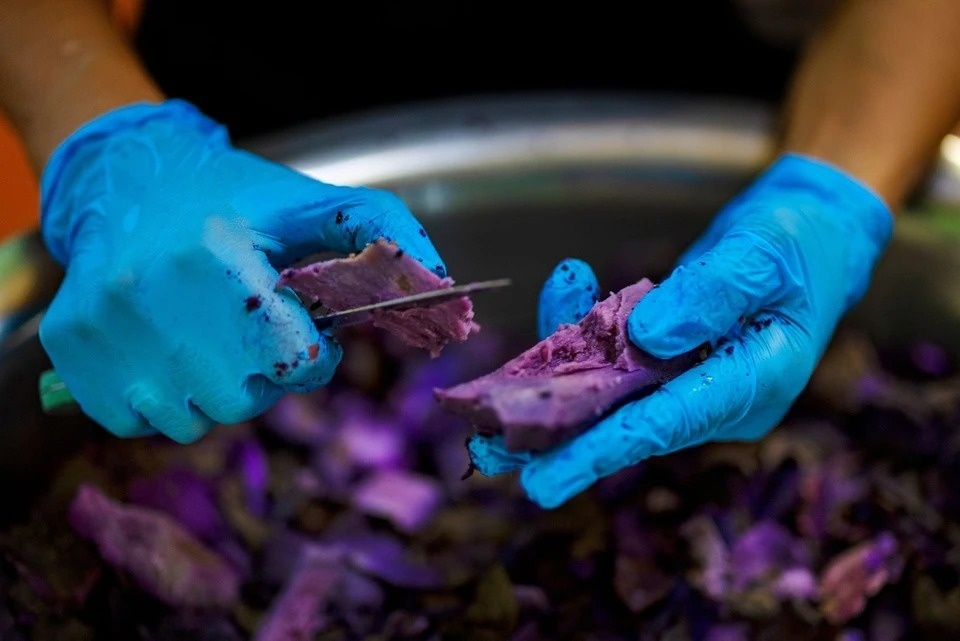 |
Filipino workers process purple sweet potatoes (ube). Photo: Reuters. |
The 'capital' of Uber, but it still has to import from Vietnam.
According to a study on the ube and matcha powder value chain in the Philippines published in ResearchGate, the country's ube production has been steadily declining from over 15,000 tons in 2021 to approximately 12,483 tons in 2025. Meanwhile, exports have continued to grow strongly, reaching approximately $3.06 million with nearly 1.7 million kg exported overseas, mainly to the United States.
Domestic supply has become so insufficient that the Philippines has to import ube from Vietnam to meet domestic demand. This is seen as a major blow to the Philippines' long-standing position in the global ube industry.
According to Global Nation , experts believe the cause lies not in market demand, but in structural weaknesses within Philippine agriculture .
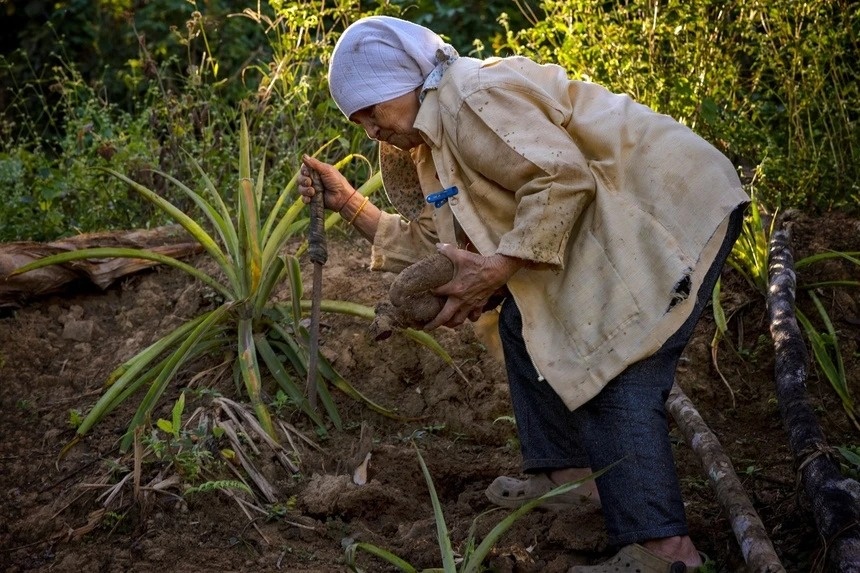 |
Filipino farmers are struggling to meet the growing global demand for purple ube sweet potatoes. Photo: Reuters. |
Ube has a long growing cycle of 8-11 months, much longer than many other root crops. For small-scale farmers needing quick cash flow, this is a less attractive option compared to shorter-harvest crops.
Furthermore, the seed shortage is becoming increasingly serious. Due to the high price of ube, many farmers sell almost all of their post-harvest produce instead of saving it for seed for the next season. The lack of a large-scale breeding system makes the supply increasingly precarious.
Climate change is also making the situation worse. Irregular rainfall patterns, prolonged droughts, and strong storms are causing significant damage to plants that need to remain underground for almost a year, such as the ube.
Traders benefit more than farmers.
Despite the rapidly increasing market value, the majority of profits do not go to the growers. According to research, traders and intermediaries control most of the ube value chain in the Philippines. Farmers are often forced to sell at low prices right in the field due to a lack of cold storage, processing facilities, and direct access to international customers.
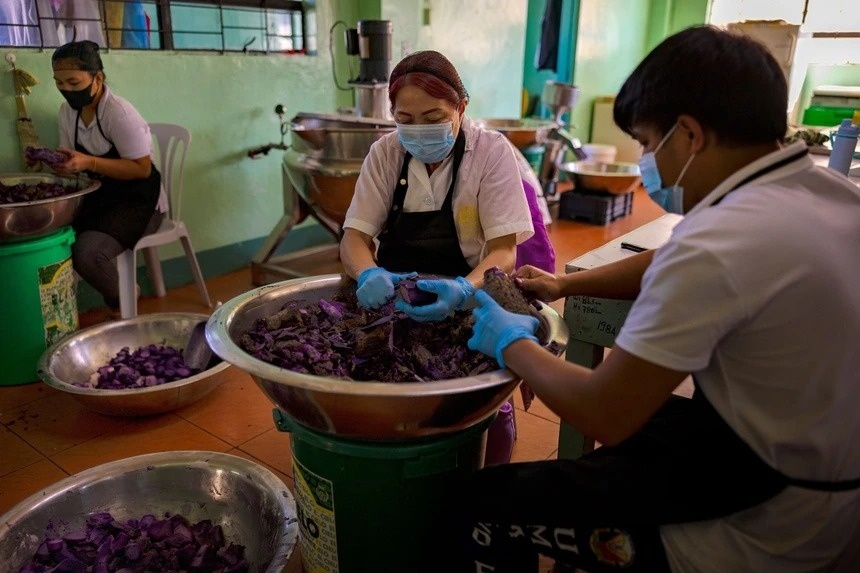 |
Filipino workers process purple sweet potatoes (ube). Photo: Reuters. |
In the current model, growers only receive about one-third of the final value of the exported product. The larger profit goes to traders, processors, and exporters. This has led many farmers to no longer consider ube a crop that can provide a sustainable income, despite continuously increasing global demand.
While the Philippines is struggling with the supply of purple yam, Vietnam and China are rapidly expanding production. Vietnam is leveraging its existing agricultural export network while investing in seeds, tissue culture, and cooperatives to stabilize production. Meanwhile, China is pursuing industrialization, expanding growing areas, applying biotechnology and mechanization, and promoting processed products from yam.
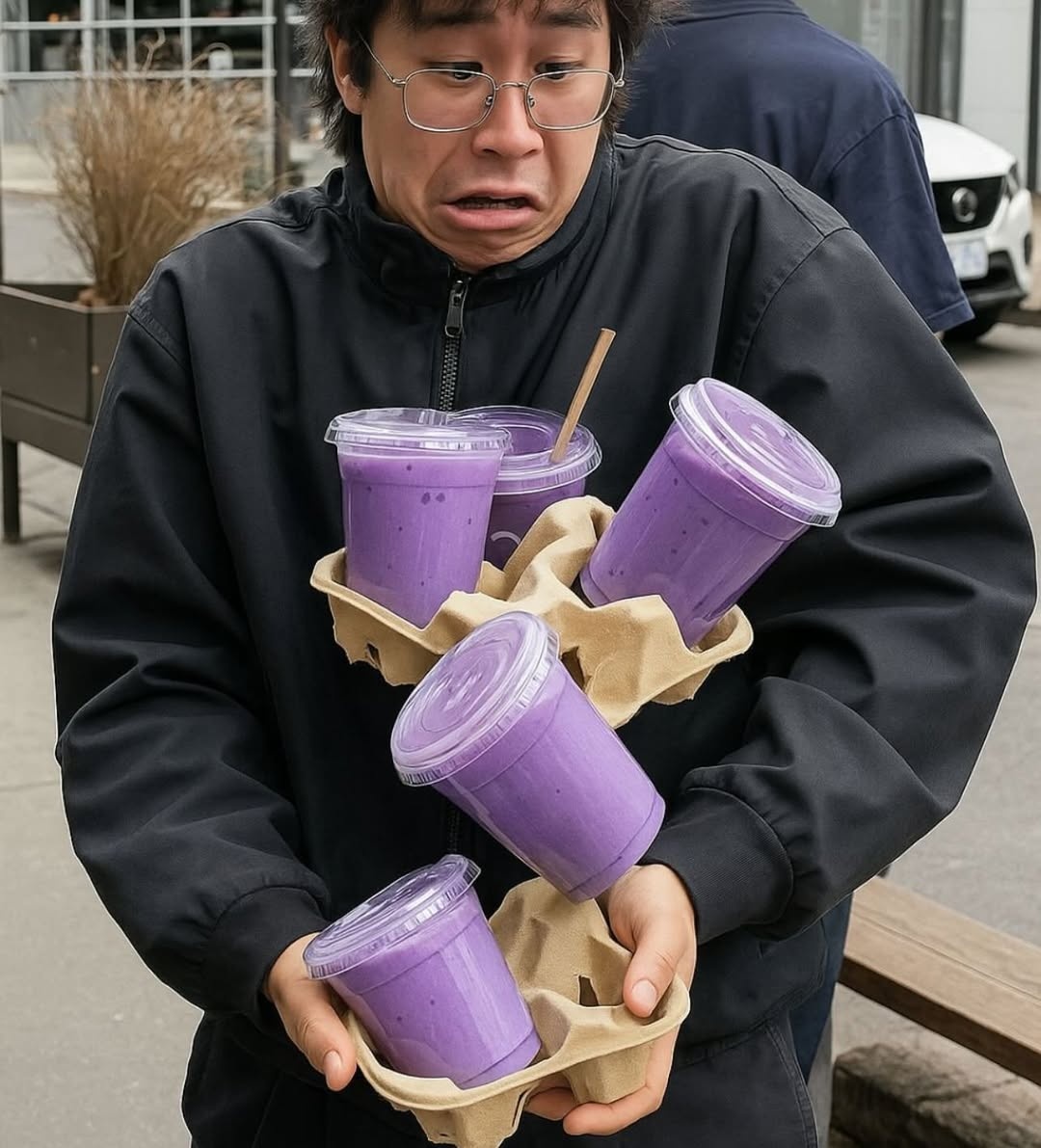 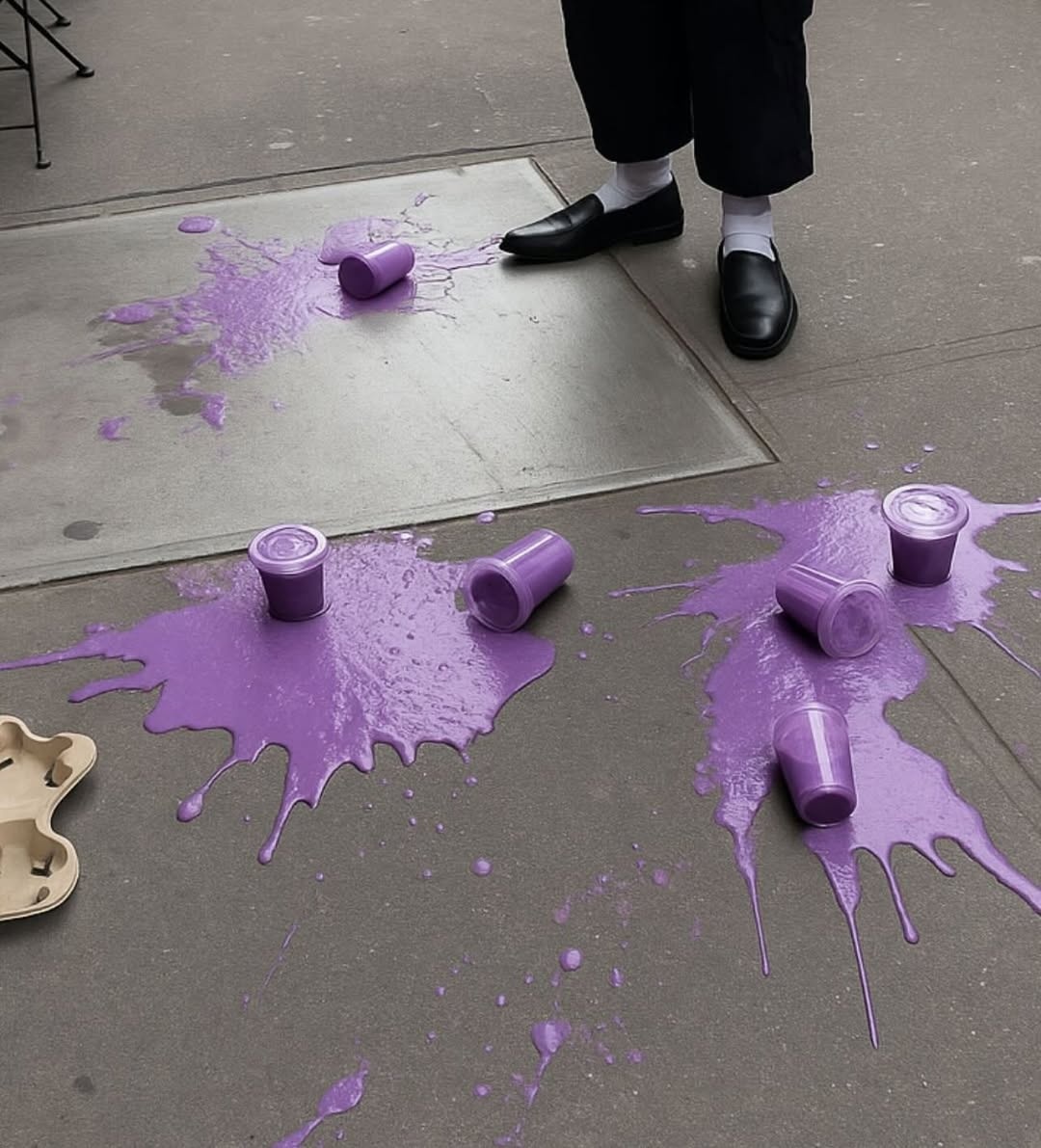 |
The purple color of ube stands out on social media. Photo: @ ube.ubeya. |
Analysts believe the appeal of ube stems from its striking color, ease of sharing on social media, and its flavor suitability for a variety of drinks and pastries. However, to turn the "purple craze" into a real benefit for farmers, the Philippines needs more than just TikTok trends.
Many experts believe that the country needs to build cooperatives to involve farmers more deeply in processing, branding, and exporting, instead of just selling fresh tubers to traders. According to research, if the entire supply chain is controlled, growers can retain up to two-thirds of the final value of their produce.
Furthermore, the Philippines needs to reinvest in its seed systems, agricultural infrastructure, and climate change response programs. Otherwise, the country once considered the "home of the ube" risks losing its competitive edge to regional rivals.
Source: https://znews.vn/nghich-ly-nguyen-lieu-soan-ngoi-matcha-post1652811.html


![[Image] Close-up view of the interchange connecting the two expressways and Long Thanh Airport.](https://vphoto.vietnam.vn/thumb/1200x675/vietnam/resource/IMAGE/2026/05/25/1779703378210_ndo_br_z7863716673926-224453a31600126cce10622af6290afd-4549-jpg.webp)


![[Image] Hanoi's urban life under the challenge of a "scorching hot" environment](https://vphoto.vietnam.vn/thumb/1200x675/vietnam/resource/IMAGE/2026/05/25/1779706979265_nang-nong-t5-2026-minh-duy-7-4636-jpg.webp)













































































Comment (0)