

 |
The Oreshnik hypersonic missile has immense destructive power. Photo: The Guardian . |
With a range that covers Europe, extremely high velocity, and a design featuring independently targetable multiple warheads, this weapon poses a significant challenge to existing defense systems.
The appearance of Oreshnik on the battlefield not only changed the conventional course of warfare but also carried significant strategic deterrent value in the region.
What is the Oreshnik missile?
Oreshnik, which means "hazelnut tree" in Russian, is a family of intermediate-range ballistic missiles (IRBMs). It can strike targets at distances ranging from 3,000 km to 5,500 km, effectively putting all of Europe within its range.
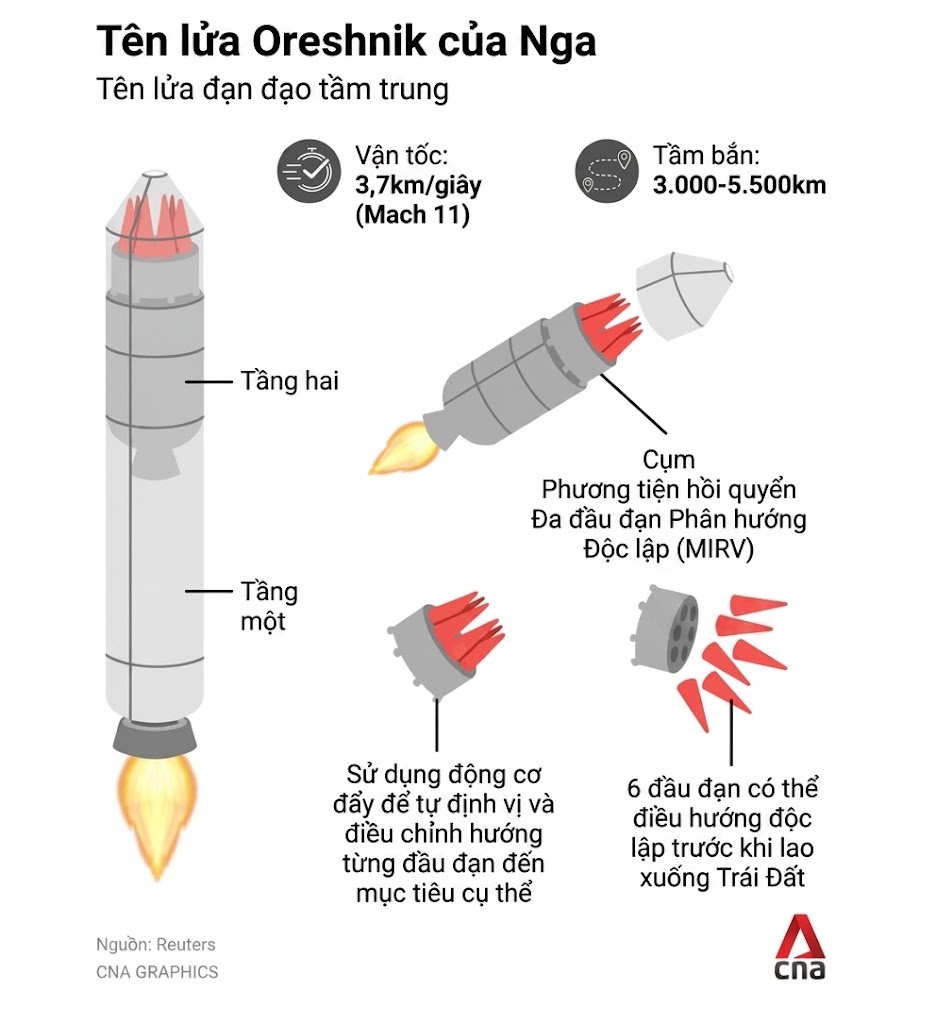 |
Ukrainian military officials have previously stated that this missile can reach a maximum speed of up to Mach 11 (approximately 13,580 km/h), which is 11 times the speed of sound.
Russian state media claimed the weapon took only 11 minutes to strike an air base in Poland and 17 minutes to reach NATO headquarters in Brussels.
According to the Kremlin, Oreshnik is a "state-of-the-art" weapon and cannot be intercepted.
Russian President Vladimir Putin once stated that the temperature generated by the missile upon impact reached 4,000 degrees Celsius. "Therefore, everything at the epicenter of the explosion was disintegrated into tiny fragments, into fundamental particles, and essentially turned into dust," he asserted.
Most alarmingly, the Oreshnik is fully capable of being configured to carry nuclear warheads.
The U.S. War Department describes Oreshnik as an "experimental" medium-range ballistic missile, believed to be developed based on Russia's RS-26 Rubezh intercontinental ballistic missile.
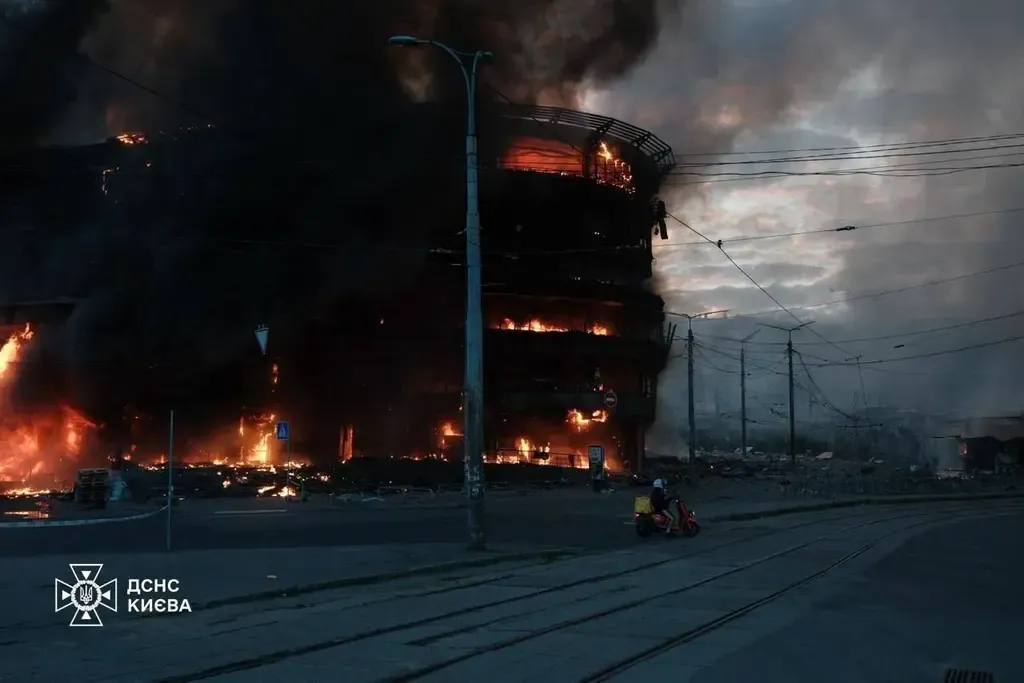 |
Thirty residential buildings in the capital Kyiv were destroyed or damaged in the attack. Photo: KI. |
The reason this weapon has such a strong deterrent effect.
Experts believe the strategic value of the Oreshnik lies in the combination of its speed, range, and warhead design.
This is a Multiple Independently Targeted Reconnaissance (MIRV) system, meaning each missile can split into multiple independent warheads to attack different targets within the same strike zone.
According to the Ukrainian side, the Oreshnik missile carries six warheads, and each warhead contains six submunitions. This means it can deliver up to 36 separate strikes to a target area, according to Dr. Nah Liang Tuang, a researcher at the S. Rajaratnam School of International Studies (RSIS).
President Putin also declared that the Oreshnik system is capable of destroying even heavily fortified underground bunkers "three, four stories or deeper," and is completely immune to any missile defense system.
Comparison with other Russian missile lines
Besides Oreshnik, Russia has also deployed the Kinzhal hypersonic ballistic missile, launched from aircraft, to strike particularly important targets.
Kinzhal's high speed (up to Mach 10) and maneuverability allowed it to evade anti-aircraft fire, although Ukraine claimed to have shot down a few. However, Oreshnik is considered even more difficult to intercept than Kinzhal.
However, some experts note that despite traveling at hypersonic speeds, this type of missile lacks the maneuverability of pure hypersonic weapons.
"Similar to other medium-range and intercontinental ballistic missiles, its warhead re-enters the atmosphere and travels towards its target at hypersonic speeds," Marcin Andrzej Piotrowski, an analyst at the Polish Institute of International Relations (PISM), stated in 2024.
"But unlike true hypersonic weapons, the Oreshnik warhead does not perform high-speed maneuvers, which is key to making it difficult for missile defense systems," he added.
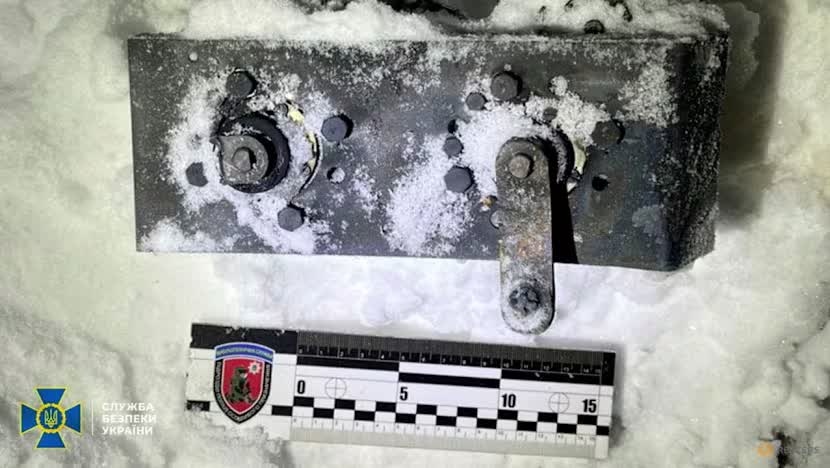 |
A piece of debris from the Oreshnik hypersonic missile system at the scene of the earlier attack. Photo: Reuters. |
The actual damage caused by Oreshnik
According to experts, in all three attacks on Ukraine so far, the Oreshnik missile has only used conventional warheads.
The first attack, which took place in Dnipro in 2024, caused negligible damage, suggesting that Russia likely only fitted dummy warheads for testing, according to CNA.
At that time, a roof was blown away and trees were consumed by flames, while locals described a "terrifying screech" and blinding flashes of light.
By January of this year, this type of missile had struck a large gas storage facility in the Lviv region of western Ukraine, according to local officials.
In Sunday's (May 24) attack, Oreshnik, in coordination with drones and other missiles, killed four people and injured around 100, with Kyiv suffering the heaviest losses. Many residential buildings, shopping centers, museums, theaters, and schools and universities were severely damaged.
A Ukrainian resident recounted how the ceiling of a subway station "collapsed" while people were evacuating underground.
Russia claims this is retaliation for previous Ukrainian attacks on "civilian facilities on Russian territory," including an attack on a student dormitory in Lugansk that killed 21 people and injured 42.
Its influence extends beyond Ukraine's borders.
Unlike most of Russia's tactical weapons on the battlefield, the Oreshnik's range covers the whole of Europe, including US military bases on the continent.
This gives Moscow the capability to threaten strategic targets without having to formally fire nuclear weapons.
At the same time, experts warn that there is no way to determine whether an incoming Oreshnik missile is carrying a nuclear or conventional warhead until it hits and explodes. This pushes the risk of misjudgment and incorrect response in escalation scenarios to a very high level.
By deploying this weapon, Moscow wants to send a message that it is ready to escalate strikes deeper into the enemy with conventional warheads that simulate nuclear-level destructive power.
This could also be a signal to force the European Union to stop intervening in or supporting Ukraine before Russia uses these missiles against them, Dr. Nah added.
Source: https://znews.vn/vi-sao-ten-lua-sieu-vuot-am-oreshnik-gay-chu-y-post1654109.html






































































































Comment (0)