

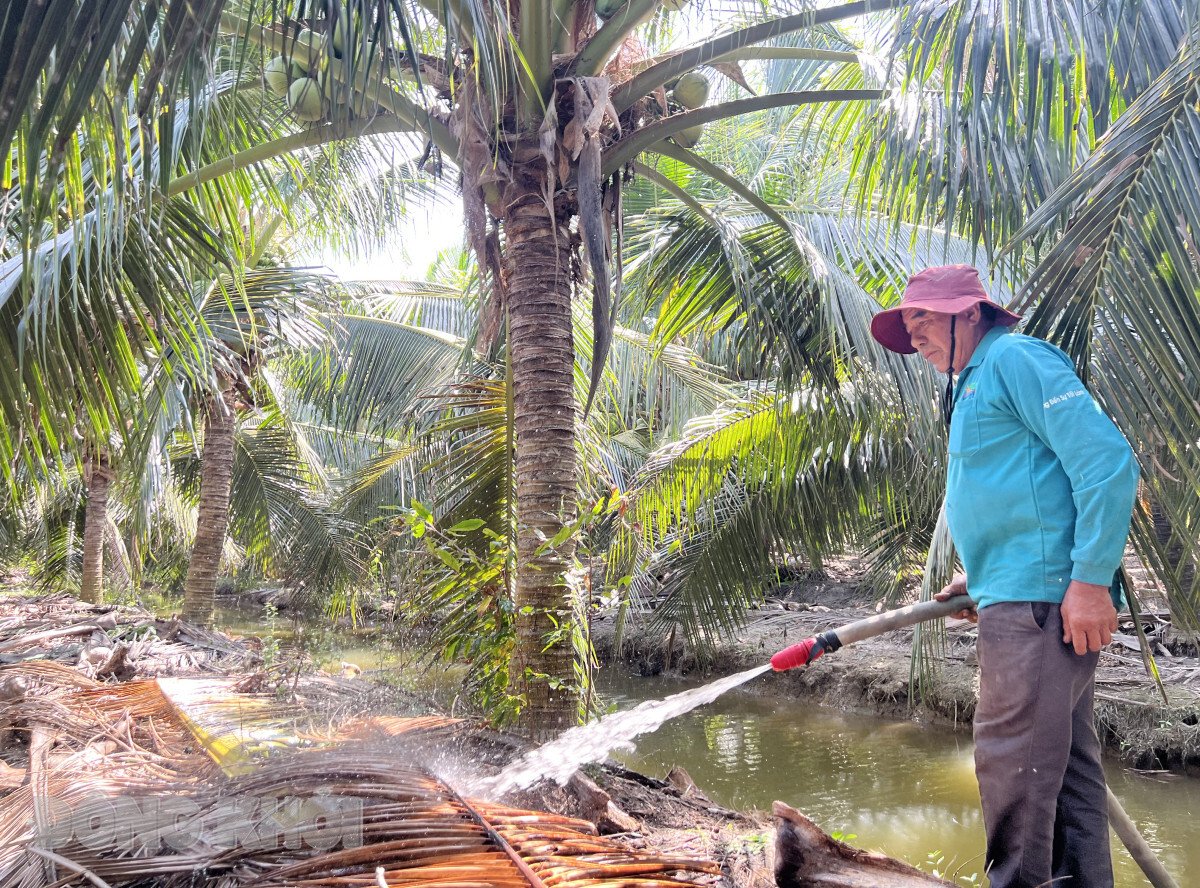
Mr. Ho Van Tu's family converted all 3 hectares of their rice paddy land to coconut cultivation.
Coconut farming provides high income.
The province has three distinct zones: saline, brackish, and freshwater. However, saltwater intrusion has recently penetrated deeper into the inland areas, prompting people to switch to more suitable crops and production methods. Many models involve converting from less efficient rice cultivation to other crops, especially coconuts, which are perfectly suited to the increasingly extreme weather conditions today.
Over the past decade or so, the weather and climate change in the province have become increasingly extreme. The worst were the dry seasons of 2016 and 2020, when droughts and saltwater intrusion damaged hundreds of hectares of rice, crops, fruit trees, and aquaculture, resulting in losses of thousands of billions of dong. Since 2016, people have gradually switched to drought- and salt-tolerant crops to adapt to the harsh climate change conditions. The fields of Phong Nam commune (Giong Trom district), once vast rice paddies, now consist of only a few plots interspersed with coconut groves in a "leopard skin" pattern due to increasingly severe saltwater intrusion, making rice cultivation unsuitable. Instead of struggling to combat drought and saltwater intrusion, many people are gradually adapting with different crops and farming methods to achieve economic efficiency.
Mr. Ho Van Tu's family, residing in Phong Phu hamlet (Phong Nam commune), has converted all 3 hectares of their rice fields to coconut cultivation after more than 40 years of rice farming. Mr. Tu recounted: “In 2016, my family suffered heavy losses due to saltwater intrusion, destroying almost all of our 3 hectares of rice. Seeing the increasingly severe drought and salinity, I gradually switched to coconut farming, starting with only 1 hectare, then gradually expanding in subsequent years, and by 2022, I had converted the entire 3 hectares of rice fields to coconut trees. In this area, 9 out of 10 households have switched to coconut farming because rice is no longer suitable due to drought and increasing saltwater intrusion into the inland areas. Meanwhile, coconut trees are very resistant to drought and salinity, so many farmers choose to plant them.” According to Mr. Tu, currently, an average profit of about 15 million VND per month from 1 hectare of Siamese coconut trees provides a relatively stable livelihood.
In An Hiep commune (Ba Tri district), Mr. Tran Van Nhin's family also converted their entire 1-hectare rice paddy land to coconut and grass cultivation for cattle farming. Mr. Nhin said: “Recently, the An Hiep commune area, being close to the sea, has been frequently affected by saltwater intrusion, causing damage to rice farmers. Therefore, in 2017, my family converted all of our land to coconut cultivation combined with grass cultivation to raise 5 cows. Thanks to the conversion to suitable crops that can withstand salinity, our livelihood has remained stable until now. This model doesn't generate high income, but it suits the current conditions of the locality, so most people have switched.”
According to statistics, Giồng Trôm district is one of the localities in the province that has converted the most from rice cultivation to coconut farming and cattle farming due to the impact of drought and salinity intrusion. Nguyen Vu Phong, Deputy Head of the Agriculture and Environment Department of Giồng Trôm district, said: “While in 2015, the entire district had about 2,800 hectares of rice, this has now decreased to around 500 hectares and is expected to continue decreasing in the future. The main reason is the increasingly severe impact of drought and salinity intrusion, leading people to switch to coconut farming, cattle farming, and other crops.”
Mango cultivation model in Thanh Phu
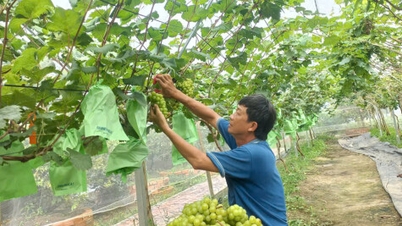
In the coastal districts of Binh Dai and Thanh Phu, people have also switched to growing four-season mangoes to suit the soil and climate conditions of the coastal sand dunes, covering an area of over 1,000 hectares. Of this, Thanh Phu district has the largest area, approximately 700 hectares, concentrated in the communes of Thanh Hai, Thanh Phong, and Giao Thanh. Mr. Mai Thanh Trien's family, in Thanh Loc hamlet (Thanh Phong commune, Thanh Phu district), has been cultivating one hectare of four-season mangoes for over a decade. Mr. Trien said: “The drought situation is becoming increasingly severe during the dry season, so my family has invested in a drip irrigation system for the entire mango area to save water, fertilizer, and labor. Many households in this coastal sand dune area have switched to mango cultivation and participated in cooperatives producing according to VietGAP standards, bringing higher economic efficiency than before.”
Currently, in Thanh Phong commune, there are over 300 hectares of land with 210 households growing Four-Season mangoes on coastal sand dunes. According to Nguyen Van Tai, Vice Chairman of the People's Committee of Thanh Phong commune: “The mango cultivation model is suitable for the local soil and climate conditions, so it is being oriented towards specialized cultivation and quality improvement. In particular, the Thanh Phong Agricultural Cooperative currently has 61 households growing mangoes on 100 hectares, producing according to VietGAP standards and having been granted planting area codes for export to markets in the US, South Korea, etc. The Four-Season mango variety is developing well in the increasingly severe climate change conditions today.”
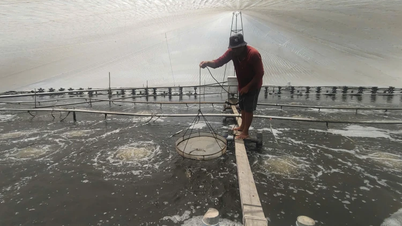
According to Phan Van Binh, Chairman of the Thạnh Phú District Farmers' Association, recently, farmers in the district have adopted many models of crop and livestock conversion to adapt to climate change, such as: switching from rice cultivation to coconut cultivation and cattle farming; from producing three rice crops per year to a rice-shrimp farming model; and planting mangoes in coastal sand dunes… This conversion helps farmers change their production methods to adapt to increasingly severe climate change.
“Currently, the province has nearly 81,000 hectares of coconut trees, with an average annual increase of about 1,000 hectares. In reality, coconut trees have a relatively high tolerance for drought and salinity, making them very suitable for the local climate change and saline intrusion conditions. To date, the area of coconut trees participating in the value chain in the province has reached over 25,000 hectares, accounting for over 30% of the province's total coconut area, with 32 cooperative groups and 30 cooperatives participating in production linkages. This includes the support of leading businesses in the coconut product chain, bringing high economic efficiency.” (Deputy Director of the Department of Agriculture and Environment, Huynh Quang Duc) |
Text and photos: Thanh Chau
Source: https://baodongkhoi.vn/chuyen-doi-cay-trong-thich-ung-bien-doi-khi-hau-26032025-a144229.html





































































Comment (0)