An inevitable step for modern cities.
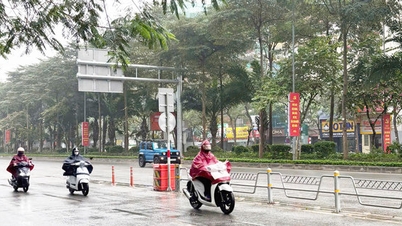
For many years, the rate of increase in private vehicles in Hanoi has been consistently high, including a large number of motorbikes and cars using internal combustion engines – one of the significant sources of PM2.5 fine dust, NOx, and CO2 emissions, directly affecting the air quality of the capital city.
In this context, establishing low-emission zones is considered a crucial solution to control pollution sources. At its fourth thematic session held on June 15th, the Hanoi City People's Council approved a Resolution on the "Low-Emission Zone within Ring Road 1" project, aiming to gradually control emissions from transportation activities, improve air quality, and promote the transition to green transportation methods in the capital city.
According to the adopted resolution, the low-emission zone will be implemented within the Beltway 1, encompassing nine wards: Hoan Kiem, Cua Nam, Ba Dinh, Giang Vo, Ngoc Ha, Hai Ba Trung, O Cho Dua, Tay Ho, and Van Mieu - Quoc Tu Giam. This area covers more than 26 km² with approximately 625,000 inhabitants and is the historical, political , administrative, cultural, and tourist center of the capital city.
The implementation roadmap is divided into three phases. Phase 1, from July 1st to December 31st, 2026, will involve a pilot program in the Old Quarter and the area surrounding Hoan Kiem Lake in Hoan Kiem Ward. During this pilot period, the city will focus on raising awareness and guiding residents to register for the conversion of personal vehicles; simultaneously, it will encourage and limit the operation of gasoline-powered motorcycles and scooters using technology-based applications in the area.


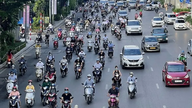
For motorcycles and motorbikes not used for commercial purposes, the city encourages restricting the circulation of motorcycles manufactured before 2008 and motorbikes manufactured before 2016; and encourages people to switch to using green vehicles, electric vehicles, or public transport.
Phase 2, from January 1st to December 31st, 2027, will expand the pilot program to cover the entire Hoan Kiem and Cua Nam wards. The city will begin implementing exhaust emission testing for motorcycles and scooters according to the government 's roadmap; strengthen control over high-emission vehicles; gradually restrict the operation of vehicles that do not meet emission standards in low-emission areas; and simultaneously improve the system of surveillance cameras, vehicle identification, data sharing, and policies to support people in switching to new vehicles.
Phase 3, from January 1, 2028 to the end of 2029, will expand the low-emission zone to the entire Ring Road 1. In addition to the measures already implemented in previous phases, the city will prohibit motorcycles and scooters using gasoline that does not meet emission standards level 3 or higher from circulating in the area.
Towards a green and sustainable capital city.
At the recent "Green Transportation Transition Day" workshop, Le Thanh Thuy, Deputy Head of the Environmental Management Department (Hanoi Department of Agriculture and Environment), stated that low-emission zones are not intended to abruptly restrict people's movement, but rather are an urban management model aimed at gradually reducing polluting vehicles and encouraging clean vehicles, public transport, walking, cycling, and other environmentally friendly modes of transportation.
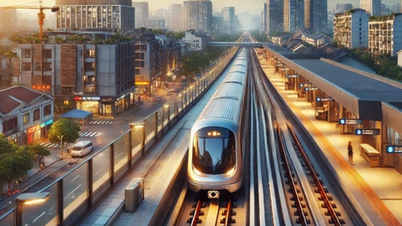
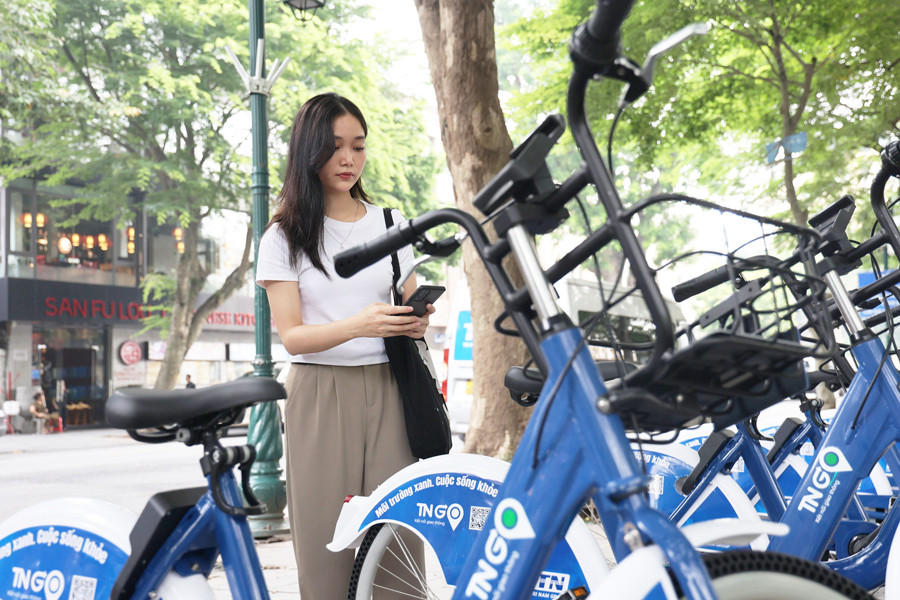
In fact, public transport is identified as a pillar of the low-emission zone. Within the Ring Road 1 area, where many streets have narrow cross-sections and high traffic density, the city is developing solutions tailored to the specific conditions, such as electric buses, minibuses, minibuses, public bicycles, parking areas, charging stations, battery swapping points, signage, and data management systems.
Based on research into practical experience from China, Dr. Pham Sy Thanh, Director of the Center for China Economic and Strategic Studies, believes that for green transition to be effective in the long term, these policies need to be implemented over a period of 15-20 years. This requires the government to have adequate financial preparation before enacting and implementing support policies. The most important non-financial tool for sustainable transition is charging station and battery swapping station infrastructure.
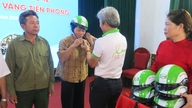

Service providers such as Grab and Be Group also suggested that the city should focus on charging infrastructure, financial support mechanisms, vehicle transition roadmaps, and technological solutions to encourage low-emission vehicles; while also strengthening the application of digital technology to prioritize low-emission vehicles, expand the proportion of electric vehicles, support people's access to green transportation services, and provide data for management purposes.
Clearly, for Hanoi, this is an opportunity to restructure its transportation system towards a modern, smart, and environmentally friendly direction. As electric vehicles, public transport, and green modes of transportation become increasingly popular, air quality will improve, urban spaces will become cleaner, and public health and the capital's attractiveness to investors and tourists will be enhanced.
Source: https://hanoimoi.vn/chuyen-doi-giao-thong-xanh-chia-khoa-hien-thuc-hoa-vung-phat-thai-thap-o-ha-noi-1208384.html
![[Image] Ho Chi Minh City: Ma Lang area, Chicken-Rice Market about to change its appearance](https://vphoto.vietnam.vn/thumb/1200x675/vietnam/resource/IMAGE/2026/06/25/1782377698627_ndo_br_m1-jpg.webp)

![[Photo] General Secretary and President To Lam receives Palestinian Ambassador Saadi Salama](https://vphoto.vietnam.vn/thumb/1200x675/vietnam/resource/IMAGE/2026/06/25/1782365384740_a1-bnd-9423-8322-jpg.webp)


![[Image] Schools organize meetings and introduce teaching models to students admitted to grade 10.](https://vphoto.vietnam.vn/thumb/1200x675/vietnam/resource/IMAGE/2026/06/25/1782368077271_ndo_br_z7970052192242-1ec8daeb77a6eed1a4e9f58c564ddd3e-jpg.webp)