

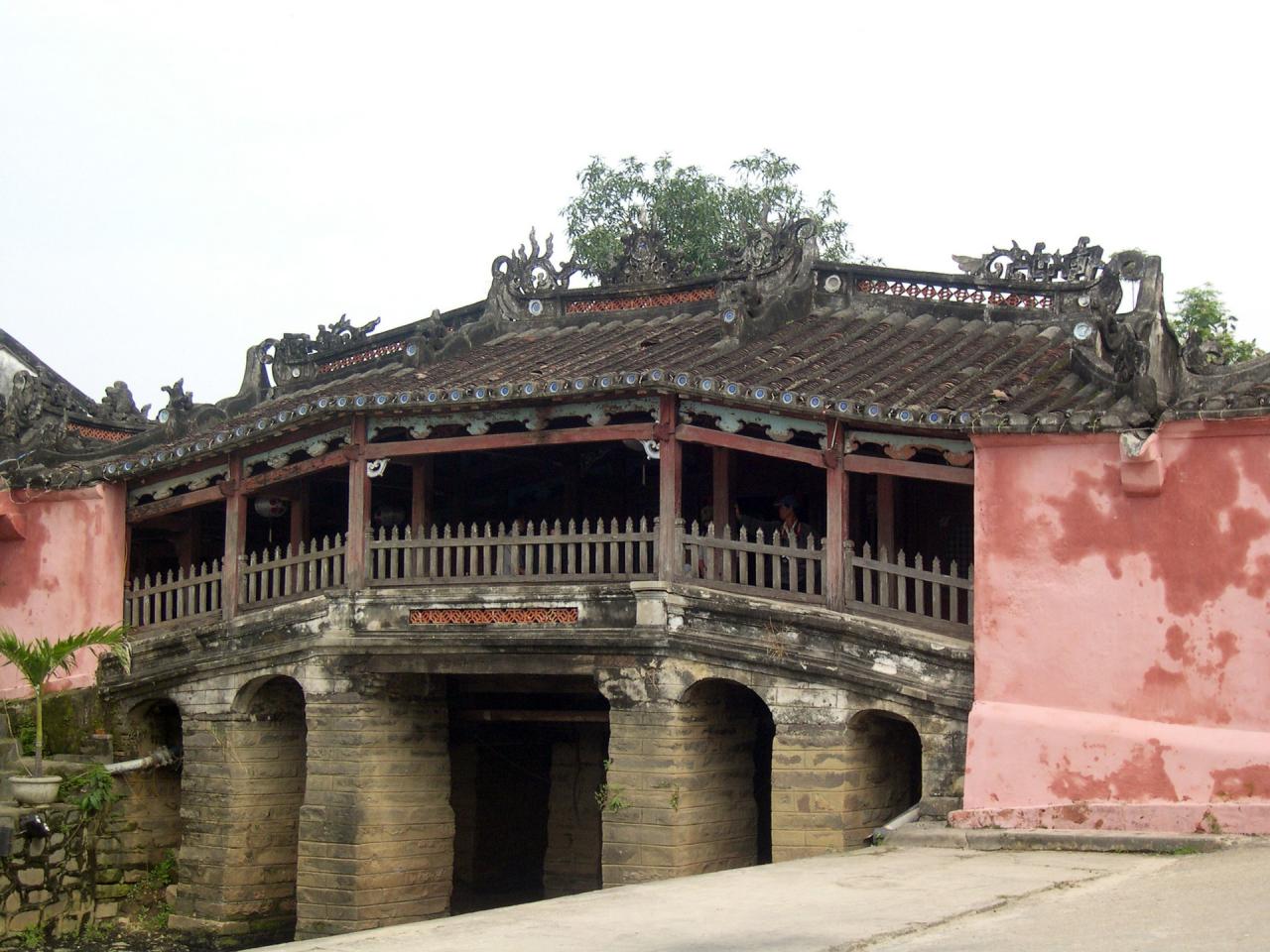
In 1990, the Japanese Bridge was recognized by the Ministry of Culture as a national historical and cultural relic. In 1999, UNESCO inscribed the ancient town of Hoi An on the World Heritage List, with the Japanese Bridge being one of the important relics that make up this world cultural heritage. The image of the Japanese Bridge is also printed on the 20,000 dong banknote in the current currency system in Vietnam.
Over its more than four centuries of existence, this architectural structure has suffered serious deterioration and damage, and has undergone seven restoration and renovation projects.
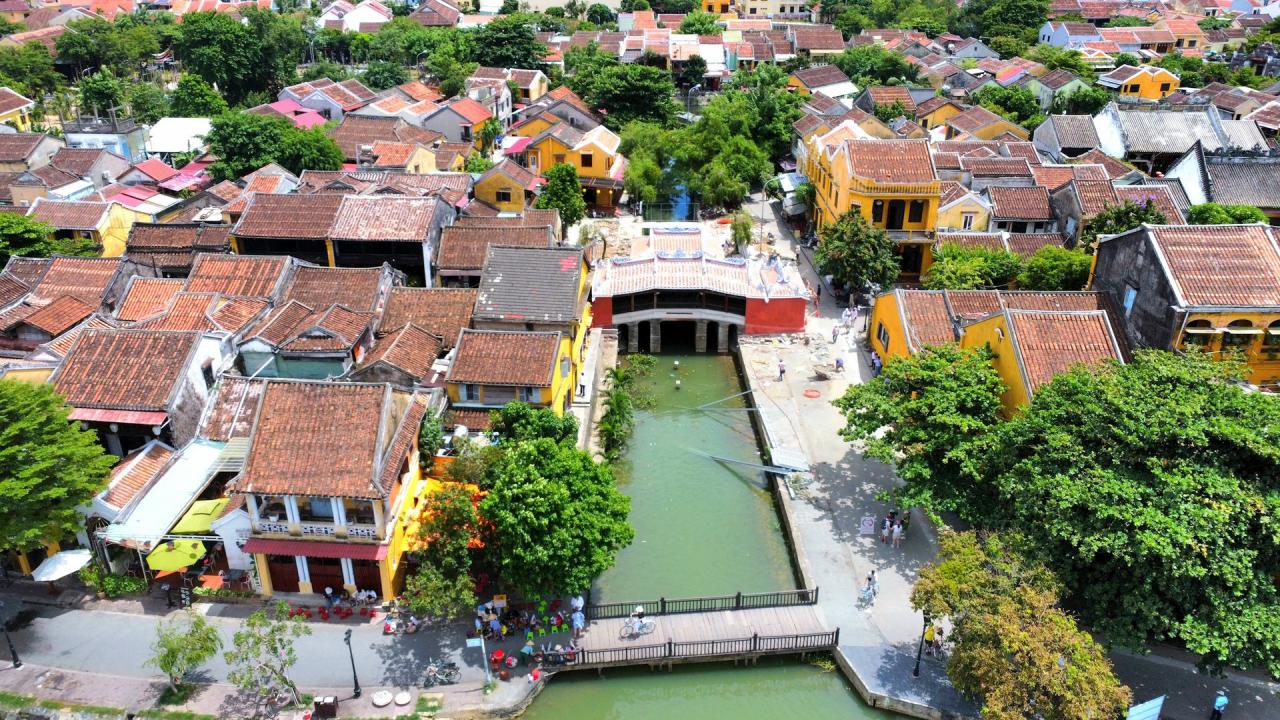
The most significant restoration project began on December 28, 2022, with a total investment of 20.2 billion VND, funded by the budgets of Hoi An City and Quang Nam Province.
According to plans, on August 3, 2024, Hoi An City will inaugurate the renovated Japanese Bridge during the 20th Vietnam-Japan Cultural Week held in Hoi An.
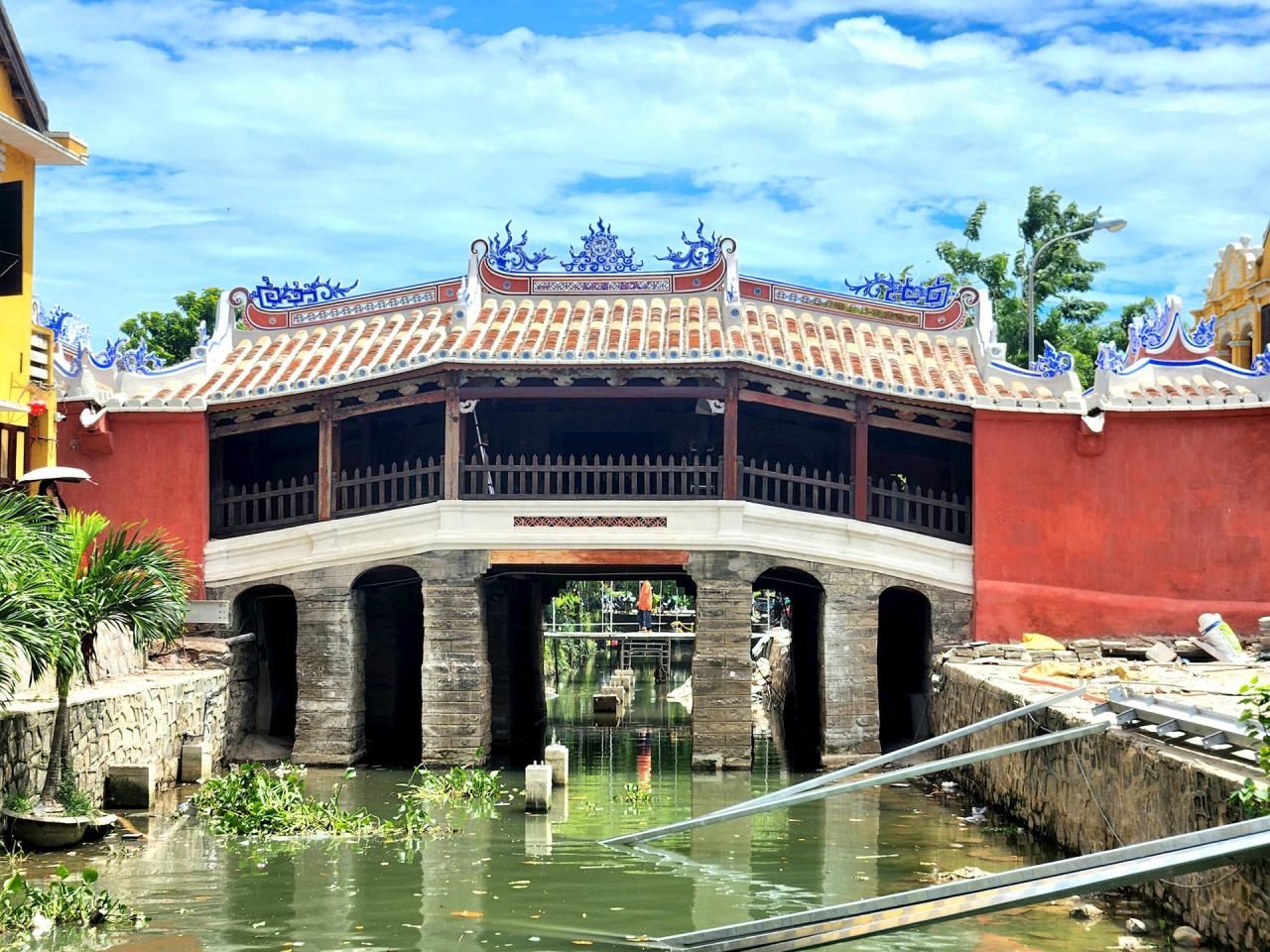
However, in the last few days of July 2024, when the protective structures used for the restoration of the Bridge Pagoda were dismantled, revealing the monument after nearly two years of extensive restoration with a "brighter" appearance than before, there were many conflicting opinions on social media and mainstream media about the Bridge Pagoda after the restoration. These opinions were mainly critical, disparaging, and mocking, claiming that the Bridge Pagoda had been restored incorrectly, had been "modernized," and that the restoration had ruined a "symbol of Hoi An," a cultural heritage of humanity...
Is restoring the Bridge Pagoda wrong?
Having worked in museum conservation in Hue for 17 years; having trained in archaeology, monument conservation, and cultural heritage management in Japan, South Korea, Germany, and France from 1997 to 2004; and having visited the Bridge Pagoda restoration site several times in 2023, as well as observing detailed images of the Bridge Pagoda before and after restoration (published in the press and on social media), I affirm that the Bridge Pagoda restoration team carried out the work systematically, scientifically , and seriously, and the restoration results are excellent, returning to Hoi An a Bridge Pagoda that is true to its original appearance and form, but more solid and sturdy.
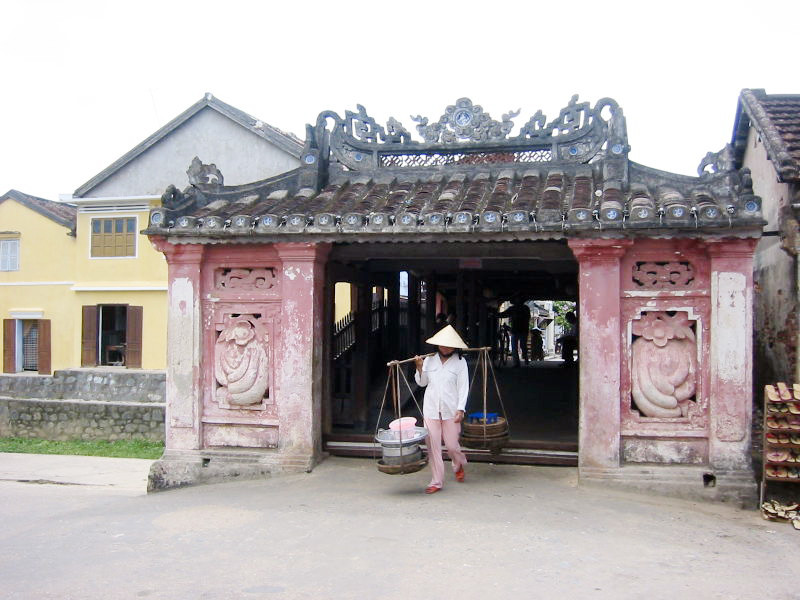
There is nothing wrong or reprehensible, as public opinion has been saying in the past few days, when comparing images of the Bridge Pagoda before and after restoration.
Why do I dare to make such a claim?
Firstly, I agree with the "dismantling and restoration" approach chosen by the Bridge Pagoda restoration project, after an expert workshop was held to evaluate and select the restoration plan for the Bridge Pagoda.
In August 2016, upon hearing the news that the Japanese Bridge would be completely dismantled for restoration, many conservation experts, architects, managers, and even leaders in Hoi An were worried about the risk of "turning a bridge over 400 years old into a bridge that is only 1 year old." However, after Hoi An organized an expert workshop and heard reports on feasible restoration options for the Japanese Bridge, including analysis and evaluation by conservation experts from Japan, the "dismantling and restoration" option was chosen.
I appreciate the choice of this option because, after more than 400 years of existence in the harsh weather conditions of Central Vietnam—scorching sun, heavy rain, and annual flooding threats—the Bridge Pagoda has deteriorated and suffered severe damage: the foundation has subsided and tilted; many wooden structures are infested with termites and rotting; the brick walls are peeling and crumbling, causing the overall structure to be somewhat deformed; the architectural structure is weakened, making it susceptible to collapse, especially during storms. Therefore, choosing the "renovation and dismantling" option to thoroughly address the foundation—adjusting, reinforcing, and strengthening it to increase its load-bearing capacity; dismantling the wooden components to replace rotten parts; replacing broken roof tiles, reinforcing the brick walls at both ends of the bridge; and replacing damaged wooden parts on the bridge deck and railings—is necessary.
If the "partial restoration" approach is chosen, it will not thoroughly address the long-standing problems of the Bridge Pagoda, unlike the six previous restorations.
"Reconstruction and dismantling" has a successful precedent.
In the Nguyen Dynasty architectural complex in the ancient capital of Hue, prior to 1998, the restoration of relics, especially those with wooden load-bearing frames and brick walls, was often carried out in stages, essentially "repairing only what was damaged." This was due to a lack of funding and the absence of suitable technical solutions for alternative restoration methods, including "dismantling and restoration." As a result, these "partial restorations" quickly deteriorated and suffered serious damage to the interior, forcing the managing authorities to create projects and request funding for further restoration.
In 1995, when the Toyota Foundation funded the restoration of Huu Tung Pagoda (the tomb of Emperor Minh Mang), they simultaneously sought a team of monument restoration experts from Nihon University (Japan), led by Professor, Doctor, Architect Shigeeda Yutaka, with the advice of master craftsman Takeshi Tanaka (a "living human treasure" of Japan) to assist the local craftsmen in restoring this monument.
The Japanese expert team recommended to the Hue Imperial City Relics Conservation Center the option of "reconstruction and dismantling," and this recommendation was approved.
After more than three years of restoration, Huu Tung Pagoda has been restored to its original form and is much more solid. Huu Tung Pagoda has become a "model" for the Hue Imperial Citadel Conservation Center to refer to and implement other restoration projects such as: Sung An Palace, Bi Dinh Pavilion, Hien Duc Gate (Minh Mang Mausoleum), Bieu Duc Palace, Hong Trach Gate (Thieu Tri Mausoleum), Ngung Hy Palace, Ta Huu Tung Pagoda (Dong Khanh Mausoleum)..., and more recently, Thai Hoa Palace (Imperial Citadel), Hoa Khiem Palace, Minh Khiem Hall (Tu Duc Mausoleum)... which are also being restored using this "dismantling and restoration" method.
How was the Bridge Pagoda restored?
Let's take a look at the statements from the leaders of Hoi An city and the restoration team that have been quoted in the press over the past few days:
- According to Mr. Nguyen Su (former Secretary of the Hoi An City Party Committee): “…In principle, regarding the restoration of the Bridge Pagoda, the unit assigned to carry out the task has made good use of usable components, meaning that all architectural parts that can still be used, such as wood, floors, railings, etc., if they maintain their original form, have been retained. Only some rotten wooden beams have been replaced. For these new wooden beams, the construction unit needs to study and process them so that they match the color of the old wood. It is even necessary to clearly engrave the date, month, and year on the new wooden beams so that future generations will know when these parts were restored…” (VTC News, July 27, 2024).
- Mr. Nguyen Van Son (Chairman of Hoi An City): “…When organizing the restoration, all wooden components, patterns, and every small detail of the monument were completely preserved. Any details, patterns, wood, or tiles that were damaged were replaced to match the old wood color, similar to the monument… The structure, internal details, and patterns were all preserved to maintain the ancient charm of the Bridge Pagoda… These things, the culmination of hundreds of years, cannot be discarded and replaced with new ones. In particular, the function of the Bridge Pagoda remains unchanged…” (Dan Viet, July 28, 2024);
- Mr. Pham Phu Ngoc (Director of the Hoi An Cultural Heritage Conservation Management Center): “…The Japanese Bridge is an important component, a typical value in the Hoi An ancient town, therefore, surveying, researching, evaluating, technical processing, adjusting the dossier, ensuring that the restoration work is carried out cautiously and systematically… The colors of the Japanese Bridge's roof decoration are restored based on some existing locations with original colors, combined with the results of research and surveys of similar traditional religious structures in Hoi An, as suggested by experts through consultations and seminars…” (Dai Doan Ket, July 28, 2024)…
The overall images of the Bridge Pagoda and detailed photos of the wooden structures inside the monument, published by the press and social media over the past two days, show that the team restoring the Bridge Pagoda has done a good job, ensuring the principles of preservation and the "authenticity" of the Bridge Pagoda monument, and there is nothing to criticize or ridicule.
What constitutes the authenticity of heritage?
According to the Nara Document on Authenticity, adopted by the UNESCO World Heritage Committee, ICCROM, and ICOMOS at the Nara Conference on Authenticity (within the framework of the International Heritage Convention) held in Nara in November 1994, “authenticity” includes the design concept, building materials, technical technology, method of use, time, space in which the heritage was formed, and its values… which are ensured during the restoration and preservation of the monuments” (Section 13 of the Nara Document on Authenticity, 1994).
During the restoration of the Bridge Pagoda, the authenticity of the monument was adhered to by the Project Management Board and the restoration team, as demonstrated in the work and restoration results I have mentioned above.
At the same time, according to Mr. Nguyen Van Son (Chairman of Hoi An City): “…When restoring the Japanese Bridge, Japan also sent experts from the JICA organization, the Japan Agency for Cultural Affairs, to advise Hoi An on restoring the Japanese Bridge to achieve a high degree of accuracy…” (Dan Viet, July 28, 2024), so the “online criticism” of “the Japanese Bridge was restored incorrectly, modernized, rejuvenated…” by people without expertise, lacking good intentions and following social media trends… is inappropriate.
Epilogue
During my two-year training program in Japan from 1997 to 1998, I was assigned by the Shimaneken Kokudai Bunka Senta (Shimane Prefecture Center for Ancient Culture Studies) to conduct research and practical training at various archaeological excavation and restoration sites in Shimane, Osaka, and Nara. In particular, I was assigned to closely monitor the team of experts restoring the Suzakumon (Vermilion Gate), the main southern gate of Heijo-kyo (Heisei-kyo) in the ancient capital of Nara.
It was a two-story wooden structure, but it was completely destroyed by time and the wars of the Middle Ages (18th-16th centuries). The Japanese discovered the ruins in 1918 and began the research process to restore it.
In 1993, the Japanese decided to restore (fukugen) the ruins of Suzakakumon.
It was extremely difficult to determine the exact appearance of Suzakumon because no structural traces remained. However, based on historical records and archaeological findings, the Nara National Institute for Cultural Heritage Research (Nabuken) proposed a hypothetical model, based on similar architecture elsewhere, and sought public opinion from conservationists, historians, architects, and the public in Nara, Tokyo, Osaka, Kyoto, and other locations. Subsequently, a restoration project for the Suzakumon ruins was finalized with a total budget of 3.6 billion yen (approximately 360 billion Vietnamese dong at the time). After more than five years of work, the Suzakumon site has now been reconstructed to its original form.
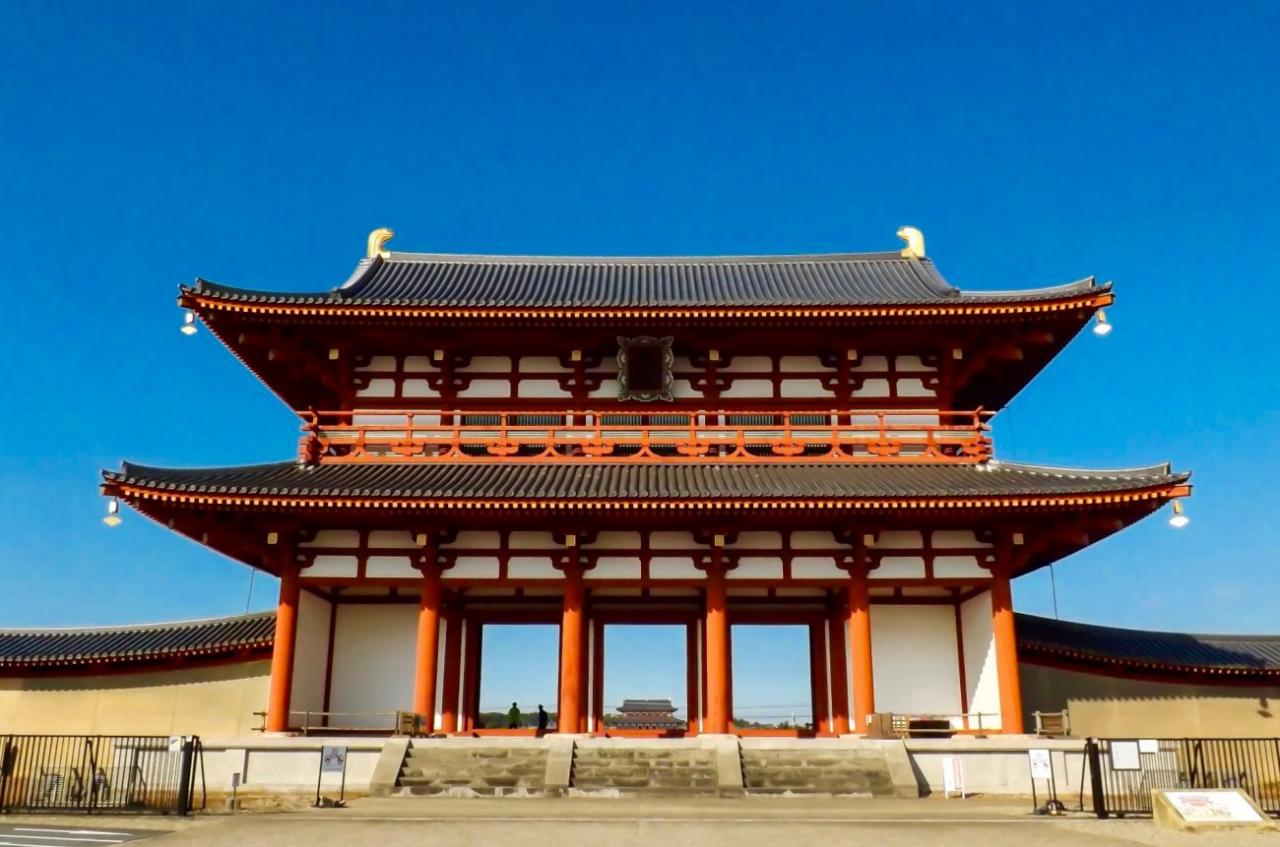
It's worth noting that after restoration, Suzakumon is recreated with vibrant and magnificent colors, and no one has criticized it by saying, "The 1,200-year-old Suzakumon monument looks like it's only one year old."
The Nara Document on Authenticity (1994) introduced the concept of "Constituent Values of Heritage" in Section 6 (Diversity of Cultural Heritage Existing Over Time and Space) and Section 9 (Form and Design, Materials and Substances, Methods of Use and Function, Traditions and Techniques, Location and Setting, Spirit and Feelings, and Other Internal and External Elements). Accordingly, cultural heritage possesses values originating from the community that produced it, inherited and developed, not immutable, but preserved by the community based on authenticity and maintained and affirmed by the community.
The seemingly new colors of the Bridge Pagoda after restoration will fade after just a few seasons of rain and sunshine. What is important is that the core values of the Bridge Pagoda—historical values, cultural values, artistic values, emotional values, and long-term usage values—will remain with the community, the nation, and humanity; they will not be lost.
So what's all the fuss about regarding the Bridge Pagoda after its restoration?
Source: https://baoquangnam.vn/trung-tu-chua-cau-co-gi-ma-phai-xon-xao-3138685.html


![OCOP during Tet season: [Part 3] Ultra-thin rice paper takes off.](/_next/image?url=https%3A%2F%2Fvphoto.vietnam.vn%2Fthumb%2F402x226%2Fvietnam%2Fresource%2FIMAGE%2F2026%2F01%2F28%2F1769562783429_004-194121_651-081010.jpeg&w=3840&q=75)






Comment (0)