

My child frequently skips meals and then compensates by drinking milk. Is this adequate nutrition? How should we give him milk, and should we use plant-based milk? (Hai Ha, 34 years old, Hanoi ).
Reply:
Milk is a food rich in various nutrients, containing three main energy components: carbohydrates, protein, and fat. It also contains water, vitamins, and other minerals and trace elements, including calcium for bones. Milk is easy to swallow in liquid form, easily digested and absorbed by the body, and helps increase height, making it very important for children.
For infants under 6 months old, milk is the sole and complete source of nutrition. For children who have started solid foods and are older, milk is still necessary, but they need a significant amount of energy and nutrients from solid foods to ensure adequate nutrition. Milk only plays a limited role in the daily diet of older children. If children only drink milk to survive, they risk energy deficiency, low weight, increased susceptibility to infections, iron deficiency, anemia causing paleness, fatigue, lack of concentration, irritability, etc.
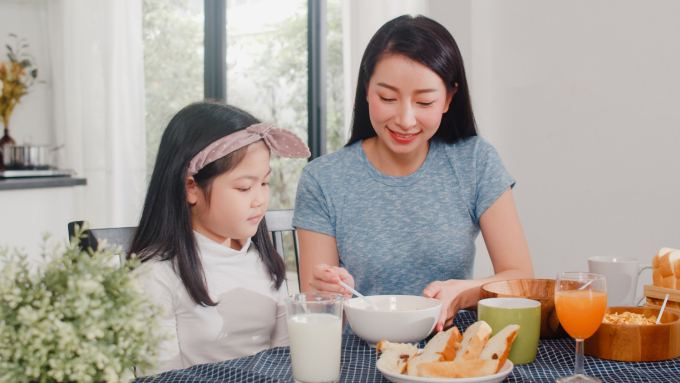
Families should provide children with foods and milk to supplement their calcium intake. Photo: Freepik
If a child occasionally skips meals or eats poorly due to illness, parents can compensate for the missed meals with milk. However, if a child skips meals entirely and only drinks milk, they would need to consume a large amount of milk to match the amount of solid food, and this method cannot be sustained for a long time. For example, a small bowl of porridge (250 ml) with sufficient nutrients provides approximately 300-350 kcal, a medium-sized bowl of white rice provides 200 kcal, while 250 ml of milk only provides 160-180 kcal.
Therefore, if a child skips a meal, the family needs to find out the reason in order to address it. The child may have an illness, mouth ulcers causing pain when eating, fever, cough, or vomiting; the food may not be suitable for their chewing ability; or it could be too salty, smelly, or sour, etc.
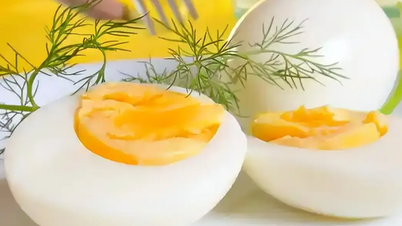
If the time between meals is less than two hours and the child still feels full, parents should wait until the child is hungry before feeding them. Parents should encourage the child to eat extra biscuits, eggs, potatoes, or yogurt after meals, then supplement with milk. Alternatively, the family can wait two hours after meals, have the milk as a snack, and eat it with biscuits for a more balanced diet. If the child refuses to eat for an extended period, the family should take them to see a doctor to find out the cause and receive timely treatment.
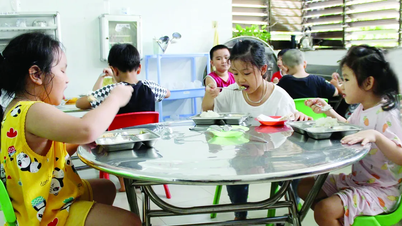
At the same time, parents need to develop good eating habits in children instead of just focusing on whether they are full or hungry. For example, parents should let children eat with adults to practice eating habits and food choices, and avoid letting children eat while watching TV or cartoons .
Families should not completely eliminate milk from a child's daily diet, forcing them to eat other foods. Children over 6 months old need at least 500 ml of milk per day. Other dairy products such as yogurt, cheese, custard (caramel), and cream can also partially replace milk by an equivalent volume.
Children over 1 year old can consume pasteurized or UHT milk (cow's or goat's milk), or whole milk powder. Whole milk helps children under 6 years old receive sufficient nutrients and fats for brain development. Children over 6 years old can use low-fat or skim milk to prevent overweight and obesity in children at risk of rapid weight gain due to excessive milk consumption.
Regarding plant-based milk, some types have protein, sugar, and fat content similar to cow's milk, but the calcium content is often low. Plant-based milk is only for nutritional supplementation and not for raising a child; it should be consumed alternately with cow's milk to avoid calcium deficiency and stunted growth.
Dr. Dao Thi Yen Thuy
Head of the Department of Dietetics and Nutrition,
Tam Anh General Hospital, Ho Chi Minh City
Source link
![[Photo] My Son at night: A thousand-year-old heritage site amidst the Milky Way](https://vphoto.vietnam.vn/thumb/1200x675/vietnam/resource/IMAGE/2026/04/15/1776261039184_ndo_br_chon6-jpg.webp)
![[Photo] Mrs. Ngo Phuong Ly meets and exchanges views with Mrs. Peng Li Yuan](https://vphoto.vietnam.vn/thumb/1200x675/vietnam/resource/IMAGE/2026/04/16/1776277858080_phu-nhan-1-jpg.webp)
![[Photo] The General Secretary, President and his wife meet with Vietnamese-Chinese friendship leaders.](https://vphoto.vietnam.vn/thumb/1200x675/vietnam/resource/IMAGE/2026/04/15/1776264829725_vna-potal-tong-bi-thu-chu-tich-nuoc-to-lam-gap-mat-nhan-sy-huu-nghi-viet-nam-trung-quoc-8703641-3130-jpg.webp)
![[Photo] National Assembly Chairman Tran Thanh Man arrives in Türkiye to attend IPU-152](https://vphoto.vietnam.vn/thumb/1200x675/vietnam/resource/IMAGE/2026/04/15/1776261003665_tnk10-jpg.webp)
![[Photo] National Assembly Chairman Tran Thanh Man attends the opening session of IPU-152](https://vphoto.vietnam.vn/thumb/1200x675/vietnam/resource/IMAGE/2026/04/16/1776277863731_ctqh5-jpg.webp)



























































Comment (0)