

According to a UNESCO analysis, more than 3 million ships are "resting" at the bottom of the world 's oceans, yet to be discovered.
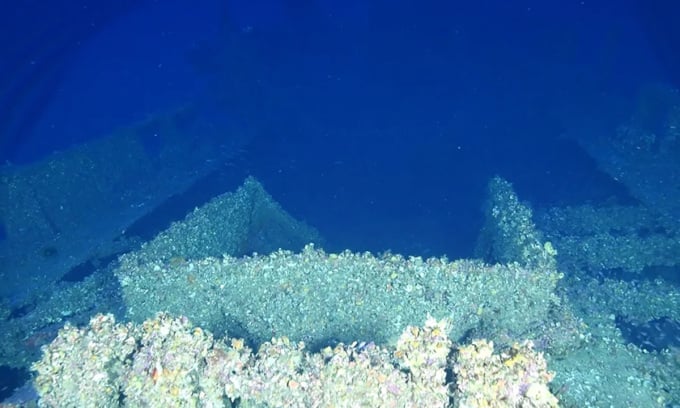
One of three shipwrecks at Skerki Bank, Tunisia. Photo: UNESCO/Drassm
Using a multi-beam sonar system and underwater robots, a team of UNESCO scientists mapped the seabed of Skerki Bank, a coral reef connecting the eastern and western Mediterranean. Last week, they announced the discovery of three shipwrecks dating from the 1st century BC, the 2nd century, and the 19th or 20th century, BBC reported on June 12.
Human activity has taken place in Skerki Bank for thousands of years, and hundreds of ships have sunk during this time. UNESCO also estimates that many more undiscovered shipwrecks remain hidden beneath the waves of the world's oceans.
The oldest known wooden boat, dating back over 10,000 years, was discovered by chance during highway construction in the Netherlands. However, it's possible that boats existed much earlier, as humans had already reached the other side of vast bodies of water. Scientists believe that around 50,000 years ago, a group of hunter-gatherers from Southeast Asia traversed a chain of islands hundreds of kilometers long, as the first Australian Aboriginal people soon appeared at Lake Mungo in New South Wales.
Wherever there were voyages across the sea, there were shipwrecks. Today, the world's oceans are filled with fragments of merchant ships, warships, and exploration vessels from thousands of years ago. Among them are pirate ships laden with silver, cargo ships along the Maritime Silk Road, luxurious royal ships that disappeared with future kings, ancient fishing vessels, modern submarines and destroyers, 19th-century whaling ships, and even giant passenger ships like the Titanic.
Like timepieces, they attract great interest from archaeologists and provide museums around the world with a wealth of valuable artifacts, such as the mysterious astronomical clock from Antikythera, which some experts consider to be the oldest known computer.
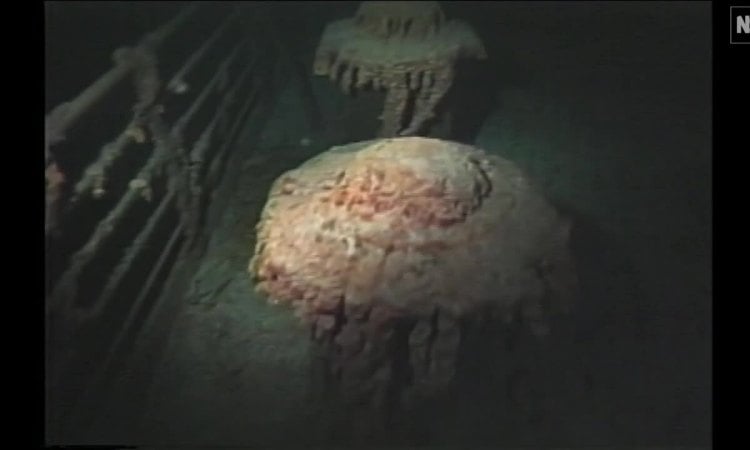
The wreck of the Titanic lies at the bottom of the Atlantic Ocean. Video : WHOI
There are many databases of shipwrecks around the world, each with slightly different estimates of the number of discovered wrecks. The Wrecksite website lists 209,640 sunken vessels, of which 179,110 have been located. The Global Maritime Wrecks Database (GMWD) contains records of over 250,000 wrecks, many of which remain undiscovered.
According to one estimate, around 15,000 ships sank during World War II alone. Many warships and liquid cargo ships lie scattered from the Pacific to the Atlantic, gradually decomposing and leaking oil, chemicals, and heavy metals into the surrounding environment.
Experts believe that recorded shipwrecks represent only a small fraction of the actual number. According to a UNESCO analysis, more than 3 million ships lie undiscovered beneath the world's oceans.
Shipwrecks are not evenly distributed. There are several "hot spots"—maritime graveyards—along popular or dangerous shipping routes. Skerki Bank is one such graveyard, as are the Fourni Islands, also in the Mediterranean. To date, 58 ships have been found there, including 23 in just 22 days in 2015.
Previously, many shipwrecks were discovered in relatively shallow waters, sometimes by chance – when fishermen, scientists, or treasure hunters explored the surrounding seas. But now, with sophisticated submersibles, modern cameras, and new sonar technology, finding shipwrecks deep beneath the sea has become much easier. They are gradually revealing more fascinating information about human life in the past.
Thu Thao (According to BBC )
Source link

![[Image] Shipbuilders exposed to steel and record-breaking heat.](https://vphoto.vietnam.vn/thumb/1200x675/vietnam/resource/IMAGE/2026/06/04/1780545781745_ndo_br_img-5402-4683-jpg.webp)
























































![[Video] Sunset at Lap An Lagoon – Where the sun sets over the fishing nets](https://vphoto.vietnam.vn/thumb/1200x675/vietnam/resource/IMAGE/2026/05/31/1780192137701_beach-landscape-sea-water-nature-grass-745871-pxhere-com.jpeg)


















![[INFOGRAPHICS] Sustainable Business Support Program (2026 – 2030)](https://vphoto.vietnam.vn/thumb/402x226/vietnam/resource/IMAGE/2026/06/04/1780552996067_1780552915.webp)





















Comment (0)