

Accordingly, in ancient times, Khanh An commune included communes of U Minh district and most of Tran Van Thoi district today. That is, from the right bank of the Trem Trem River and the right bank of the Ong Doc River, running along the coast from the mouth of the Ong Doc River to Tieu Dua, bordering Kien Giang province.
According to the land register of Southern Vietnam (1836), Khánh An was one of 12 villages in Quản Xuyên commune, Long Xuyên district, Hà Tiên province. By 1910, Khánh An was one of 9 villages (Tân Hưng, Phong Lạc, Khánh An, Tân Duyệt, Tân Thuận, Hưng Mỹ, Thạnh Phú, Tân Ân, Viên An) in Quản Xuyên commune, Cà Mau district, Bạc Liêu province. Khánh An was formed by merging two villages, Tân Khánh and Lâm An.

A national-scale gas-electricity-fertilizer industrial complex is being built in Khanh An commune, U Minh district. Photo: HUYNH LAM
Around 1932, Khanh An village was divided into three villages: Khanh An, Khanh Lam, and Khanh Binh. The boundaries of Khanh An commune extended from Cay Kho canal to Rach Gieng canal. In May 1950, the Bac Lieu Provincial Resistance Administrative Committee decided to establish Tran Van Thoi district, comprising 12 communes: Khanh Binh, Tran Hoi, Khanh Hung, Khanh An, Nguyen Phich, Khanh Lam, Phong Lac, An Binh, Phu Hung, Phu My, Hung My, and Tan Hung My; Khanh An belonged to Tran Van Thoi district. In October 1956, the Saigon government established An Xuyen province, comprising 6 districts: Quan Long, Thoi Binh, Song Ong Doc, Dam Doi, Cai Nuoc, and Nam Can; Khanh An commune belonged to Thoi Binh district.
On the revolutionary side, during the early period of the war against the US to save the country, the two communes of Khánh An and Nguyễn Phích were merged and called Hai Khánh commune, belonging to Trần Văn Thời district (codename Mười Tế district), which had 5 communes: Khánh Bình Đông (Bảy Điền), Khánh Bình Tây (Tám Biển), Phong Lạc, Khánh An (Hai Khánh), and Khánh Lâm.
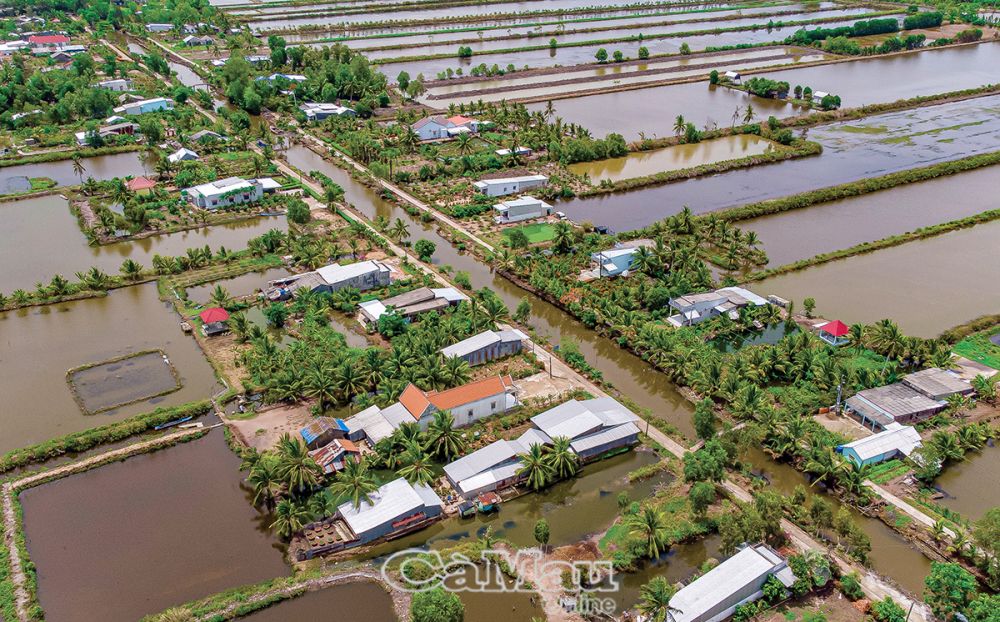
Shrimp farming area in Khanh Lam commune, U Minh district. Photo: NHAT MINH
In 1960, Tran Van Thoi district was divided into 9 communes: Khanh An (Hai Kha), Nguyen Phich (Hai Phich), Khanh Lam, Khanh Binh, Tran Hoi, Khanh Hung A (Tam Bien), Khanh Hung B (Chin Hon), Phong Lac, and Loi An. On May 20, 1979, U Minh district was officially established, separated from Thoi Binh district, comprising 3 communes: Khanh An, Nguyen Phich, and Khanh Lam. In July 1979, Khanh An commune was divided into 4 communes: Khanh Minh, Khanh An, Khanh Hiep, and Khanh Thoi. Khanh Thoi commune was transferred to Thoi Binh district. In May 1991, Khanh An and Khanh Hiep communes merged to form Khanh An commune, and Khanh Minh commune merged with Nguyen Phich commune...
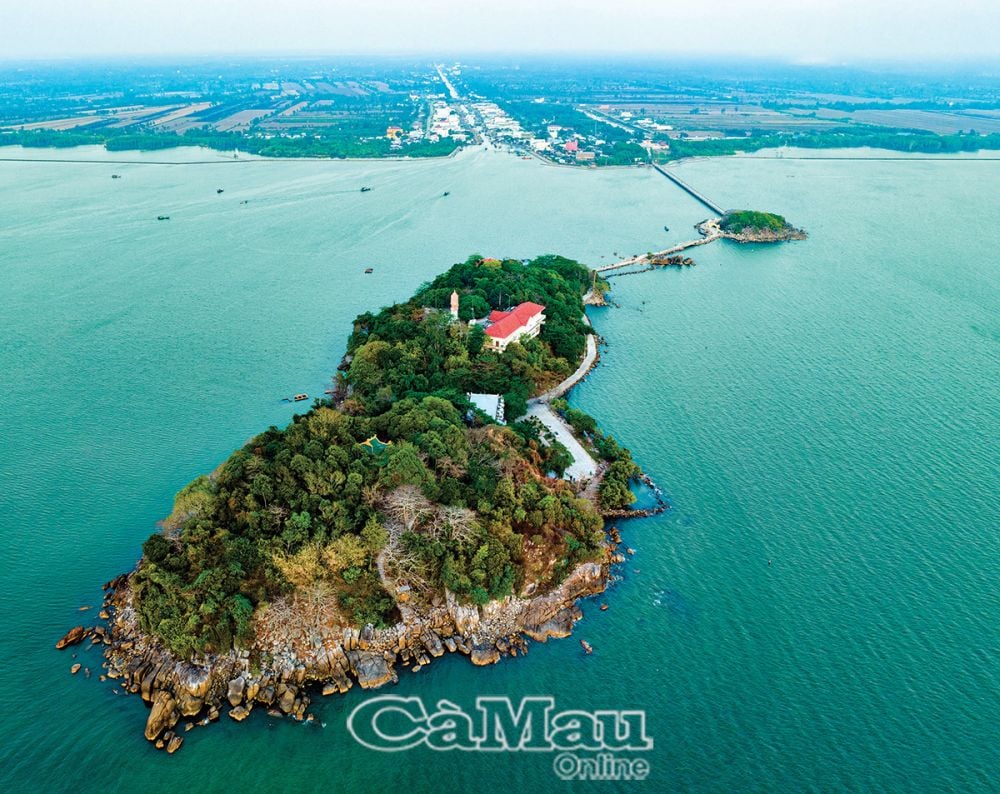
Hon Da Bac (Silver Rock Island) is located in Khanh Binh Tay commune, Tran Van Thoi district. Photo: HUYNH LAM
This is perhaps the most convincing explanation for why 13 out of 21 administrative units in the two districts of U Minh and Tran Van Thoi have the word "Khanh" at the beginning of their names.
Through Mr. Sau Son's sharing, I not only gained clarity on the origins of the word "Khanh," but also a deeper understanding of the heroic revolutionary struggle and the path of homeland reconstruction in Khanh An since liberation. The most significant period in Khanh An's history is the one from 1955-1975, when the US and its puppets violated the Geneva Accords, implementing the most brutal war strategies to suppress the revolutionary movement there. However, the Party Committee and the people and army of Khanh An, united in their resolve, upheld the slogan: "Not an inch will be given up, not a millimeter will be surrendered"... with their forest villages, their self-made weapons, their "two legs - three prongs" strategy, their people's guerrilla warfare, and their unwavering will. Many times they captured enemy outposts without firing a single bullet, achieving great victories. Khanh An forest villages were the starting point of the forest village movement in the province, the place where armed forces at all levels were built, and where people rose up to destroy the enemy.
B52 bombings and chemical weapons destroyed villages, and the enemy launched four "U Minh Weed Eradication" campaigns, leaving villages desolate and barren. Yet, the village guerrilla team, along with various departments, organizations, and associations in Khanh An, survived and grew stronger, continuously charging forward to fight the enemy and liberate their homeland.
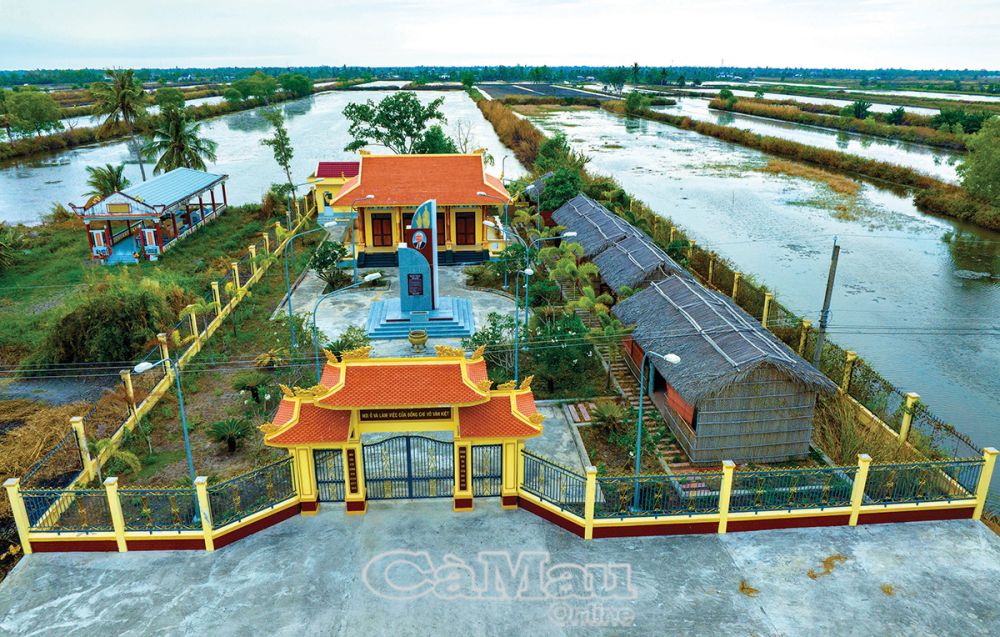
The historical site of Comrade Vo Van Kiet's residence and workplace is located in Khanh Hoa commune, U Minh district. Photo: HUYNH LAM
With that victory, the Party Committee and the people and army of Khanh An were honored to receive high honors from the Party and State such as: the Third-Class Military Merit Order, the First-Class Resistance Order, the First-Class Liberation Order... On January 29, 1996, the President of the Socialist Republic of Vietnam decided to award the title of Hero of the People's Armed Forces to the Party Committee and the people and army of Khanh An for "having achieved exceptionally outstanding results in the resistance war against the US to save the country".
Building upon that indomitable spirit, the Party Committee and the people and military of Khanh An continue to enrich the glorious history of their homeland with many achievements in socio-economic development during the period of reform and integration with the province and the whole country. Khanh An today is in the final stages of achieving advanced new rural development by 2025.
Mr. Ngo Thanh Phong, Chairman of the People's Committee of Khanh An commune, happily shared that although the commune is still lacking in rural transportation criteria to meet the 19 criteria in the Advanced New Rural Development Criteria, it can be said that the commune's transportation infrastructure is receiving significant investment, with 56 km of asphalt and concrete roads accommodating four-wheeled vehicles, and over 103 km of inter-hamlet roads currently in place. Furthermore, the commune has completely eradicated poverty in 7 out of 18 hamlets; the remaining 11 hamlets only have 31 poor households, meaning the poverty rate is only about 0.6%. The average per capita income of the commune is projected to reach 78 million VND in 2024.
Witnessing the face of this area firsthand, from the commune's People's Committee along the paved road 23, I turned onto the T19 road running along Hamlet 13 and Hamlet 14, where I saw sturdy, spacious houses. According to Mr. Quach Minh Hoa, Head of Hamlet 14, more than 80% of the residents in the hamlet have built solid houses like these... Currently, many communes beginning with the word "Khanh" in the two districts of U Minh and Tran Van Thoi are changing every day, contributing to the province's continued achievements in the new era.
Nguyen Phu
Source: https://baocamau.vn/coi-nguon-xu-khanh-xua--a36643.html










![[BMHP Episode 32]: Dung sets a trap to shake off the detective, Minh secretly sacrifices himself but is still misunderstood by his wife.](https://vphoto.vietnam.vn/thumb/402x226/vietnam/resource/IMAGE/2026/04/18/1776490183743_bvl_2_20260418111705.jpeg)

























































Comment (0)