


Hang Dao Street, also known as the "Silk Road," is only 260 meters long (from Hang Ngang Street to Dong Kinh Nghia Thuc Square) and is one of the oldest and busiest streets in Hanoi .
In the 15th century, people from Dan Loan village (now in Hai Duong province) came to live here and established Hoa Loc market, specializing in dyeing and trading silk fabrics. (Currently, at 90A Hang Dao Street is Hoa Loc Thi communal house, dedicated to the founders of the dyeing profession, established by seven clans from the old Dan Loan village who came here to work in the dyeing trade).
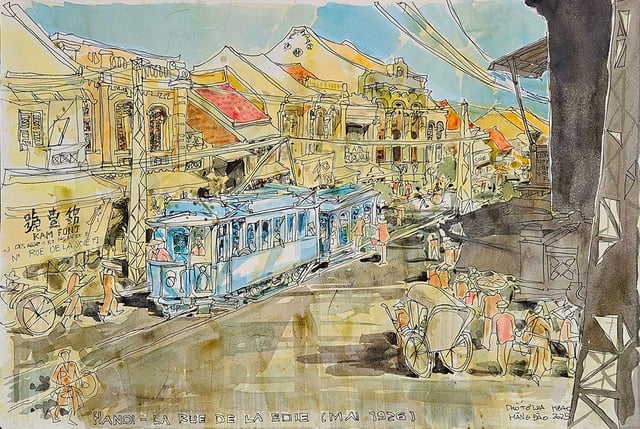
Silk Street in 1926 - sketch based on archival photos by architect Bui Hoang Bao
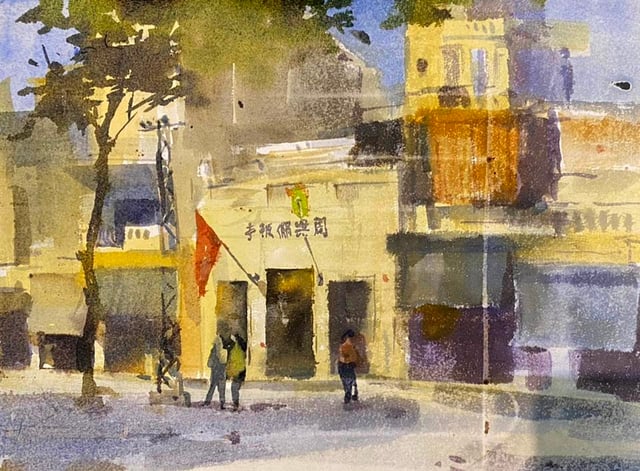
Dong Lac Temple - a sketch by architect Nguyen Khanh Vu.
Some documents suggest that the name Hang Dao (Peach Blossom Street) originated from their specialization in dyeing red and pink (peach blossom color). Nguyen Trai's 15th-century geographical treatise also records "Hang Dao ward dyes cashew nuts" (cashew nuts have pink flowers and red seeds used for dyeing). At that time, Hang Dao Street became the silk center of Thang Long (Hanoi).
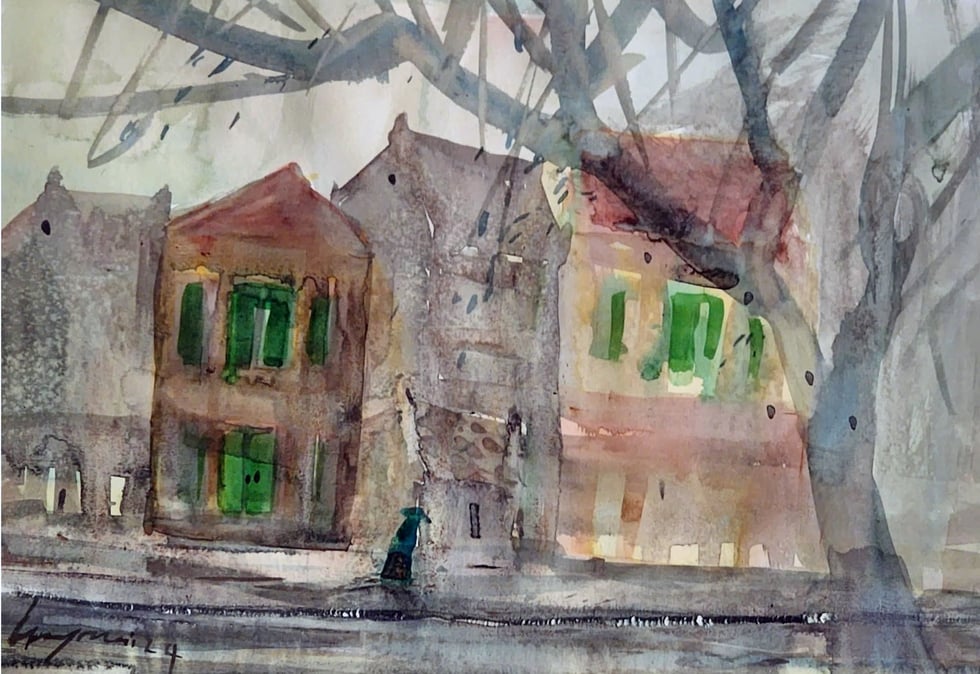
Walking Alone Through the Street in the Afternoon - a painting by architect Phung The Huy
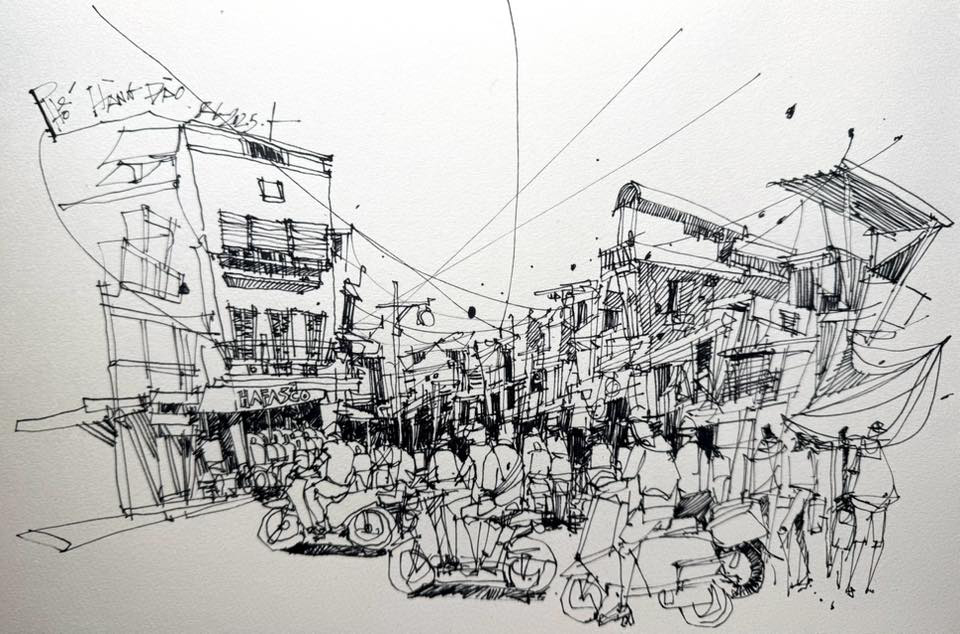
Street corner - a sketch by artist Ngoc Nguyen

Street corner - a sketch by artist Ngoc Nguyen
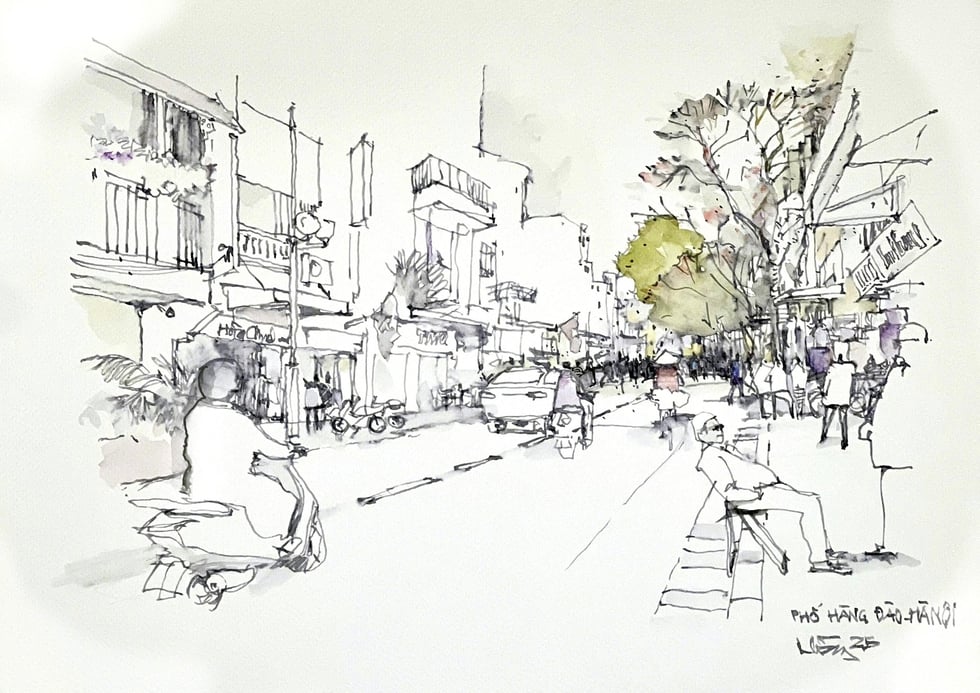
Winter arrives on Hang Dao Street - a sketch by architect Tran Xuan Hong.
At the beginning of the 20th century, this street was renamed Rue de la Soie (Silk Street). The tram line from Hoan Kiem Lake to Hang Dau Street also ran through this street. In 1945, the street was renamed back to its original name, Hang Dao Street.
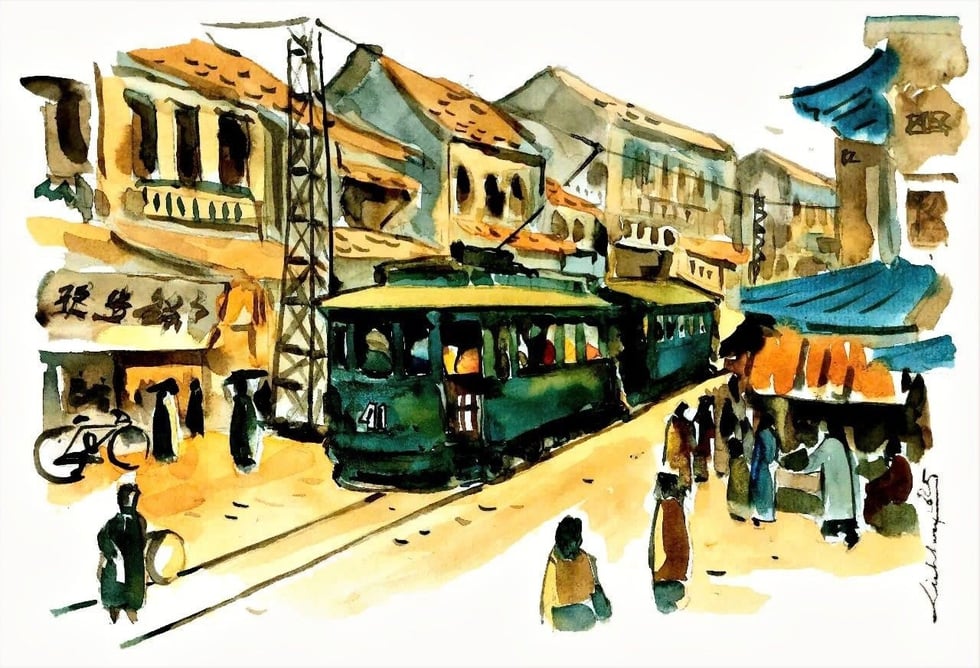
Trams on Hang Dao Street in the early 20th century - a sketch based on archival photos by architect Linh Hoang.

No. 19 Hang Dao Street - sketch by architect Bui Quan
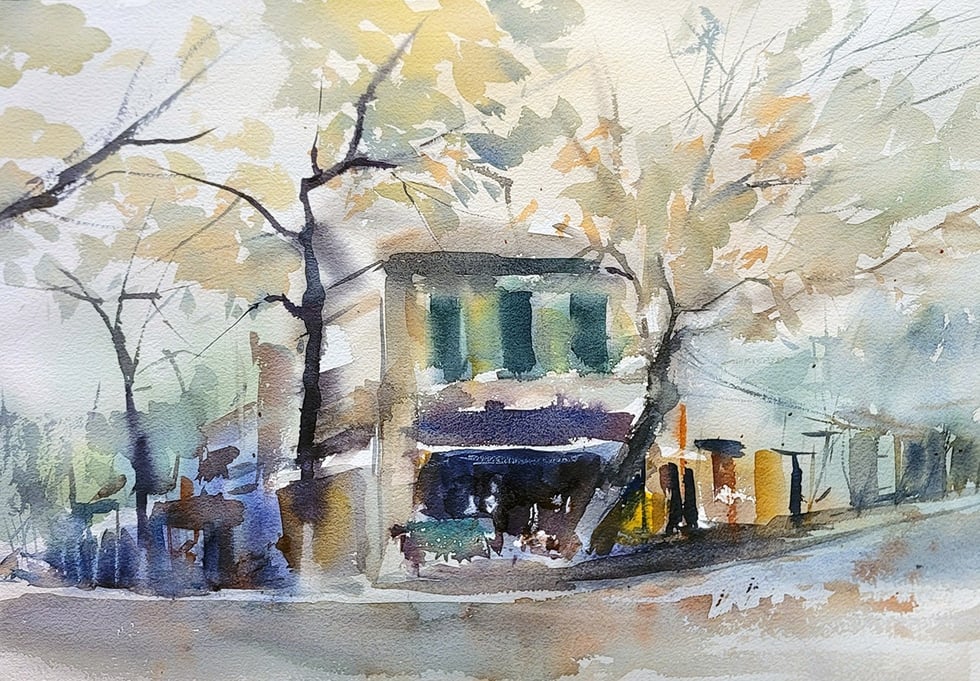
Small street - sketch by architect Hoang Dung
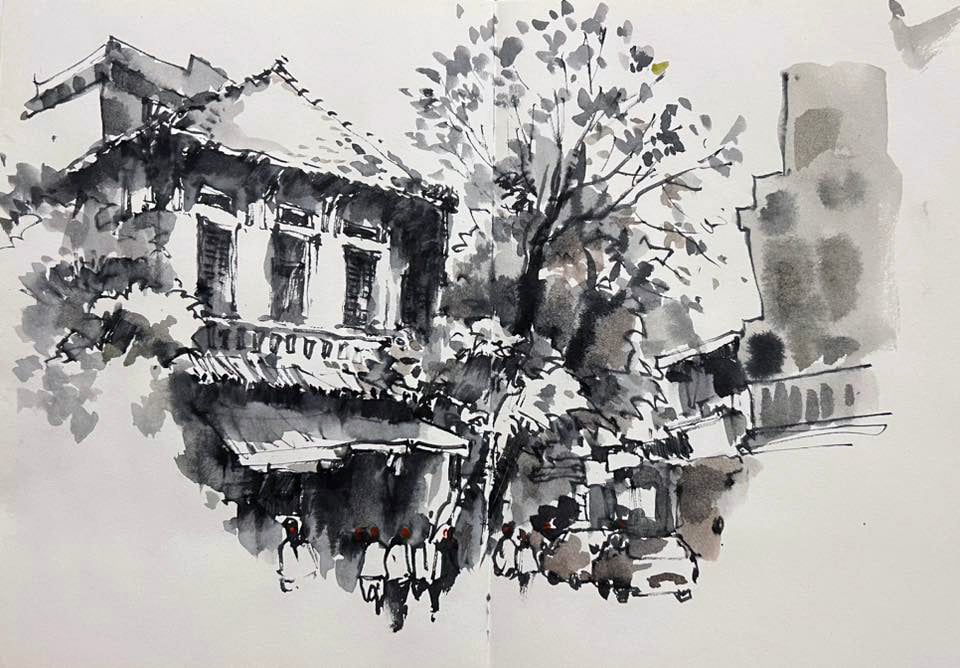
Hang Dao Street - a sketch by architect Phan Dinh Trung
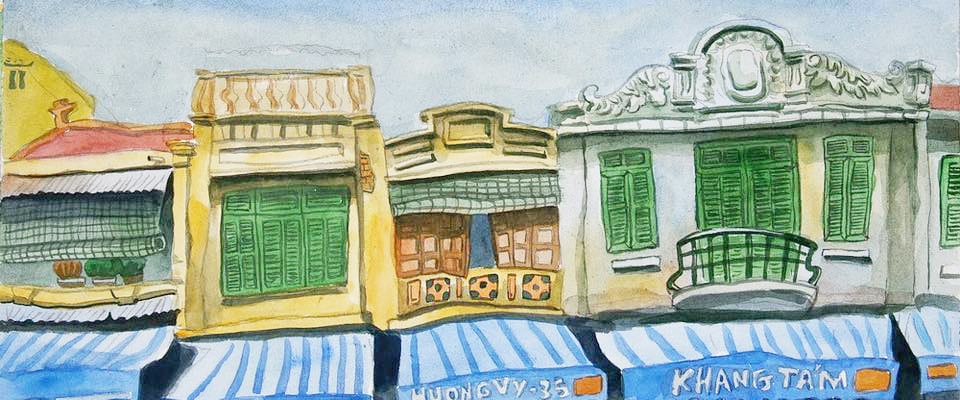
Old houses on Hang Dao Street - sketches by artist Tran Binh Minh
This street still preserves many historical and cultural stories. Number 10 Hang Dao Street was once the Dong Kinh Nghia Thuc School, where Mr. Luong Van Can and other patriotic scholars taught the Vietnamese Quốc ngữ script, history, and progressive ideas for free, aiming to enlighten the people. Number 38 Hang Dao Street is a national historical and cultural relic – the Dong Lac communal house, dating back to the 17th century (rebuilt in 1941 with two floors, the communal house moved to the second floor). Inside the communal house is a stone stele from 1856 (during the reign of Emperor Tu Duc) inscribed: "The market communal house sells silk aprons... built during the Le Dynasty."
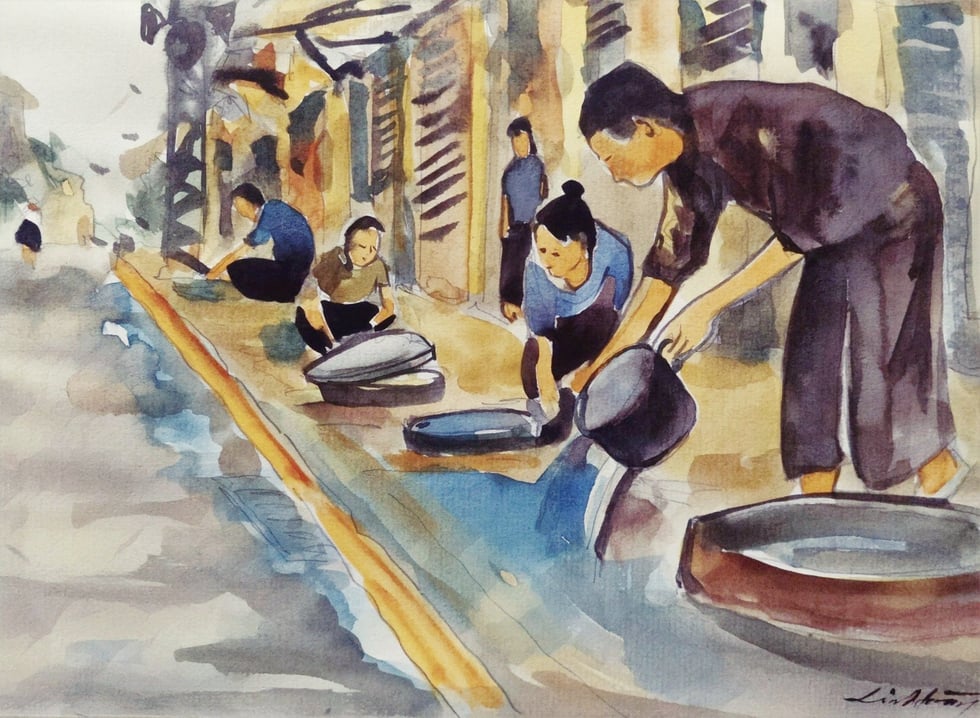
Residents of Hang Dao Street bail water out of a bomb shelter built right on the sidewalk (1972) - sketch based on archival photos by architect Linh Hoang.
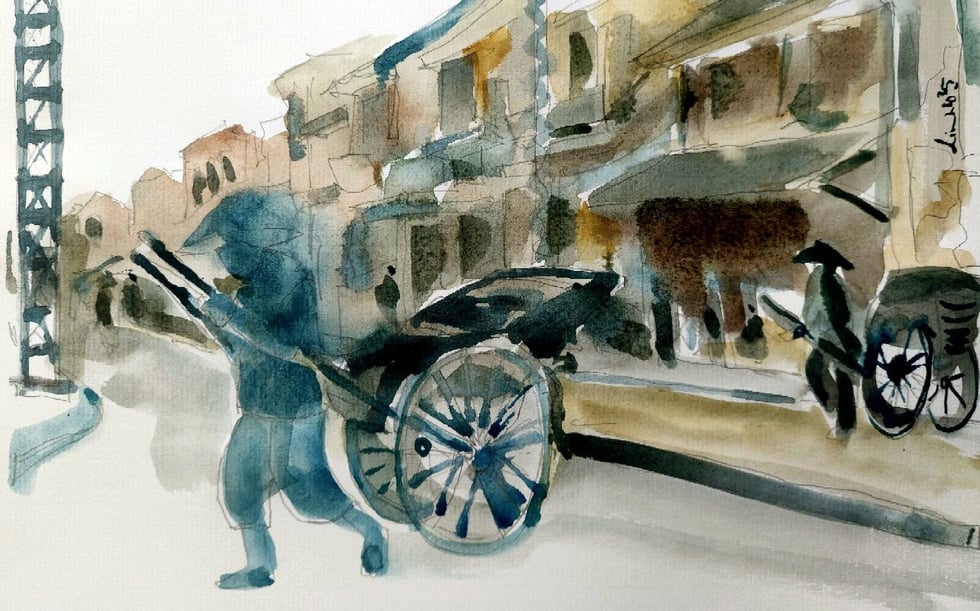
Rickshaw pullers on Hang Dao Street in 1928 - sketches based on archival photos by architect Linh Hoang.
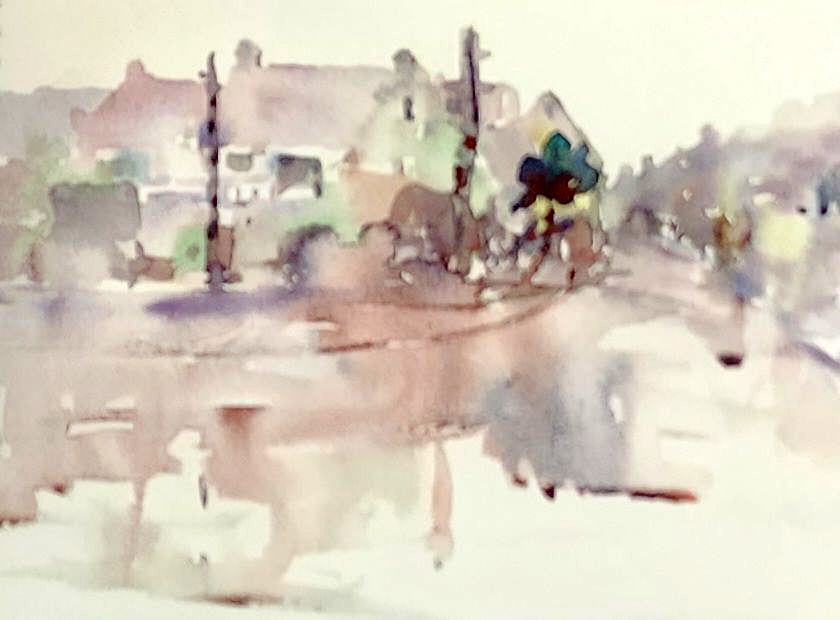
Rainy Street - a painting by architect Phung The Huy
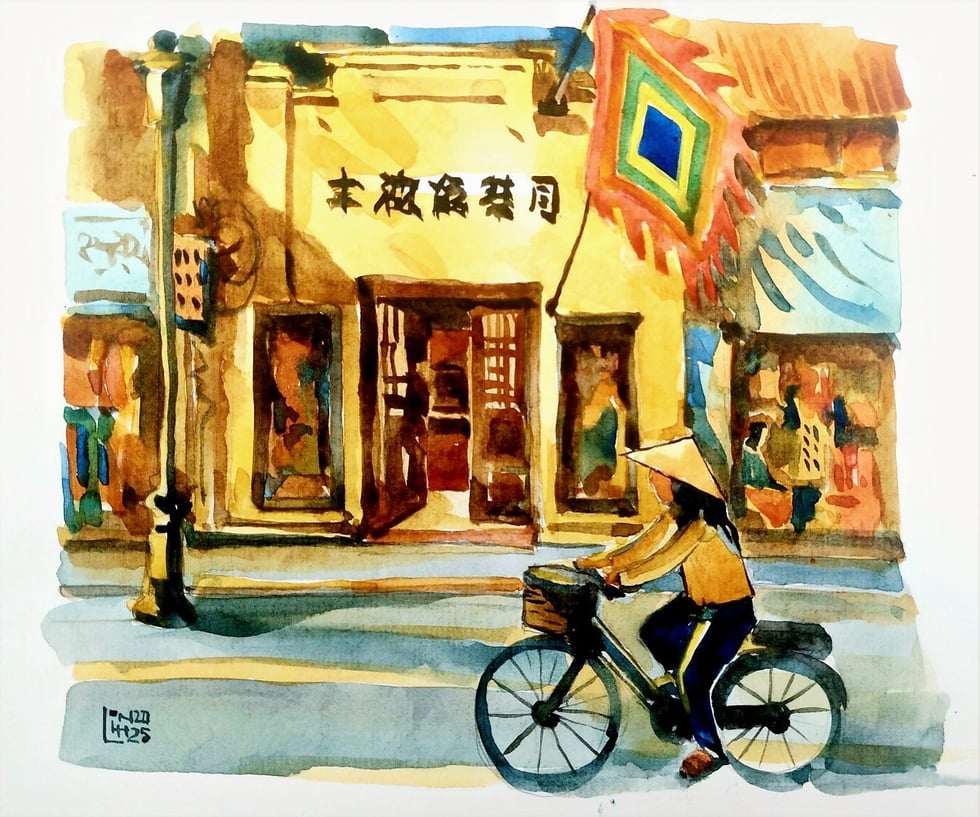
Dong Lac communal house relic - sketch by architect Linh Hoang
Source: https://thanhnien.vn/con-duong-to-lua-hon-400-nam-o-ha-noi-185250614201320239.htm
![[Image] Current situation of houses precariously balanced due to road leveling in Dong Nai.](https://vphoto.vietnam.vn/thumb/1200x675/vietnam/resource/IMAGE/2026/03/02/1772455749144_ndo_br_z7579763955585-6e80a60471e75768fa835d035eba45ea-6979-jpg.webp)
![[Photo] Procession of a giant "pig" weighing over 200kg at the La Phu Village Festival](https://vphoto.vietnam.vn/thumb/1200x675/vietnam/resource/IMAGE/2026/03/02/1772444501339_anh-man-hinh-2026-03-02-luc-16-40-20.png)










































![[Photo] National Assembly Chairman Tran Thanh Man receives the First Vice President of the Greek Parliament](https://vphoto.vietnam.vn/thumb/402x226/vietnam/resource/IMAGE/2026/03/02/1772444080600_anh-man-hinh-2026-03-02-luc-16-34-09.png)
























Comment (0)