

Children's meals that exceed the recommended standards not only harm their health, leading to obesity, tooth decay, and high blood pressure, but also foster unhealthy eating habits from a young age through school lunch programs.
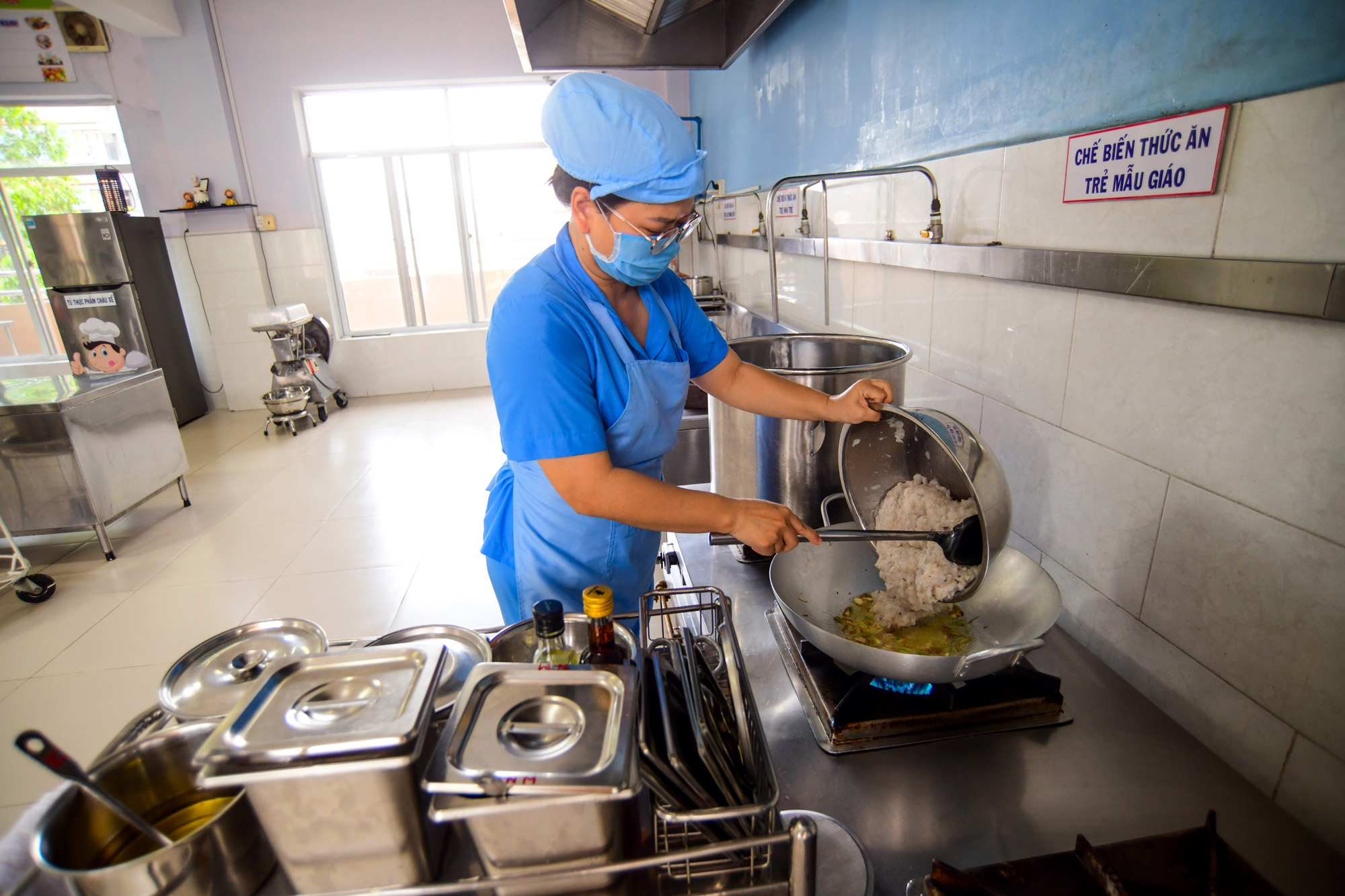
Food service staff at Bé Ngoan Kindergarten, District 1, Ho Chi Minh City, prepare food according to the one-way kitchen layout to ensure nutrition and food safety and hygiene (photo taken at noon on May 7) - Photo: QUANG ĐỊNH
This is a question that many parents whose children are enrolled in the school lunch program are always concerned about.
Recent reports about a kindergarten in Ho Chi Minh City purchasing food ingredients at prices many times higher than market rates, along with the excessive use of sugar and salt, have further increased parental concerns.
From a parent's perspective, looking at the amount of sugar and salt used by the aforementioned preschool, I see potential health risks for children.
With 358 students having lunch and afternoon snacks at school on October 24th, the food inventory shows a total of 27 different spices, vegetables, and food items.
Specifically, the school's kitchen uses 8kg of white granulated sugar, 1kg of iodized salt, 3 liters of fish sauce, 2 liters of fish oil, 1.5 liters of vegetable oil, and 28kg of rice.
At lunchtime, the school uses 2kg of powdered milk, and in the morning, 7kg. This means that the amount of sugar and salt this school provides to its students is much higher than the guidelines from the education sector, which stipulate that sugar should not exceed 15g/student/day, and salt should not exceed 3g/day for children under 5 years old.
Children's meals that exceed the recommended standards not only harm their health, leading to obesity, tooth decay, and high blood pressure, but also form unhealthy eating habits from a young age.
First and foremost, we must commend the spirit of the school's administration and parents, as not every school agrees to allow parents to seriously monitor school activities. Thanks to this, any shortcomings have been identified, allowing all parties to find solutions and address them.
Given this situation, many parents hope that the school and relevant authorities will take more decisive measures.
While awaiting concrete actions from schools and relevant authorities to ensure the rights and well-being of children, transparency should always be the top priority in all choices and decisions related to early childhood education in our country.
While it's true that "you get what you pay for," the reality is that there are still suppliers offering the best quality food at the most competitive prices through open bidding processes. This is a step that the aforementioned preschool is lacking.
Bidding not only helps select reputable suppliers from among those that meet food safety standards, but also helps eliminate favoritism and protect the rights of parents and students.
In addition, parents want the school to collaborate with nutrition experts to create a diverse, balanced menu that is appropriate for the children's age and nutritional needs, minimizing the use of sugar, salt, and additives.
The school administration can hold regular meetings to listen to parents' opinions and contributions, and sometimes even have the opportunity to gather suitable solutions from experts whose children attend the school.
And once again, the story of the preschool above demonstrates the power of enhanced inspection and supervision.
Authorities need to have a strict inspection and monitoring mechanism in place, from the selection of suppliers, warehousing, processing, to the serving of meals to children.
Schools should proactively disclose information about suppliers, daily menus, prices, and quality control reports, either in person or online, to help parents feel more secure.
Source: https://tuoitre.vn/con-toi-co-thuc-su-duoc-an-uong-day-du-va-an-toan-trong-bua-an-ban-tru-20241108230844332.htm






























































Comment (0)