

Artificial intelligence
One of the most common applications of artificial intelligence (AI) in retail is demand forecasting. Algorithms have learned to understand the products customers like, as well as when and where they want to buy them. This allows stores to manage their supply chains optimally, reducing inventory levels and avoiding price reductions.
The AI market in the retail sector is projected to grow from $5.5 billion (in 2022) to over $55.5 billion by 2030. This projected demand is so valuable that Nike acquired the AI startup Celec for $110 million in 2019 to better understand its customers.
AI technology helps stores not only analyze demand but also electronically order necessary goods from suppliers. The store's information system communicates with the supplier's information system and prepares packages according to the required product volume for shipment.
Furthermore, AI can even determine the optimal price for a product. Retail is a competitive business, and prices at each individual store depend on many different factors. The algorithms themselves will compare these prices and suggest their own options.
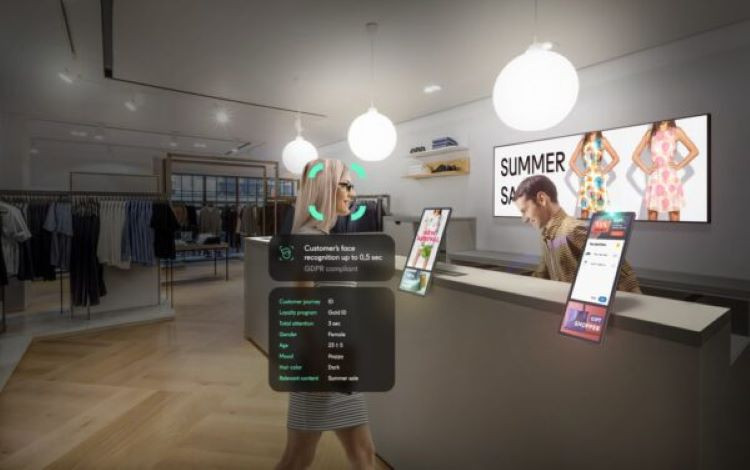
Biometric technology is also being introduced in stores. Smile recognition systems can allow you to withdraw cash without a physical card. Biometrics is also being actively used in banks and public transport, where you can pay for fares using your face.
Video analysis
While the use of cameras in stores was previously limited to security, today the retail industry uses computer vision technology for a wide range of business needs, from simply monitoring the display of goods on shelves.
According to IHL Group (USA), the global retail industry loses 900 billion euros annually due to merchandise shortages and delays in restocking. The American retail chain Walmart addresses this problem by having store employees attach cameras to floor cleaning machines and then sending them to clean hallways and warehouses.
The cameras record inventory levels on the shelves and send the information to a data center, where AI analyzes stock shortages and decides when to restock. These machines capture over 20 million product images on the shelves every day.
Other retailers use a robotic scanner that moves along the aisles of the distribution center, scanning all the pallets and helping to prevent stockouts. There are also cameras in the hallways, such as a video analytics system, that monitor product availability on shelves and send signals to the manufacturing facility about remaining stock levels.
Computer vision isn't just used in stores; it's also used in cargo trucks. Cargo trucks move around the clock, so it's crucial to monitor the driver's condition at any given time.
The Antison system (Russia) operates directly in the cabin and monitors whether the driver falls asleep while driving. If this happens, the system will wake the driver and then notify the control center that the driver needs to stop and rest.
Video analytics helps monitor safety in stores, as well as service standards and procedures at the checkout counter. If an incident suddenly occurs at the checkout counter, the system will immediately detect it and notify the relevant department.
In addition, cameras monitoring queues are not set up inside the hall: the system notifies staff about crowds and signals to quickly open another cash register. According to a study by Honeywell's in the UK, reducing long queues increases customer loyalty by 35%.

Cybersecurity
In 2022, 67% of companies in Russia and the CIS in the retail sector reported experiencing threats of data leaks. The most common leaks involved customer and transaction data (71%), financial information (41%), and technical documents (21%). Such datasets are highly sought after by cyberattackers.
Stores are often equipped with a large number of "smart" devices, making them easy targets for hackers. These threats are recorded and prevented by Information Security Incident Monitoring and Response Centers. The main task of these centers is to maintain customer trust and protect their personal data.
Retailers' seriousness regarding data security is a constant part of their business processes, allowing stores to operate smoothly and attract customers. Customers know that their data is protected and that the shelves will always have the products they need.
(according to RBK)
Source


![[Photo] Prime Minister Pham Minh Chinh presides over a meeting on private sector economic development.](/_next/image?url=https%3A%2F%2Fvphoto.vietnam.vn%2Fthumb%2F1200x675%2Fvietnam%2Fresource%2FIMAGE%2F2025%2F12%2F20%2F1766237501876_thiet-ke-chua-co-ten-40-png.webp&w=3840&q=75)










































































Comment (0)