In areas once considered "off-peak" regions, new waves are gradually emerging at the mountaintops. These are not just telecommunication waves, the internet, or digital data, but also waves of knowledge, new management methods, and development opportunities that are penetrating deep into every highland village.
From remote villages nestled deep in the mountains, dozens of kilometers away from the commune center, the geographical distance is gradually being narrowed by technology. These new "waves" not only connect people with the outside world but also help policies reach the people more quickly and effectively, gradually replacing paper notebooks and the arduous journeys of local officials.
The series of articles " Waves at the Mountain Peaks " documents these movements – where technology is overcoming mountains and geographical divides to connect highland regions with the overall development of the country; and at the same time shows that behind the cell towers, transmission lines, and digital data lies the aspiration to ensure that no village is left behind on the path of development.
* Article 1: The 'waves' replacing officials in 'carrying' policies into the villages
To ensure that every household and every village is fully represented on the "digital map" of the policy, many localities in ethnic minority and mountainous areas are gradually building digital governments from the grassroots level, with villages and hamlets as the core.
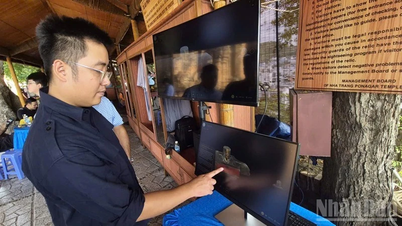
Thanks to technology, many meetings no longer depend on long journeys, and many administrative procedures can be carried out locally. Activities at the grassroots level have become more convenient and transparent, from online Zalo groups to electronic notebooks and work management software.
Technology is helping local governments reorganize life using digital tools, from administration and production to community activities. Although still in its early stages, these changes are gradually erasing geographical barriers and opening a shift from management based on experience to governance based on data, thereby unlocking local potential for development.

From 'digital villages' to digital government
Lao Vang is one of the most remote and disadvantaged villages in Bat Xat commune, Lao Cai province. The hilly terrain is fragmented, and of the 93 households, many families live scattered across the hillsides, making access to public services and the implementation of policies and guidelines for the people quite challenging.
To bring the government closer to the people, from November 2025, Lao Vang village was selected by Bat Xat commune to pilot the model of a digital village. Basic equipment and facilities were provided to "bring the waves" to the village, allowing people to access public services quickly, without wasting time and money on travel as before.
Mr. Vang Thong Din, a villager, shared: "Previously, when people needed to do paperwork, they had to go down to the commune center. For many elderly people who don't know how to ride a motorbike, each time they had to deal with administrative procedures, it was a tiring journey."
"Now, many procedures are simplified and can be accessed online, with guidance provided to connect with commune officials so that they can be carried out right at the village cultural center via computer," Mr. Din said excitedly.
Bat Xat commune is piloting the "digital village" model in 7 villages, with plans to expand to 3 more villages in 2026. Based on the success in Bat Xat, on March 27, 2026, the People's Committee of Lao Cai province issued Decision No. 828/QD-UBND on the set of criteria for "Temporary Digital Villages and Smart Villages". The criteria are divided into three levels: Basic, Advanced, and Smart, ensuring suitability to the uneven development conditions across different areas.


![[Video] Weather forecast for tonight and tomorrow, June 26, 2026: Northern Vietnam to end heatwave from tomorrow, Central Vietnam to continue experiencing a heatwave.](https://vphoto.vietnam.vn/thumb/192x108/vietnam/resource/IMAGE/2026/06/25/1782392692278_thumb-dem-png.webp)
In particular, according to Mr. Chao Duan Phau - Head of Lao Vang village, the "digital village" model is even more evident in addressing urgent social issues. Timely updated data has "accelerated" policy implementation, resolving the essential needs of the people.
For Lao Vang village, a key landslide-prone area in Bat Xat commune, since 2022, the National Target Program 1719 has allocated funds to invest in a resettlement area of nearly 7 hectares. However, due to various reasons, including delays in reviewing and updating information, only 50% of the land leveling work has been completed by the end of 2025.
Regular updates on population data, resettlement needs, and household information have helped the authorities resolve many obstacles in the project implementation process.
The 'digital village' model has contributed to accelerating the progress of the Lao Vang resettlement project. Currently, the resettlement area's infrastructure is complete, the power grid was officially extended to the area in early May 2026, and 19 households have moved in.
From a remote and disadvantaged village like Lao Vang, it's clear that digital transformation doesn't necessarily have to start with complex technologies. Digital transformation in mountainous areas can begin with helping people save on a trip, reducing the number of mountain crossings for officials, and bringing policies closer to people's lives.
The 'waves' of building 'digital humans'
For ethnic minority and mountainous regions, the establishment of "number villages" like Lao Vang is even more urgent. With vast areas, fragmented terrain, scattered populations, and inadequate transportation infrastructure, these "waves crossing the mountains" not only bridge the administrative gap but also ensure that people have full and timely access to government policies.
Furthermore, "digital villages" also lay the foundation for the formation of digital government from the grassroots level, helping to narrow geographical distances, shorten development gaps, and ensure that no citizen is left behind in the digital transformation process.

However, for particularly disadvantaged villages, digital transformation is not simply about purchasing and installing equipment, connecting to the network, etc., but more importantly, about the digital skills of the people. In this context, supporting people in accessing technology and gradually building "digital citizens" is a top priority for local authorities.
Returning to Lao Vang village, the difficult economic conditions mean that people's access to and skills in using smart electronic devices are still limited. As a key village in the pilot implementation of the "digital village" model, Bat Xat commune has organized many training sessions on digital transformation for the villagers.
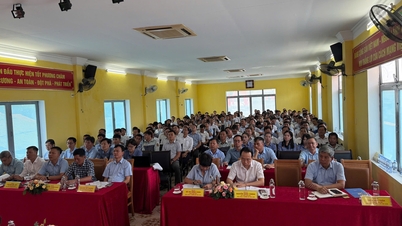
Most recently (on May 29, 2026), the commune implemented a program to support villagers in carrying out digital transformation according to the criteria for "Temporary Digital Village, Smart Village" as stipulated in Decision No. 828/QD-UBND of the People's Committee of Lao Cai province. With the support of members of the Bat Xat Commune Digital Transformation Task Force and the Lao Vang Village Community Digital Technology Team, residents have access to the benefits of digital transformation safely.
According to Mr. Le Manh Hung, Chairman of the People's Committee of Bat Xat commune, the program guides people in installing and using online public services, electronic health records, the "Digital People's Education" platform, the "Smart Agriculture" application, paying electricity and water bills, checking SIM card ownership, and using telecommunications and Internet services to support digital transformation in the village.
"To ensure that the digital village model is substantive, effective, and suitable to the actual conditions of the village, members of the digital transformation teams will directly visit households to provide support to the elderly, people with disabilities, people with particularly difficult circumstances, or those who do not have the means to go to centralized support points," Mr. Hung said.




Training courses like the one in Bat Xat need to be replicated throughout ethnic minority and mountainous regions. Digital transformation will not succeed with only infrastructure, equipment, or internet connectivity. The crucial factor is creating "digital natives"—people with the skills to access information, use digital services, and transform technology into a tool for development.
When people can handle administrative procedures, access production knowledge, or essential services using only a smartphone, the "waves" in the highlands are no longer simply telecommunication or internet signals. They become bridges of opportunity, narrowing the development gap and opening new paths for the people in the highlands to confidently step into the future.
According to Report No. 812/BC-BDTTG dated March 31, 2026, from the Ministry of Ethnic Minorities and Religions, after reorganization, the ethnic minority and mountainous regions currently have 33,764 villages, of which 13,139 are particularly disadvantaged. 97.5% of villages in the region have paved roads, but the Northern Midlands and mountainous region has only reached 95.9% (specifically Dien Bien at 93.8% and Son La at 82.8%).
Source: https://vietnamnet.vn/chuyen-doi-so-o-thon-ban-khi-cu-nhap-chuot-thay-cho-hanh-trinh-vuot-nui-2523926.html

![[Image] Schools organize meetings and introduce teaching models to students admitted to grade 10.](https://vphoto.vietnam.vn/thumb/1200x675/vietnam/resource/IMAGE/2026/06/25/1782368077271_ndo_br_z7970052192242-1ec8daeb77a6eed1a4e9f58c564ddd3e-jpg.webp)

![[Image] Ho Chi Minh City: Ma Lang area, Chicken-Rice Market about to change its appearance](https://vphoto.vietnam.vn/thumb/1200x675/vietnam/resource/IMAGE/2026/06/25/1782377698627_ndo_br_m1-jpg.webp)
![[Photo] General Secretary and President To Lam receives Palestinian Ambassador Saadi Salama](https://vphoto.vietnam.vn/thumb/1200x675/vietnam/resource/IMAGE/2026/06/25/1782365384740_a1-bnd-9423-8322-jpg.webp)