

Beijing does not want another trade war with key partners… but it is not afraid of it either.
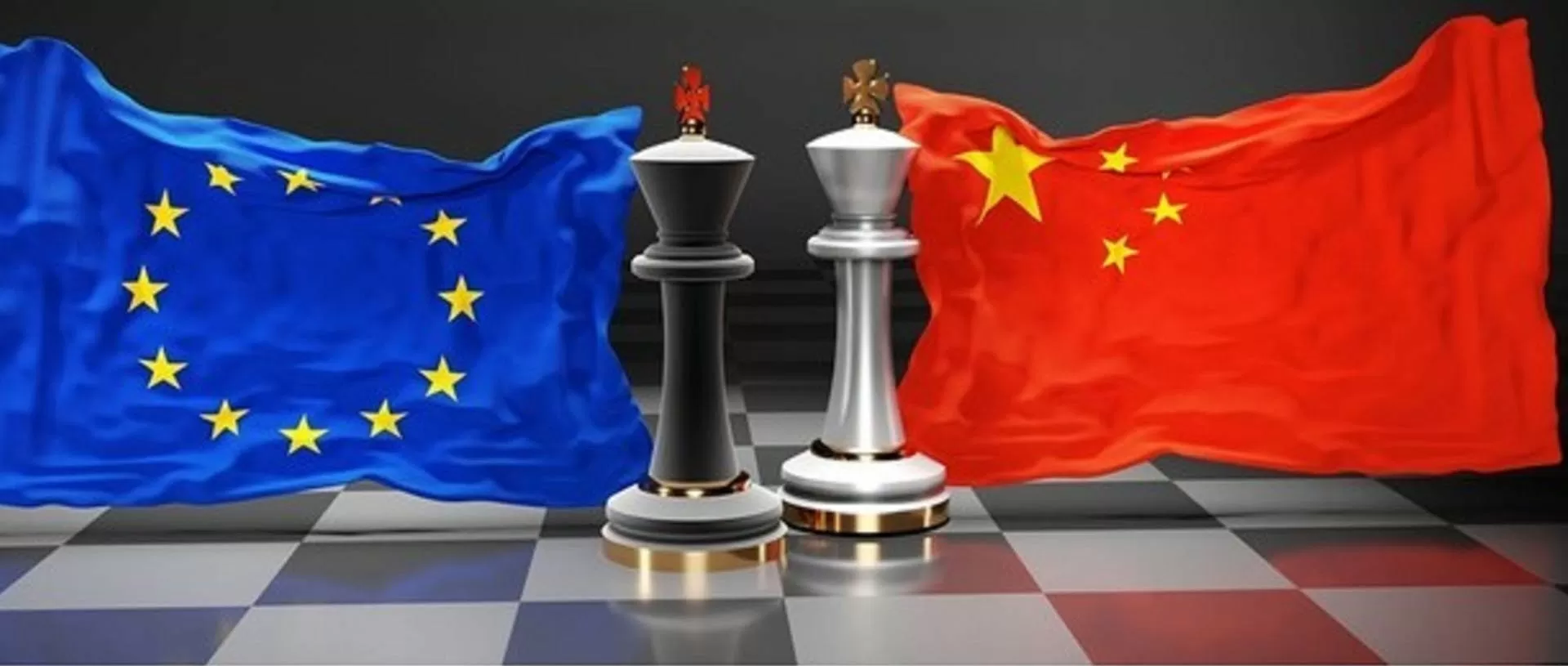 |
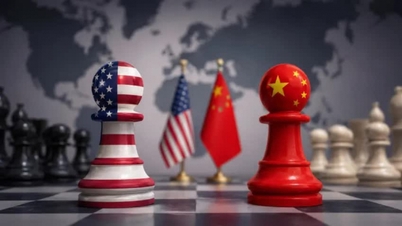
| "Tit-for-tat" action could plunge China and the EU into a new trade war. (Illustrative image. Source: Shutterstock) |
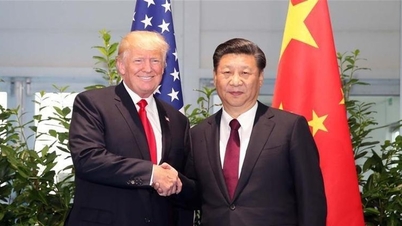
The US-China trade war erupted on March 22, 2018, when US President Donald Trump announced tariffs on $50 billion worth of Chinese goods exported to the US, to curb what they considered unfair trade practices and intellectual property theft.
"An eye for an eye"
Since then, retaliatory measures have escalated tensions between the world's two largest economies , transcending borders and significantly impacting the global economy.
Most recently (on May 14th), the administration of President Joe Biden continued to announce new tariffs on imports of electric vehicles, semiconductors, solar panels, steel, aluminum, and medical products from China, with tariffs on electric vehicles quadrupling to over 100%.
There appear to be similarities unfolding, as Beijing has responded after the European Union (EU) officially imposed tariffs.
Accordingly, the Chinese Ministry of Commerce will hold an anti-dumping hearing on imported spirits from the EU on July 18, according to a new announcement. This is Beijing's first official response to the EU.
This move comes after the EU imposed a temporary 38% additional tariff on imported Chinese electric cars on July 4, citing "unfair state subsidies," despite warnings from Beijing that this move would trigger a trade war.
From July 5th, provisional tariffs will take effect, with Chinese electric vehicle manufacturers cooperating with the EU facing a 20.7% tariff, while those not cooperating will face a 37.6% tariff.
According to the European Automobile Manufacturers Association, the market share of electric vehicles manufactured in China within the EU has increased from around 3% to over 20% in the past three years. Experts predict that temporarily higher tariffs will reduce Chinese electric vehicle imports by 42%, and electric vehicle prices could increase by an average of 0.3-0.9% in the EU.
The Chinese government has repeatedly called on the EU to lift tariffs, demonstrating its willingness to negotiate. Beijing has frankly stated that it does not want to fall into another tariff war while still in a trade dispute with the US, but will take all measures to protect its businesses.
Meanwhile, observers comment that the EU's punitive tariffs are insufficient to curb China's growing export surge, as its major players are investing heavily, even "betting" on Europe in the electric vehicle value chain.
This is considered the third "Asian wave," following the Japanese (1980) and Korean (1990) waves into the European automotive market. However, the Chinese wave is considered much stronger and more worrying, as it is based both on the unprecedented industrial strength of the world's second-largest economy and on a new technological field – electric cars, in which Europe is considered to be lagging behind.
Overall, as many have noted, China's assault on the European electric vehicle market is structural, rapid, and large-scale. Decisions made by the EC may slow this process, but it is very difficult to stop it.
Meanwhile, faced with this threat, the EU, as usual, remains divided by differing interests. Intense debate has ensued among EU members. The German government and its automotive industry – a key trading partner of China – officially oppose the EU's decision to impose tariffs. Sweden has also voiced its opposition to these additional tariffs. Conversely, French automakers welcomed the move, arguing that it creates a "level playing field"... This is also the main reason why the EU cannot take the same aggressive stance against Beijing as the US has just done.
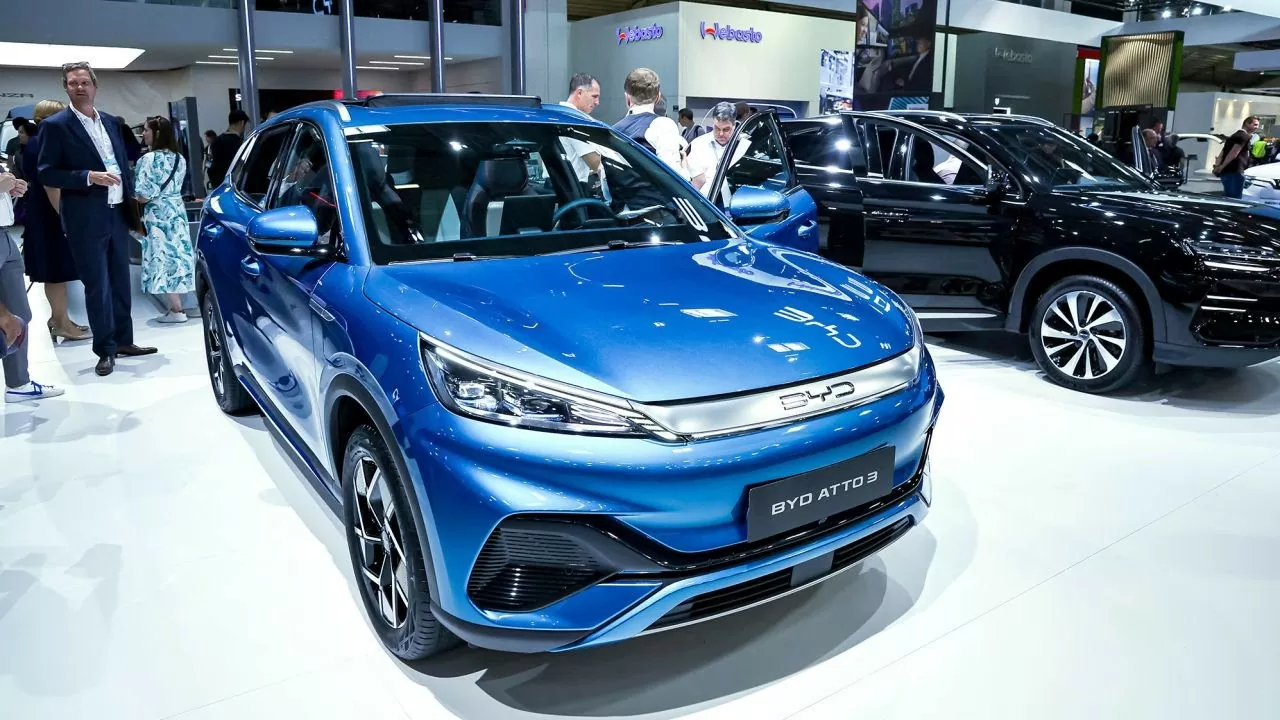 |
| Some argue that China's assault on the European electric vehicle market is structural, rapid, and large-scale. (Source: Reuters) |
"The ball is in the EU's court."
In a move aimed at retaliating against Europe's decision, China stated that the EU is undermining fair competition, the transition to green energy, and China-EU cooperation in general.
Chinese automakers are urging the government to increase tariffs on gasoline-powered cars imported from Europe. Beijing has begun investigations into imports of pork and dairy products from Europe, potentially impacting a quarter of the EU's total agricultural exports to China. The Chinese authorities are also investigating cheap French cognac in the country – seen as a retaliatory move against the electric car investigation. The Chinese Ministry of Commerce stated that it has completed the formal procedures and will soon announce the results.
In the Izvestia newspaper, Rosalia Varfalovskaya, a leading researcher at the Russian Academy of Sciences, suggests that it cannot be ruled out that China may target the EU's aviation sector in the near future. The supply of European aviation equipment and components to China is estimated to be worth around 7 billion euros.
The researcher added that the comprehensive strategic partnership between Russia and China in the new era is a crucial foundation for promoting cooperation between the two countries in the fields of agriculture, aircraft, and the automotive industry, and this could be a "pillar" to help China escape European and other sanctions.
However, political analysts believe that Beijing's response so far has been relatively restrained and cautious, as in response to the EU's decision to increase tariffs on electric cars, the Chinese government only initiated a new investigation, rather than restricting exports. This approach by China reflects a diplomatic tactic aimed at encouraging the EU to reconsider its actions.
However, if Brussels refuses to negotiate, analysts believe Beijing could quickly complete its investigation and respond with appropriate or even tougher countermeasures. While consistently claiming to prioritize mutually beneficial cooperation, Beijing is believed to be unforgiving of unfriendly policies that harm its national interests. It has stated that it neither desires a trade war nor fears one.
As Professor Yang Cheng of Shanghai University of International Studies shared with the media: "The ball is now in the EU's court!"
Source: https://baoquocte.vn/cuoc-chien-thuong-mai-moi-278309-278309.html


![[Photo] General Secretary and President To Lam presides over a working session with the Central Policy and Strategy Committee on the development of the materials industry.](https://vphoto.vietnam.vn/thumb/1200x675/vietnam/resource/IMAGE/2026/05/21/1779359935432_a3-bnd-3129-1412-jpg.webp)

![[Photo] National Assembly Chairman Tran Thanh Man working with the Standing Committee of the Law and Justice Committee](https://vphoto.vietnam.vn/thumb/1200x675/vietnam/resource/IMAGE/2026/05/21/1779378929214_ndo_br_1-4610-jpg.webp)




























































Comment (0)