


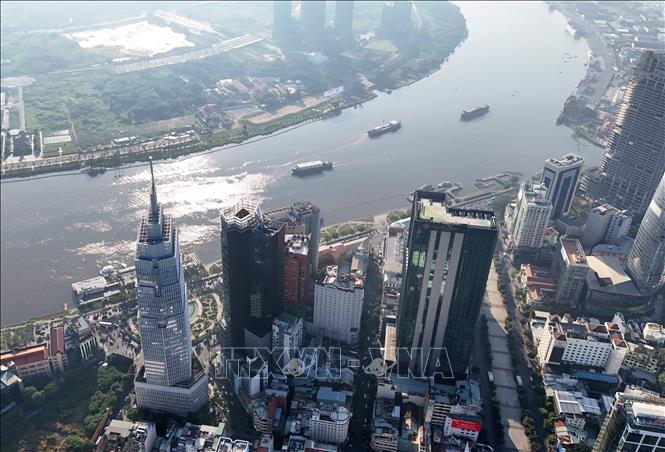
This is not only a time to test the resilience of the economy, but also a period of convergence of institutional reforms, adjustments to the growth model, and strategic positioning in foreign policy, preparing for a new development cycle aligned with the direction of the 14th National Congress of the Communist Party of Vietnam .
Economically , international commentators are paying particular attention to Vietnam's high growth target based on structural reforms set for 2026, against the backdrop of slowing global trade and rising protectionism. Aiming for double-digit Gross Domestic Product (GDP) growth from 2026 is considered bold, but not entirely without basis if key reforms are implemented effectively.
Experts from Dezan Shira & Associates (Hong Kong, China) believe that the target of approximately 10% GDP growth in 2026 is very ambitious, but accurately reflects a pivotal stage in Vietnam's development roadmap, as the country shifts its focus from low-cost growth to high-value growth based on innovation. According to this assessment, the Vietnamese government is restructuring its policies to strengthen its position in the global value chain while aiming for a GDP per capita of US$5,400–5,500.
The focus of the new growth strategy is a shift from a traditional production-export-based model to high-value growth based on innovation, digital technology, and a green economy. Strategic initiatives such as Resolution 68, the Power Development Plan VIII, the national semiconductor industry plan, and the International Financial Center initiative are expected to lay the foundation for sustainable growth in the new phase.
According to Dr. David Dapice, a leading expert on Southeast Asian economics from Tufts University (USA), initiatives based on the “four pillars” – the private sector, technological dynamics, legal reforms, and deep international integration – if effectively implemented, could help Vietnam accelerate its growth in the latter half of this decade.
From an institutional perspective, the latest report on the business environment outlook in Vietnam by the consulting group PDLegal LLC (Singapore) shows that a wave of extensive administrative reforms, along with an unprecedented number of new laws enacted and amended, is how Vietnam is concretizing its transition to a green and digital economy. New regulations, from the Law on Digital Technology Industry, the amended Enterprise Law, the Law on Digital Transformation to the plan to build an International Finance Center in Ho Chi Minh City and Da Nang, are considered important legal foundations for sustainable growth from 2026 onwards.
From an investor's perspective, Dominic Scriven – Chairman of Dragon Capital – acknowledges that the 10% GDP growth target is very ambitious, but with nearly three decades of involvement with Vietnam, he believes that the current political will and concrete solutions create a basis for believing that Vietnam can approach this goal.
Meanwhile, major banks maintain a more cautious approach. UOB (Singapore) forecasts Vietnam's GDP growth in 2026 at around 7%, while MUFG (Japan) projects 8.2%, still among the highest in the region. The general view is that high growth is achievable in the short term, but maintaining double-digit growth requires deeper reforms in productivity, development of the domestic private sector, and tight public debt management.
Mr. Suan Teck Kin – Director of Global Market and Economic Research at UOB – noted that Vietnam needs to enter a more cautious phase in 2026. Meanwhile, MUFG emphasized that the greatest value lies not in short-term growth figures, but in structural reforms that can unleash productivity and remove growth barriers in the medium term.
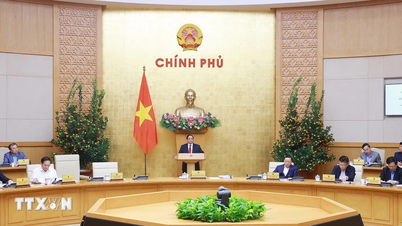
Beyond the economic aspect, 2026 is also a crucial milestone in national politics and governance. It's the time to assess the effectiveness of an unprecedented wave of large-scale administrative reforms, including streamlining the apparatus, consolidating agencies, and amending and enacting a series of new laws related to digital technology, businesses, green transformation, and finance.
Notably, the 14th National Congress of the Communist Party of Vietnam, scheduled for early 2026, will elect a new leadership for the next term and establish policy directions to guide national development in the coming period. International commentators believe the new leadership will continue to uphold the principle of collective decision-making, ensuring stability and policy continuity, thereby maintaining consistency in economic and foreign policy development. However, this also poses challenges to the administrative apparatus's capacity for implementation in the context of increasingly demanding reforms.
On the foreign policy front, strategic competition among major powers continues to pose a significant challenge to Vietnam's growth prospects in 2026. In this context, international opinion expects Vietnam to maintain a flexible diplomatic approach while shifting more significantly from adapting to proactively shaping the external environment.
Some international analysts believe that Vietnam will not only react to international developments but also proactively use diplomacy to shape the external environment in a way that benefits domestic development. In this context, foreign relations are elevated to a "crucial and ongoing" task, on par with national defense and security, with the coordination of three pillars: Party diplomacy, State diplomacy, and people-to-people diplomacy, aiming to consolidate international standing, enhance strategic autonomy, and address external risks early.
Overall, 2026 could be a decisive test of whether Vietnam can transform from a high-growth emerging economy to a sustainable development model based on innovation. The double-digit growth target reflects strategic confidence, but also carries risks if institutional reforms, productivity enhancement, and fiscal management do not keep pace.
Vietnam is choosing a challenging development formula, but one that clearly demonstrates its determination to achieve high-income status by 2045, based on political stability, flexible and prudent foreign policy, and gradual but decisive economic reforms. In this formula, laws and policies are not merely management tools, but are gradually becoming the central drivers of growth for the next development phase. Given these characteristics, 2026 is seen by observers as a crucial test for Vietnam's development model on its path to sustainable development based on innovation.
Source: https://baotintuc.vn/kinh-te/da-moi-truc-nguong-ban-le-20251231064031660.htm

















































































Comment (0)