According to experts, cuisine holds a particularly important position in shaping the national culture of any country in the world . Today, cuisine is also a factor in attracting attention and positioning a national brand.
According to Dr. Tran Quoc Hung, from the Center for Research, Preservation and Development of San Diu Culture in Vietnam, in addition to common features, the culinary culture of the San Diu people possesses unique characteristics, demonstrating skill and sophistication in processing and combining foods. It also reflects the beauty of culture through etiquette and behavior in eating; a reflection of culture through the lens of cuisine.
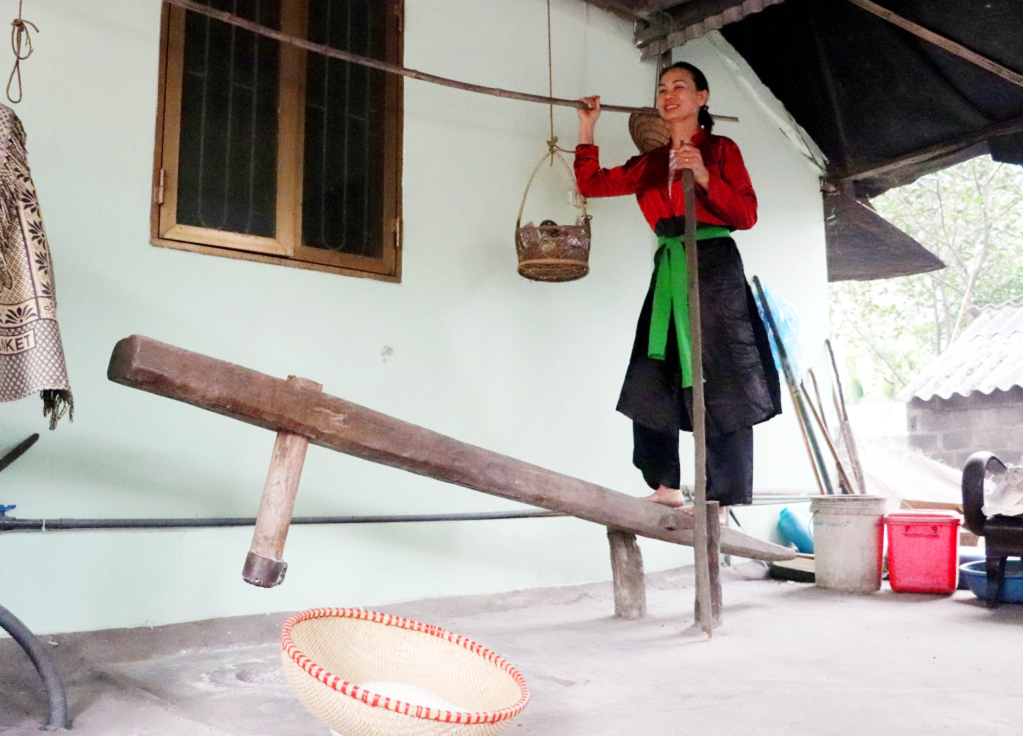
The San Diu people still preserve many beautiful aspects in their cooking methods and unique dishes.
First of all, a common feature is that the San Diu people's meals are divided into three main meals, with food components (rice, vegetables, meat, fish, etc.) similar to many other ethnic groups. To diversify their dishes, the San Diu people have learned to combine ingredients through various cooking methods. Their dishes are prepared both with and without heat. Besides drying and salting, heat-based cooking methods are very diverse, using various cooking utensils such as stir-frying, steaming, braising, stewing, deep-frying, and braising, or methods of cooking food directly over fire such as burying or grilling.
The culinary culture is most vividly expressed during the festivals and holidays of the ethnic groups, with dishes rich in national identity, such as: braised pork belly, roasted pork, pickled pork, mugwort leaf cake, colored sticky rice, humpback rice cake, and Tài Lồng ệt cake…
On this occasion, the San Diu people prepare a full range of traditional dishes and cakes to offer to their ancestors, including many unique and elaborately prepared items. The "humpback" sticky rice cake is one such example; from selecting the ingredients to wrapping the cake to achieve its six corners and beautiful hump, it's a process that requires considerable practice.
Similarly, making "Banh Bac Dau" (silver-headed cake) requires real skill. It's made from glutinous rice that has been soaked thoroughly, then pounded in a stone mortar until smooth, and filtered multiple times. The flour is then kneaded with water, carefully shaped, and boiled 2-3 times until very smooth and cooked through. Finally, it's used to shape the cakes with a filling of sesame seeds, peanuts, and brown sugar. The pounding of the rice, the filtering of the flour, and the shaping technique are the essence of this cake... San Diu women are usually responsible for making these cakes, and this is also a criterion for judging their domestic skills.
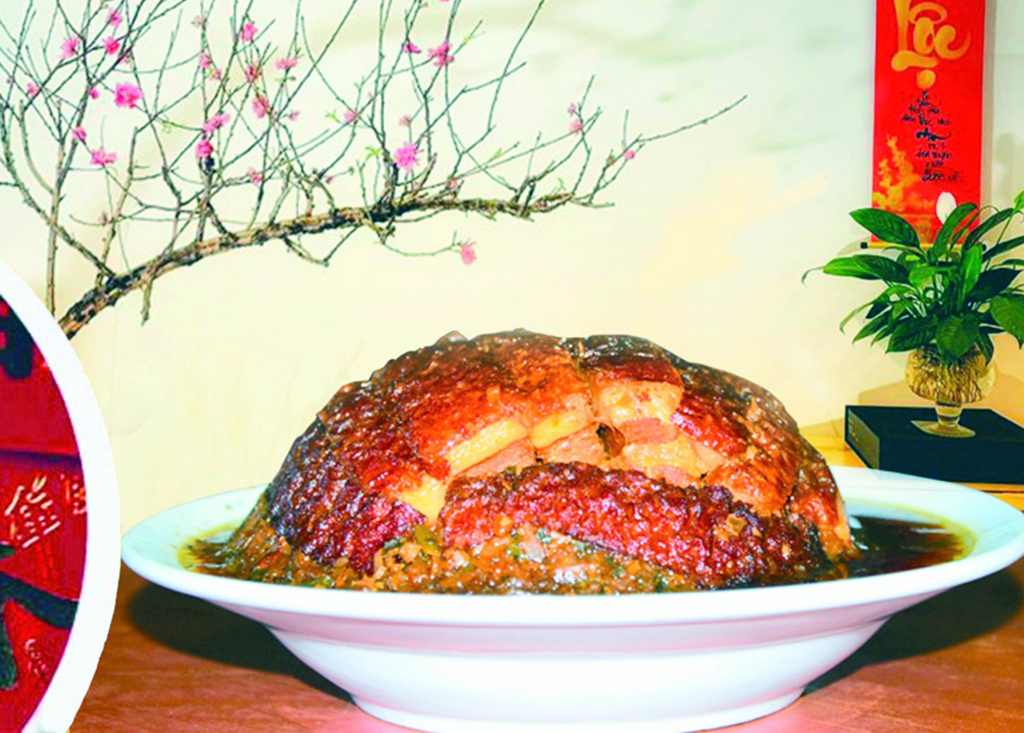
Khau nhục is a traditional dish of the San Diu people, prepared elaborately and very delicious, especially during festivals and holidays.
Creativity and meticulousness in preparation are also evident in braised pork belly, a dish prepared for holidays, festivals, weddings, etc. This dish is made from delicious pork belly, boiled until cooked, then hung up, the skin carefully pricked with a needle to drain off the fat, then brushed with honey and fried until golden brown. The filling, which determines the flavor of the dish, is elaborately prepared from finely minced lean pork, wood ear mushrooms, shiitake mushrooms, and nearly 40 kinds of spices, such as water spinach, onions, garlic, galangal, cardamom, tofu, pickled lime, fish sauce, salt, MSG, soy sauce, honey, five-spice powder, lotus seeds, basil…
During the Qingming Festival, the San Diu people also offer sticky rice to their ancestors, especially black sticky rice, which is prepared quite elaborately using the leaves of the "sau" plant (a type of small leaf found in the forest, abundant in the area). The leaves are crushed, filtered to extract the juice, and used to soak glutinous rice before steaming. Black sticky rice, cooked with glutinous rice of the "hoa vang" or "cau" variety, is both chewy, fragrant, and has a special flavor from the "sau" leaves.
The way food and drinks are arranged on the San Diu people's table reflects respect for elders and deference to those younger. The most delicious dishes are placed in the center, tending to be closest to the oldest person. Vegetables are placed around them. During meals, younger people always invite and wish older people a good meal, and older people usually yield and serve the best dishes to the children. When guests arrive, especially those from afar, to show hospitality, the San Diu people always enthusiastically offer food and serve the best pieces to their guests.
Moreover, the cuisine of the San Diu people is also characterized by its sophistication in processing agricultural products, creating beverages with clear health benefits and medicinal properties. Their drinks are very diverse. First and foremost are the alcoholic beverages, including distilled liquor and glutinous rice wine... made from carefully fermented white rice, glutinous rice, corn, and cassava.
There is a rather special type of liquor called molasses liquor, which utilizes sugarcane pulp. The locals press the pulp again to extract the liquid, then ferment it with yeast for a few days before distilling it. Each type of liquor has its own distinctive flavor. In many places, the glutinous rice liquor of the local people has a sweet taste, a strong aroma of yeast, is easy to drink, and is suitable for postpartum women, promoting abundant milk production for their babies.
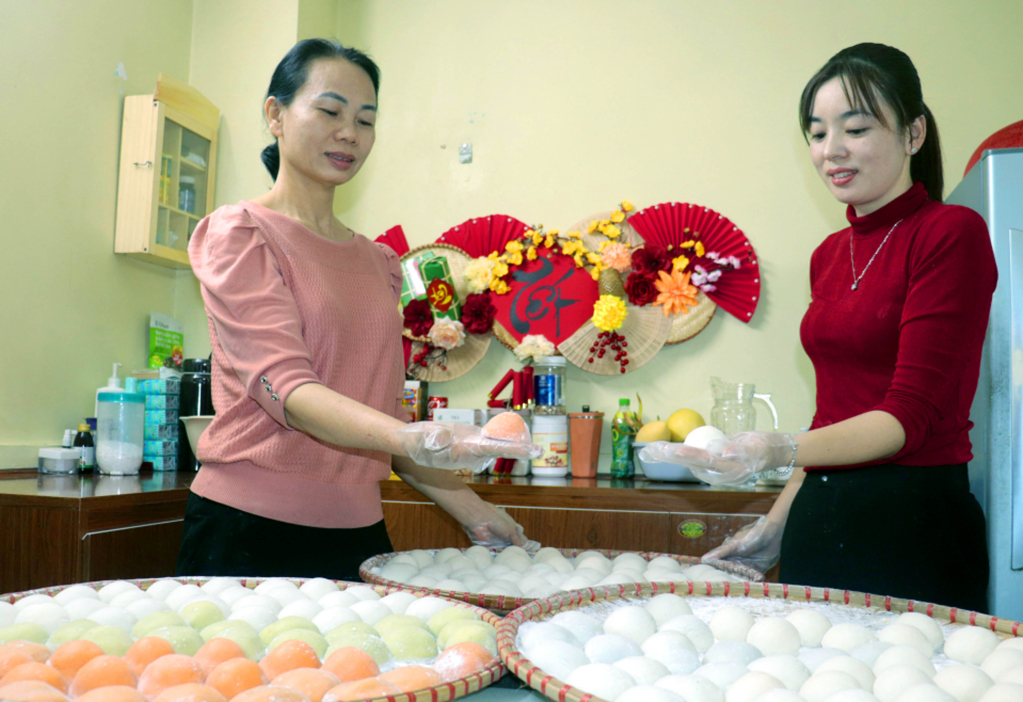
The San Diu ethnic people prepare "banh bac dau" (silver-headed cake) along with many other delicious dishes to offer to their ancestors and to entertain guests.
Besides meticulously prepared dishes, the San Diu people's favorite daily drink is thin rice porridge. This is quite common and widely consumed by the people during meals, as a refreshing drink, or while working in the fields; it is very good for their health.
In general, the San Diu people's culture has long been closely intertwined with the cultures of other ethnic groups, resulting in a fusion of cultures in their cuisine. However, many unique culinary features are still preserved by the people, considered secrets and "brands" that reflect the distinct culinary identity of the San Diu people.
Ta Quan
Source: https://baoquangninh.vn/dac-sac-nghe-thuat-am-thuc-trong-van-hoa-nguoi-san-diu-3327078.html





































































Comment (0)