

Why did the US decide to implement this system?
The Electoral College was established in 1787 by the framers of the U.S. Constitution. At that time, the United States was a brand-new nation, completely independent from Great Britain after the American Revolutionary War.
These individuals, known as the American Founding Fathers, wanted to establish an electoral system that did not concentrate power. However, some members of the group worried that voters were not educated enough to make responsible and informed voting decisions. Furthermore, at that time, no other country elected its leaders through popular vote.
The American founding fathers viewed the Electoral College as a compromise between the people's vote and giving more responsible entities the power to choose the president. Therefore, they decided that electors elected in each state would vote for the president.
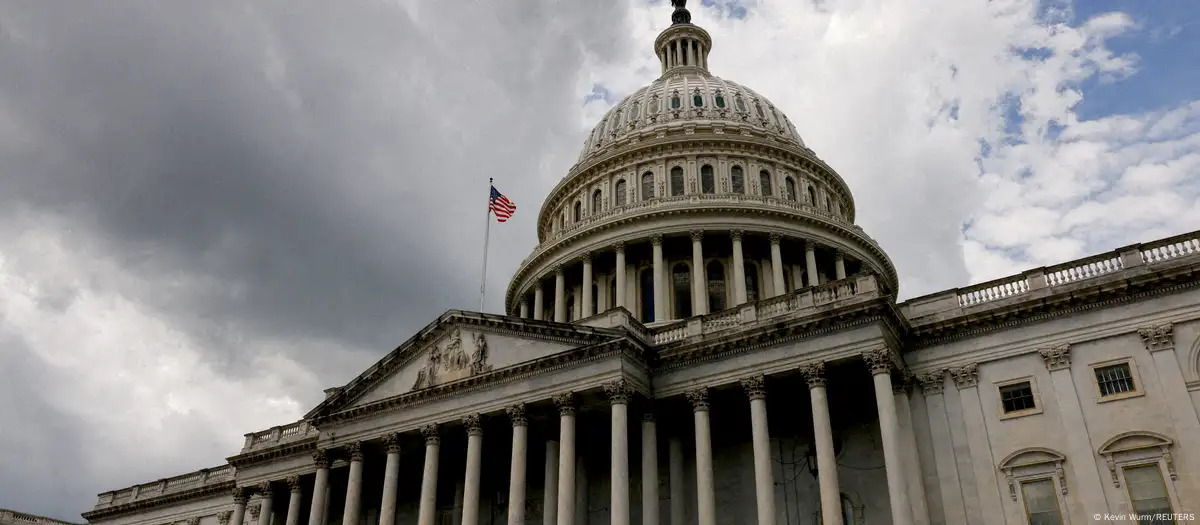
The Electoral College was first established in 1787. Photo: Reuters
How does the Electoral College work?
The U.S. Congress consists of the House of Representatives and the Senate. Each state has two Senate members to represent it at the federal level. House members represent individual districts within a state.
The number of U.S. House representatives from a state is determined through the U.S. Census, a census conducted every 10 years.
California, being the most populous state, has the highest number of delegates: 52. States with smaller populations, such as Alaska, have only a single House delegate.
Each state receives one electoral vote for each congressional delegate. Thus, California has 54 electoral votes (52 for the House of Representatives and two for the Senate).
Meanwhile, the state of Alaska has three seats: one for a House representative and two for Senators.
The United States has a total of 538 delegates in Congress and therefore 538 electoral votes in the race for the US presidency. A presidential candidate needs to secure an absolute majority of the electoral votes, 270 or more, to be elected president.
Who do Americans vote for in person?
When American citizens vote in a presidential election, they are voting for the presidential candidate's electors. In most states, if a candidate wins a majority of the popular vote, they receive all of the electoral votes. For example, if the current Democratic candidate, Kamala Harris, wins a majority in California, she will receive all 54 electoral votes.
Maine and Nebraska are the only states that do not award all electoral votes to a single candidate based on a majority. In these two states, electoral votes are divided among candidates based on the proportion of votes cast.
Although no constitutional law requires electors to vote for the candidate who receives a majority of the vote in their state, it is very rare for electors to vote against their own party. According to the U.S. Federal Register, "more than 99% of electors have voted as pledged" in American political history.
What happens if no candidate wins a majority of the votes?
In the rare event of a tie where both candidates receive 269 Electoral College votes, the House of Representatives will be responsible for deciding the winner. Each state delegation will receive one vote, and a majority (26) is required to win. To date, there has never been a tie in the Electoral College.
When will the winner be announced?
The US Congress counts the electoral votes on January 6th, and the newly elected president takes office on January 20th. By the time the results are announced on election day, the winner is usually already clear, and the January 6th announcement is essentially just a formality.
But counting the votes also takes time. In the 2020 election, Joe Biden was declared the winner on November 7th, four days after Election Day on November 3rd.
Ngoc Anh (according to DW)
Source: https://www.congluan.vn/bau-cu-my-2024-dai-cu-tri-doan-la-gi-va-co-vai-tro-nhu-the-nao-post309110.html
![[Photo] The General Secretary attends the groundbreaking ceremony for the construction of the Truong Ha Primary and Secondary Boarding School.](/_next/image?url=https%3A%2F%2Fvphoto.vietnam.vn%2Fthumb%2F1200x675%2Fvietnam%2Fresource%2FIMAGE%2F2026%2F01%2F28%2F1769604498277_vna-potal-tong-bi-thu-du-le-khoi-cong-xay-dung-cong-trinh-truong-pho-thong-noi-tru-tieu-hoc-va-trung-hoc-co-so-truong-ha-8556822-jpg.webp&w=3840&q=75)


![[Photo] Commemorating the unwavering friendship between Vietnam and Laos](/_next/image?url=https%3A%2F%2Fvphoto.vietnam.vn%2Fthumb%2F1200x675%2Fvietnam%2Fresource%2FIMAGE%2F2026%2F01%2F27%2F1769518372051_ndo_br_1-jpg.webp&w=3840&q=75)


![[Photo] National Assembly Chairman Tran Thanh Man meets with former leaders of the National Assembly from various periods.](/_next/image?url=https%3A%2F%2Fvphoto.vietnam.vn%2Fthumb%2F402x226%2Fvietnam%2Fresource%2FIMAGE%2F2026%2F01%2F28%2F1769601014034_anh-man-hinh-2026-01-28-luc-18-50-04.png&w=3840&q=75)


![OCOP during Tet season: [Part 3] Ultra-thin rice paper takes off.](/_next/image?url=https%3A%2F%2Fvphoto.vietnam.vn%2Fthumb%2F402x226%2Fvietnam%2Fresource%2FIMAGE%2F2026%2F01%2F28%2F1769562783429_004-194121_651-081010.jpeg&w=3840&q=75)


![OCOP during Tet season: [Part 2] Hoa Thanh incense village glows red.](/_next/image?url=https%3A%2F%2Fvphoto.vietnam.vn%2Fthumb%2F402x226%2Fvietnam%2Fresource%2FIMAGE%2F2026%2F01%2F27%2F1769480573807_505139049_683408031333867_2820052735775418136_n-180643_808-092229.jpeg&w=3840&q=75)
![OCOP during Tet season: [Part 1] Ba Den custard apples in their 'golden season'](/_next/image?url=https%3A%2F%2Fvphoto.vietnam.vn%2Fthumb%2F402x226%2Fvietnam%2Fresource%2FIMAGE%2F2026%2F01%2F26%2F1769417540049_03-174213_554-154843.jpeg&w=3840&q=75)




Comment (0)