 |
Harvard University loses its leading position in research. (Image source: Wharton Knowledge ) |
For the first time in over 10 years, in Nature Index's Research Leaders 2026 ranking, Harvard University is no longer the world's leading higher education institution in terms of high-quality research output. The top spot belongs to Zhejiang University in Hangzhou, China.
If you include research institutes, government organizations, and medical facilities, Harvard would only rank third, behind the Chinese Academy of Sciences (CAS) and Zhejiang University.
Harvard is stagnant in research.
According to Nature Index , the latest data shows that the gap between China's leading research institutions and the rest of the world is widening.
CAS's Share Index (an index measuring the level of contribution of a country, organization, or research institution to scientific articles published in journals belonging to the Nature Index system) in 2025 reached over 3,655 points, nearly three times that of Zhejiang University.
Meanwhile, Harvard's research output increased by only 0.6% year-on-year, significantly lower than the overall expansion rate of the Nature Index database.
This year's rankings also show the dominance of Chinese institutions. Nine out of the top 10 globally belong to Chinese universities. Besides Zhejiang University, many other universities such as Sichuan University, Fudan University, and Shanghai Jiao Tong University have also seen significant improvements in their rankings.
Sichuan University entered the top 10 for the first time, while Shanghai Jiao Tong University saw the largest increase in Share between 2024 and 2025. Conversely, many long-standing Western research icons continued to decline in rankings. Germany's Max Planck Society dropped out of the top 10 for the first time, and the French National Centre for Scientific Research (CNRS) is now ranked 16th.
Top American universities are not immune to this trend. Stanford University dropped to 14th place, while the Massachusetts Institute of Technology (MIT) fell three places to 21st.

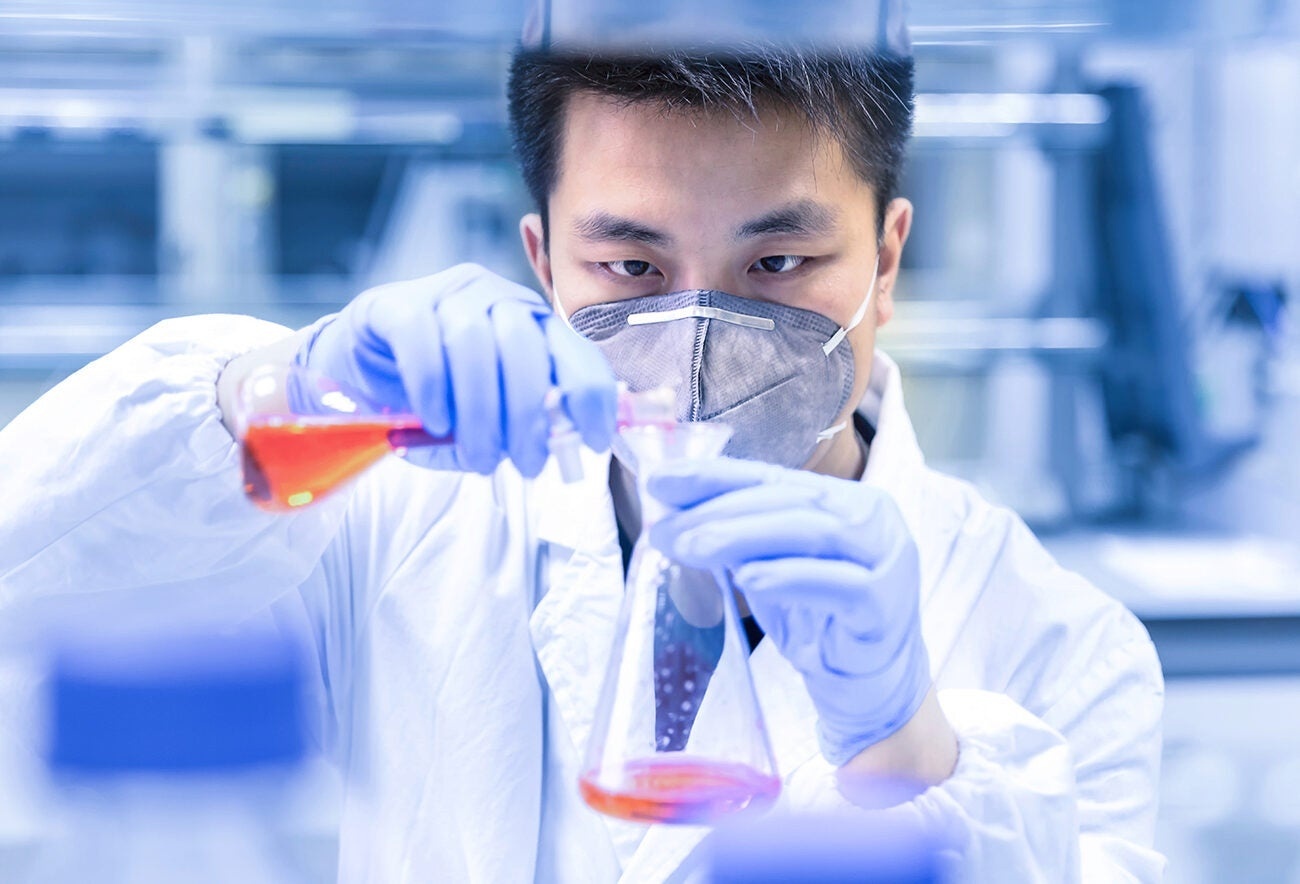
The Nature Index states that the shift is not simply a ranking story. It reflects the rapid expansion of China's research ecosystem in fields with a significant impact on global science. Chinese institutions now occupy the top 10 positions in applied science and chemistry, and hold nine of the top 10 positions in Earth and environmental sciences.
In the field of health sciences—a traditional strength of the United States—Chinese institutions are also increasingly developing. Besides Harvard, the National Institutes of Health and Stanford University are two of the few American institutions that still appear in the top 10.
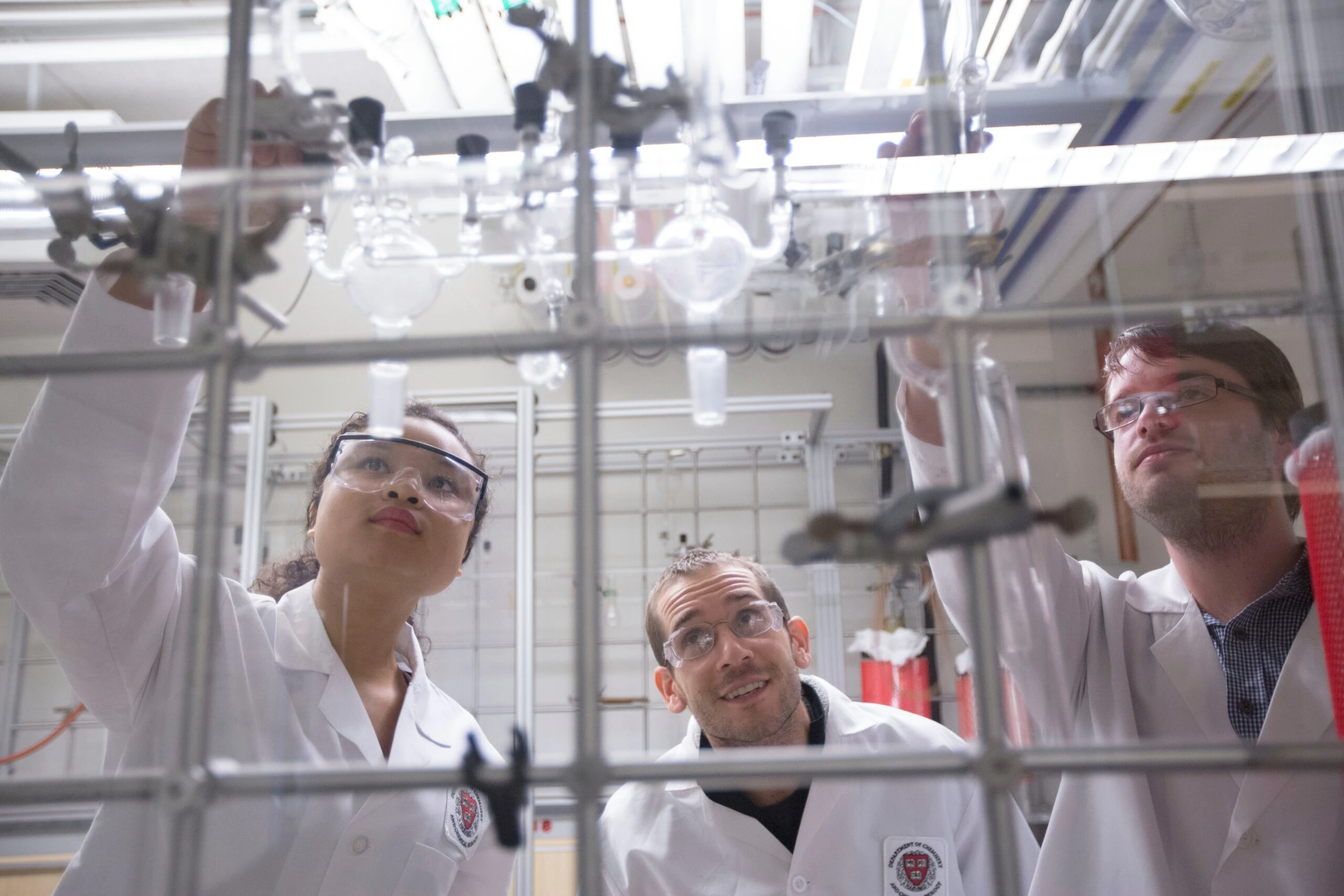 |
Researchers at Harvard University. Photo: Harvard . |
East Asia experiences strong growth.
Not only China, but many other East Asian countries are also demonstrating increasing competitiveness with Western research powers.
According to the Nature Index , China's research contribution is projected to increase by 22% between 2024 and 2025, far surpassing the other top 10 countries. However, Japan and South Korea also recorded nearly 10% increases in the Share index, higher than the US, UK, and Germany.
While this increase is not enough to catch up with China, it still shows that the two East Asian scientific fields are adapting well to the new research environment. In this environment, interdisciplinary projects, the application of computational technology, and a focus on solving social problems are increasingly playing a central role.
In Japan, positive signs are emerging after years of the country being perceived as having stagnant research. According to Motoko Kotani, an advisor at Tohoku University, Japanese policymakers changed their approach about a decade ago, shifting the focus from research serving the scientific community to research serving society.
This shift led to a series of reforms such as increasing autonomy for universities, focusing investment on a few strategic research facilities, and expanding support for young scientists. In 2023, the Japanese government established a funding fund worth 10 trillion yen, equivalent to approximately 63 billion USD , to provide long-term resources for academic research.
Furthermore, the ASPIRE program was implemented to promote international cooperation in strategic fields such as artificial intelligence, biotechnology, and semiconductors. However, internationalization remains a major challenge for the Japanese university system, as the country continues to struggle to attract international talent and expand cross-border research collaboration.

Meanwhile, South Korea is benefiting from a model of close integration between research and industry. The country allocates nearly 5% of its GDP to research and development, among the highest in OECD countries. Notably, more than 80% of research spending comes from businesses.
The South Korean government currently prioritizes areas considered to have the potential for breakthroughs, such as AI, quantum technology, robotics, and semiconductors. This helps to quickly translate research results into commercial products and continues to generate resources for new research activities.
Experts believe this is a significant advantage for South Korea in a global scientific landscape increasingly linked to technological innovation and industrial capacity. However, the country is still considered to be less prominent in basic research – an area where China, the US, Japan, and Europe still hold a dominant position.
Source: https://znews.vn/dai-hoc-harvard-mat-vi-tri-so-1-post1659665.html

![[Photo] General Secretary and President To Lam receives Palestinian Ambassador Saadi Salama](https://vphoto.vietnam.vn/thumb/1200x675/vietnam/resource/IMAGE/2026/06/25/1782365384740_a1-bnd-9423-8322-jpg.webp)
![[Image] Schools organize meetings and introduce teaching models to students admitted to grade 10.](https://vphoto.vietnam.vn/thumb/1200x675/vietnam/resource/IMAGE/2026/06/25/1782368077271_ndo_br_z7970052192242-1ec8daeb77a6eed1a4e9f58c564ddd3e-jpg.webp)


![[Image] Ho Chi Minh City: Ma Lang area, Chicken-Rice Market about to change its appearance](https://vphoto.vietnam.vn/thumb/1200x675/vietnam/resource/IMAGE/2026/06/25/1782377698627_ndo_br_m1-jpg.webp)











![[Video] Weather forecast for tonight and tomorrow, June 26, 2026: Northern Vietnam to end heatwave from tomorrow, Central Vietnam to continue experiencing a heatwave.](https://vphoto.vietnam.vn/thumb/402x226/vietnam/resource/IMAGE/2026/06/25/1782392692278_thumb-dem-png.webp)