

On the afternoon of May 26th, continuing the program of the Fifth Session, under the chairmanship of Deputy Speaker of the National Assembly Tran Quang Phuong, the National Assembly convened in the assembly hall to hear the presentation on the draft Law on Management and Protection of National Defense Works and Military Zones.
General Phan Văn Giang, member of the Politburo, Deputy Secretary of the Central Military Commission, and Minister of National Defense, attended the meeting.
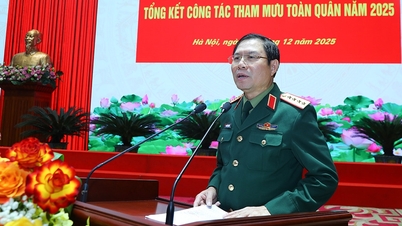
At the session, General Phan Van Giang, acting on behalf of the Prime Minister , presented the draft Law on the Management and Protection of National Defense Facilities and Military Zones.
General Phan Van Giang emphasized that national defense facilities and military zones are state assets, entrusted to the military and authorities at all levels for construction, management, use, and protection to serve the cause of building and defending the socialist Vietnamese Fatherland. The management and protection of national defense facilities and military zones is the responsibility of Party committees, authorities at all levels, and the entire population, with the military as the core force.
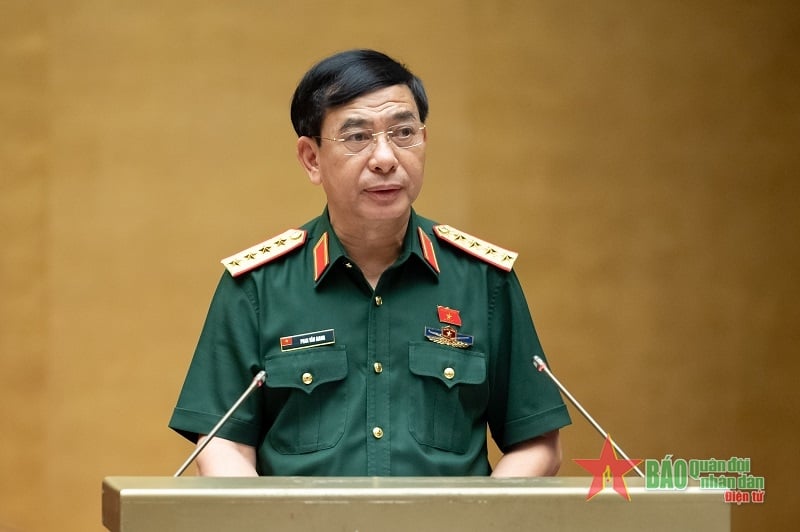 |
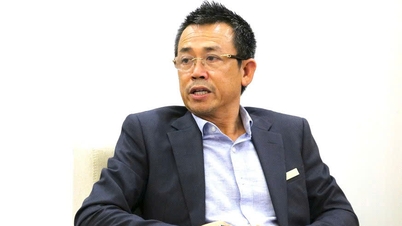
General Phan Van Giang: National defense projects and military zones are state assets, entrusted to the army and authorities at all levels to organize construction, management, use, and protection to serve the cause of building and defending the socialist Vietnamese Fatherland. Photo: Tuan Huy |
On May 19, 1994, the Standing Committee of the National Assembly issued the Ordinance on the Protection of National Defense Works and Military Zones (hereinafter referred to as the Ordinance); during the implementation of the Ordinance, the management and protection of national defense works and military zones achieved important results, ensuring the fulfillment of national defense tasks, actively contributing to consolidating and building the regional defense posture, strengthening national defense potential to protect the Fatherland and promote socio-economic development.
"However, to date, the Ordinance has revealed some difficulties and shortcomings; some contents have not kept pace with the socio-economic development and the Party and State's guidelines and policies on the task of protecting the Fatherland in the new situation; at the same time, some provisions on restricting human rights and citizens' rights in the Ordinance are not consistent with the provisions of the 2013 Constitution. Therefore, it is necessary to develop a law on the management and protection of national defense facilities and military zones," General Phan Van Giang emphasized.
Specifically, General Phan Van Giang mentioned several obstacles and shortcomings, such as: The scope and boundaries of defense facilities and military zones have not been clearly and specifically defined; illegal encroachment and cultivation within assigned management and protection areas still occur; coordination between localities, the Ministry of National Defense, and military units in determining the scope and boundaries for management and protection has not been implemented synchronously; the development of plans and licensing of some socio-economic development projects and the management of foreigners residing in some localities and areas related to defense facilities and military zones are not strict enough;… The above-mentioned shortcomings necessitate the development of a law to create a higher legal basis and promptly resolve practical problems and shortcomings.
On the other hand, because the Ordinance was issued in 1994, many of its provisions are no longer relevant and need to be reviewed and amended to ensure consistency and uniformity with the current legal system.
"Therefore, the enactment of the Law on Management and Protection of National Defense Facilities and Military Zones is necessary to perfect the legal system on national defense, contributing to the building of a socialist rule of law state," said General Phan Van Giang.
Minister Phan Van Giang also clarified that, fundamentally, the provisions in the draft law are consistent, unified, and do not contradict the provisions in relevant current legal documents. The contents of the draft law will not replace existing laws but will supplement and improve the legal system; the implementation of measures to manage and protect national defense facilities and military zones, the rights and obligations of organizations and individuals, and the responsibilities of state agencies in managing and protecting national defense facilities and military zones will be carried out according to the provisions of this law and other relevant laws that do not contradict the provisions of this law.
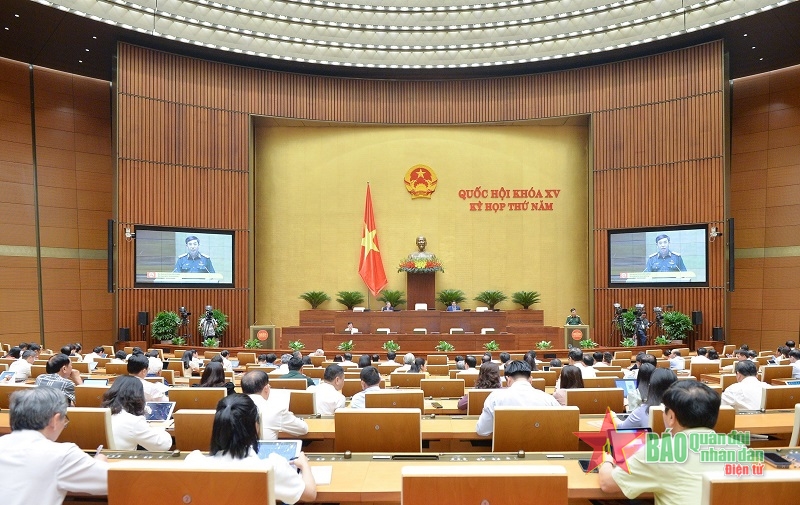 |
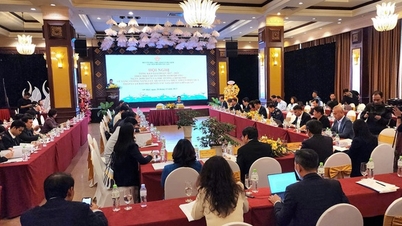
| The scene at the meeting. |
Representing the agency reviewing the draft law, the Chairman of the National Assembly's Committee on National Defense and Security, Le Tan Toi, stated that the Committee also agrees with the necessity of enacting the Law on Management and Protection of National Defense Facilities and Military Zones.
"The promulgation of the law based on the 1994 Ordinance on the Protection of National Defense Works and Military Zones aims to further concretize the Party's guidelines and policies; the provisions of the 2013 Constitution related to military affairs, national defense, and the protection of the Fatherland; and to create a complete and feasible legal framework for the effective and efficient management and protection of national defense works and military zones," Chairman Le Tan Toi affirmed.
According to Chairman Le Tan Toi's assessment, the draft law dossier is basically complete and in accordance with regulations; many research documents have been meticulously and carefully prepared, making it suitable for submission to the National Assembly for consideration and feedback at this session.
The basic content of the draft Law on Management and Protection of National Defense Facilities and Military Zones.The content of the draft law is based on four main policy groups, including: Policy 1: Improve regulations on defining the scope of protection for national defense facilities and military zones, and the content of management and protection of national defense facilities and military zones. Policy 2: Management and protection regime for restricted areas, protected areas, safety zones, ammunition depot safety zones, and technical safety corridors for military antenna systems of defense facilities and military zones. Policy 3: Conversion of land use, demolition, and relocation of defense facilities and military zones. Policy 4: Policies for localities, agencies, organizations, households, and individuals in areas affected by the requirements of managing and protecting national defense facilities and military zones. |
GRASSLAND
Source

![[Photo] Prime Minister Pham Minh Chinh presides over a meeting on private sector economic development.](/_next/image?url=https%3A%2F%2Fvphoto.vietnam.vn%2Fthumb%2F1200x675%2Fvietnam%2Fresource%2FIMAGE%2F2025%2F12%2F20%2F1766237501876_thiet-ke-chua-co-ten-40-png.webp&w=3840&q=75)
















































































Comment (0)