
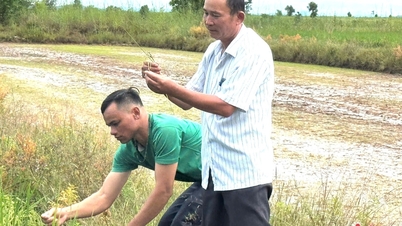
My hometown is a purely agricultural commune in the north of Nghe An province . During the off-season, to earn some extra income, my older brother often goes to the fields to catch eels. Depending on the weather and the season, sometimes he goes fishing with a rod and line, sometimes he sets traps; other times he goes hunting at night. Of these methods, setting traps is probably the most laborious. The afternoon before, he has to finely chop earthworms and carefully put them into the mouth of the trap, then close the lid.
The eel traps are made from bamboo stalks, and the lids are woven from bamboo strips. At dusk, he takes the traps to the fields to set them before returning home for dinner. Early in the morning, while everyone else is still asleep, he gets up and goes to the fields to retrieve the traps. He has to retrieve them so early, partly to prevent theft, but more importantly, to keep the eels from suffocating and becoming unsaleable.
When we got home, my mother would be the one to prepare the eels. After selecting the larger ones to sell at the market, she would set aside the smaller ones or those that were dying from suffocation for the whole family's meal. Because they live in deep mud, eels are very fishy and slimy. To clean them, my mother would usually rub them with wood ash or coarse salt, then rinse them thoroughly with water several times. If making porridge, she would boil them and then remove the meat. Stir-frying them was more elaborate; she had to use a sharp knife or a bamboo stick to gut the eels.
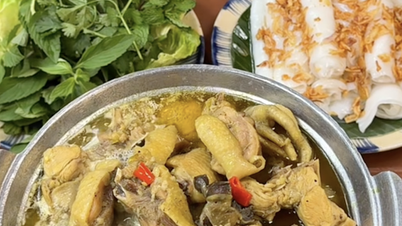
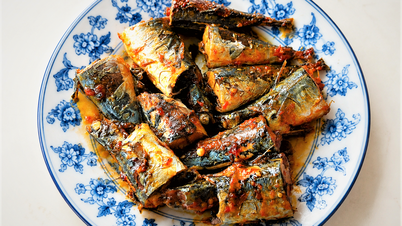
I don't know where my mother learned her cooking skills, but even with just stir-fried eel, she could create so many dishes that, later on, when I ate at restaurants, I couldn't find the familiar delicious taste. Besides the popular stir-fried eel with eggplant (small eggplant, purple eggplant, green eggplant), my mother also stir-fried eel with banana stem or green bananas.
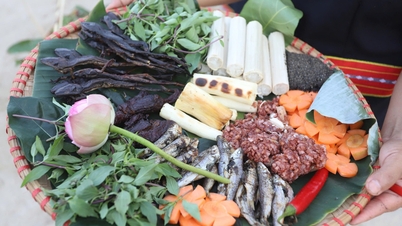
In particular, another ingredient that pairs very well with eel is dried radish and kohlrabi. During the season, when there's an abundance of radish and kohlrabi, my mother would slice them thinly and dry them. When cooking, we just need to soak them in water to soften them. Besides seasoning to taste, my mother always adds a little betel leaf or sawtooth coriander to all her stir-fried eel dishes, which enhances the flavor.
Perhaps, for any person from Nghe An province, eels are very familiar. And because of the harsh natural conditions here, the people of Nghe An have come up with nearly a dozen dishes from eels such as porridge, soup, vermicelli, stir-fries, stews, grilled eels, eel wrapped in betel leaves, etc.
In particular, word of mouth has spread, and eels are no longer only found in Nghe An but are now available in many provinces and cities nationwide, processed to suit consumer tastes such as crispy fried eel, eel rolls, dried eel, canned eel, packaged eel vermicelli, etc. Currently, many localities in Nghe An have even become villages specializing in mudless eel farming and processing, bringing in high income. Besides being a nutritious food, eel is also a good medicine in Traditional Chinese Medicine for treating diseases and nourishing the body, such as nourishing the blood, benefiting the spleen, strengthening the liver and kidneys, and fortifying tendons and bones…
QUYNH YEN
Source: https://www.sggp.org.vn/dam-da-mon-luon-xu-nghe-post832925.html


![[Image] "Journey of Hope" promotes the organ and tissue donation movement in Vietnam.](https://vphoto.vietnam.vn/thumb/1200x675/vietnam/resource/IMAGE/2026/05/20/1779294400833_1-8910-jpg.webp)

![[Photo] National Assembly Chairman Tran Thanh Man working with the Standing Committee of the National Assembly's Delegation Affairs Committee.](https://vphoto.vietnam.vn/thumb/1200x675/vietnam/resource/IMAGE/2026/05/20/1779294340023_ndo_br_1-1691-jpg.webp)
![[Photo] General Secretary and President To Lam works with the Party Committee of the Ministry of Health on the work of Vietnamese traditional medicine.](https://vphoto.vietnam.vn/thumb/1200x675/vietnam/resource/IMAGE/2026/05/20/1779294323718_a1-bnd-2978-3319-jpg.webp)


































































Comment (0)