Bringing rustic pottery to the streets.
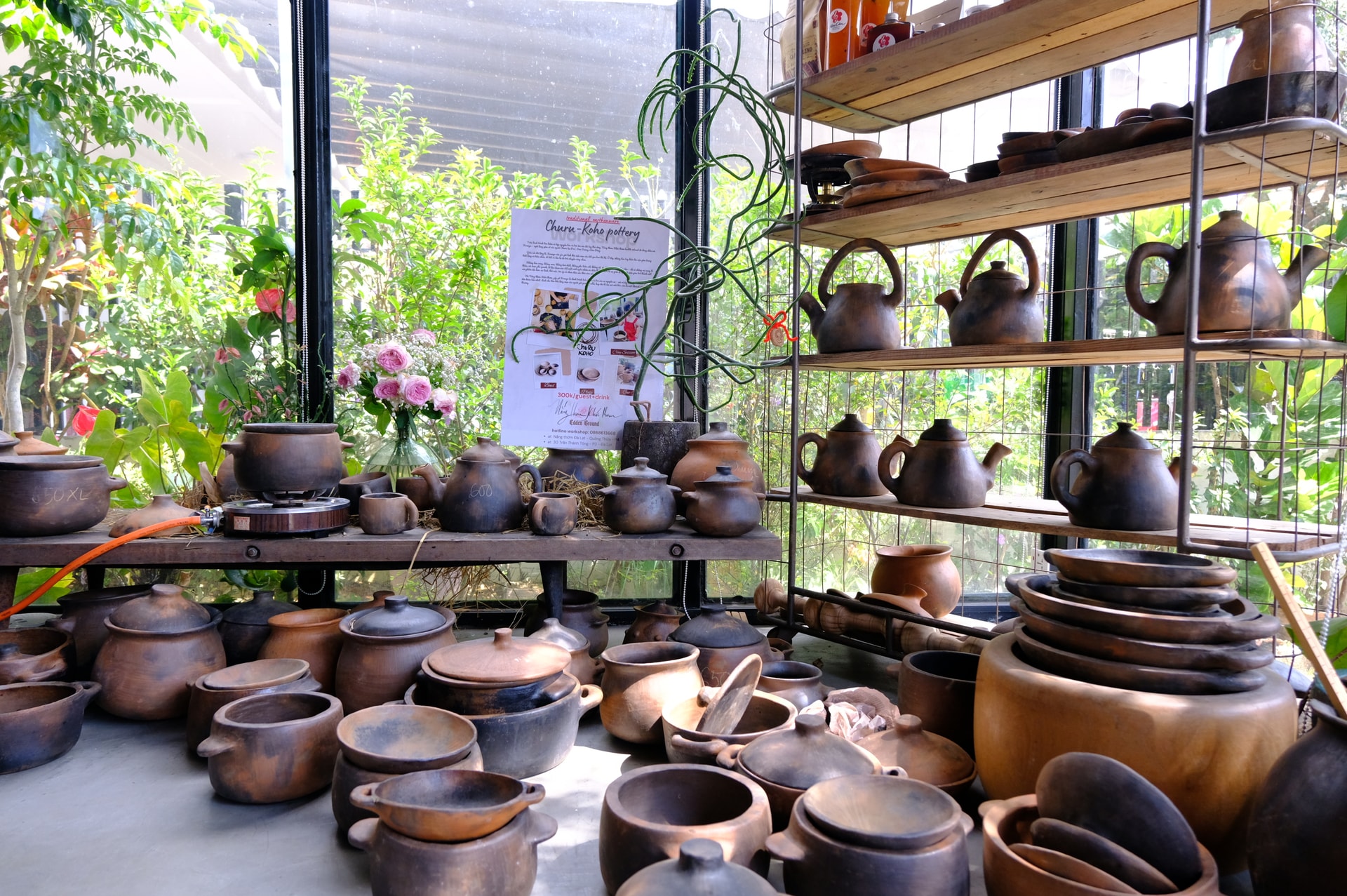
In a small, sun-drenched space on Tran Thanh Tong Street (Xuan Huong Ward - Da Lat), the rustic pottery products of the Churu people are displayed in a simple yet captivating way. From pans, teapots, jars, and cups to decorative items, Churu pottery not only embodies the rustic beauty of earth and fire but also tells the story of the efforts of Ms. Nguyen Thi Hai Yen and Ms. Touneh Mai Cam in preserving a traditional craft facing the risk of extinction.
As a native of K'răng Gọ village (Quảng Lập commune), Touneh Mai Cầm grew up surrounded by images of her grandmothers patiently sifting clay, kneading, and shaping pottery in their small courtyards. Over time, as modern life gradually infiltrated the village, traditional pottery products became less and less used. Nevertheless, many dedicated artisans like Mrs. Ma Ly and Mrs. Ma Ti Ơng quietly preserve the craft, but pottery from this small village still struggles to reach the market and customers.
Troubled by this reality, Mai Cam and Hai Yen decided to bring Churu pottery "to the city." They started small: displaying pottery at cafes, introducing their products on social media, and gradually connecting with people who love handicrafts and local culture. Pottery items that seemed familiar only in village kitchens, when placed in urban spaces, became novel and were embraced by many for use or decoration.
Churu pottery uses no potter's wheel, no glaze, and no chemicals. The clay is shaped entirely by hand and fired with wood, allowing the fire to naturally and randomly touch the clay. This simplicity creates unique products, each bearing the distinct mark of the artisan. Hai Yen and Mai Cam only hope to be a bridge to spread these original values.
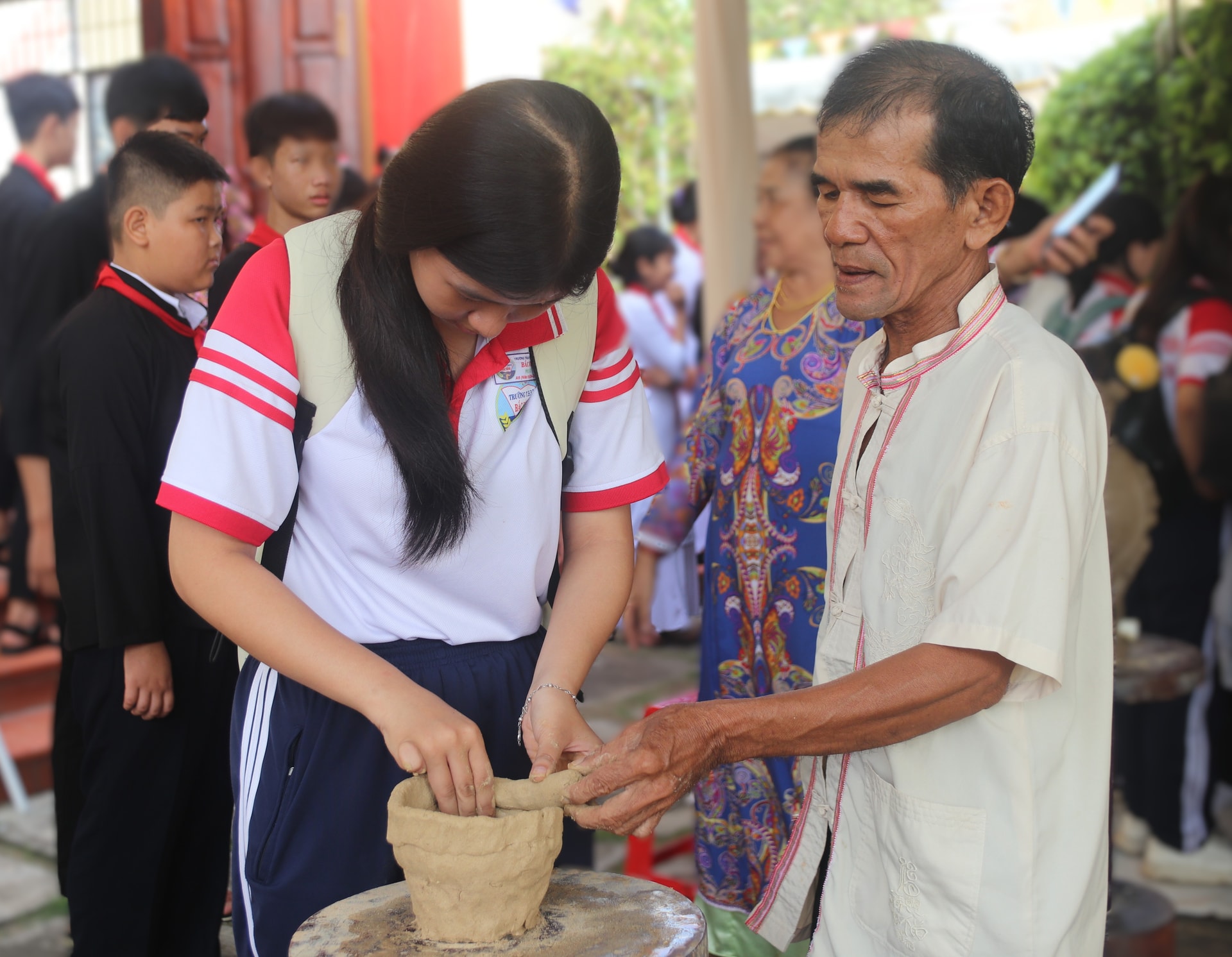
In addition to selling their products, the women also organize pottery-making workshops for tourists in Da Lat. Here, visitors can directly touch the clay, feel its raw, smooth texture, and gain a better understanding of the traditional Churu pottery-making process. These experiences help bring the story of Churu pottery and culture closer to the community.

“Since pottery sales have increased, the women are very happy and have more motivation to work every day,” shared Ms. Mai Cam. For the past six months, hundreds of pottery products from K’răng Gọ village have been sold each month, bringing a more stable income to the artisans. Ms. Hai Yen and Ms. Mai Cam regularly return to the village, supporting those preserving the craft, so that the flame of Churu pottery continues to burn brightly in today's life.
Preserving the soul of the land through the hands of Cham women.
It would be remiss to mention pottery without mentioning the Cham Binh Duc pottery village in Bac Binh commune, with its handcrafted products that are nonetheless exquisite and possess unique cultural value.
The Binh Duc pottery village has a long history, closely linked to the life, customs, and traditions of the local Cham people in the southeastern part of the province. The tradition is passed down through storytelling and daily practice, following the "mother-to-daughter" model.
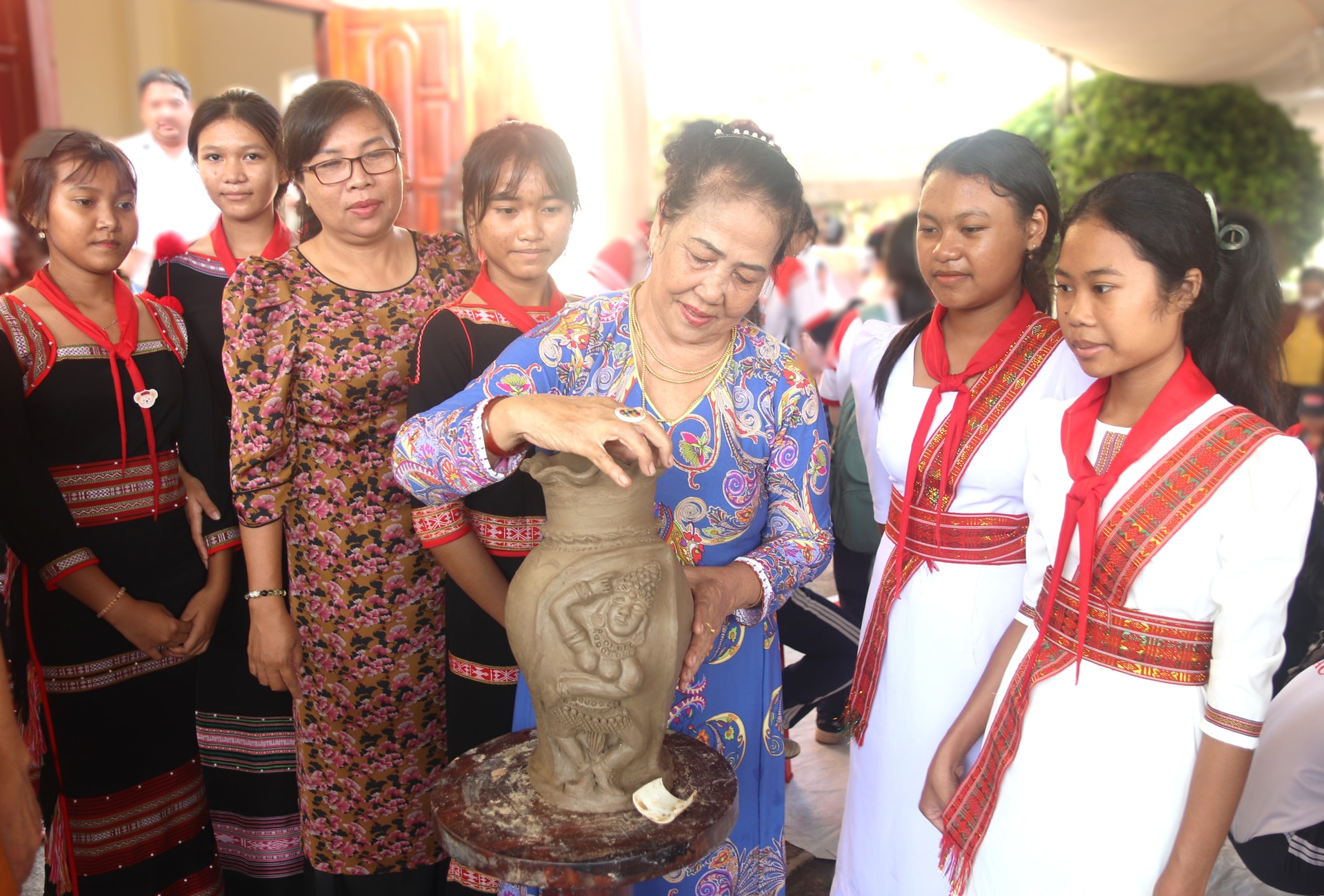
The entire pottery-making process of the Cham people exudes a distinctive artistic value. This is due to the technique of kneading clay without using a potter's wheel. With skillful hands and rhythmic footwork, moving gracefully around a fixed table, Cham women transform lifeless lumps of clay into exquisitely crafted products. This method of pottery making has existed for thousands of years.
The value of Binh Duc pottery also lies in its cultural and spiritual depth in the daily life and activities of each family, and in the beliefs of the Cham community. It tells the story of the harmonious relationship between humans and nature, and of the quiet perseverance in preserving the craft amidst the flow of modernity.
And for the artisans of the pottery village in Binh Duc hamlet in particular, and the Cham ethnic community in Lam Dong province in general, the event of November 29, 2022, when the Cham pottery art was inscribed on the List of Intangible Cultural Heritage in Need of Urgent Safeguard by the United Nations Educational, Scientific and Cultural Organization (UNESCO), will forever be remembered with pride. This is an affirmation and appreciation from the world for a cultural feature, but also a "reminder" for the people to better understand the significance of the heritage, and thus to take measures to preserve and protect their ethnic identity.


Having been deeply connected to the village and dedicated nearly 40 years to the craft, artisan Dang Thi Hong emotionally stated, "The joy of being honored also comes with the responsibility of the artisans to ensure that the pottery village continues to thrive, remaining an integral part of life." With this in mind, Ms. Hong is one of the village's artisans actively passing on her skills and performing at festivals and tourist destinations. Along with 40 other households in the village, her family now has a new generation carrying on the tradition, with both of her daughters skilled in handcrafted and artistic pottery making and possessing a special passion for clay.
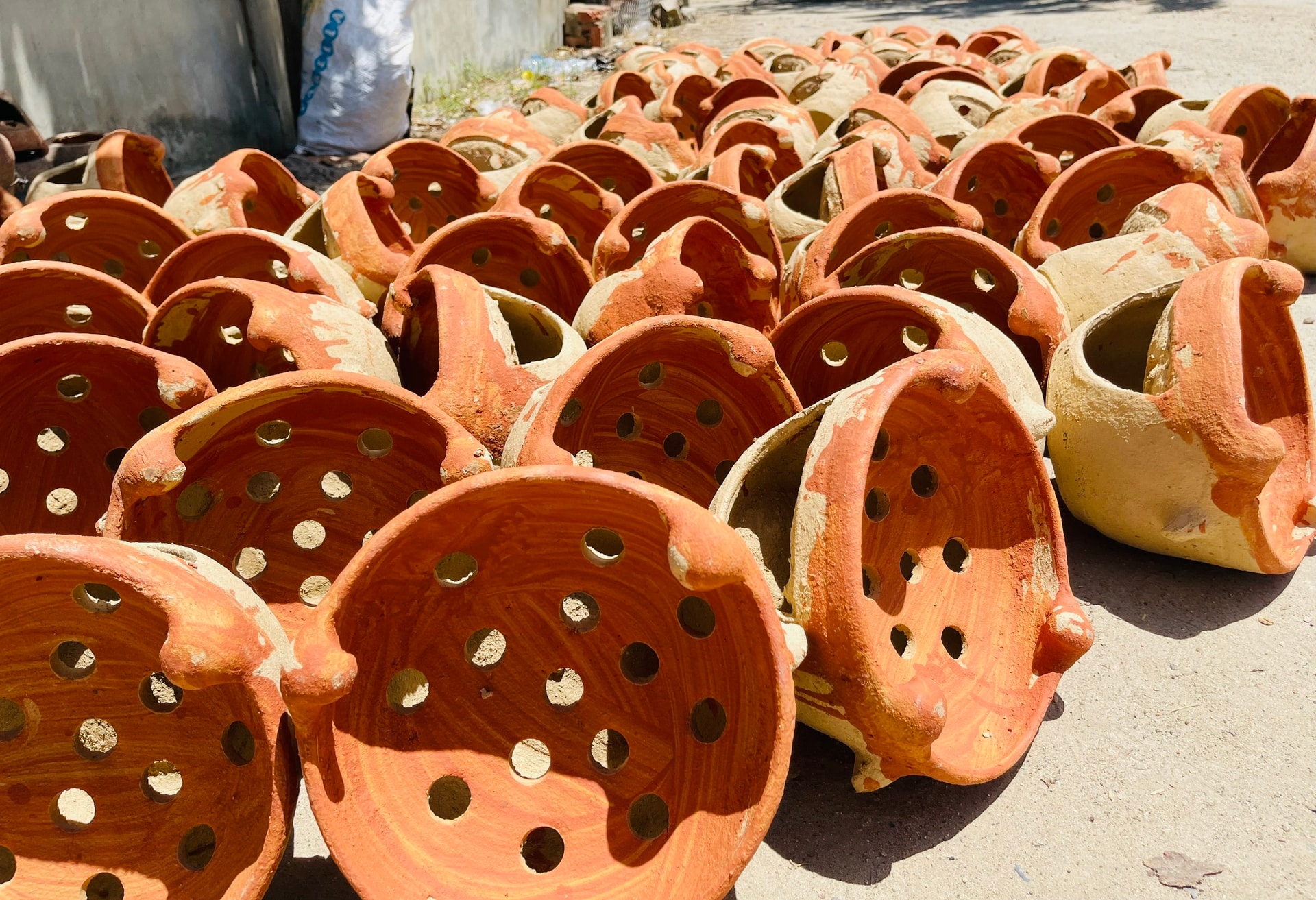
Recognizing Cham pottery art heritage as a valuable resource for tourism development, the Department of Culture, Sports and Tourism has implemented numerous solutions to enhance the attractiveness of local tourism. These include focusing on opening training classes to improve the skills of young artisans, and organizing experiential programs and guided tours for tourists visiting the pottery villages. Practicing this heritage in an intimate setting is creating a sustainable connection, ensuring the long-term preservation of the village's stories, the craft, and the Cham cultural and religious life.
Source: https://baolamdong.vn/giu-lua-nghe-gom-truyen-thong-419313.html