

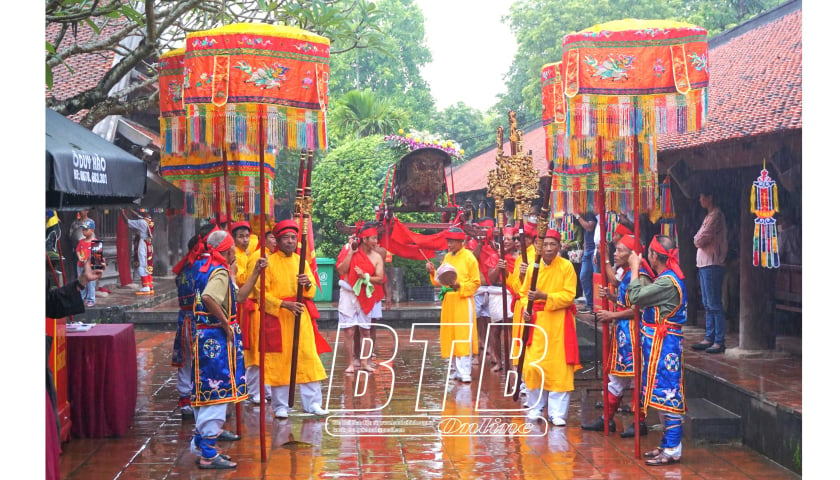
Preserving traditional rituals in the Keo Pagoda festival, Duy Nhat commune (Vu Thu district).
A place where unique folk traditions converge, unlike anywhere else.
Besides their diligent labor and unwavering resistance against foreign invaders, the traditional cultural life of the people of Thai Binh reflects the characteristics of the low-lying, downstream Red River Delta region—diverse, open, and liberal. This is manifested in folk religious practices and numerous forms of traditional performing arts of the agricultural population, which take place during various festivals. Before the August Revolution of 1945, the province had more than 800 villages, most of which had village communal houses with festivals where people gathered to worship. The diverse activities organized during the festival aim to honor the heroes who made great contributions to their homeland and country, while also recreating agricultural life, folk customs and beliefs, and organizing competitions and entertainment, showcasing the good and beautiful aspects of each locality such as rice cooking contests, fish feasts, cake making, firecracker making, wrestling, etc. Many unique and attractive festivals can be mentioned, such as the Keo Pagoda Festival in Duy Nhat commune (Vu Thu district), held twice a year, reflecting the customs of the riverine inhabitants; the Quang Lang Village Festival in Thuy Hai commune (Thai Thuy district) with the Ong Dung Ba Da dance; the Het Temple Festival in Thai Thuong commune (Thai Thuy district) with the ball wrestling competition; and the Sao Den Festival in Song An commune (Vu Thu district) with the kite flying competition…
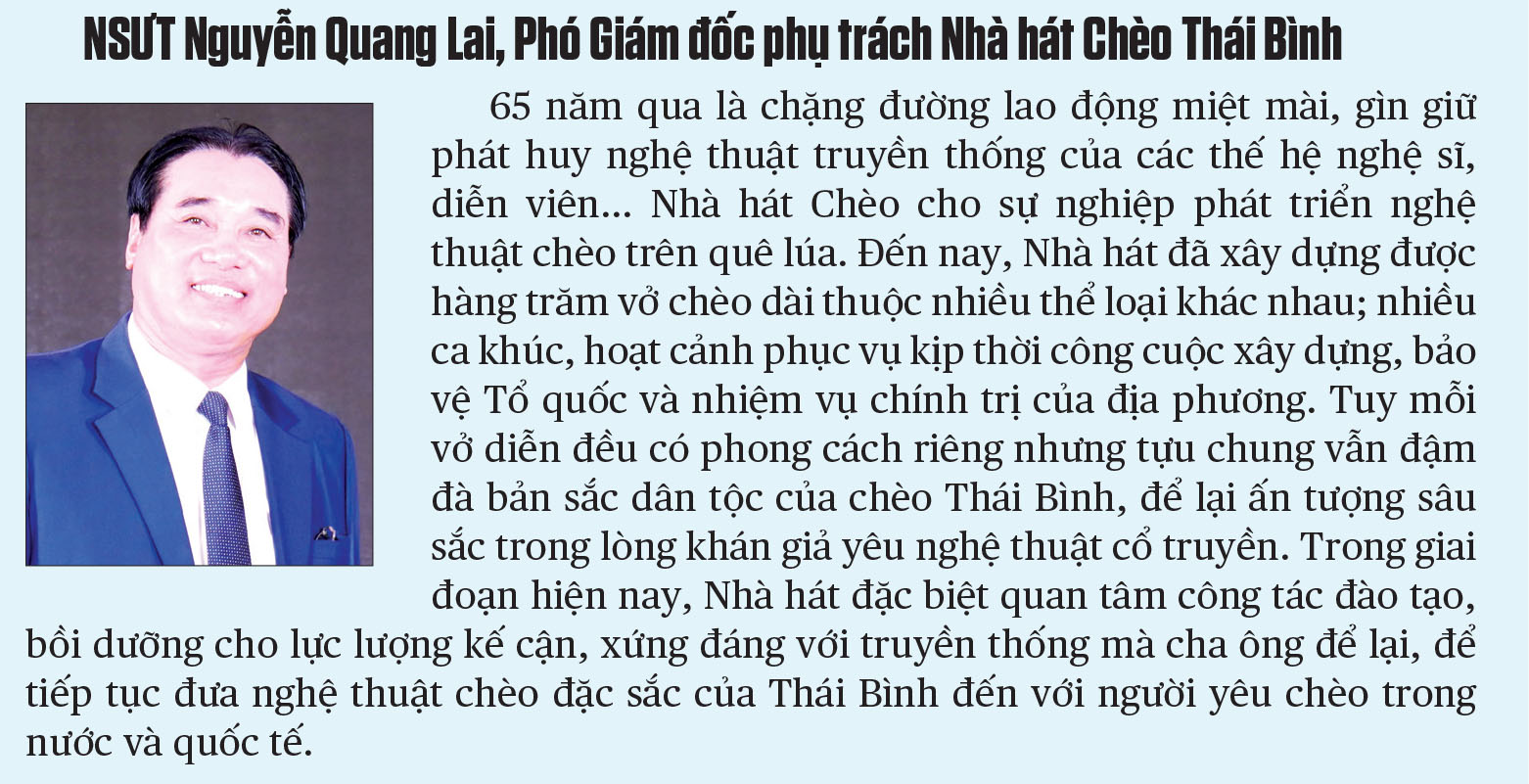
In particular, within village culture, festivals serve as a place to preserve and promote unique forms of folk art and performance, rich in the characteristics of the agricultural communities in the coastal areas of the Northern Delta. Ancient dances such as the flag and fan dance, the letter-pulling dance, the eight-string dance, the boat-rowing dance, and the dragon dance have become distinctive features of the villages of Thai Binh . In addition, folk singing is concentrated at the Dong Bang Temple festival (Quynh Phu), Ca Tru singing is performed at some village festivals in Kien Xuong, and most notably, Cheo singing, with its performances in the village square, was present at almost all traditional village festivals. Songs like "I don't crave spring rolls or fried meatballs/I crave plain rice, I crave watching Cheo singing" reflect the enduring vitality of Cheo singing in Thai Binh. Statistics show that before 1945, there were over 50 Cheo troupes in the province that regularly competed at village festivals. Among them, three famous traditional opera villages stand out: Ha Xa opera (Hung Ha), Khuoc village opera (Dong Hung), and Sao Den opera (Vu Thu). Along with traditional opera, water puppetry is a unique theatrical art form that has developed in many traditional guilds in the villages of Dong Hung district… Over the centuries, due to the secrecy of the craft, water puppetry has not been widely practiced, but this unique art form is still performed at many village festivals both within and outside the province.
Village festivals have become a direct and important environment for preserving and promoting the cultural and artistic potential of villages. Conversely, folk art, along with games and performances, have created a unique identity and a powerful appeal in this land at the end of the Red River.
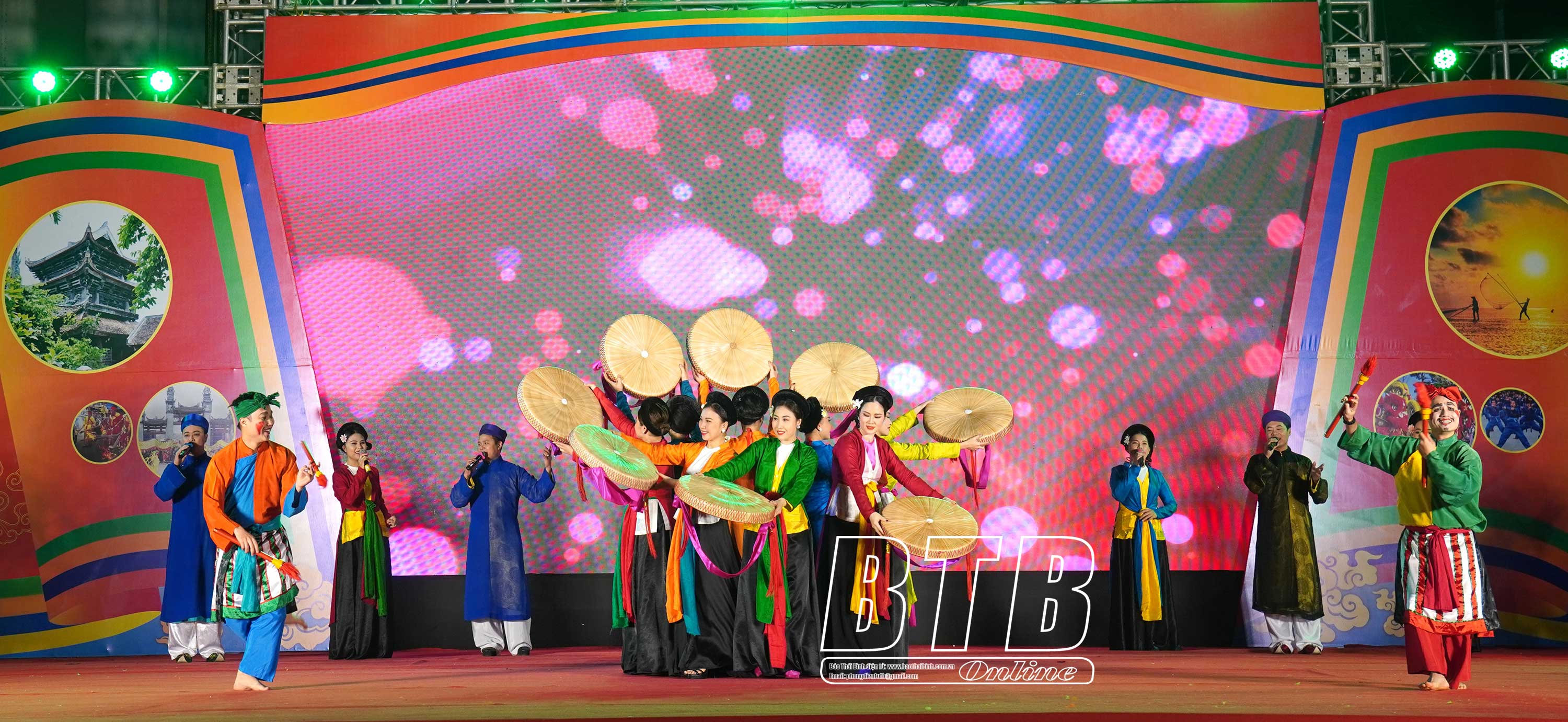
Traditional Vietnamese opera (cheo) performances at the Provincial Culture, Sports and Tourism Festival on March 21st.
Leveraging cultural resources
Implementing the Party's guidelines and the State's policies and laws, the work of building and developing culture in Thai Binh province over the past years has achieved many important results. Paying attention to leveraging resources, Thai Binh province has issued many guidelines and policies to develop culture; the focus being Resolution No. 04-NQ/TU, dated January 30, 2019, of the Provincial Party Committee on strengthening education and promoting the cultural, historical, patriotic, and revolutionary traditions of Thai Binh province for cadres, Party members, and all strata of the people; Resolution No. 09-NQ/TU, dated October 3, 2024, of the Provincial Party Committee on developing tourism into an important economic sector of the province…
Throughout history, the province currently has 2,969 ancient cultural institutions bearing traces of history and culture that have been inventoried. These include relics, artifacts, antiques, and Han Nom documents of exceptional historical, cultural, and scientific value, marking a glorious period in the nation's history and representing the artistic style of an era. Among them, 2 sites have been classified as special national relics by the Prime Minister, 127 are national relics, and 610 are provincial relics. Thai Binh also boasts two national treasures: a gilded wooden altar currently preserved and displayed at the Thai Binh Museum and an incense altar at Keo Pagoda.
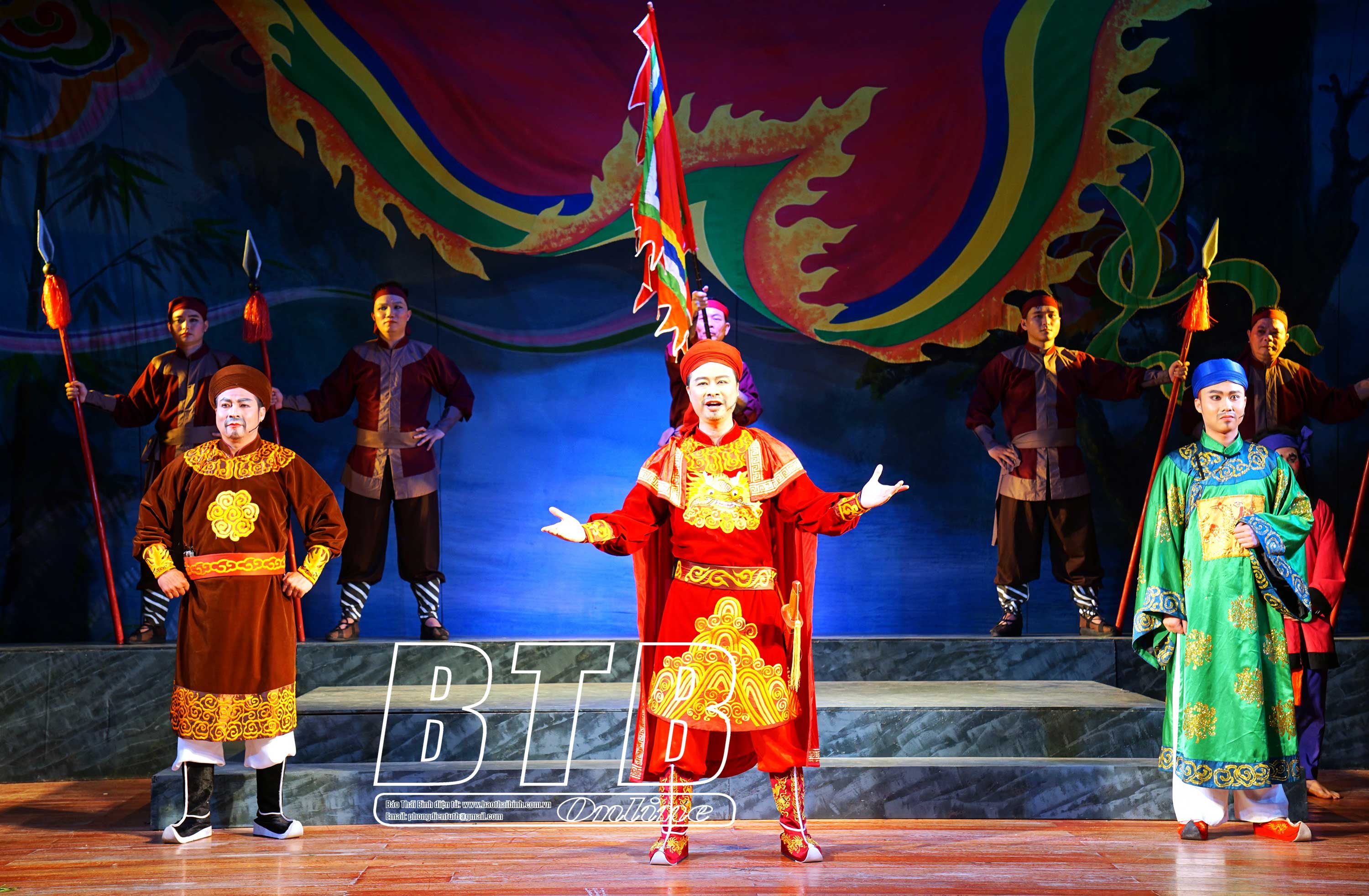
The artists of the Cheo Theatre perform the play "Legend of the Jade Couple," preserving the original story of the ancient Cheo opera.
As a land where diverse cultures converge, Thai Binh currently preserves hundreds of intangible cultural heritage items, including 585 traditional festivals, 91 traditional crafts, 58 folk performing arts, and 28 social customs and beliefs. Among these, 14 intangible cultural heritage items have been included in the national list of intangible cultural heritage: the Tran Temple Festival, the Tien La Festival (Hung Ha); the Keo Pagoda Festival, the custom of flying kites with whistles in the Sao Den Festival, Song An commune, the Bong Dien Festival (Vu Thu); the A Sao Temple Festival, the Dong Bang Temple Festival, the Long Khe Temple Festival (Quynh Phu); the Quang Lang Village Festival (Thai Thuy); the Giang Village Festival, water puppetry in Dong Cac and Nguyen Xa communes (Dong Hung)... Thai Binh also has 22 artisans who have been awarded the title of "Outstanding Artisan" by the state, and 7 artisans who have been awarded the title of "People's Artisan" in the field of intangible cultural heritage. They are all living museums, preserving and passing on treasures of knowledge and expertise in the field of cultural heritage conservation, serving as an important resource for the development of local tourism… The above figures and documents are not enough to fully describe the cultural heritage of Thai Binh. However, they have partly demonstrated the long history and profound culture of this land.
In the era of national progress, the building and development of culture is increasingly valued, not only as the spiritual foundation of society but also as a driving force for comprehensive development. With the National Target Program on Cultural Development for the period 2025-2035 being gradually implemented, Thai Binh's folk cultural resources will play an important role in preserving patriotism and national pride for present and future generations. This is also a unique characteristic that the province is focusing on preserving and promoting to attract more tourists to Thai Binh, thereby boosting the development of the tourism industry.
.
Tu Anh
Source: https://baothaibinh.com.vn/tin-tuc/19/219502/dam-da-van-hoa-truyen-thong


![OCOP during Tet season: [Part 3] Ultra-thin rice paper takes off.](/_next/image?url=https%3A%2F%2Fvphoto.vietnam.vn%2Fthumb%2F402x226%2Fvietnam%2Fresource%2FIMAGE%2F2026%2F01%2F28%2F1769562783429_004-194121_651-081010.jpeg&w=3840&q=75)




Comment (0)