

Impressive, captivating, and highly artistic... these are the feelings of many tourists when they first experience the Ca Tru song "Hong Hong Tuyet Tuyet" performed on the stage of the Tourist Reception and Performing Arts Center at the Hung Temple Historical Site.
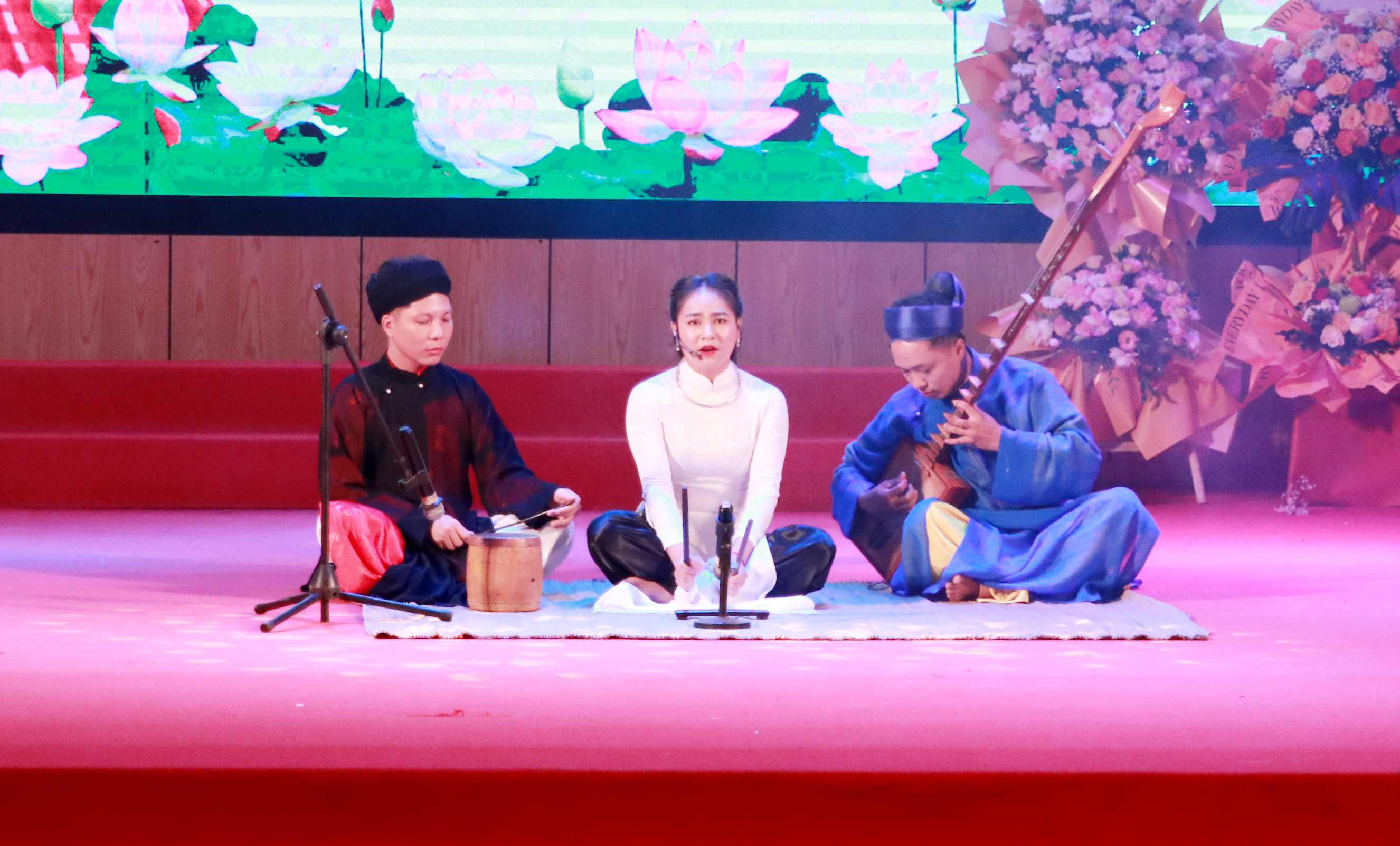
Singer Thúy Quỳnh performed the Ca trù piece "Hồng hồng tuyết tuyết" on the stage of the Tourist Reception and Performing Arts Center at the Hung Temple Historical Site.
The person who breathed life into the performance was singer Thuy Quynh. As a member of the Provincial Art Troupe, Thuy Quynh's journey into Ca Tru (traditional Vietnamese singing) was a matter of destiny. After Ca Tru was listed by UNESCO as an Intangible Cultural Heritage in need of urgent protection, she, along with many colleagues from the Department of Culture, Sports and Tourism, went to study and perform at the National Ca Tru Festival in 2014, 2018, and other years. There, Thuy Quynh made her mark as a young singer with a resonant, powerful, and expressive voice perfectly suited to Ca Tru. After many years of diligent self-study and training, Thuy Quynh can sing classic styles such as: "Offering Incense - Singing Melodies," "Sending Letters," "Northern Rebellion," and "Singing in 36 Styles"...
On stage, the talented and beautiful female singer, dressed in a pristine white ao dai (traditional Vietnamese dress), gracefully sang and tapped the rhythm, each beat interwoven with the poignant, sometimes slow, sometimes fast, subtle, skillful, and refined singing. The melodious music of the male musician and the drumming of the officials, sometimes like "flying geese," sometimes "riding horses," seemed to praise the artistry of the singer and musician. All these elements blended together to recreate an impressive artistic space, each lyric, each note, each drum beat imbued with personal emotion, stirring the hearts of the audience present.
Singer Thúy Quỳnh shared: “Ca Trù is a traditional performing art form that is very selective in its audience, with complex skills that require a great deal of hard work and dedication to master, so not many people can learn it. In each performance, I always try to convey to the audience the complete soul of Ca Trù, not just the sound but also the story behind each lyric and each melody.”
In Ca Tru singing, the use of clear breath is primary, and the vibrato must achieve a style that is both discreet and dignified. Mastering the rhythm is difficult, and mastering the rhythmic patterns fluently and vividly requires a great deal of practice. The singers do not need gestures; they use only the lyrics and the rhythmic clapping to express the soul of the Ca Tru song.
Ca trù is a long-standing art form. Although considered a scholarly art form with a significant influence on the nation's traditional music , Ca trù has also experienced ups and downs throughout history, even facing the risk of extinction at times. Through the dedicated efforts and sense of responsibility of various levels of government, and especially the artists and performers themselves, this art form is gradually gaining public acceptance.
Mr. Nguyen Kim Loc, a tourist from Hanoi, shared: “This is the first time I’ve seen Ca Tru performed live at Hung Temple. I’m truly impressed by the talent of the artists and feel their love and effort in bringing this art form to the public. Through this performance, I have a deeper understanding of Ca Tru and a greater love for Vietnamese culture.”
With passion and enthusiasm, artists, including singer Thuy Quynh, continue to strive to bring Ca Tru art to the stage in various art performances. Singers like her always hope to bring this unique art form closer to the public and give it a more vibrant appeal.
Thuy Phuong
Source: https://baophutho.vn/dam-say-cau-hat-a-dao-225129.htm
![[Photo] Standing Committee member of the Party Central Committee Tran Cam Tu working with the Central Inspection Committee](https://vphoto.vietnam.vn/thumb/1200x675/vietnam/resource/IMAGE/2026/05/28/1779969579668_ndo_br_bnd-2495-jpg.webp)













































































Comment (0)