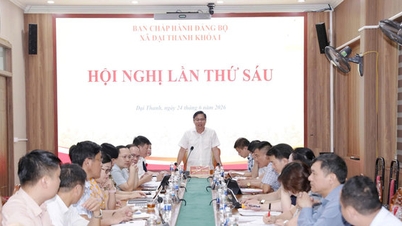
These days, in residential areas throughout the province, the issue of reorganizing villages and neighborhoods is attracting much attention from the people. To achieve high levels of consensus, local Party committees, authorities, and residential area Party branches always prioritize promoting democracy. Democracy is demonstrated through the public disclosure and transparency of reorganization policies and plans; organizing consultations with the people; and listening to, accepting, and fully addressing the valid opinions of the people.
In Thien Hoa commune, from June 10th to June 14th, the commune organized a public consultation on the draft plan for rearranging and reorganizing the commune's villages. Accordingly, residents were fully informed about the necessity, legal basis, implementation principles, and rearrangement plan. Currently, the commune has 16 villages; after the rearrangement, it is expected that there will be 11 villages remaining, with 11 villages merged into 6 new villages and 5 villages remaining unchanged.

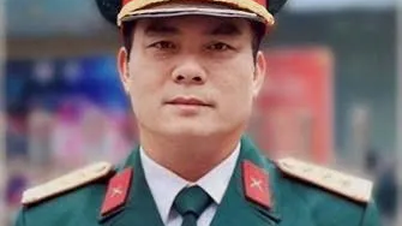
Mr. Vy Xuan Tinh, Secretary of the Party Committee of Thien Hoa commune, shared: "To ensure the effectiveness of the consultation process, the commune directed the villages to intensify propaganda about the purpose and significance of rearranging residential units; at the same time, we assigned officials to directly guide and answer questions of concern to the people. Based on the information gathered, the majority of the people agreed with and supported the policy of rearranging and reorganizing villages and residential areas. The commune compiled all the people's contributions to finalize the plan, ensuring that the rearrangement plan is suitable to reality and creates high consensus within the community."
Along with Thien Hoa, 100% of communes and wards have now completed or are in the process of gathering public opinion. This process has been implemented through various flexible methods such as organizing direct dialogue conferences, voter outreach, village and neighborhood meetings, publicly posting draft proposals, and distributing opinion forms to representatives of households. The issues raised by the people focus on the merger plan, the names of the new villages and neighborhoods, the location and use of the community cultural center after the reorganization, etc.
For example, consider the selection of names for the new villages after the reorganization. Most residents wish to retain their old village names. However, through meetings and discussions, many residents also agreed to name the new villages after the names of the old communes before the reorganization. For instance, in Tuan Son commune, according to the proposed plan, Dinh Be and Dong Dien villages will be reorganized into a new village named Minh Son (these two villages originally belonged to the old Minh Son commune, one of the three communes merged to form the current Tuan Son commune).
Mr. Hoang Van Hoa, from Dinh Be village, said: "When the local authorities implemented the village reorganization plan, the villagers all agreed and unanimously supported it because it was a correct policy, suitable to practical requirements. Regarding the choice of name for the new village, initially, there were many differing opinions. Some wanted to keep the name Dinh Be, while others suggested using Dien Be – the name of the two villages before the separation – to preserve the historical significance and long-standing values of the community. However, after receiving information and guidance from the local Party committee and government on the proposed name Minh Son, we discussed and consulted with the residents. Through the consultation process, the majority of people agreed with this name."
The province currently has 1,646 villages and residential areas, of which 1,340 are subject to reorganization. However, depending on specific characteristics and practical circumstances, there are approximately over 100 villages subject to reorganization that will not be reorganized in 2026. Publicizing information, listening to and respecting the opinions of the people not only ensures the feasibility and suitability of reorganization plans to the historical, cultural, customary, and traditional characteristics of each locality, but also strengthens the people's trust in the Party's policies and the State's guidelines.
Every contribution from the people not only helps to refine the reorganization plan but also contributes to improving the quality of governance at the grassroots level. Implementing the motto "The people know, the people discuss, the people do, the people inspect, the people supervise, and the people benefit" will create a high level of consensus in awareness and action, thereby ensuring that the reorganization of villages and residential areas proceeds smoothly and effectively.
Source: https://baolangson.vn/dan-chu-trong-sap-xep-thon-to-dan-pho-5096242.html
![[Photo] Prime Minister Le Minh Hung presides over the thematic session on promoting science and technology development and innovation.](https://vphoto.vietnam.vn/thumb/1200x675/vietnam/resource/IMAGE/2026/06/23/1782207872934_ndo_br_dsc-1724-jpg.webp)


![[Image] Paris's oldest bridge goes viral after transforming into a giant cave.](https://vphoto.vietnam.vn/thumb/1200x675/vietnam/resource/IMAGE/2026/06/24/1782283441197_ndo_br_dsc05314-jpg.webp)