

At 11:01 AM on April 9th, Vietnam time, the retaliatory tariffs imposed by the US on a range of countries and territories officially took effect without any modifications. Vietnam was subject to a 46% tariff.
According to KB Securities Vietnam (KBSV), the 46% retaliatory tariff for Vietnam will have the strongest impact on the fisheries, textile, logistics, and industrial real estate sectors.
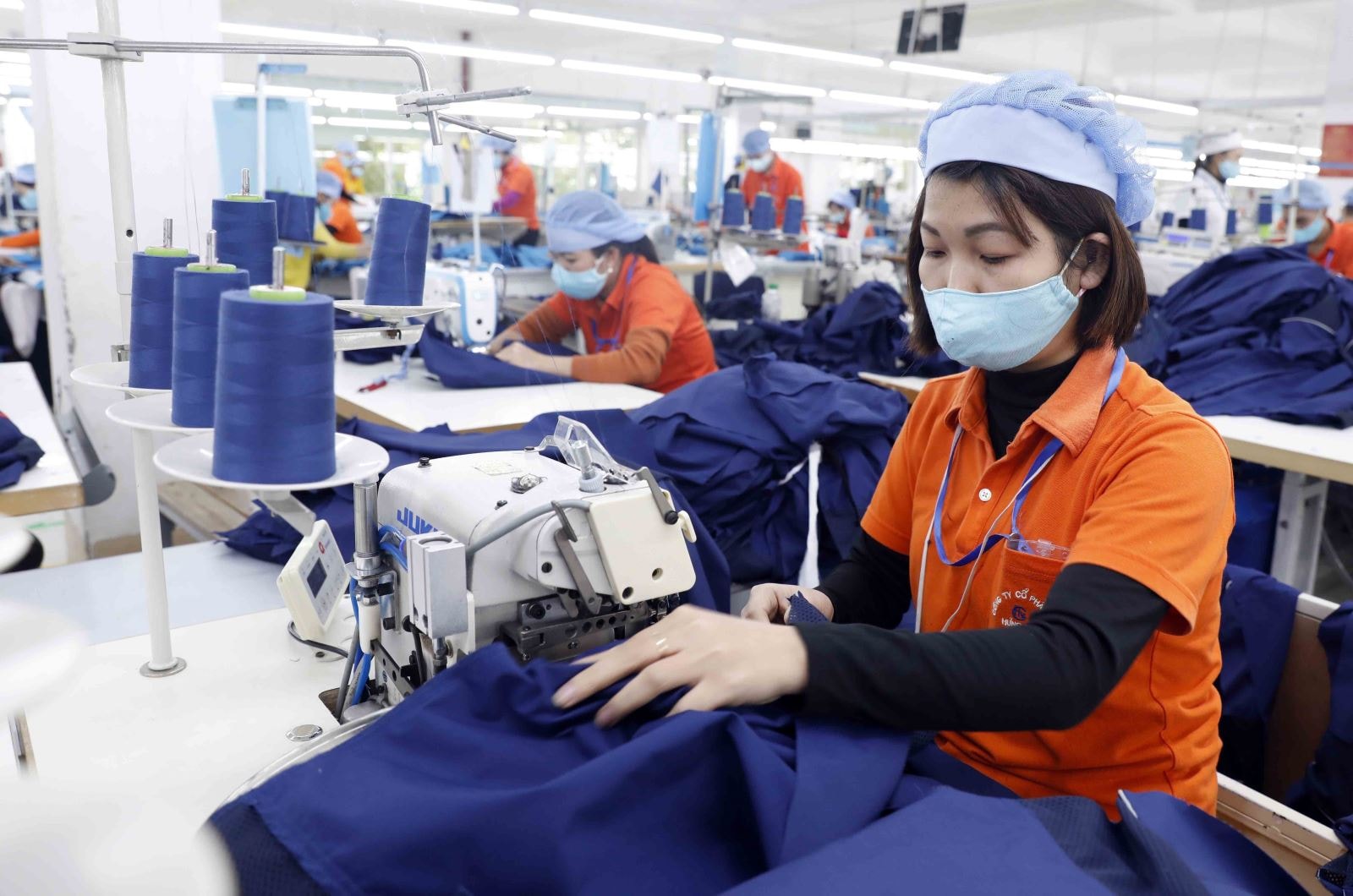
Specifically, for the textile and garment industry, the US is a key market, with textile and garment exports to the US accounting for approximately 43.4% of total export turnover. Therefore, Trump's new retaliatory tariff policy will have a strong negative impact on the Vietnamese textile and garment industry. US demand for Vietnamese textiles and garments will decrease because the price level of textile and garment products in the US has increased due to the increased tariffs on these items from all exporting countries. Furthermore, Vietnam is the second-highest taxed country among the five largest exporters to the US.
According to KBSV's calculations, the average selling price of textiles and garments exported to the US after the new tariffs increased by 16.7%, second only to China's 21.2% increase and higher than Bangladesh, Indonesia, and India (increases of 12.5%, 9.7%, and 6.8%, respectively). The value of new contracts signed by textile and garment businesses is likely to decline as orders shift to countries with more competitive pricing, as selling price is a crucial factor for retailers when choosing suppliers of low value-added textiles and garments such as CMT and FOB.
Similarly, in the seafood industry, the US is the second largest market for two main seafood export products: shrimp and pangasius, accounting for 18% and 17% respectively of the export value of these two products. Among them, leading export companies such as VHC/FMC/MPC are expected to derive 30%/20%/16% of their revenue from the US market in 2024, respectively.
Businesses' profits will be impacted as most of their main competitors—India, Ecuador, and Indonesia—are subject to lower tariffs, at 26%, 10%, and 32% respectively, while China faces a higher overall tariff of 54%. Businesses will need more time to find new markets where prices and profit margins will be lower than in the US market.
For the industrial real estate sector, in the short term, FDI enterprises tend to temporarily halt disbursements for previously registered new factory construction projects. Manufacturing facilities in Vietnam continue to operate but will experience production cuts due to the shift of export orders from the US to countries with lower tariff costs and the increased risk of a global economic recession.
Over the next 3-5 years, KBSV expects that the demand for industrial park land leases will recover and be offset by FDI enterprises with export markets to countries other than the US. These businesses will continue to expand production in Vietnam thanks to competitive advantages such as low labor costs, political stability, and favorable geographical location.
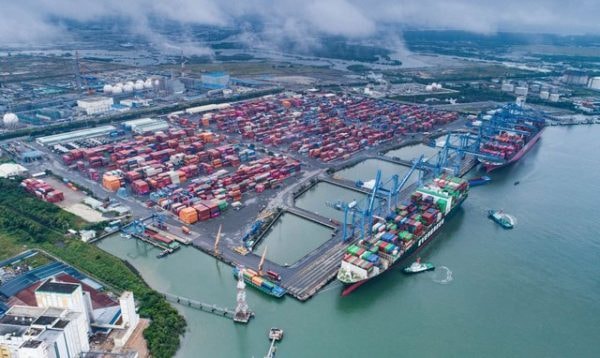
The port industry will also be strongly impacted by the decrease in import and export volumes, affecting cargo throughput at ports and potentially affecting the ability to adjust service prices upwards. Port expansion investment projects may be postponed.
Meanwhile, the shipping industry is not directly affected (Vietnamese shipping companies mainly operate domestic and intra-Asia routes). However, the shift of supply chains out of Vietnam could indirectly impact shipping volume and spot freight rates due to decreased demand for imported raw materials and reduced demand for transit through intermediate countries before reaching the US. T/C prices are not expected to be significantly affected as demand for long-term chartering remains stable despite concerns about supply chain instability, route reallocation, and cargo volume.
For the aviation sector, passenger services will be moderately impacted due to a decrease in international visitors related to FDI inflows, while cargo transport and airport operations will be more strongly affected by declining cargo demand.
Banking, securities, retail, food and beverages, electricity, technology, and building materials are predicted to experience moderate indirect impacts.
According to experts at KBSV, credit may be affected due to the high proportion of loans to the manufacturing and processing industry, import-export businesses (accounting for 15-20%), and retail consumption indirectly impacted by import-export activities. However, this will be offset by diversification of export markets to other countries; increased credit to other key sectors such as real estate and investment; and the continued maintenance of existing supporting factors (interest rates, although under pressure to rise, remain low).
Furthermore, downward pressure on Net Interest Margin (NIM) will increase after adjustments to expectations of a potential 1-1.5% increase in deposit interest rates, while lending interest rates remain low – a smaller increase with a lag compared to deposit rates. Non-performing loans (NPLs) will also increase due to the less positive economic outlook, especially for customers in sectors directly affected by tariffs, who will face cash flow pressures. Nevertheless, banks still have room to manage debt, and the enactment of Resolution 42 is expected to help reduce NPLs across the entire system.
In the securities sector, brokerage and proprietary trading are affected by the reduced growth prospects of listed companies, negatively impacting stock prices and liquidity. Margin lending is also affected by decreased borrowing demand due to reduced liquidity resulting from the unfavorable market outlook. Simultaneously, exchange rate and interest rate fluctuations put pressure on margin lending rates, increasing borrowing costs for clients. Conversely, the launch of the KRX and the upgrade of the FTSE market will positively impact foreign capital flows, benefiting the securities sector in the second half of 2025.
Declining incomes are impacting demand and affordability for housing, particularly in the mid-range segment. A projected 1-2% increase in interest rates could affect buyer sentiment and developers' project implementation plans. Reduced FDI inflows will impact both buying and renting demand, decreasing absorption rates in housing projects around industrial parks. However, these impacts will be somewhat mitigated by recent positive developments in the real estate market, including the removal of legal and funding obstacles for real estate businesses, along with increased public investment and infrastructure improvements.
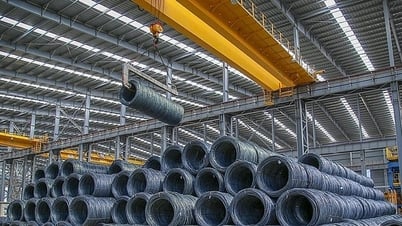
For the construction materials sector, import duties on steel will remain at 25% under Section 232, instead of the newly announced 46% reciprocal duty. Although not affected by the reciprocal duty, the outlook for exports of galvanized steel to the US will be negatively impacted by the newly announced anti-dumping and countervailing duties (the highest rates for each are 59%/46.73%).
Regarding the plastic pipe market, KBSV believes that the reciprocal tax will not impact the consumption prospects of businesses in the industry because production is concentrated to serve domestic demand. For the wood and stone sectors, the 46% reciprocal tax will have a strong impact because the US market accounts for an average of 50%/80% of the export revenue of domestic businesses.

Consumer demand may weaken due to reduced incomes as export and FDI businesses cut costs and scale back production. Prices of imported goods may also tend to rise due to the depreciation of the VND, which will also affect demand. Consumption of food and beverages will also be affected as income and purchasing power decline. There will be a tendency towards reduced consumption and increased asset hoarding as a risk-averse strategy.
Demand for essential food items (pork, milk, sugar, personal consumer goods) is expected to remain stable, while demand for non-essential items (beer) will be significantly impacted. Profit margins for businesses will face pressure as import costs increase due to the depreciation of the VND, while weak consumer demand leads to a decrease in average selling prices.
Electricity consumption may be affected by the decline in production and business activities of industrial and service customers facing difficulties from import and export operations. Industrial electricity consumption accounts for 45-50% of total consumption. Thermal power plants will experience reduced capacity as EVN will focus on mobilizing electricity from BOT projects, renewable energy projects benefiting from FIT rates, and hydropower projects with lower costs. Thermal power plants will only operate during peak hours or during the dry season in 2026 when El Nino begins to appear.
Residential real estate and construction were only slightly affected.
In the short term, the technology services sector is not subject to US protective tariffs, thus software outsourcing continues to maintain a cost-competitive advantage. However, in the long term, higher tariffs will negatively impact global economic prospects, causing businesses to cut spending on technology investments. For large companies likeFPT , the impact on revenue growth will be minimized thanks to a strategy of gradually shifting towards higher-value and longer-term IT system operation service contracts.
In conclusion, KBSV believes that declining income in the construction sector and the difficulty in maintaining interest rates at their current low levels will impact the recovery of the real estate market. Industrial construction is negatively affected by the decline in FDI inflows, with many businesses scaling back production and temporarily suspending investment disbursements in Vietnam, leading to a decrease in demand for industrial park factories. The infrastructure construction sector, particularly public investment projects, may benefit as the government accelerates disbursement to support growth, offsetting the decline in exports and FDI.
Source: https://baodaknong.vn/danh-gia-tac-dong-cua-thue-doi-ung-len-cac-nganh-nghe-248815.html
![[Photo] Prime Minister Pham Minh Chinh presides over a meeting on private sector economic development.](/_next/image?url=https%3A%2F%2Fvphoto.vietnam.vn%2Fthumb%2F1200x675%2Fvietnam%2Fresource%2FIMAGE%2F2025%2F12%2F20%2F1766237501876_thiet-ke-chua-co-ten-40-png.webp&w=3840&q=75)






















































































Comment (0)