

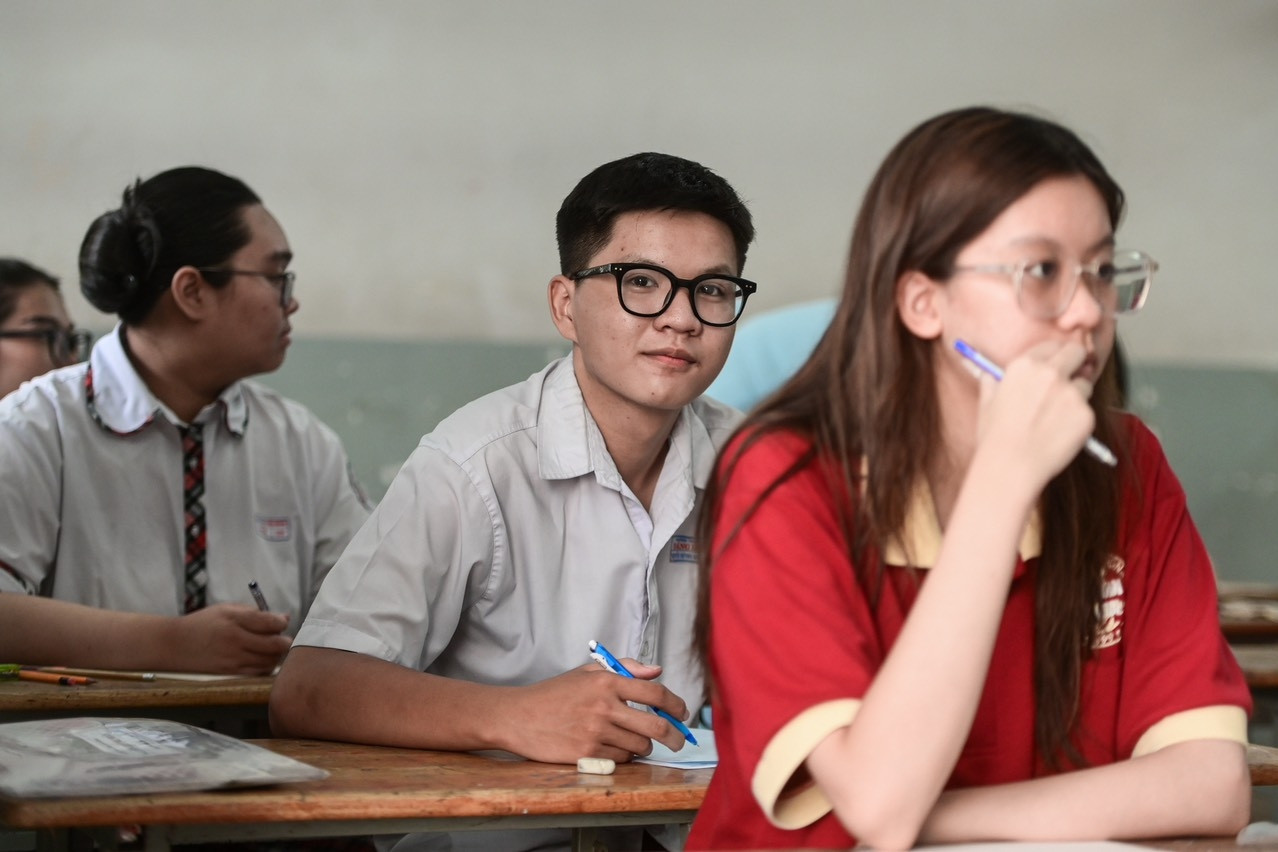
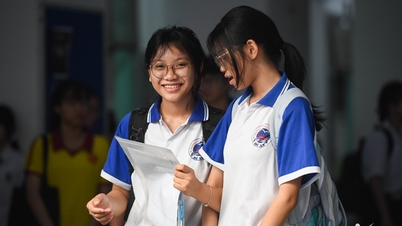
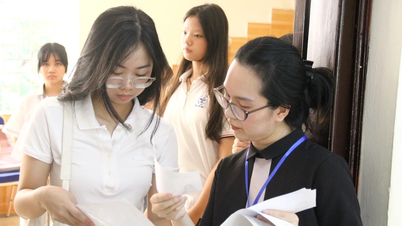
Mathematics exam for the 2024 high school graduation exam.
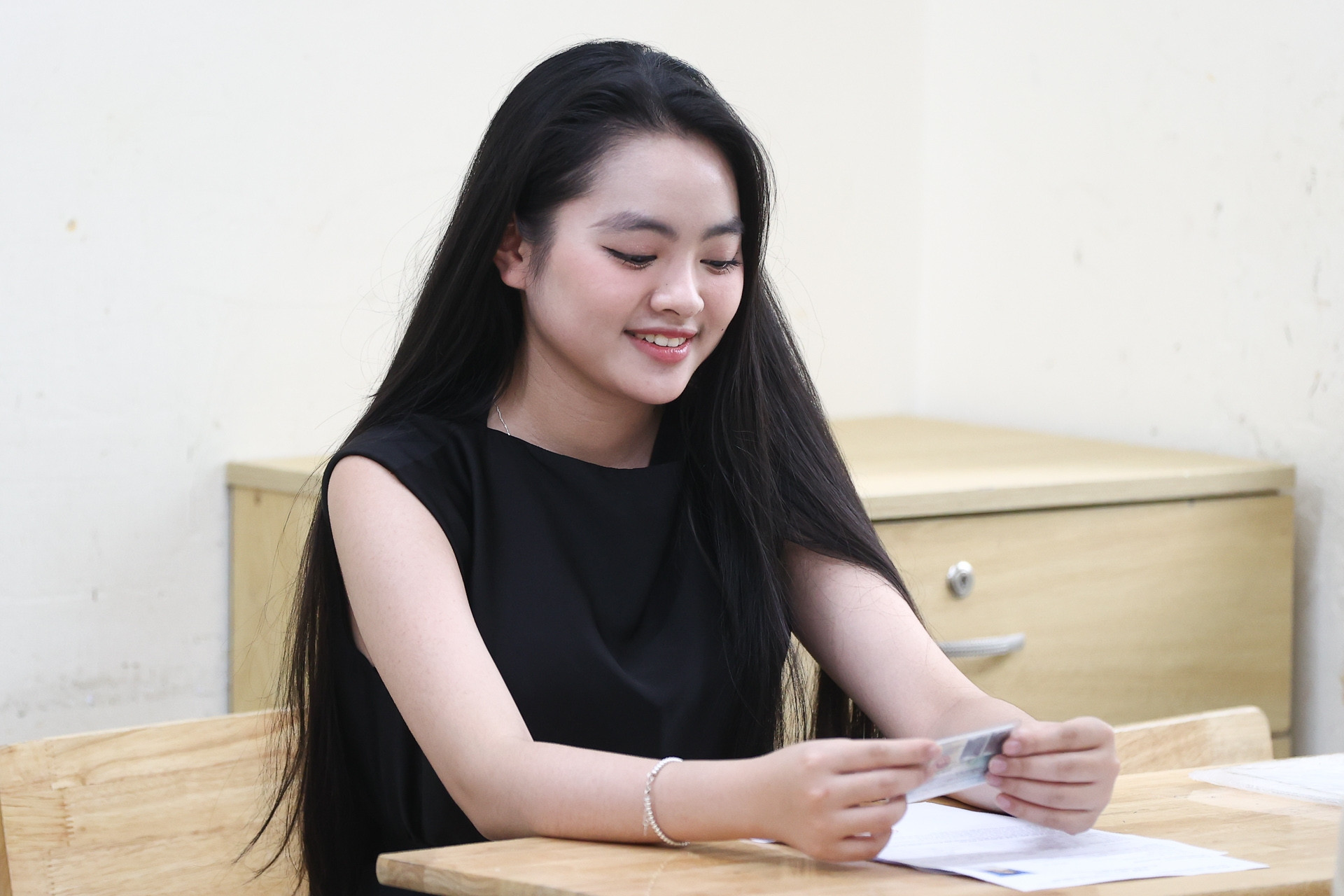
The theme of "Country" will be included in the 2024 high school graduation exam for Literature.
VietNamNet presents the suggested answers for the Literature subject in the 2024 High School Graduation Exam (prepared by Tuyensinh247). Readers can view the exam questions here .
I. READING COMPREHENSION
Question 1. What makes up the history of human art is the succession of generations of artists.
Question 2. Without previous generations of artists, artists of subsequent generations would: lack the resources to create and explore.
Question 3. The effect of associating the flow of a river with the history of artistic creation is:
It helps make sentences more vivid and engaging, making it easier for readers to visualize. It creates unique associations and emphasizes continuity and progression in artistic creation.
Through this, the author affirms that artistic creation is a continuous process, with inheritance and succession from one generation to the next. Subsequent generations must not only build upon the values left by previous generations but also explore and create new things so that the flow of art always develops.
Question 4. Students should use the quoted statement to provide appropriate reflections. The following is a suggestion from the expert panel:
A lesson about unity.
Lessons about cooperation and support...
II. ESSAY WRITING
Question 1
Formal requirements: The paragraph should be approximately 200 words long, free of grammatical and vocabulary errors. It must include all three parts: introduction, body, and conclusion.
Content requirements: Clarify the argumentative issue: The importance of respecting individuality. The essay can be developed in various ways; here are some suggestions:
1. Opening paragraph: Introducing the issue: the importance of respecting individuality.
2. Body paragraph
a. Explanation
- Personality refers to the unique and distinctive characteristics, thoughts, and traits of an individual.
- Respecting individuality means accepting, acknowledging, and valuing the unique characteristics and personalities of each person. → This has immense significance in contributing to a rich diversity in society.
b. Analysis
Respecting individuality means understanding and appreciating the unique personality traits of oneself and those around us.
- The importance of respecting individuality:
+ Helps people develop themselves: When respected, individuals feel understood, which motivates them to improve themselves.
+ Improve the quality of relationships: Respecting individuality allows us to connect, understand, and empathize with each other more easily.
Respecting individuality helps create a positive living environment.
- We should focus on the two words "beginning," which the poet wants to express here in a simple yet profound way: The space of the Nation has been formed for a very long time; it is the cradle that embraces the people of Vietnam. But that space is only called the Nation when culture and customs begin to emerge. The image of the Nation beginning with a betel quid is a simple yet philosophical way of saying that. Thus, we understand that the Nation's formation process runs parallel to the emergence of culture and customs.
The nation grows stronger when its people learn to plant bamboo to fight the enemy.
- The phrase "knowing how to plant bamboo to fight the enemy" reminds the reader of the legend of Saint Gióng. The boy stretches and becomes a mighty warrior, uprooting bamboo to drive the enemy out of the country. From this, we can understand the poetic meaning of Nguyễn Khoa Điềm in the two words "growing up." The author has depicted the image of the Nation rising up through struggle, through construction and preservation.
My mother's hair was tied up at the back of her head.
Parents love each other through the bitterness of ginger and the saltiness of salt.
- The poem evokes an image, a habit that embodies the culture and the entire rice-farming civilization, where farmers toil: "Selling their faces to the earth, selling their backs to the sky."
- "Ginger is spicy, salt is salty" - these are the rich, indispensable seasonings in Vietnamese meals. Over time, ginger becomes spicier, and salt becomes saltier. This symbolizes affection, loyalty, and faithfulness in emotional life, especially in the marital relationship.
The rafters and pillars become names
The rice grains must endure the harsh sun and dew before being milled, pounded, sifted, and winnowed.
The poem suggests that the inanimate trees and logs in the forest suddenly acquire names and ages when they become intertwined with human life. A second interpretation relates to spiritual beliefs and traditions, while a third speaks of the way houses are built to protect against wild animals and ensure a peaceful and prosperous life.
- To produce rice grains, countless steps are involved: milling, pounding, sifting, and winnowing. This poetic imagery evokes the folk song: "Oh, whoever holds a bowl full of rice, each fragrant grain holds a thousand bitter sorrows."
c. Defining the Nation through geographical space - the source of the formation of Vietnamese cultural identity.
The land is where he goes to school.
Water is where I bathe.
The country is where we meet.
- The homeland is not something lofty and distant, but rather the space where we grew up, connected to us from infancy. When "Land" and "Water" stand side by side, they also mark the place where we first met. The homeland is harmonious and unified, just as the love between two people is intertwined. Thus, the homeland is the unity and close connection between the elements: "Land" and "Water," inseparable. Just like love, neither you nor I can exist without each other.
The Homeland is where I dropped my scarf in silent longing.
- The poem acts as a bridge leading to the folk song: "The scarf misses someone!" The place where you dropped the scarf is the space of the Nation, and your secret longing for your lover is also intertwined with the Nation. In your love, in the place where you hẹn hò (date/rendezvous), there is the Nation. Thus, the Nation is in your memories, in your love, in our love.
This land is where the phoenix flies back to the silver mountain.
Water is where the fisherman swims in the open sea.
- Drawing inspiration from folk songs of Central Vietnam, the poet incorporates these two lines into a vision of a beautiful and prosperous country with endless silver mountains and vast oceans.
The land is where the birds return.
Water is where dragons live.
- The homeland is a sacred space, a place where birds return, where dragons reside. It evokes the simple yet noble and proud meaning of the word "compatriots." At the same time, it awakens the ancestral feelings and the deep spiritual connection to the Vietnamese people. Whether living in the highlands or lowlands, in the South or the North, all are descendants of the same family of ancestors Lac Long Quan and Au Co.
The homeland is where our people are reunited.
- The country is the reunion place for generations of Vietnamese people, the place where many young men go to school, the meeting place for many couples. It is the return home for those who work far away, the place where children and grandchildren reunite with their parents and grandparents, and where the elderly return to be with their ancestors. The country is the source, the place where one was born and raised, both familiar and sacred.
2.2. Comments on the combination of emotion and reflection expressed by Nguyen Khoa Diem in the poem.
- This poem expresses Nguyen Khoa Diem's unique and profound reflections on the origins of the Nation through verses rich in imagery, emotion, and lyricism; the free verse form, folk literary elements, and sweet, lyrical tone, like a whisper, a heartfelt conversation, contribute to the cohesive flow of emotions and thoughts in each line and in the entire poem.
- Nguyen Khoa Diem's profound reflections on the nation are also intertwined and blended with pride in the traditional cultural space within the nation's history.
- The combination of passionate emotion and profound reflection is one of the distinctive features of Nguyen Khoa Diem's poetic style.
3. Conclusion: Summarize the main points of the essay.
Last year, the average score for Literature nationwide was 6.86 points, the median score was 7.0 points; the most common score was 7.0 points. 92 candidates scored 1 point or less, representing 0.009%; 73,622 candidates scored below average, representing 7.3%.
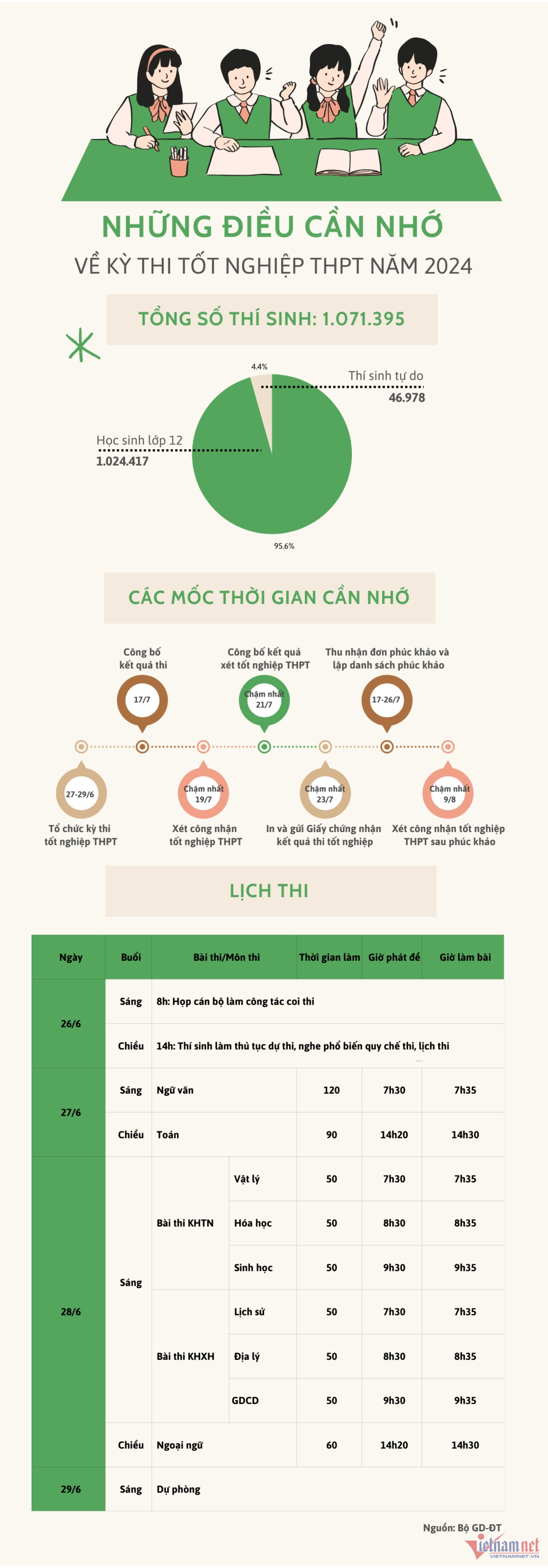
This year, the total number of candidates registering for the high school graduation exam is 1,071,000, an increase of more than 45,000 candidates compared to last year. Of these, the number of independent candidates is 46,978, accounting for 4.38%. The total number of candidates registering for exemption from the Foreign Language exam is 66,927, accounting for 6.25%; the highest number is from Hanoi with 21,554 candidates; followed by Ho Chi Minh City with 13,076 candidates.
This year, only 37% of candidates chose the Natural Sciences exam, while the remaining 63% chose the Social Sciences exam. Compared to last year, the number of candidates choosing the Social Sciences exam has increased and is the highest since 2017.
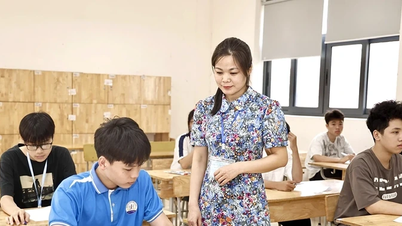
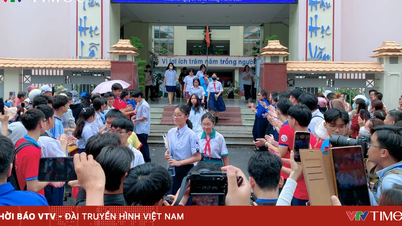
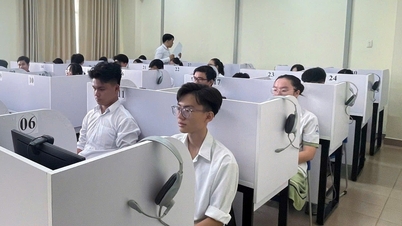
The 2024 high school graduation exam will be organized in a way that remains largely stable compared to the 2020-2023 period. The Ministry of Education and Training will provide overall guidance, while provinces and centrally-governed cities will be responsible for organizing the exam locally. Exam boards will conduct invigilation from June 26-29; grading will begin on June 29; results will be announced at 8:00 AM on July 17; and high school graduation will be officially recognized on July 19.
>>> Check your 2024 high school graduation exam scores on VietNamNet <<<
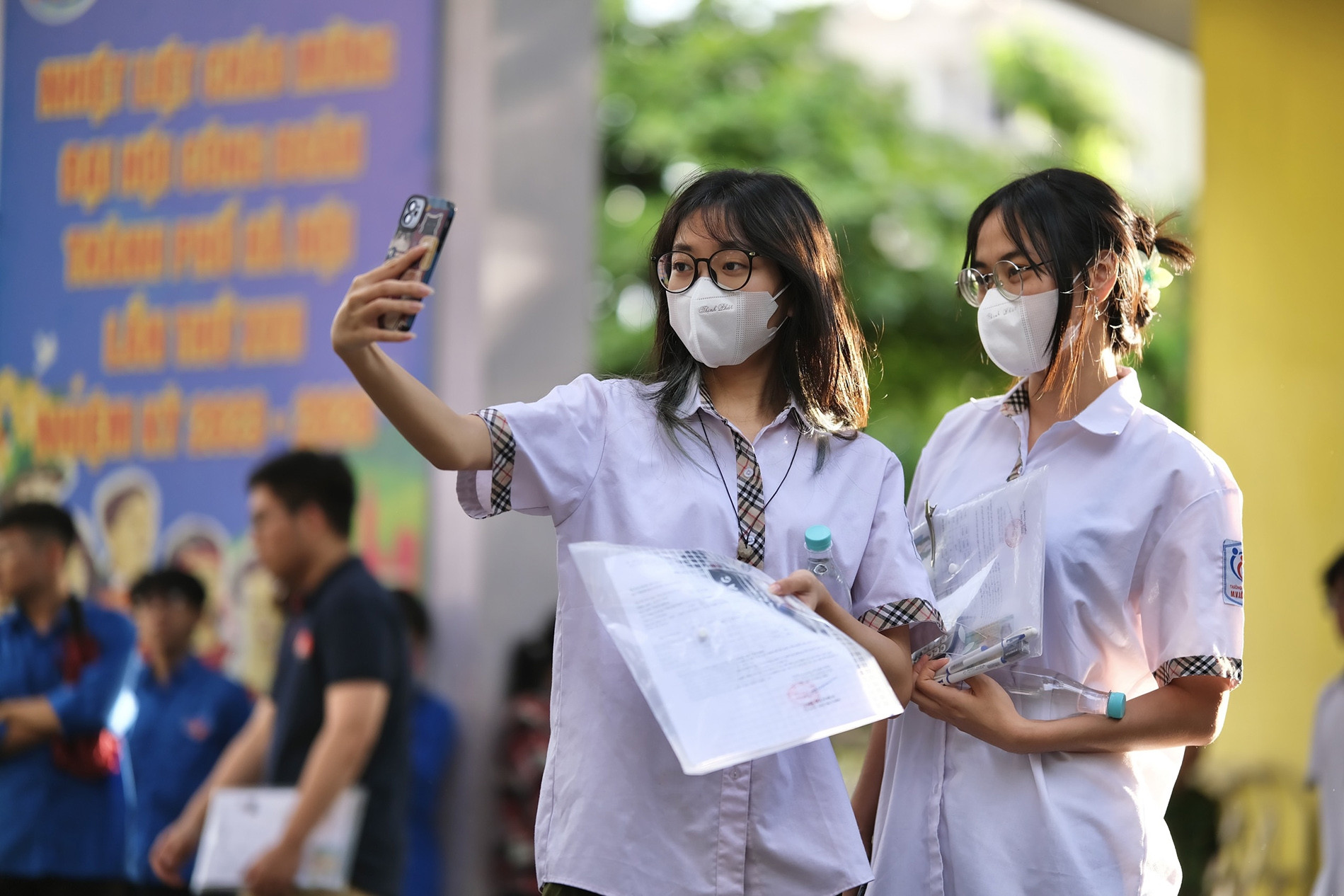
Reference answers for the 2024 High School Graduation Exam in Mathematics - 24 test codes
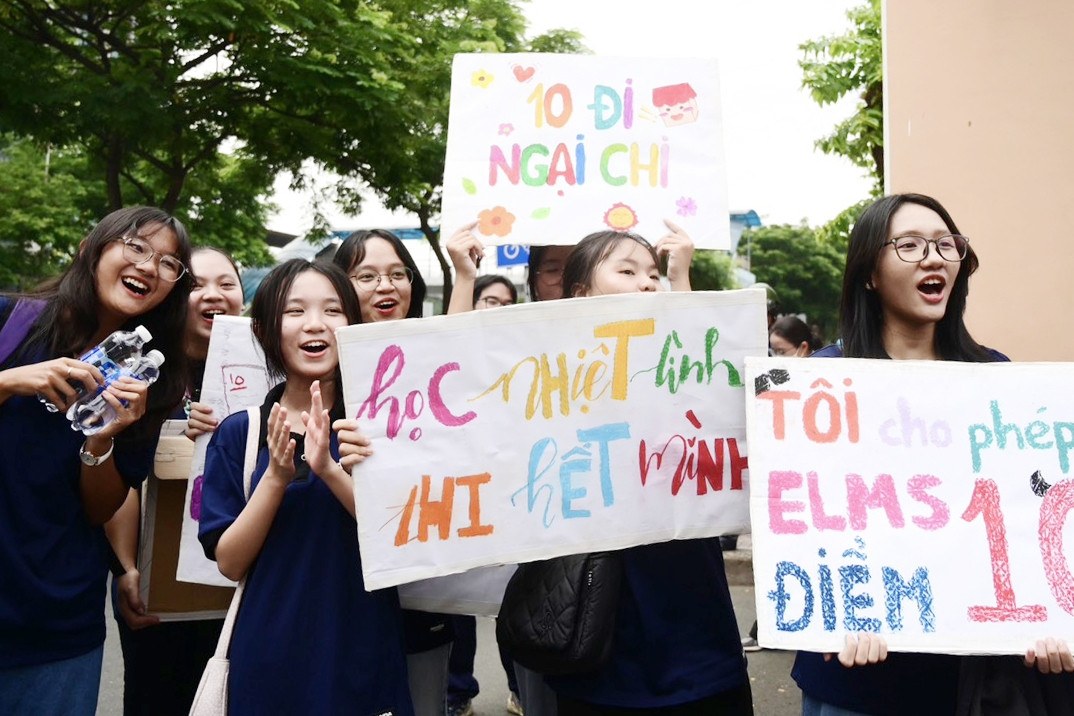
Literature subject for the 2024 high school graduation exam: Familiar exam questions, likely many scores of 7-8.
Source: https://vietnamnet.vn/dap-an-mon-ngu-van-thi-tot-nghiep-thpt-nam-2024-2295606.html
![[Image] Shipbuilders exposed to steel and record-breaking heat.](https://vphoto.vietnam.vn/thumb/1200x675/vietnam/resource/IMAGE/2026/06/04/1780545781745_ndo_br_img-5402-4683-jpg.webp)

































![[Video] Sunset at Lap An Lagoon – Where the sun sets over the fishing nets](https://vphoto.vietnam.vn/thumb/1200x675/vietnam/resource/IMAGE/2026/05/31/1780192137701_beach-landscape-sea-water-nature-grass-745871-pxhere-com.jpeg)
























Comment (0)