

On their march to Thang Long to defeat the 290,000 invading Qing army, King Quang Trung - Nguyen Hue (1753-1792) and the Tay Son army left many indelible marks on the land of Thanh Hoa province.
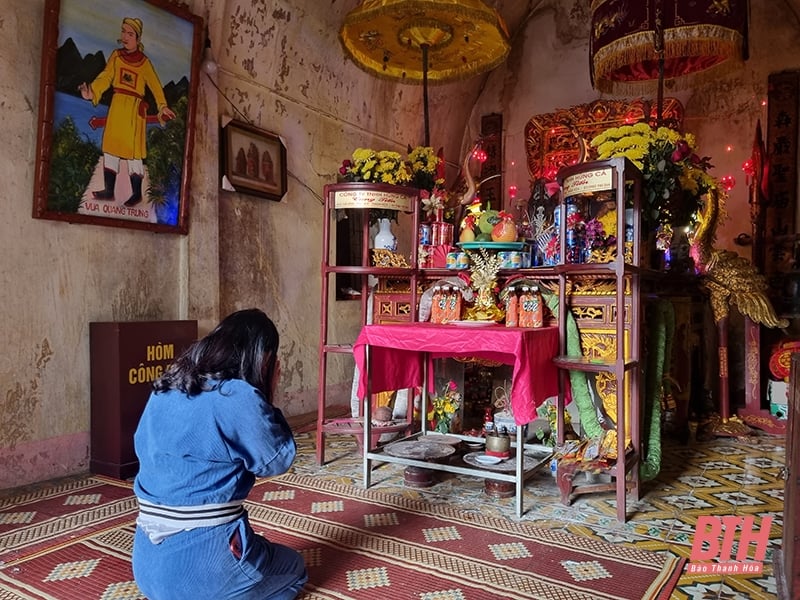
According to historical records, in late 1788, upon receiving a plea for help from Le Chieu Thong, the Qing dynasty sent 290,000 troops into Vietnam to crush the Tay Son movement. Receiving urgent news from Ngo Van So and Ngo Thi Nham, who were then commanding the defense of the Tam Diep - Bien Son line, on November 25th, 1788 (December 22nd, 1788), Nguyen Hue ascended the throne as emperor, taking the regnal name Quang Trung; simultaneously, he held a ceremony to send his army north to stop the Qing invasion. The great victory over the Qing army was accomplished in five days, beginning on New Year's Eve and ending on the 5th day of the Lunar New Year of the Rooster in 1789. Nguyen Hue, riding an elephant and wearing his imperial robe, entered Thang Long (Hanoi) amidst the joyful welcome of the people.
Along the march, Emperor Quang Trung's army stopped in the areas of Bien Son (present-day Nghi Son), Tho Hac ( Thanh Hoa City), Tam Diep - Bim Son (Bim Son town)... in Thanh Hoa province.
"Dai Nam Nhat Thong Chi," the National History Institute of the Nguyen Dynasty, records: From the beginning of the Gia Long era, the Nguyen Dynasty built Bien Son Island at Bang Gate, "with a circumference of 58 trượng, 8 thước, 8 tấc; a height of 8 thước 2 tấc, with a flag tower, a military house, 12 cannons, and a gunpowder depot." During the Minh Mang era (9th year), they built "Tinh Hai Fortress at Bien Son, with a circumference of 11 trượng 8 thước; a height of 5 thước 5 tấc; with a flag tower, a military house, and 4 cannons." With its strategically important location, situated in the middle of the sea, surrounded by mountains, sheltered from the wind, and offering easy observation of the enemy from above, the Bien Son area was identified by Emperor Quang Trung as a crucial military defense line.
Despite his resounding victory, Quang Trung did not forget the favors he bestowed upon several localities where his army had stopped, including Bien Son, a region of crucial strategic military importance. To commemorate his contributions, the people erected a temple on the coast, near the Bien Son naval base at that time (now Nghi Son commune, Nghi Son town).
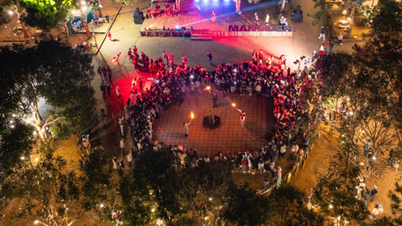
In Nghi Son island commune, we were guided by Mr. Le Van Cuong, a cultural and social affairs official of Nghi Son commune, to visit artifacts such as stone steles, ancient stone elephants, stone statues, and cannons identified as dating back to the time of the temple's construction; we also saw and learned about the square wells built by the Cham people to serve the daily life of the Tay Son army. In 2024, the Quang Trung Temple Festival in Lach Bang and Cu Lao Bien (Bien Son), Hai Thanh ward and Nghi Son commune, Nghi Son town, was included in the National List of Intangible Cultural Heritage.
On the way north, Emperor Quang Trung highly praised the plan of Ngo Van So and Ngo Thi Nham: “You have known how to restrain yourselves to avoid their spearhead, dividing yourselves to block and hold strategic points, stimulating the morale of the troops internally, and making the enemy arrogant externally; that plan is very correct!” (Hoang Le Nhat Thong Chi). In this strategy of “retreating a move” to take the initiative, in addition to the naval forces “loading their supply ships, sailing straight to the sea with the wind, and setting sail to the Bien Son area to encamp,” the land forces “prepared their weapons, beat the drums and set off, retreating to hold Tam Diep mountain. The two sides maintained contact with each other, holding strategic points on the way north to annihilate the Qing army.”
The Tây Sơn army's stay in Tam Điệp - Bỉm Sơn lasted only 10 days (from the 20th to the 30th of the 12th lunar month of the Year of the Monkey). Despite the short time, the Tây Sơn army left many historical and cultural imprints on the land of Bỉm Sơn. Here, the Tây Sơn command spent time assessing the enemy and their own forces; meticulously preparing logistics; and confidently formulating, refining, and deciding on their battle strategy.
Twenty-six years have passed since Quang Trung and the Tay Son rebels stopped at Tam Diep - Bim Son, but the imprint of the commoner emperor is still present at the Gao village communal house, Ong Tap hill, Ong Dung hill, Chan Voi dam, Khoi Thuy stream, Ngoc stream, Can Chuoi field, Cam Co field, Tuong Son mountain, Ky Son mountain, Trinh cave, Cua Buong cave, Chin Gieng temple, Song Son temple, Cay Vai temple (Tra Son Mieu), Ba Doi stele house (also known as Tam Diep - the border between Thanh Hoa and Ninh Binh provinces)...
Today, when visiting these historical sites, people still tell each other stories about the Song Son Temple, where Emperor Quang Trung and his generals prayed to the Holy Mother Lieu Hanh for protection; the Gao Village communal house - where the rebel army stored food supplies; the Nghia Mon Village communal house - where Princess Ngoc Thuy Tinh appeared in a dream, offering advice to Quang Trung on how to march swiftly to Thang Long to defeat the Qing invaders; the Cua Buong Cave - where the emperor and his generals discussed strategies to defeat the enemy; and the Khoi Thuy stream, with its cool, clear water that never dries up, likened to the indomitable spirit of the Tay Son rebels...
Visiting Cua Buong Cave, located in Ba Dinh ward (Bim Son town), where Emperor Quang Trung planted his flag during his stopover, we heard many fascinating historical stories. Cua Buong Cave is a system of caves including Dao Nguyen Cave, Trinh Cave, Nguoi Xua Cave, Co Tien Cave, and the sacred Quang Trung Cave. Among them, Trinh Cave was where Emperor Quang Trung held meetings with his generals and discussed military affairs. Generals frequently came to pay their respects and report to the emperor on the military situation and the recruitment of new soldiers in preparation for marching to Thang Long to suppress the enemy; Quang Trung Cave is where the emperor erected an altar to worship heaven and earth and prayed for divine assistance, enabling the Tay Son army to march swiftly to Thang Long and drive out the invading Qing army.
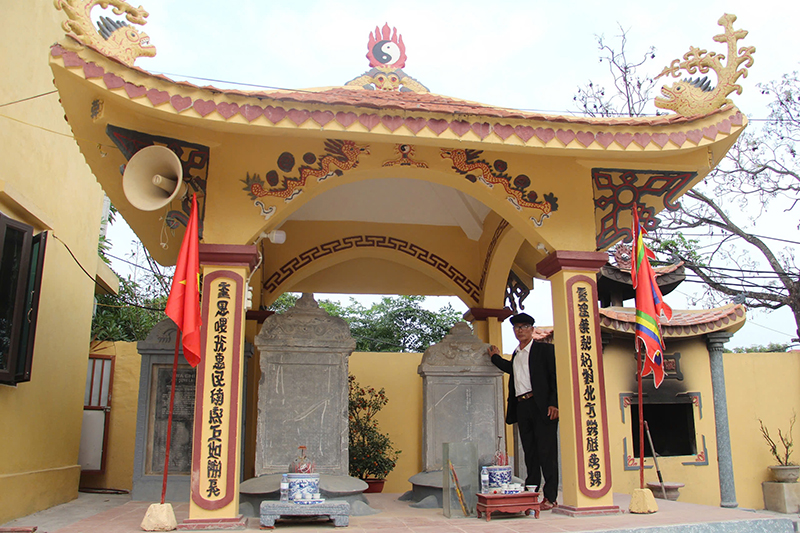
Wherever Emperor Quang Trung and the Tay Son army stopped to recruit more soldiers, they left distinct cultural imprints. From Bien Son northward to the area of present-day Quang Nham, Nguyen Hue - Quang Trung stopped twice. The first time, when marching north with the banner "Support Le, Destroy Trinh," Nguyen Hue visited Mom Temple to offer incense and assemble his land and naval forces. After returning victorious, Nguyen Hue ordered the temple to be renovated, and also commissioned the creation and carving of an inscription on a stone stele as a gift, renaming it Phuc Temple from then on. The second time was during his swift march north; Emperor Quang Trung again stopped at the temple to offer incense and recruit more young men to join the campaign against the Qing army.
Furthermore, the Thọ Hạc area (Thanh Hóa City) also "witnessed" the oath-taking ceremony of Emperor Quang Trung. Here, he boldly declared: "My lords, whoever is willing to fight, let them wipe out the enemy for me. If anyone is unwilling, then watch me kill tens of thousands in a single battle; that is not an unusual occurrence" (according to the book: "Lê Quý Kỷ Sự" - author: Nguyễn Thu). Also during the grand ceremony, Emperor Quang Trung resolutely affirmed his determination: "Fight so that our hair may grow long / Fight so that our teeth may remain black / Fight so that not a single wheel can return / Fight so that not a single piece of armor remains / Fight so that history knows that the Southern nation has heroic leaders."
Through the vicissitudes of time, many historical sites may or may not exist, but the ancient highway that the heroic commoner and emperor Quang Trung once traveled through Thanh Hoa province has left behind numerous imprints, legends, and historical structures and relics.
Text and photos: Kieu Huyen
Source: https://baothanhhoa.vn/dau-an-cua-hoang-de-quang-trung-nbsp-tren-dat-xu-thanh-238944.htm









































































Comment (0)