Acute heart failure is a medical emergency.
According to the Vietnam Cardiology Association, cold weather and sharply reduced temperatures increase the risk of cardiovascular events. For individuals already diagnosed with heart failure, it is crucial to prioritize healthcare to prevent critical symptoms. Cardiovascular diseases account for approximately one-third of all deaths, and heart failure is the ultimate cause of death among all cardiovascular diseases.
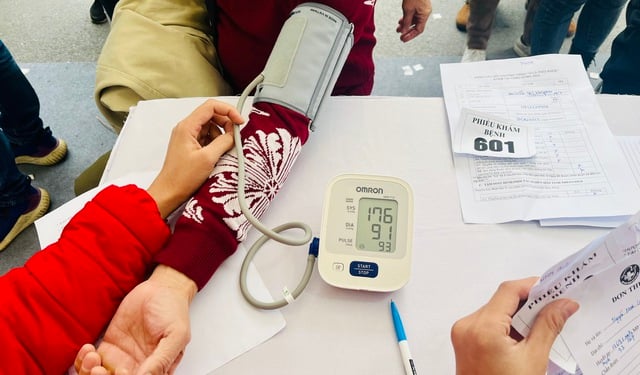
Effective blood pressure control is essential for preventing heart failure.
PHOTO BY LIEN CHAU
Professor Do Doan Loi, President of the Vietnam Heart Failure Association and Vice President of the Vietnam Cardiology Association, stated that heart failure, commonly known as congestive heart failure (CHF), is a chronic, progressive condition in which the heart cannot pump enough blood to meet the body's needs for blood and oxygen.
Heart failure is the result of various cardiovascular diseases, including coronary artery disease. This involves narrowing of the coronary arteries, leading to myocardial ischemia, or myocardial infarction (damage to the heart muscle).
You may also like

Extreme weather: Enhancing early warning capabilities for proactive response.(PLVN) - In the context of climate change increasing extreme weather events and El Niño being predicted to have a strong impact on Vietnam, improving forecasting and early warning capabilities and strengthening international cooperation are considered important solutions to minimize natural disaster risks, protect people, and promote sustainable development. High blood pressure (which puts excessive pressure on the heart muscle over a long period); valvular heart disease (narrowing or leakage of the valves); and cardiomyopathy (abnormalities of the heart muscle itself) are also causes of heart failure.
Professor Loi specifically noted that acute heart failure (or an acute exacerbation of chronic heart failure) is a medical emergency requiring prompt intervention, so early recognition is extremely important.
Acute heart failure typically develops rapidly and severely, often associated with acute fluid accumulation in the lungs (acute pulmonary edema). Patients should call emergency services or go to the hospital immediately if they experience sudden and severe shortness of breath, a feeling of gasping for air, or suffocation, like drowning.
Shortness of breath occurs even at rest or when lying flat (having to sit up, prop up with a very high pillow, or bend forward to breathe more easily) and may be accompanied by a dry cough or a cough with pink frothy sputum (a sign of acute pulmonary edema).
Chest pain or discomfort, such as a feeling of tightness, heaviness, or constriction in the chest that may radiate to the shoulder, neck, or jaw, could be a sign of acute coronary syndrome (myocardial infarction), a common cause of acute heart failure.
When a patient experiences anxiety, severe palpitations, a feeling of the heart beating too fast or irregularly (arrhythmia), shortness of breath, or loss of consciousness (fainting or near-fainting), the heart rate may exceed 120 beats per minute, which is also a dangerous sign of heart failure.
Emergency care is also needed if the patient experiences acute hypoperfusion with symptoms such as: confusion, altered consciousness, dizziness or fainting; pale, cold skin, and cold sweats.
Conditions that worsen heart failure
According to cardiologists, conditions such as chronic kidney disease, obesity, diabetes, and metabolic disorders can all independently cause heart failure through different mechanisms.

Vietnam encourages US businesses to expand investment in high technology.On the morning of June 26th, at the Government Headquarters, Deputy Prime Minister Ho Quoc Dung received Mr. Jeff Place, Supply Chain Director of Coherent Group (USA). During the meeting, the Deputy Prime Minister affirmed that Vietnam encourages US businesses to expand investment, especially in high-tech, innovation, and semiconductor industries. However, these conditions can also be co-morbidities in people with heart failure, as a person may have two, three, or all of them. Each condition worsens heart failure, making it more difficult to treat and increasing the risk of a poor outcome. Therefore, effective treatment requires a clear diagnosis of the underlying causes of heart failure and treatment of those causes alongside the treatment of heart failure symptoms.
For effective treatment, patients need to be examined to diagnose the cause and severity of heart failure in order to develop an appropriate treatment plan. Taking medication exactly as prescribed by the doctor is extremely important.
At the same time, patients must follow the correct diet, drinking habits, and exercise regimen according to their condition, ability, and circumstances, under the guidance of doctors and medical staff.
Source: https://thanhnien.vn/dau-hieu-suy-tim-cap-can-duoc-xu-tri-khan-185251214144959876.htm






![[Photo] "Hanoi Lotus Festival" honors the lotus flower that has been associated with Vietnam for thousands of years.](https://vphoto.vietnam.vn/thumb/1200x675/vietnam/resource/IMAGE/2026/06/27/1782516943048_sen-ha-noi-2026-minh-duy-1-jpg.webp)