The pressure to manage waste necessitates new financial mechanisms.
Every day, Hanoi generates approximately 8,000-8,400 tons of household waste. This volume of waste is putting significant pressure on the city's collection, transportation, and processing systems. According to statistics, the city's total environmental sanitation fees average around 568 billion VND per year, while the actual cost of waste collection, transportation, and processing reaches nearly 2,300 billion VND per year. This means that the majority of funding for environmental sanitation activities still depends on the city's budget.
Meanwhile, environmental sanitation fees in Hanoi are low compared to reality. In urban wards, the fee is 6,000 VND/person/month, while in rural areas it is 3,000 VND/person/month. According to Ngo Thanh Loan, Director of Tay Do Environmental Joint Stock Company, with these fees, the city budget has to significantly compensate for the difference to maintain waste collection and treatment operations.
Therefore, adjusting environmental sanitation service fees from 2026 is considered consistent with the provisions of the 2020 Environmental Protection Law. Specifically, in the first and second quarters of 2026, the environmental service fee for households in wards will increase to 10,000 VND/person/month and in communes to 8,000 VND/person/month; in the third and fourth quarters of 2026, it will increase to 15,000 VND/person/month in wards and 10,000 VND/person/month in communes. In 2027, the service fee will continue to increase according to Decision No. 4996/QD-UBND dated October 6, 2025, of the Hanoi People's Committee.
According to Nguyen Van Quy, Head of the Solid Waste Management Department (Department of Agriculture and Environment), the adjustment of service fees in 2026 will accurately and fully account for waste collection and a portion of waste transportation costs. In subsequent years, the city will refine the mechanism for calculating the full cost of waste treatment. The goal is that by 2030, waste generators will have to pay the full cost of waste collection, transportation, and treatment.



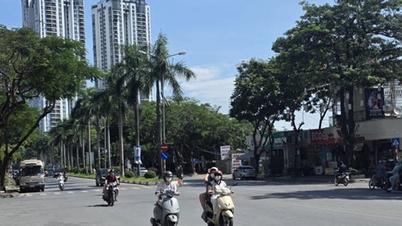
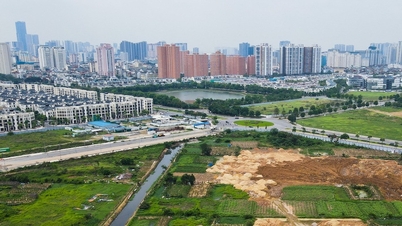
Along with rapid urbanization, environmental pressure in Hanoi is increasing. Garbage accumulation at collection points, residential areas, and busy streets continues to occur, directly affecting urban aesthetics and people's lives. The two waste treatment complexes in Nam Son (Trung Gia commune) and Xuan Son (Tung Thien ward) are also under significant pressure regarding their processing capacity. Without additional investment in modern waste treatment technology and systems, the risk of environmental overload is evident.
Associate Professor Bui Thi An, Director of the Institute of Resources, Environment and Community Development, believes that adjusting sanitation fees is not simply aimed at increasing budget revenue, but also as an economic solution to change social awareness about responsibility for environmental protection. Many countries around the world have adopted a model of charging for waste based on the actual volume of waste generated or the number of standard garbage bags. The more people reduce waste generation and sort waste, the lower the amount they pay. This is considered an effective approach to reducing environmental pressure.
Expectations for improved environmental quality.
Besides reducing the burden on the budget, the increase in environmental sanitation fees is also expected to create an incentive to promote modern waste treatment models, raise awareness of waste sorting, and reduce waste generation in the community.
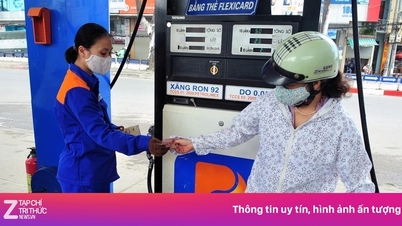
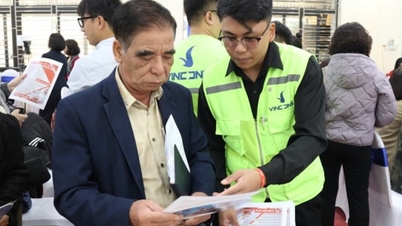
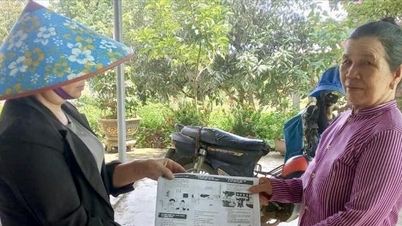
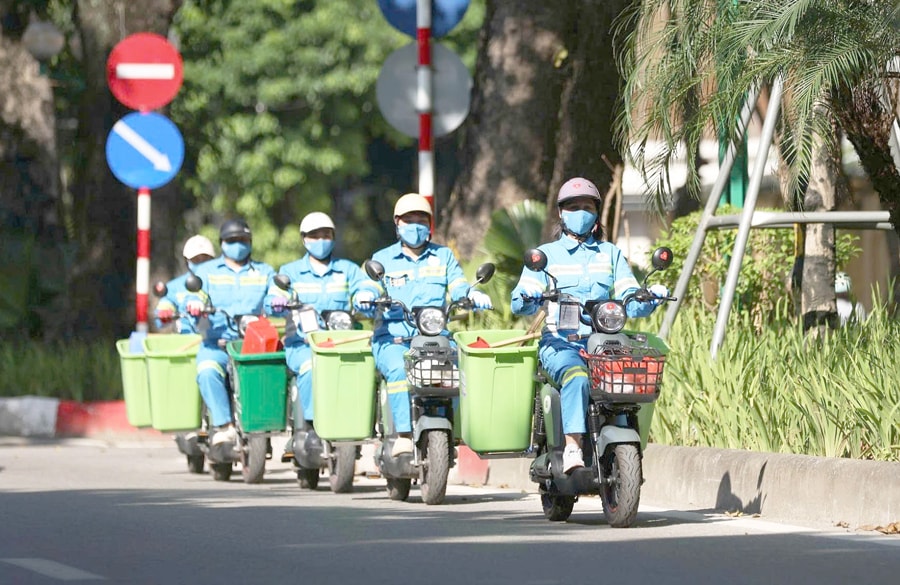
In many residential areas of Hanoi, environmental workers are going directly to each household to inform and explain the new service fees. The work, already arduous, is now even more stressful as many residents remain concerned about the increase.
Ms. Nguyen Thi Lan, an employee of the Dong Da Branch of Hanoi Urban Environment One-Member Limited Company, said that when collecting fees, they have to explain a lot to people so they understand that this is a correct policy of the city, implemented on a legal basis and aimed at accurately and fully calculating service costs. Therefore, people need to understand that this fee directly serves the purpose of collecting, transporting, and processing waste, thereby improving the quality of the living environment.
Ms. Nguyen Thi Dien (Giang Vo ward) believes that while sanitation fees are increasing, the quality of service must be improved proportionally. Environmental sanitation companies must increase the frequency of garbage collection and transportation, preventing accumulation and environmental pollution. "This is also the common wish of many Hanoi residents in the context of increasingly high demands for a better living environment," Ms. Nguyen Thi Dien expressed.


However, according to environmental experts, for the fee increase policy to gain social consensus, it is crucial that the city publicly and transparently discloses the implementation roadmap and requires environmental sanitation companies to improve the quality of their services. Citizens are willing to share responsibility if they see a real improvement in their living environment, timely garbage collection, cleaner streets, and a more modern waste treatment system.
Increasing environmental sanitation fees may create immediate financial pressure for some residents, but in the long run, it is a necessary step to provide Hanoi with additional resources for reinvestment in the environment. When policies are implemented transparently, with a suitable roadmap and accompanied by improved service quality, social consensus will become the foundation for the capital to move closer to its goal of green, civilized, and sustainable development.
Source: https://hanoimoi.vn/dau-tu-cho-thu-do-xanh-1159602.html
![[Photo] Opening Ceremony of the 13th National Congress of the Ho Chi Minh Communist Youth Union](https://vphoto.vietnam.vn/thumb/1200x675/vietnam/resource/IMAGE/2026/06/24/1782286753905_ndo_br_1-8510-jpg.webp)

![[Photo] The 13th National Congress of the Youth Union conducts personnel work.](https://vphoto.vietnam.vn/thumb/1200x675/vietnam/resource/IMAGE/2026/06/24/1782299943080_ndo_br_1-6868-jpg.webp)
![[Photo] General Secretary and President To Lam attends the Central Public Security Party Committee Conference](https://vphoto.vietnam.vn/thumb/1200x675/vietnam/resource/IMAGE/2026/06/24/1782302063612_a1-bnd-9302-9166-jpg.webp)