

TEACHERS AND STUDENTS ARE FORCED TO CHANGE
The 2018 General Education Program has been implemented for the past five years, and this is the first academic year in which it is being implemented simultaneously across all 12 grade levels in general education. The Ministry of Education and Training states that the 2018 General Education Program aims to ensure the development of students' qualities and competencies through educational content with fundamental, practical, and modern knowledge and skills; a harmonious balance of morality, intellect, physical fitness, and aesthetics; emphasis on practical application of learned knowledge and skills to solve problems in learning and life; high integration in lower grades, gradually differentiation in higher grades; and the use of methods and forms of educational organization that promote the initiative and potential of each student, along with assessment methods appropriate to educational goals and teaching methods to achieve those goals. How are teachers, schools, and students in Ho Chi Minh City applying this program to achieve these goals?
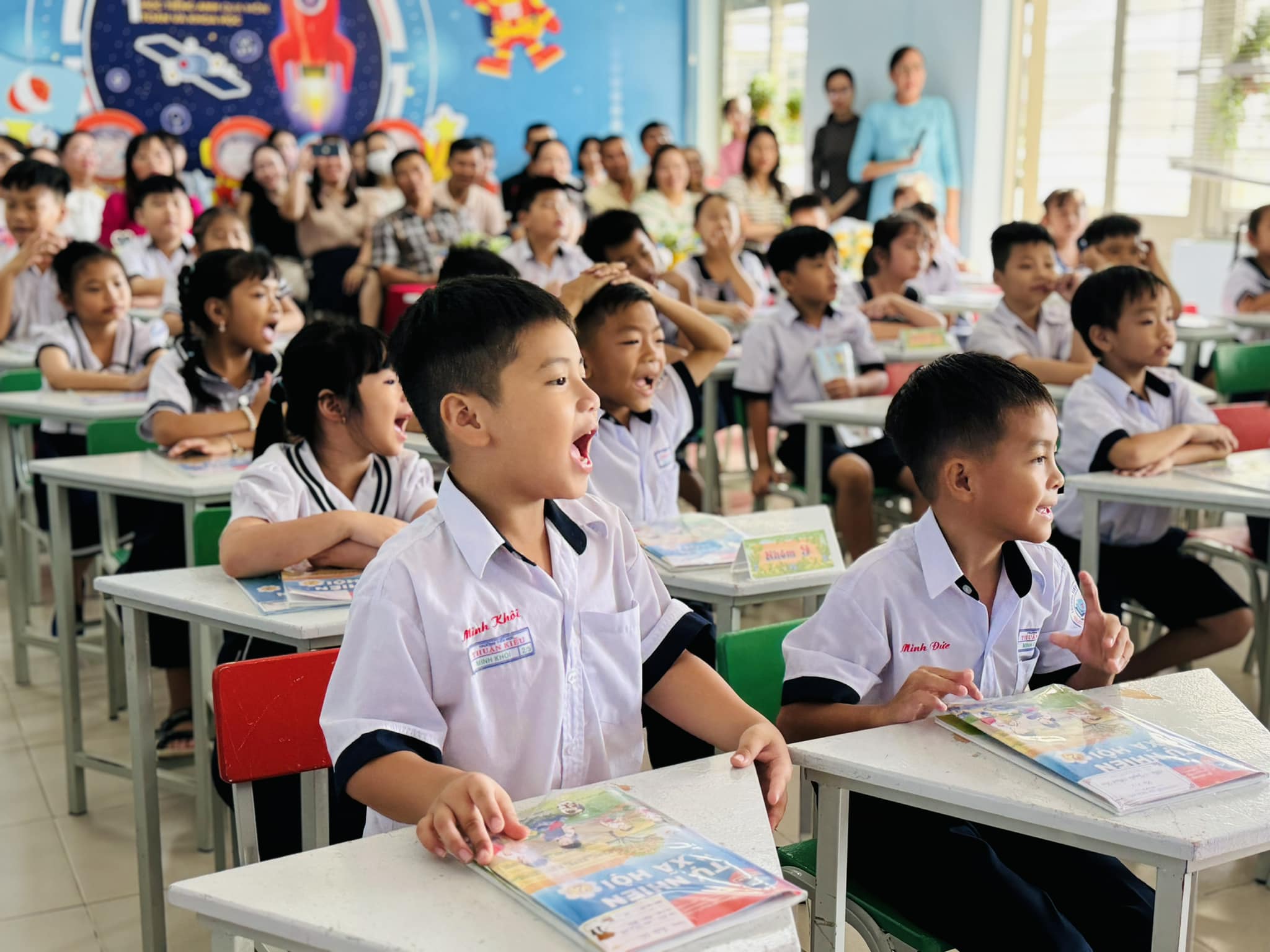
Lessons based on the 2018 General Education Program were conducted at Thuan Kieu Primary School, District 12, Ho Chi Minh City.
We were present at a second-grade Natural and Social Studies lesson at Tran Hung Dao Primary School, District 1, on aquatic and terrestrial animals. Unlike the common perception of primary school lessons—students reciting answers, the teacher lecturing on the board, students looking at textbooks, reading along, memorizing, and then the time is up—today's primary school students are trained in many more skills within their 35 minutes in class. These include teamwork skills (discussing and working together to arrive at multiple correct answers); the ability to express opinions clearly and persuasively in front of a group (the teacher can invite a student representative from the group to present); and the ability to ask questions (many students in the class had interesting discoveries and were not afraid to raise their hands to share their questions with the teacher, and this was respected)...
In a first-grade math lesson at Nguyen Van Tran Primary School in Da Phuoc commune, Binh Chanh district, during the lesson "Numbers up to 40," the teacher organized the teaching in a personalized manner, tailored to the abilities of each student, while simultaneously developing communication, cooperation, and mathematical thinking skills.
Ms. Nguyen Thi Kim Tuyen, Deputy Principal of Nguyen Van Tran Primary School, said that in this lesson, the teacher applied various teaching methods and forms such as visual methods, helping students access knowledge from concrete (a cake) to abstract (a cube model) to make it easier for students to visualize; the inductive-questioning method, encouraging students to think and ask questions to the teacher to develop their thinking; and the practical-practice method, enhancing the ability to apply knowledge to real-life situations...
Furthermore, according to Ms. Kim Tuyen, organizing interactive learning groups helps students develop cooperation and exchange skills; individual activities with worksheets help them practice self-learning and problem-solving skills... Teachers are not only providers of data and knowledge but also guides to inspire students' eagerness to learn and their love of exploration .
C. Emphasize practice and application of knowledge.
On the morning of February 27th, at Thuan Kieu Primary School in District 12, "Open Classes" were held, welcoming parents and guests to participate in experiential learning activities for 3rd graders, themed "Self-Care and Development," conducted by Ms. Tran Thu Thao, homeroom teacher of class 3/3, with integrated content on digital citizenship skills education.
At the same time, we attended a demonstration lesson in Vietnamese for 5th grade, "Introducing a Traditional Beauty," conducted by Ms. Nguyen Yen Nhi, homeroom teacher of class 5/2, using the project-based learning method. To introduce a traditional beauty of their hometown, the students were divided into groups and confidently presented their group's project on food, festivals, and clothing. To vividly introduce coconut jam – a traditional dish during the Lunar New Year – to teachers, parents, and classmates, one group even brought coconut jam to share with everyone. This school also previously organized an experiential activity on food safety right in the canteen, allowing students to practice identifying safe food. Or, to teach 4th grade math, on the topic of "The number of times an event is repeated," the teacher and students went to the football field together to practice calculating the number of times the ball was kicked into the goal…
Ms. Le Thi Thoa, Principal of Thuan Kieu Primary School, said that in order to effectively implement the 2018 General Education Program, teachers have had to strive to constantly innovate and be creative in recent years, meeting the requirements of the program and the task of digital transformation in education. The results are clearly visible in the students' activeness, initiative, thinking skills, and abilities.
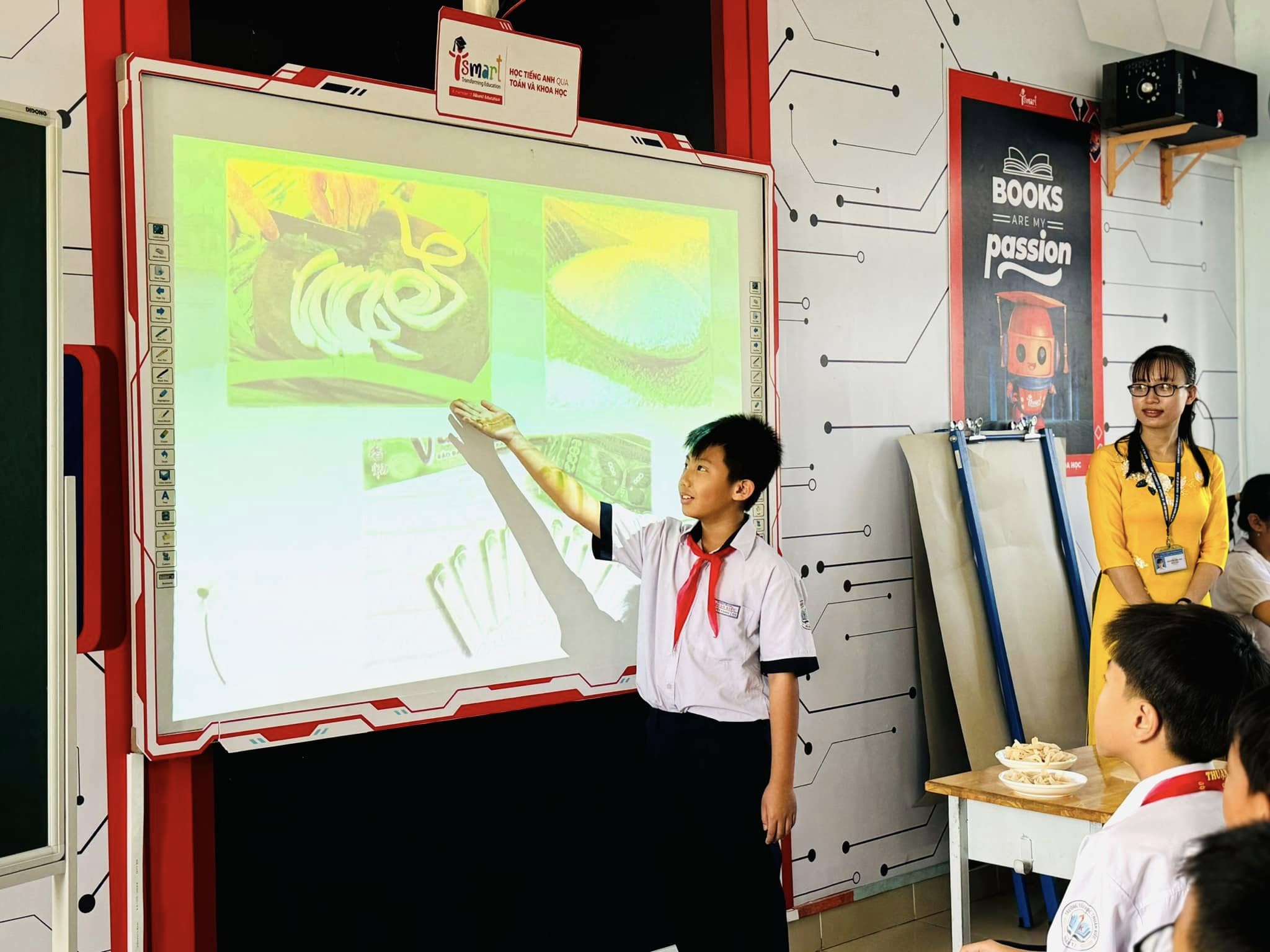
Elementary school students today are trained in many more skills during their 35 minutes in class.
CONCERN FOR EMOTIONAL INTELLIGENCE IN THE AGE OF ARTIFICIAL INTELLIGENCE
In the era of artificial intelligence (AI), rapid technological development, and a rapidly changing society, paying attention to emotional intelligence education for students is considered crucial and essential by those working in the field of education.
According to Nguyen Minh Nam, a Master of Education from Plymouth State University and recipient of the US government's Fulbright scholarship program, and the founder and professional manager of MAMO Art Studio, simply put, intellectual intelligence (IQ) helps individuals learn and understand the outside world and society, while emotional intelligence (EQ) is about understanding and mastering one's inner world.
Mr. Nam also pointed out a problem: some parents today do not pay attention to their children's emotional lives, focusing only on academic results. However, besides studying, children have a whole life to live; in addition to physical health, they need a strong mental life to overcome many obstacles, events, and the rapid changes in the outside world.
Mr. Nam cited the example of a student who is academically excellent, consistently achieving high grades, but has limited emotional intelligence (EQ). This student might lack communication skills to connect with friends, struggle with teamwork, and easily feel isolated. Later, in 12th grade, that student might still excel academically but lack self-confidence, unsure of career paths or what makes them happy. Even further into the workforce, they might perform well in their assigned professional roles but struggle to understand their own emotions and manage stress effectively in challenging situations. With good EQ, a student would know how to listen to their own feelings, identify, understand, and accept them, regulate their emotions to cope with and alleviate stress, and confidently overcome difficult situations in a volatile world, both academically and personally, ultimately leading to a truly happy life.
According to Master Nam, many schools in Ho Chi Minh City, from preschool to high school, have integrated various activities and programs to educate students on emotional intelligence. However, in life, the family remains the biggest learning environment, containing the most important people for students. Because no matter how difficult life outside may be, we always have a place to return to – our family.
Learn to adapt to unexpected situations.
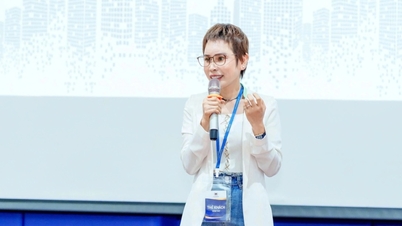
Ms. Tran Lam Thao, Director of TiTBrain Education, said that many parents and students worry that as AI develops significantly, humans will be replaced. However, it's important to note that AI lacks emotional intelligence (EQ). Therefore, in an era where everything is changing rapidly and AI can perform many roles, simply providing children with information, data, knowledge, and basic skills is insufficient. Children need to learn and develop emotional intelligence to cope with unexpected situations and find ways to live happily even in challenging circumstances.
Source: https://thanhnien.vn/day-hoc-the-nao-trong-mot-the-gioi-nhieu-bien-dong-185250310211758328.htm


![[Photo] Prime Minister Pham Minh Chinh presides over a meeting on private sector economic development.](/_next/image?url=https%3A%2F%2Fvphoto.vietnam.vn%2Fthumb%2F1200x675%2Fvietnam%2Fresource%2FIMAGE%2F2025%2F12%2F20%2F1766237501876_thiet-ke-chua-co-ten-40-png.webp&w=3840&q=75)

























































Comment (0)