

 |
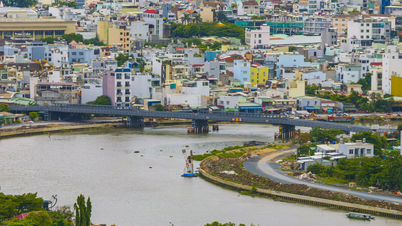
On January 9th, IFC Vietnam in Da Nang City officially opened, marking the beginning of the IFC model in Vietnam in accordance with Government Decree No. 323/ND-CP. (Source: Shutterstock ) |
By the end of 2025, the political and administrative foundations for these centers had been vigorously promoted. The conference announcing the establishment of the International Finance Centre in Vietnam on December 21, 2025, affirmed the strong commitment of the Vietnamese Government to building a stable, transparent, safe, and investor-friendly financial environment. On January 9, 2026, the Vietnam International Finance Centre in Da Nang officially opened under Government Decree No. 323/2025/ND-CP issued on December 18, 2025, marking the beginning of the IFC model in Vietnam.
The question now is no longer whether or not to have an IFC, but how to operate the center efficiently, reliably, on a large scale, and in accordance with international standards.
Human resources are key.
Despite the rapid development of artificial intelligence (AI), human resources remain crucial to IFC's growth. A high-quality workforce not only meets international standards but also efficiently handles cross-border transactions and builds trust with international partners.
To operate effectively, IFC requires a workforce with specialized skills: working in an international environment, understanding and handling legal and cultural differences, and adapting quickly to technological changes. Vietnam has an increasing number of young professionals with international mindsets, especially graduates from leading economics and finance universities.
However, it would be unrealistic to assume that Vietnam is fully ready in terms of human resources. The most obvious gap lies in practical experience, as many students have a strong academic background and high discipline but lack experience working in an international environment.
 |
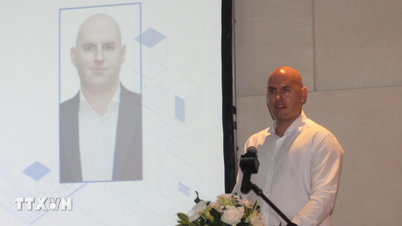
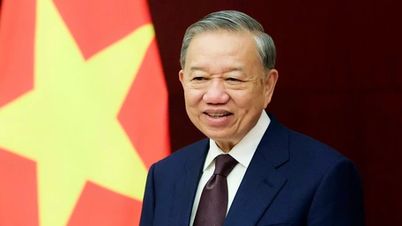
| Professor Andreas Stoffers at FOM University of Applied Sciences, Essen, Germany. (Photo courtesy of the interviewee) |
In an IFC, the difference between a high-achieving student and a trusted professional isn't just about having a lot of knowledge. More importantly, it's about sound judgment, weighing the pros and cons, communicating effectively with personnel from different cultures, handling situations, and working according to strict rules and standards. Therefore, education and human resource training play a crucial role.
The Vietnamese higher education system has seen significant improvements, particularly at top universities with increasingly clear international orientations. However, international thinking has not yet spread evenly throughout the entire education ecosystem, while the International Finance Corporation (IFC) demands a stable, large-scale supply of human resources with diverse skills at various levels.
For example, Germany always places great importance on training programs that are closely linked to practical experience, as this is a very distinctive part of their education system and way of working. I saw this very clearly when I was Head of Retail Banking at Deutsche Bank in Bavaria 20 years ago. At that time, out of 18 retail banking managers in the region, only 3-4 had university degrees, including myself.
The remaining individuals all completed vocational training programs in banking. However, in terms of leadership ability, work performance, and career advancement opportunities, there was almost no significant difference. Therefore, in my opinion, a university degree may be useful, but it is not a prerequisite for career success in the banking sector. This is also true in Vietnam.
A successful IFC requires a balanced “talent architecture,” encompassing not only academic excellence but also a skilled workforce with strong operational capabilities. Vietnam needs not only managers with strong theoretical training but also experts capable of solving real-world problems.
Shaping AI-powered workflows
A pressing issue facing universities and policymakers is AI. The Law on Digital Technology Industry, passed by the National Assembly in June 2025, covers areas such as AI, semiconductors, and digital assets, sending a clear signal that Vietnam wants to elevate its position in the global value chain and considers digital capabilities as a strategic infrastructure.
In the near future, many jobs currently performed by university graduates may be fundamentally changed by AI. The human element will still play a crucial role, but the value of human resources will shift from repetitive tasks to judgment, interpretation, building trust with customers, and strategic decision-making.
For an IFC, this isn't a theoretical discussion; it directly impacts competitiveness. An IFC that trains professionals capable of shaping AI-powered processes, understanding model risk, building governance frameworks, managing data quality, and integrating AI into compliance and risk management will quickly build credibility and significantly reduce learning costs.
Localizing talent: Practical, but not closed-off.
Vietnam's policy of localizing its workforce for IFC instead of relying on foreign experts is practical and reasonable. Vietnam has abundant domestic human resources and a high-performance orientation. This is a significant advantage.
However, localization should not be misunderstood as isolation. In the early and medium-term stages of IFC development, foreign experts will still play a vital role. A deliberate combination of domestic and international expertise will accelerate institutional learning, strengthen credibility, and minimize experimentation.
Over the past decade, Vietnam has become much more attractive to foreign professionals, not only in Ho Chi Minh City and Hanoi but also in other localities. The simplification of visa procedures, work permits, and citizenship for highly qualified professionals and Vietnamese citizens residing abroad has strongly supported this process.
One of Vietnam's strategic assets is its overseas Vietnamese community. Many Vietnamese expatriates have returned in recent years, bringing with them international experience, professional standards, and global networks. This potential needs to be systematically integrated into education and training, with individuals serving as lecturers, advisors, visiting professors, curriculum designers, and bridges between Vietnam and international financial markets.
 |
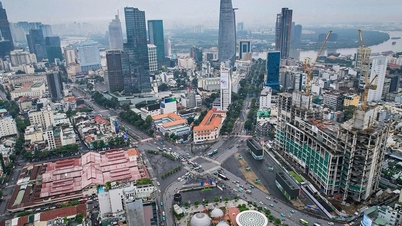
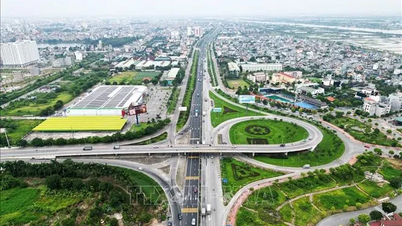
| International Finance Corporations (IFCs) could become a crucial component in Vietnam's strategy to become a developed, high-income country by 2045. (Illustrative image. Source: Ho Chi Minh City Law Newspaper) |
Five key priorities
If IFC wants to succeed, education and human resource development must move from discussion to concrete implementation. Accordingly, there will be five key priorities:
First , strengthen the practice-oriented approach in higher education. Internships, case-based teaching, and programs in collaboration with banks, fintech companies, law firms, and auditing firms should become the standard in university training. An IFC cannot operate solely based on theoretical competence.
Secondly, develop dual training programs and structured career paths. Vietnam would benefit from adapting and adopting some elements of the German dual training model, connecting academics with paid work from the outset. This is not about mechanically copying, but about building reliable pathways to create a job-ready workforce and enhance the standing of practical skills.

Thirdly , curriculum development needs to be adapted for the digital economy. Finance programs should integrate AI, data governance, cybersecurity, digital identity, fintech legal frameworks, and ESG (Environmental, Social, and Governance) reporting not as electives but as core content.
Fourth , international academic cooperation on a substantive scale is essential. Partnerships need to go beyond symbolic memoranda of understanding, moving towards concrete operational forms such as: joint degree programs, faculty exchanges, visiting professorships, and joint research centers focused on innovation, finance, risk, and governance.
Fifth , build academic career paths that are attractive enough to practitioners. If Vietnam wants a truly world-class academic environment, salaries and career paths in academia need to be more competitive and flexible.
Well-designed IFCs can create powerful spillover effects: Innovation, entrepreneurship, professional services, and higher education could become a crucial component of Vietnam's strategy to become a developed, high-income country by 2045.
And if Vietnam does well in the areas of education and human resources, IFC will not only be a financial project but could become one of Vietnam's most important development platforms in the next two decades.
Source: https://baoquocte.vn/de-cac-trung-tam-tai-chinh-van-hanh-hieu-qua-tin-cay-346261.html













































![[Video] Sunset at Lap An Lagoon – Where the sun sets over the fishing nets](https://vphoto.vietnam.vn/thumb/1200x675/vietnam/resource/IMAGE/2026/05/31/1780192137701_beach-landscape-sea-water-nature-grass-745871-pxhere-com.jpeg)































Comment (0)