

 |
| Global stock markets opened the week in the red. |
Global stock markets opened the week in the red as US President Donald Trump's tough rhetoric on tariffs fueled concerns about a new spiral of trade tensions between the US and Europe. The sell-off coincided with a weakening of the US dollar, while safe-haven assets such as gold, silver, the Japanese yen, and the Swiss franc were heavily bought by investors.
In the last trading session, the US cash equity market was closed due to the Martin Luther King Jr. Day holiday, but that did not prevent negative sentiment from spreading to derivative markets. S&P 500 and Nasdaq futures both fell by more than 1.2%, reflecting clear investor caution amid rising geopolitical and trade uncertainties.
In Europe, selling pressure was more pronounced. The STOXX 600 index fell 1.2%, dragging down other major blue-chip indices. Markets in Frankfurt, Paris, and London all declined, with drops ranging from 0.4% to 1.7%. This development reflects the high sensitivity of European stocks to the risk of direct tariffs from the US, especially given the deep trade ties between major economies in the region and Washington.
In Asia, the market picture was more mixed. Japan's Nikkei index fell 0.7%, while the broadest index of Asia-Pacific stocks outside Japan was nearly flat. Investors in the region are facing risks from US-Europe tensions while closely monitoring domestic factors, particularly Japan's monetary policy.
The main reason for the global market turmoil stemmed from President Trump's announcement that the US would impose an additional 10% tariff starting February 1st on imported goods from a number of European countries, including Denmark, Norway, Sweden, France, Germany, the Netherlands, Finland, and the UK. This tariff could even increase to 25% from June 1st if no agreement is reached regarding Greenland. This move immediately met with strong opposition from European countries, with many leaders considering it an act of economic "blackmail."
France has proposed a response with unprecedented economic countermeasures, while the European Union is considering activating available tools. One option is a €93 billion tariff package on US goods, which had been previously suspended. Alternatively, the EU could use the Anti-Coercion Instrument to impact US trade in services or investment, further escalating bilateral tensions.
According to George Lagarias, chief economist at Forvis Mazars, the negative market reaction is understandable. He believes the White House is likely to continue using tariff threats as a tool of pressure, even in the context of existing trade agreements. This makes the global investment environment more unpredictable and risky.
Tariff disputes are expected to remain a hot topic at the World Economic Forum in Davos, where global leaders, including a large US delegation led by President Trump, will discuss the economic outlook and global geopolitics. The event is expected to serve as both a forum for dialogue and a test of the ability to de-escalate trade tensions in the near future.
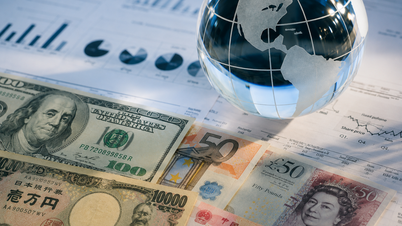
In the currency market, a notable development was the US dollar no longer acting as a safe haven as usual. The euro recovered from a seven-week low, rising 0.4% to $1.1641. The British pound also rebounded to $1.3422 after weakening in the Asian session. Meanwhile, the USD fell 0.7% against the Swiss franc and 0.2% against the Japanese yen, indicating a shift of funds away from US assets.
Strategists believe the weakening of the US dollar reflects the fact that current risks stem directly from US policy. This could prompt investors to diversify their portfolios, reduce their holdings of dollar-denominated assets, and seek safer havens.
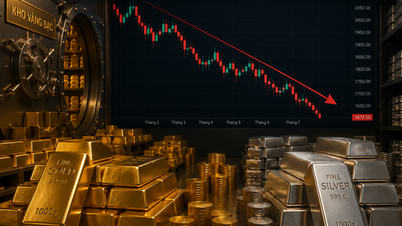
Gold once again affirmed its traditional "safe haven" status, soaring to a record high of $4,689 per ounce. Silver was equally strong, climbing to $94.08. The sharp rise in precious metals reflects a clear defensive sentiment among investors amid the risk of a widening trade war and its negative impact on global economic growth.
In other markets, Chinese stocks were largely flat despite data showing fourth-quarter economic growth slowed to 4.5%. Industrial output exceeded expectations thanks to strong exports, but weak retail sales indicated that domestic demand remains a bottleneck. Oil prices showed little movement, with Brent slightly lower at $64.04 a barrel, as markets monitored developments in the Middle East and assessed the potential impact of renewed trade tensions.
Overall, current developments suggest that global markets are entering a sensitive phase where political statements can quickly translate into significant financial volatility. In this context, gold and other safe-haven assets are likely to remain favored until the trade and geopolitical landscape becomes clearer.
Source: https://thoibaonganhang.vn/de-doa-thue-quan-cua-trump-khien-chung-khoan-lao-doc-176794.html
























































![[Video] Sunset at Lap An Lagoon – Where the sun sets over the fishing nets](https://vphoto.vietnam.vn/thumb/1200x675/vietnam/resource/IMAGE/2026/05/31/1780192137701_beach-landscape-sea-water-nature-grass-745871-pxhere-com.jpeg)







































Comment (0)