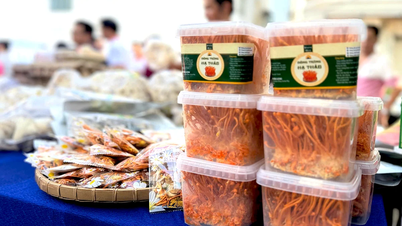
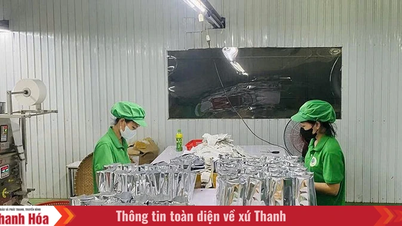
From the clean tea growing region of Quang Duc
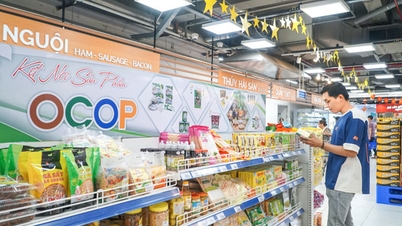
After years of transformation, Quang Ninh's agriculture has developed many key products, and many 5-star OCOP products are gradually gaining market share. A common feature of these products is the stable supply of raw materials.

In Quang Duc commune, the area under tea cultivation once saw a decline. However, learning from that experience, the locality is now choosing a different path: sustainable development with quality as the central focus. Ms. Nguyen Thi Quynh Trang, a technical officer at the Quang Duc Commune Service Supply Center, shared: The entire commune currently has 200 hectares of tea. From now until the end of 2030, the commune aims to develop an additional 40-50 hectares of tea; at the same time, it strives to achieve 30-50% of the commune's tea cultivation area meeting VietGAP, organic, or organically-oriented standards.
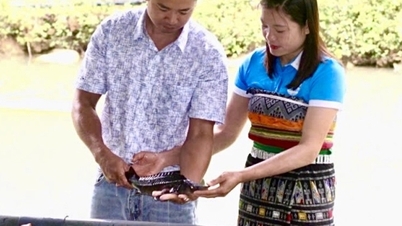
Determined not to chase after high production volume, from the very beginning of its operation as a two-tiered local government, Quang Duc commune has focused on improving tea varieties, expanding the area of VietGAP and organic tea, and investing in deep processing. Currently, the commune has about 10 hectares of organic tea and about 50 hectares of tea grown according to VietGAP standards. Along with this, the flourishing of production models along the value chain, cooperatives, and associations growing VietGAP and organic tea has made the prospect of a clean tea growing area in Quang Duc increasingly real. Ms. Dao Thi Binh, one of the pioneers in growing and processing organic tea in Hamlet 5, Quang Duc commune, said: "Currently, I am linked with 21 women who grow VietGAP tea to purchase and process it. The products are highly valued by the market, easy to sell, and fetch a high price, around 300-350,000 VND/kg."
With stable incomes, tea growers in Quang Duc are increasingly committed to tea cultivation, proactively researching and developing methods for growing and processing clean tea products. Mr. Bui Van Sinh, Head of the Front Committee of Hamlet 5, Quang Duc Commune, happily stated: "About 60% of households in the hamlet grow tea, harvesting for about 8-9 months each year. Some households get a few hundred kilograms, while others can reach up to a ton of tea."

It is evident that Quang Duc is developing a concentrated tea production area and expanding its tea raw material region. More importantly, the direction in building Quang Duc's tea raw material region is moving towards sustainable development, prioritizing quality over quantity. This is considered key to Quang Duc not only avoiding the localized surplus and shortage crises seen in the past, but also helping Quang Duc transform tea into a strong agricultural brand, as affirmed by Mr. Phan Van Viet, Vice Chairman of the People's Committee of Quang Duc commune.
Raw material sourcing areas need to be linked to product processing and consumption.
According to a report by the Department of Agriculture and Environment, the province currently has over 6,300 hectares of concentrated crop cultivation, nearly 10,000 hectares of production forest, 9 disease-free livestock farming zones, and approximately 4,700 hectares of industrial shrimp farming. These figures represent not only the area but also the foundation for enhancing the value of Quang Ninh's agricultural products.
Currently, to meet the requirements of agricultural economic growth in the 2026-2030 period, Quang Ninh province is developing a plan to " Develop concentrated production areas linked to processing and consumption of agricultural products with advantages in Quang Ninh province." Specifically, the goal for 2026 is to achieve over 8,900 hectares of concentrated crop cultivation areas (including rice, vegetables, flowers, fruit trees, ornamental plants, ginger, and tea); 2,334,000 head of livestock and poultry in concentrated farming areas (including cattle, pigs, and poultry); approximately 9,980 hectares of concentrated forestry production areas (including cinnamon and star anise); and approximately 18,040 hectares of concentrated aquaculture areas (including shrimp, marine fish, mollusks, and freshwater aquatic products). The Department of Agriculture and Environment is also advising on a roadmap and specific solutions to quickly realize this plan.
Mr. Tran Van Thuc, Deputy Head of the Crop Production and Plant Protection Sub-Department, Quang Ninh Department of Agriculture and Environment, said: Currently, specific policies on developing raw material areas and production along the value chain are being revised by the central government to suit the operation of the two-tiered local government system. Quang Ninh province is awaiting specific guidance from the central government, while we are also developing and advising the province on specific policies suitable to Quang Ninh's situation, thereby immediately promoting raw material areas, concentrated production areas, and production along the value chain in Quang Ninh.


In reality, developing concentrated agricultural production areas and forming raw material zones to serve the processing and export of agricultural products is an essential requirement for creating strong, highly competitive, and high-value branded agricultural products. However, the practical implementation process will present many challenges. Some recent movements regarding the transformation of farming technology towards modern, high-tech methods, or the application of good agricultural practices, creating VietGAP and organic green and clean agricultural production areas, are in the right direction and necessary, but not sufficient. The development of concentrated production areas also needs to be linked to the processing and consumption of agricultural products that have advantages in the province, namely key agricultural products or OCOP agricultural products.
Developing raw material areas, the "core" of concentrated agricultural production linked to processing and consumption of advantageous agricultural products, is not just a matter of today but the solution for sustainable agriculture tomorrow. When raw material areas are properly established, and production is linked to the market, the story of "bumper harvest, low prices" will likely no longer repeat itself.
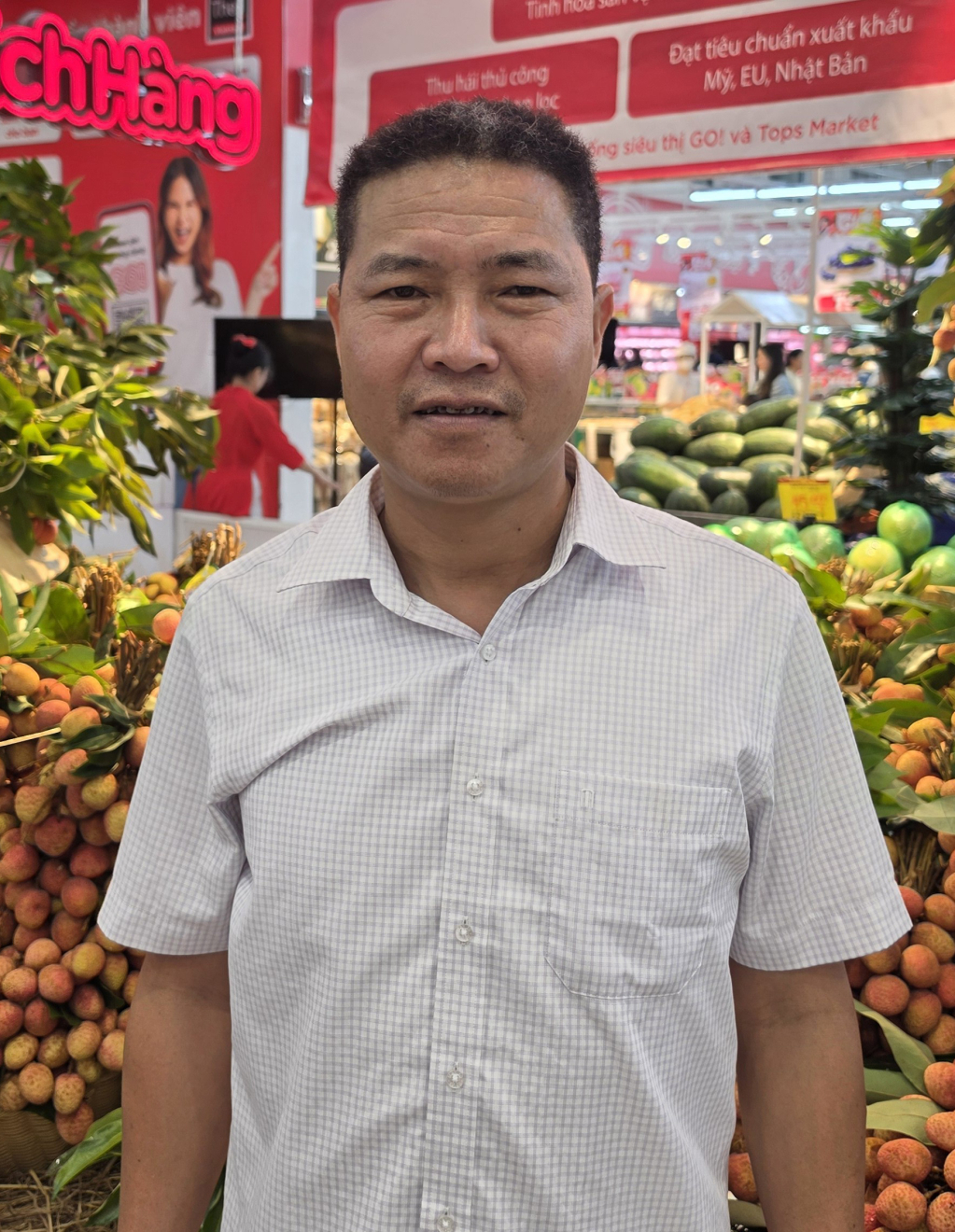 Deputy Director of the Department of Agriculture and Environment, Nguyen Khac Dung: Providing guidance and advising on the legal framework for developing suitable raw material areas. For production activities, including agricultural production, the current operating principle is to create products that the market needs, rather than producing and supplying products that the province already has. Quang Ninh has and continues to have certain raw material areas in all aspects of crop cultivation, livestock farming, and aquaculture. However, these raw material areas themselves need to adapt, innovate, and keep up with and meet the development trends of the market. As the governing body, the Department of Agriculture and Environment provides guidance and advises on the legal framework for developing suitable raw material areas. Specifically, it focuses on rejuvenating, technologizing, digitizing, and marketizing existing raw material areas, while simultaneously establishing new areas associated with new agricultural products that have development potential and competitive advantages. At the same time, the Department of Agriculture and Environment, together with relevant units and localities, will implement pilot models to be replicated among the people, or work alongside agricultural producers to address bottlenecks within its jurisdiction, thereby promoting the development of agricultural raw material areas in accordance with the established direction. |
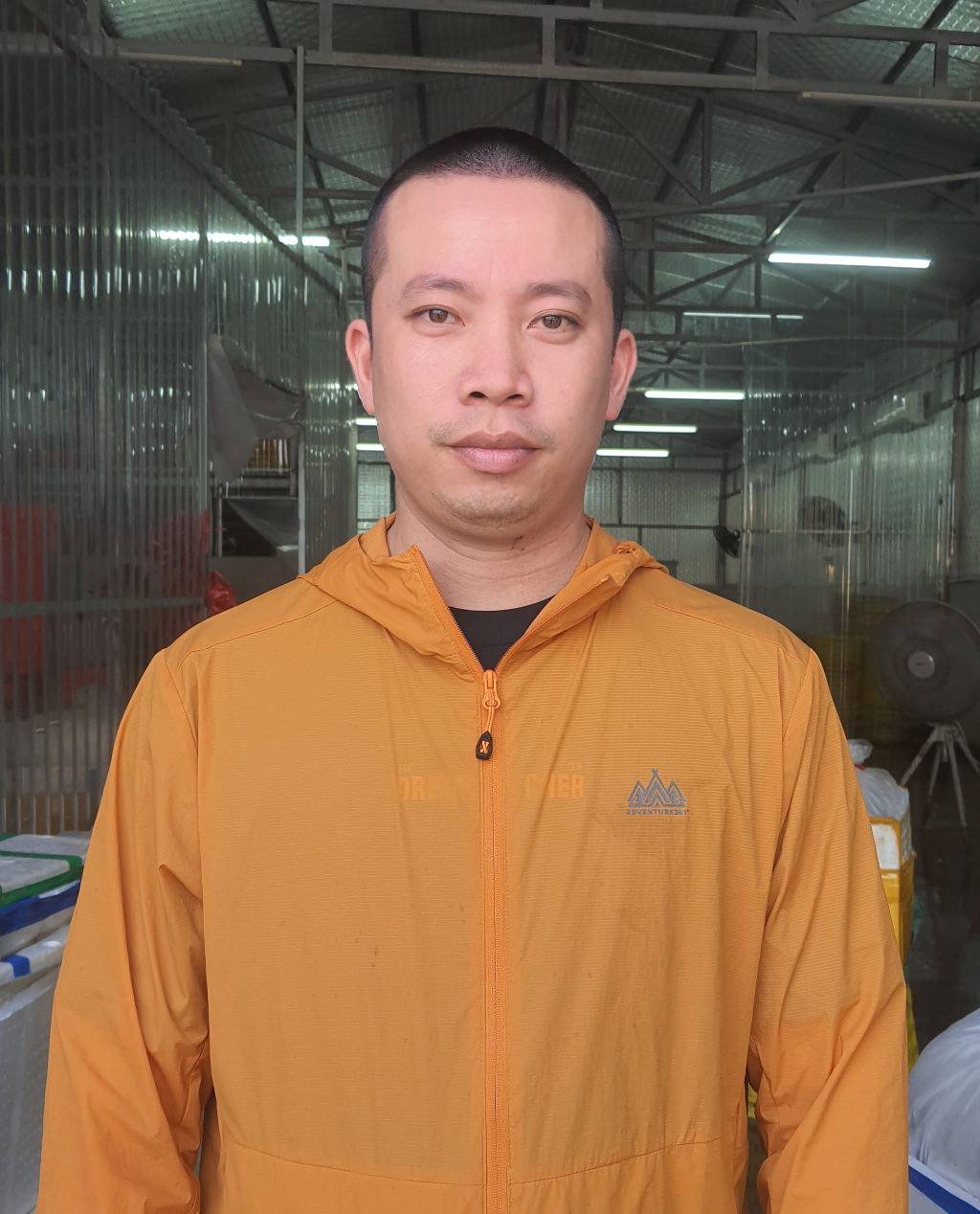 Mr. Tran Van Quang (Dong Mat area, Ha An ward): It is necessary to assign area codes to agricultural raw material production areas. We specialize in the preliminary processing and preparation of Pacific oyster meat. Our products currently come from large-scale aquaculture farms in Quang Ninh province, and market demand is very high, meaning we have a significant advantage in terms of quantity. However, we face issues regarding raw material quality standards, as most products lack aquaculture zone codes, making traceability impossible. Consequently, we cannot export them, or export them through official channels, depending on the technical barriers imposed by importing countries. In the long run, it is a minimum and essential requirement that raw materials must be cultivated in designated areas with traceability information. Therefore, we earnestly hope that relevant authorities will address the "bottlenecks" in mollusk raw material areas, including Pacific oysters, throughout the province. This will determine sustainable development not only in cultivation but also in processing; it will provide a foundation for processing businesses like ours to confidently invest in factories, infrastructure, and equipment to operate on a large scale and sustainably. |
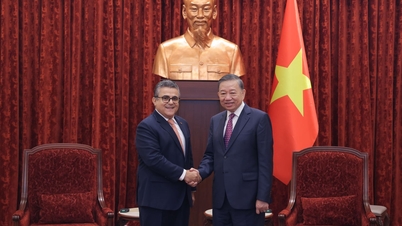
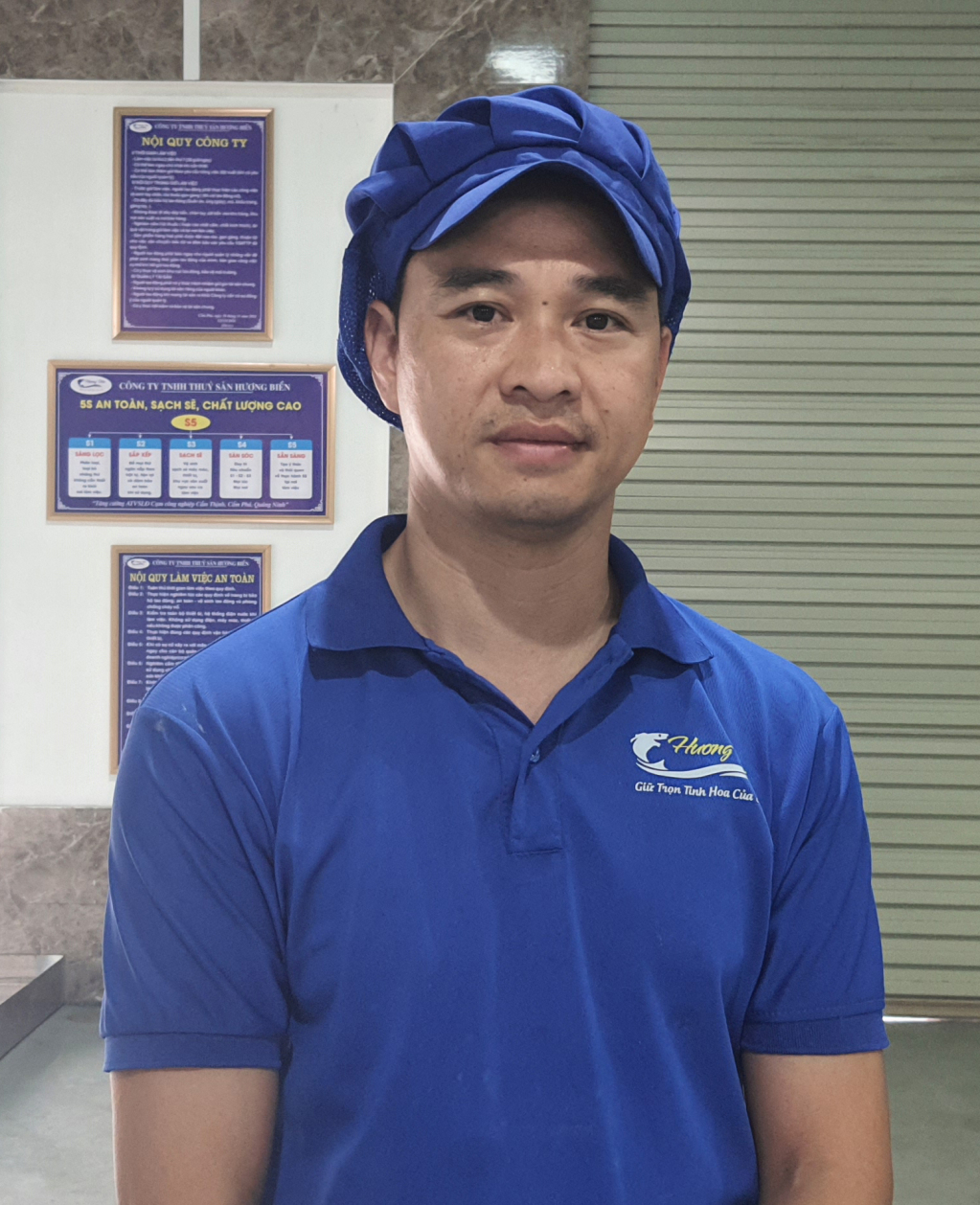  Vietnam and the United States strengthen cooperation in addressing the consequences of war.VTV.vn - On June 22, General Secretary and President To Lam received Acting Secretary of the US Navy Hung Cao.  General Secretary and President To Lam receives Acting Secretary of the Navy of the United States.On June 22, 2026, in Hanoi, General Secretary and President To Lam received Acting Secretary of the U.S. Navy Hung Cao.  The General Secretary and President of Vietnam receive the Acting Secretary of the Navy of the United States.On June 22, 2026, in Hanoi, General Secretary and President To Lam received Acting Secretary of the U.S. Navy Hung Cao. Director of Huong Bien Co., Ltd. (Cam Thinh Industrial Cluster, Cua Ong Ward) Tran Van Cung: Strengthening measures to combat IUU violations to ensure that harvested seafood products meet standards. For the past three months, almost all of our fresh seafood export operations have been halted. Previously, we sourced our products directly from fishing vessels in Quang Ninh province; however, this supply is becoming increasingly scarce, and we have also encountered cases where customers have refused to accept our products. This is because some fishing vessels have violated the EC's yellow card regarding illegal, unreported, and unregulated fishing, and therefore their catch is not accepted. We earnestly hope that Quang Ninh province will strengthen measures to lift the EC's yellow card, strictly manage fishing vessels, and remove obstacles for fishing vessels to operate offshore in accordance with regulations. I believe that lifting the EC's yellow card is a difficult task, but Quang Ninh must do it well, both to tighten management and aim for sustainable development of the fisheries economy, and to create favorable conditions for businesses trading in seafood products to operate stably and efficiently. |
Source: https://baoquangninh.vn/de-nong-san-co-vung-loi-3410468.html


![[Image] Ho Chi Minh City: Ma Lang area, Chicken-Rice Market about to change its appearance](https://vphoto.vietnam.vn/thumb/1200x675/vietnam/resource/IMAGE/2026/06/25/1782377698627_ndo_br_m1-jpg.webp)
![[Image] Schools organize meetings and introduce teaching models to students admitted to grade 10.](https://vphoto.vietnam.vn/thumb/1200x675/vietnam/resource/IMAGE/2026/06/25/1782368077271_ndo_br_z7970052192242-1ec8daeb77a6eed1a4e9f58c564ddd3e-jpg.webp)

































![[Photo] General Secretary and President To Lam receives Palestinian Ambassador Saadi Salama](https://vphoto.vietnam.vn/thumb/1200x675/vietnam/resource/IMAGE/2026/06/25/1782365384740_a1-bnd-9423-8322-jpg.webp)