To enhance the practical skills of students in business and management programs, feedback from businesses is a crucial factor that universities value. According to many businesses, having good professional knowledge in the curriculum is not enough; universities and businesses need to collaborate more deeply in improving the quality of student internships.
STUDENTS GIVE UP FOR VERY "CHILDISH" REASONS
According to Mr. Phan Minh Chinh, Chairman of the Board of Directors of Pro Sports Group, a good training program is one that helps students gain practical skills during internships at businesses and later when entering the labor market. The question is how can students both learn professional knowledge and gain practical experience? The answer involves all three sides: students, schools, and businesses. From the business perspective, the answer is obvious: creating opportunities for student internships. "Just letting them come for the sake of it, then giving them a certificate at the end of the semester is not difficult. The problem is how, during that short internship period, we can share, create, and nurture the motivation and desire for advancement in them," Mr. Chinh stated.
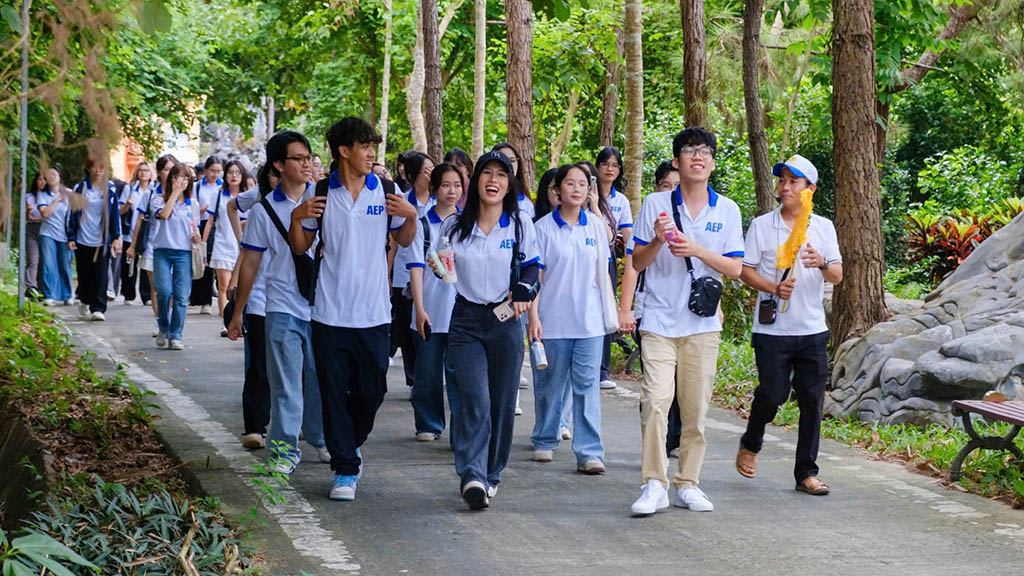
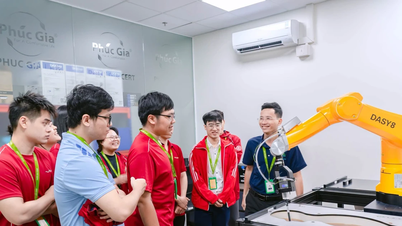
High-quality marketing management students from the National Economics University on a company visit.
According to Mr. Chinh, Pro Sports Group is a company that accepts many student interns and often creates opportunities for them to learn. Students are given the right to take ownership and gain experience without having to pay the price, because the company pays that price for them. But do they truly have the spirit of self-reliance? Our students today generally have very good qualities. They are often very quick-witted and adapt extremely quickly, but they also get bored easily. Therefore, the concern of business leaders like him is to cultivate the "core" of perseverance in students who have a burning desire. "Where there is perseverance, there is a way. How can we ensure that during the training process, in addition to imparting professional knowledge and new knowledge (English, computer skills, etc.), teachers cultivate perseverance and a mindset ready to face challenges in the students?" Mr. Chinh said.
Ms. Bui Thi Hanh Hieu, General Director of Bao Minh Agricultural Products Processing and Trading Joint Stock Company, also stated that her company has several projects involving students. Basically, the students are intelligent, well-trained, dynamic, and eager to learn, but there are also some shortcomings. "They need to further cultivate their ethics, perseverance, and intellect. These three factors are very important, because there is a situation where businesses are very eager to welcome students, but many students quit halfway through the project. Some reasons are very 'childish'. We advise them that when they start working, they should understand that they will receive a salary, and they must work very seriously, since they are all over 18 years old," Ms. Hieu shared.



YOU SHOULD GET FAMILIAR WITH THE BUSINESS ENVIRONMENT FROM YEAR 2
Mr. Nguyen Huu Hieu, founder and CEO of FiinGroup Corporation, reflected on the reality that many graduates are still clueless when they start working. They don't understand what the workplace environment will be like. They don't grasp the human resource management system, who they will work with, who their colleagues and partners will be, what a typical workday will be like, or what kind of work discipline is required… "It seems that in the current training program's output standards, we haven't focused enough on students' practical experience. For example, there needs to be a regulation specifying how many hours and days each student needs to spend learning in the workplace or at businesses during the academic year… In my opinion, this requirement is very important in training," Mr. Hieu noted.
Ms. Nguyen Thi Dung, Director of D&P Vietnam Tax Consulting and Agency Co., Ltd., suggested that universities should create opportunities for students to intern and gain practical experience early on, rather than waiting until their final year. Even in their second year, universities could introduce students to the business environment, even allowing them to work at a company for a period of time (perhaps a week, a month, or even a quarter) so that students can understand the work process and company culture. Continuing these experiences in their third and fourth years would ensure that graduates are fully capable of adapting to the real-world environment upon graduation.
Ms. Nguyen Thi Thu Hai, Director of LCFoods Co., Ltd., suggested that when businesses accept student interns, there needs to be a commitment between the business and the school, and between the business and the student. Businesses need to invest resources (financial) and personnel to create favorable conditions for student internships. Schools need to increase the time allocated to lecturers so that they can work closely with businesses during the student internship process. Currently, when students go for internships, lecturers only "connect" with businesses during the introductory phase and consider their task completed, which is ineffective.
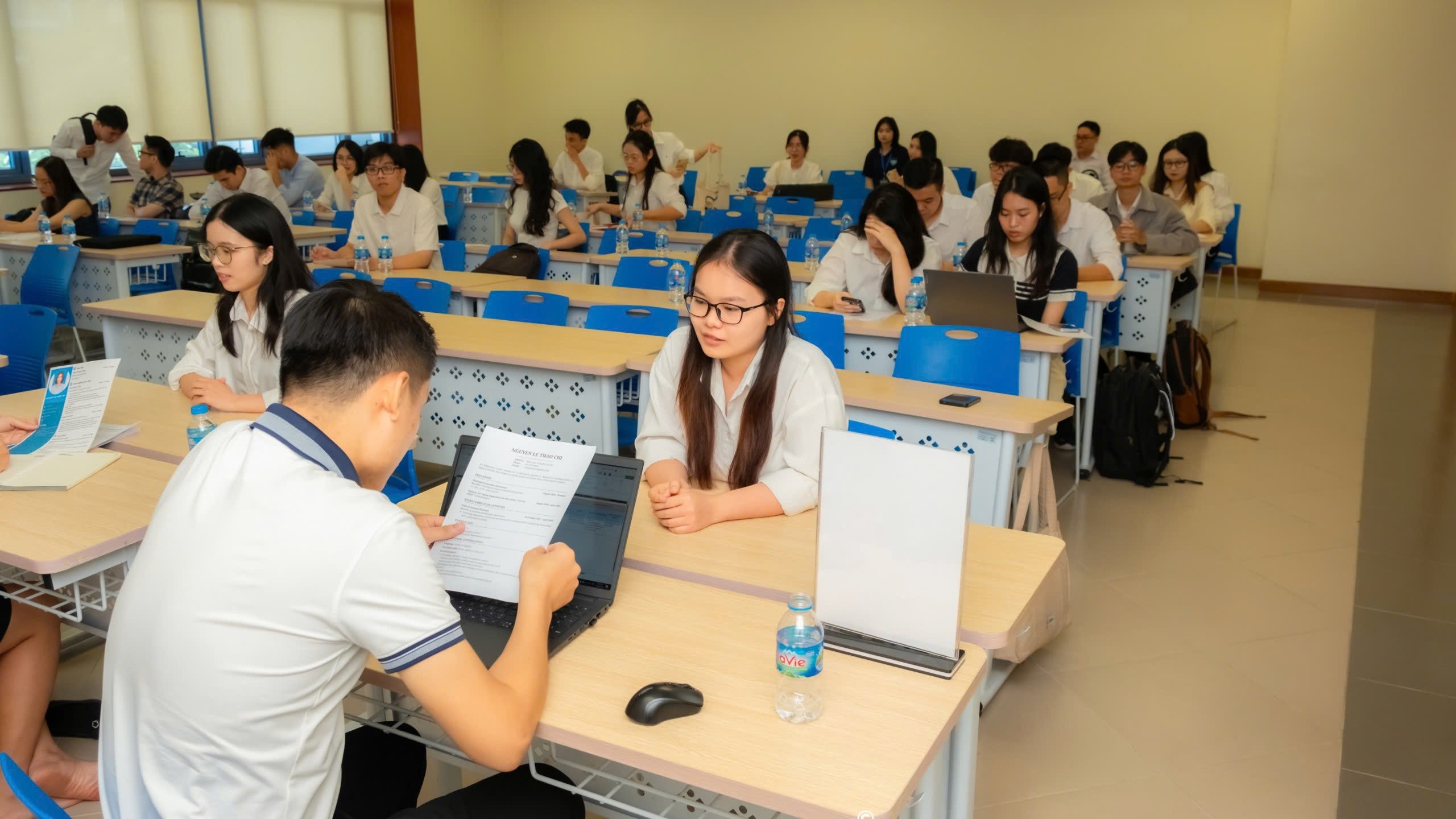
Students participate in an activity during the internship fair.
We need to create conditions for students to make mistakes…
According to Mr. Trinh Van Tuan, Chairman of the Board of Directors of PC1 Group Joint Stock Company, activities such as internships, major assignments, and graduation theses are part of preparing students for life after graduation, but the majority of students still lack responsibility towards these activities. Student internships at businesses remain largely superficial and lack quality. The process of completing major assignments doesn't focus on the core issues. Students often choose assignments that are closely related to their future work.
"Learning must go hand in hand with practice. Right from the moment they choose a company model for their internship, students need to make a practical choice that aligns with the career path they intend to pursue. Their graduation projects should also be closely related to their internships. But many students don't do that. I consider that a shortcoming, a waste of time and resources, and it doesn't bring any benefits. Therefore, the training process should not only provide students with specialized knowledge but also help them develop the right mindset, so they can quickly identify what they want to do in the future, ensuring that learning and practice are truly effective," Mr. Tuan shared.



According to Mr. Nguyen Huu Hieu, universities need to create an experimental environment for students within the university lecture halls. Participants should not be under KPI pressure (pressure to achieve results). They can try, they can make mistakes, and they can make mistakes quickly so they can move on to something else. In that environment, they can immerse themselves in a simulated environment to create new products, initiatives, and services for society. "Universities create conditions that allow students to experiment in a specific environment, geographical space, and time, and it's okay if they make mistakes. After many trials, they will create things that are useful for the market," Mr. Hieu said.
Add new content to the training program.
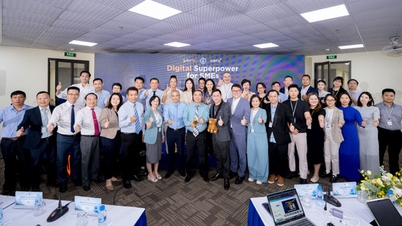
To enhance the practical relevance of its training programs, since 2023, the National Economics University has regularly organized an annual conference for the business community, a forum for gathering feedback from partner businesses. At this year's conference, held last weekend, the National Economics University announced that, building on last year's conference, it has added several new contents to the training program for students of cohort 66 (those enrolling in 2024).
For example, the National Economics University has included a "Practical Specialization" course, worth 4 credits, in all its regular undergraduate programs (starting from cohort 66) to increase the practical content of the training process; or the university has also introduced a new course, "Basic Data Science in Economics and Business," worth 3 credits, with training content tailored to students in each major group, for all new students.
Source: https://thanhnien.vn/de-sinh-vien-ra-truong-het-lo-ngo-185241104190544128.htm