

Yen Bai - In recent years, cinnamon has become one of the key crops helping people in Yen Bai province alleviate poverty. Thanks to this crop, many households have stabilized their lives and risen to prosperity. However, getting this "green gold" to penetrate the international market still faces many difficulties.
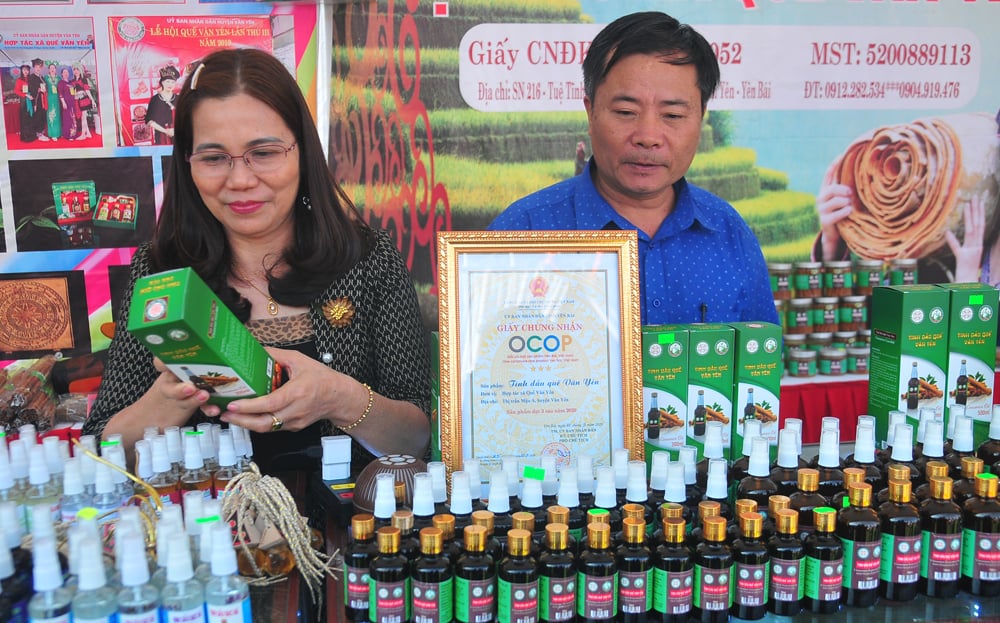 |
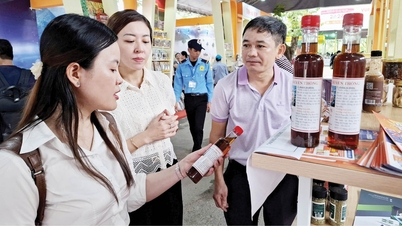
Products made from cinnamon essential oil are popular with consumers. |
>> "Green Gold" of the Dao Vien Son people
>> Article 2: "Green Gold" of the Mountainous Region
>> "Green gold" in Tran Yen district
In Van Yen district, cinnamon trees, once a means of poverty alleviation, have now become a source of wealth for the local people. Revenue from cinnamon trees brings in over 700 billion VND annually for the people of Van Yen, with an average per capita income of approximately 4 million VND, contributing to the development of a progressively prosperous and strong highland region. However, despite the natural advantages of cinnamon as a key input, deep processing and consumption remain limited, the supply chain is not well-organized, and marketing capabilities and market understanding are weak.
Accessing international export markets remains challenging. Organic cinnamon cultivation is developing but is still limited, accounting for less than 7% of the total area, and product diversification is lacking. The supply chain has not been effectively organized and implemented, particularly the formation of cooperatives to connect with businesses. Furthermore, the concept of "organic" for cinnamon and cinnamon products is currently absent. Deep processing is limited to essential oils. In addition, difficulties related to logistics and product promotion hinder the development of the industry.
The presence of chemical residues/metal content in cinnamon products exceeding export standards is one of the challenges facing Vietnamese cinnamon in general and Yen Bai cinnamon in particular. The chemical residues/heavy metal content in cinnamon products exceeding the export standards of the EU and US markets are lead and mercury.
In addition, there is another problem occurring frequently with cinnamon: two active ingredients found in pesticides, namely Glyphosate (found in herbicides) and Chlorpyrifos (found in insecticides), are present in many cinnamon products. Although these two substances are banned from use and sale in Vietnam, they are still widely found in cinnamon products.
With the active ingredient Chlorpyrifos, the EU and US markets allow a concentration of 0.01 PPM; therefore, this level is almost zero. To enhance competitiveness and meet the quality standards for cinnamon exports, many processing facilities have shifted towards cleaner production, achieving ISO standards, and creating clean, organic products.
Therefore, fresh cinnamon raw materials need to be grown organically, without pesticide residues exceeding permissible limits. Recognizing the benefits of producing clean cinnamon, organic cinnamon not only increases the cinnamon essential oil content but also boasts superior quality, meeting the requirements of international customers. Furthermore, the high selling price allows the cooperative to purchase raw materials from farmers at a price 20% to 30% higher than conventional cinnamon.
In addition to applying organic farming methods, cinnamon growers are provided with cinnamon seedlings of clear origin and free from disease; during cultivation, no herbicides or chemical fertilizers are used; and for cinnamon trees aged 4 years or older, pruning is limited to ensure that the essential oil content does not decrease. On the part of Yen Bai province, besides preserving the high-quality native small-leaf, red-tipped cinnamon variety, the province has supported farmers in applying advanced techniques to intensively cultivate organic cinnamon, increasing density, shortening the harvesting cycle, and increasing biomass per unit area.
Thanks to this, over the past three years, the area of organic cinnamon cultivation has increased rapidly, four times more than planned, preserving purebred cinnamon on 15 hectares to create a source of cinnamon seedlings annually. To date, the total area certified as organic cinnamon meeting international standards is over 4,500 hectares; however, through the value chain linkage mechanism between farmers and processing businesses, the actual area of organic cinnamon has reached approximately 20,000 hectares. Van Yen district is a prime example of organic cinnamon cultivation and production, resulting in cinnamon of the highest quality in the country due to its high essential oil content.
Recognizing the continuous increase in the area of organic cinnamon cultivation, in order to sustainably develop this "green gold" crop and enhance its value, localities are planning the development of concentrated, specialized cinnamon growing areas, adhering to State regulations on food safety, disease control, and environmental protection; while also promoting linkages between production and consumption of cinnamon products.
The province also supports people in replicating cinnamon cultivation models in an intensive, organic manner, aiming for sustainable forest management certification, and bringing Yen Bai cinnamon products into large, high-value markets such as Europe, the US, and Japan; linking cinnamon production along the value chain from production, harvesting, processing, and consumption, focusing on deep and refined processing to create high-value products.
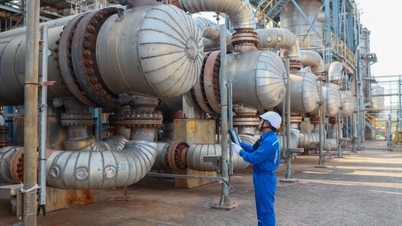
According to statistics from Yen Bai's agricultural sector, the province currently has over 80,000 hectares of cinnamon trees, concentrated in the districts of Van Yen, Tran Yen, Luc Yen, and Van Chan. Each year, these trees yield a total of 22,000 tons of dried cinnamon bark, nearly 600 tons of cinnamon essential oil, and over 70,000 cubic meters of various types of cinnamon wood, generating over 1 trillion VND in revenue from cinnamon cultivation throughout the province. The province has 17 large-scale cinnamon essential oil extraction factories using boiler technology for distillation, with a capacity of 1,000 tons of product per year. In addition, Yen Bai also has more than 400 small-scale, family-run cinnamon essential oil processing facilities, mainly operating manually, with a capacity of approximately 200 tons per year. |
Quang Thieu
Source: http://baoyenbai.com.vn/12/347724/De-vang-xanh-tham-nhap-thi-truong-lon.aspx

![[Photo] General Secretary and President To Lam meets with National Assembly delegates from ethnic minorities.](https://vphoto.vietnam.vn/thumb/1200x675/vietnam/resource/IMAGE/2026/04/20/1776696701056_a1-bnd-8331-3342-jpg.webp)

![[Image] National Assembly discusses the implementation of the socio-economic development plan.](https://vphoto.vietnam.vn/thumb/1200x675/vietnam/resource/IMAGE/2026/04/20/1776696707422_ndo_br_img-20260420-185419-jpg.webp)






















































Comment (0)