

TPO – The Vietnam Railway Authority has just proposed to the Ministry of Transport to review, appraise, and approve the planning for the Lao Cai – Hanoi – Hai Phong – Quang Ninh railway line, with a total capital requirement of over 179,000 billion VND.
The Lao Cai – Hanoi – Hai Phong – Quang Ninh railway line starts at Lao Cai Station (from the point where the rails connect with the Chinese railway) and ends at Ha Long Station (part of the Kep – Ha Long railway line). The total length of the line is approximately 427km, including 41 stations along the route.
The route passes through 10 provinces and cities: Lao Cai, Yen Bai, Phu Tho, Vinh Phuc, Hanoi, Bac Ninh , Hung Yen, Hai Duong, Hai Phong, and Quang Ninh.
The planning consultancy consortium, TRICC – TEDI, divided the Lao Cai – Hanoi – Hai Phong – Quang Ninh railway line into two main lines and two branch lines.
The main section from Lao Cai – South Hai Phong – Lach Huyen port is over 391 km long. The main section from South Hai Phong – Cai Lan is 50.5 km long. Meanwhile, the branch line from South Hai Phong – South Do Son port is 12.6 km long; and the branch line from South Dinh Vu – Dinh Vu is 7.4 km long.
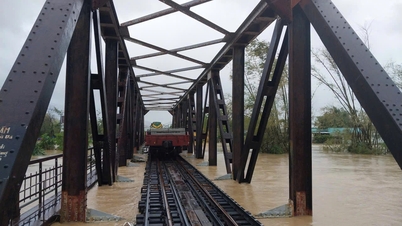
According to the Vietnam Railway Authority, the entire line will have 56 large bridges with a total length of 47.5 km crossing the Red River, Lo River, Bach Dang River, and over the Hanoi - Lao Cai, Hanoi - Hai Phong, and Hai Phong - Quang Ninh expressways, as well as national highways and some provincial roads, and will include 11 tunnels.
The entire line will have 10 stations serving both passengers and cargo, including Yen Bai, Phu Tho, Viet Tri, Vinh Phuc, Vinh Yen, Tam Hop, Bac Hong, Dong Anh, Lac Dao, and Hai Duong, while the remaining stations will be for either freight or passenger trains only. Five stations are located at the seaports of Lach Huyen, Nam Do Son, Nam Dinh Vu, and Dinh Vu.
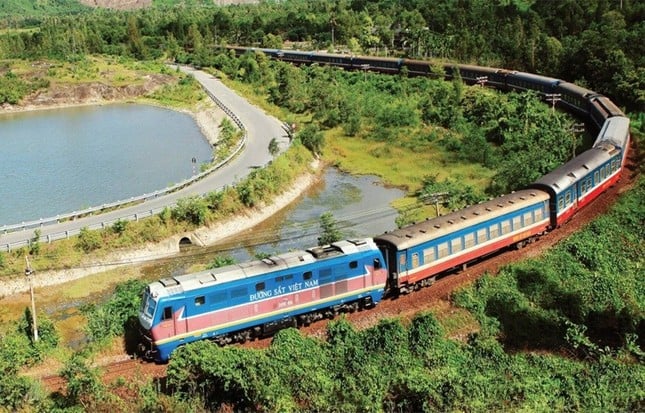 |
The estimated total capital requirement for the Lao Cai – Hanoi – Hai Phong – Quang Ninh railway line is over 179,000 billion VND. |
The estimated total capital requirement for the Lao Cai – Hanoi – Hai Phong – Quang Ninh railway line is over 179,000 billion VND. Of this, land acquisition costs account for 23,448 billion VND, construction and equipment costs are 107,260 billion VND, and the remainder covers consulting fees, project management, and contingency costs.
According to calculations by the planning consultancy consortium TRICC – TEDI, the transportation demand for the Lao Cai – Hanoi – Hai Phong – Quang Ninh railway network is projected to reach 12.7 million tons of goods and 4.6 million passengers in 2030, 14.9 million tons of goods and 6.2 million passengers in 2040, and 17.4 million tons of goods and 8.3 million passengers in 2050.
The objective of the aforementioned railway line planning is to enhance the transport capacity of the Lao Cai – Hanoi – Hai Phong – Quang Ninh railway line to meet the demand for rail transport and ensure the most efficient utilization of the line's capacity; to connect the national railway with seaports, concentrated industrial zones, and tourist areas, thereby maximizing the efficiency of rail transport and contributing to the country's industrialization and modernization.
This is also a major route connecting economic zones and industrial parks, and large seaports, within Vietnam's Two Corridors, One Belt Strategy (Kunming – Lao Cai – Hanoi – Hai Phong – Quang Ninh economic corridor; Nanning – Lang Son – Hanoi – Hai Phong – Quang Ninh economic corridor), and within the framework of the China-ASEAN Free Trade Agreement.
Regarding the project schedule, the consultant recommends that the Lao Cai – Hanoi – Hai Phong section be implemented by 2030. The Hai Phong – Quang Ninh section will be studied for implementation after 2030, along with the investment roadmap for the Nam Dinh – Thai Binh – Hai Phong – Quang Ninh coastal railway line.
![[Image] National Assembly discusses the implementation of the socio-economic development plan.](https://vphoto.vietnam.vn/thumb/1200x675/vietnam/resource/IMAGE/2026/04/20/1776696707422_ndo_br_img-20260420-185419-jpg.webp)


![[Photo] General Secretary and President To Lam meets with National Assembly delegates from ethnic minorities.](https://vphoto.vietnam.vn/thumb/1200x675/vietnam/resource/IMAGE/2026/04/20/1776696701056_a1-bnd-8331-3342-jpg.webp)










































































Comment (0)