

Every day, from early morning, many parents in Ca Mau 'go to school' with their children on ferries, hoping for a better future for their children.
Ngoc Hien is the most remote area of Ca Mau province, with 27 kindergartens, primary schools, and secondary schools. Here, getting to school is not only a journey for students but also a challenging experience for parents. With its intricate network of rivers and waterways, daily commutes by boat have become a routine, carrying with them the hardship and worry of parents.
At Dat Mui 2 Primary School (Dat Mui commune, Ngoc Hien district), a large number of parents gathered around the shops near the school waiting to pick up their children. The school currently has 350 students, of whom about 80% have to travel to school by boat.
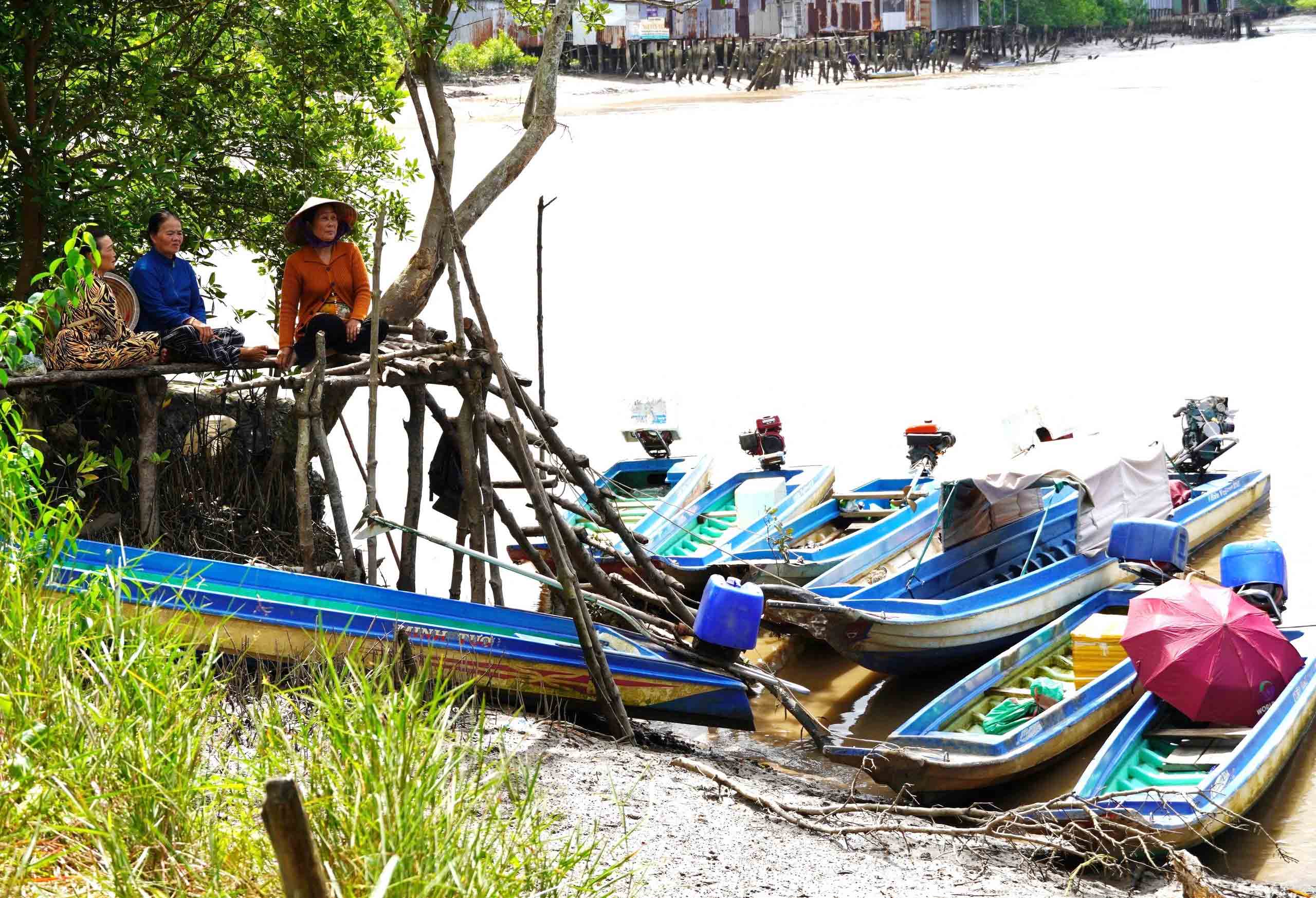
Parents in Ngoc Hien District (Ca Mau Province) wait to pick up their children from school by boat.
Ms. Huynh Bich Ngoc has to wake up at 4 a.m. to prepare her daughter for school. Her house is located deep within a small canal, and to get to the school, she has to cross many large and small rivers. "Every day, I try to get my husband to take me to the main river, then I take a ferry to school, costing about 60,000 VND per day for the two of us, not including food. Because our house is so far away and there are so many obstacles, I have to stay at the school until the afternoon to pick my daughter up," Ms. Ngoc confided.
Mr. Tran Van Dung (73 years old, residing in Cai Xep hamlet, Dat Mui commune) has to spend 30,000 VND each day on ferry fares for two trips (morning and afternoon) for his grandson, who is in 5th grade, not including lunch costs. "The transportation here is difficult, so studying is very challenging. Some children from disadvantaged families have to drop out of school," Mr. Dung shared.
At Tan An Tay Primary School No. 1 (Tan An Tay commune), Ms. Tran Thi Thuy (32 years old, residing in Tan An Tay commune) said: "My house is more than 10 km from the school, and there's no road yet, so I have to take my two children to school by boat. If I choose to stay and wait to pick them up in the afternoon, it only costs 2 liters of gasoline for two round trips; but if I choose to go home at noon, it costs twice as much. To save money, I stay at a friend's house during lunchtime."
Ms. Dam Thu Ha, Deputy Principal of Tan An Tay Primary School 1, said that currently 100 out of 321 students travel to school by waterway. Despite the local authorities' efforts, the lack of road coverage throughout the area makes getting to school even more difficult for the children.
According to Ms. Ha, going to school by waterway is more difficult than by road because of the high cost, the time-consuming nature of the journey, and the potential dangers. "It's common for children to be late for class due to boat malfunctions. During low tide, I feel heartbroken watching the children climb on and off the boats using makeshift wooden bridges," Ms. Ha shared.
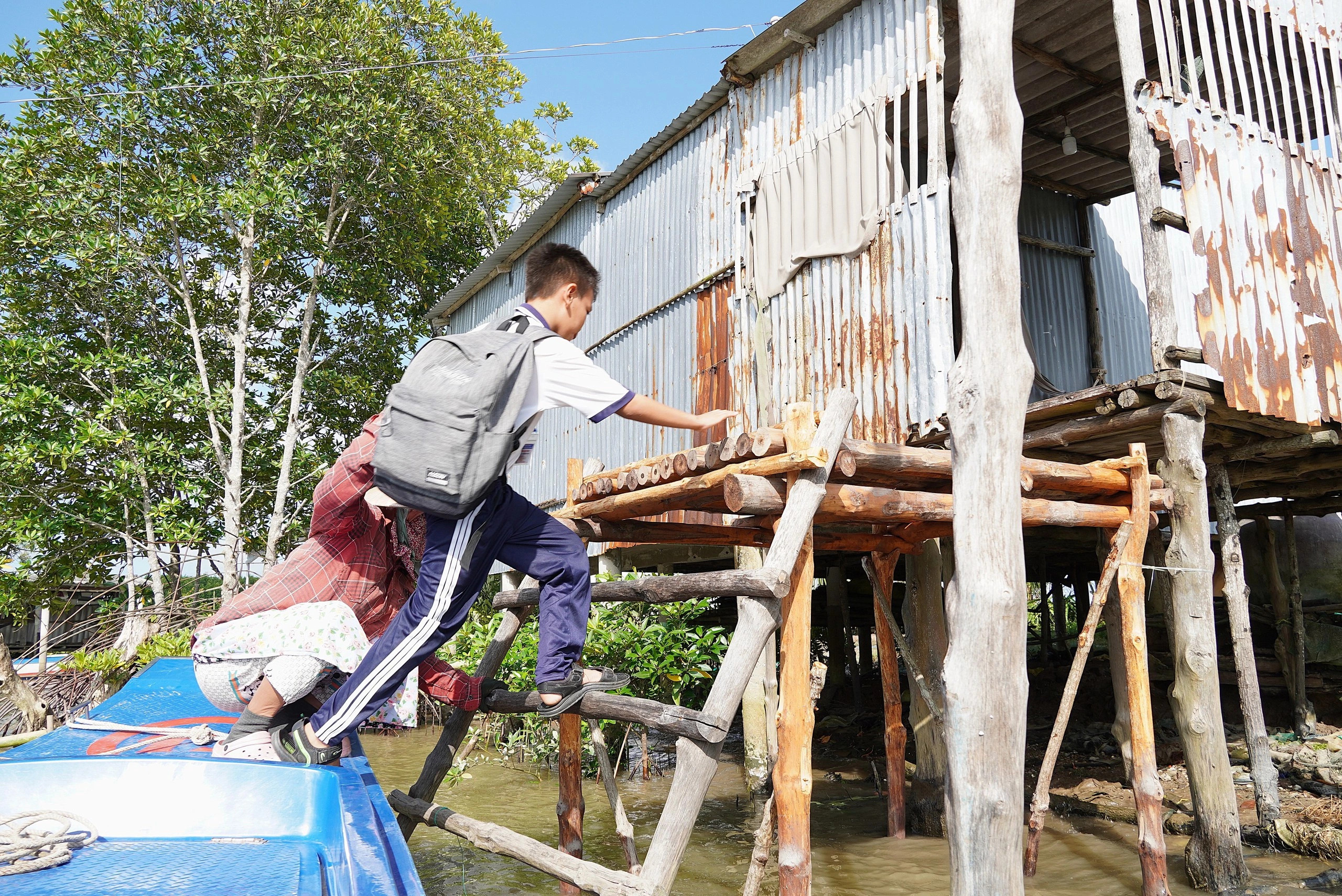
Students in Ngoc Hien district (Ca Mau province) go to school by boat.
According to the Department of Education and Training of Ngoc Hien District, more than 1,600 students in the district travel to school by waterway. Recently, schools have actively mobilized philanthropists and local authorities to support disadvantaged students.
Mr. Le Xuan Hung, Head of the Education and Training Department of Ngoc Hien District, suggested that the locality continue to have policies to support ferry fares for students from disadvantaged backgrounds; and pay attention to building roads in remote areas to make it easier for students to get to school.
Source: https://thanhnien.vn/di-hoc-cung-con-tren-nhung-chuyen-do-185241111193143288.htm


















































































Comment (0)