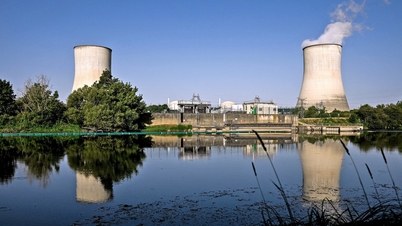
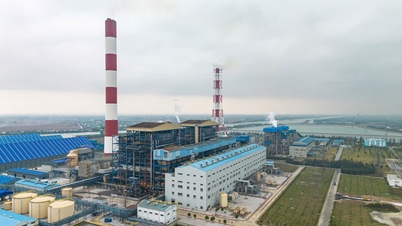
The world's largest nuclear power plant, Kashiwazaki-Kariwa (with a capacity of nearly 8 GW), is located in Japan. Photo: Reuters
One of the notable aspects of the bill is a complete shift away from the large-scale nuclear power plant model used in the past. Instead, Italy will focus on developing next-generation nuclear technologies such as Small Modular Reactors and Advanced Modular Reactors.
According to experts, these technologies offer many advantages such as higher safety levels, shorter construction times, flexible deployment capabilities, and easy integration with renewable energy systems. This is also a trend being researched by many countries to meet their long-term carbon neutrality goals.
Meanwhile, Japan plans to replace several nuclear power reactors by 2040 to ensure a stable energy supply and reduce reliance on imported fossil fuels. Tokyo expects to replace between 2 and 5 reactors with a total capacity of 2.2-5.5 GW in the 2040s and another 9 reactors by the 2050s.
According to the National Energy Master Plan, nuclear power will account for 20% of the national power generation mix by 2040. However, that figure only reached 9.4% in 2024.
To achieve this goal, Japan must not only restart decommissioned reactors but also replace reactors that have reached their 60-year operational lifespan as stipulated by current regulations, as well as build new reactors or expand capacity at existing plants.
But Japan's nuclear power scale and ambitions are nothing compared to those of its closest ally, the United States.
President Donald Trump recently issued a series of executive orders to kickstart the resumption of nuclear power in the United States, including the construction of dozens of advanced reactors. The U.S. is the world's largest producer of nuclear power, accounting for approximately 30% of global output. Nuclear power contributes 19% to the U.S. total electricity production, and the country aims to quadruple its nuclear power capacity to 400 GW by 2050.
Explaining the strong resurgence of nuclear power, at the international nuclear energy summit held in France in March amidst the Middle East conflict, host President Emmanuel Macron emphasized that nuclear power not only helps countries strengthen their energy independence but also plays a crucial role in mitigating the impact of geopolitical fluctuations.
Macron argues that restoring and developing nuclear power could help stabilize economies against global energy shocks. While debate remains, in the context of a world facing increasing energy uncertainty, nuclear power appears to be returning to the center of national energy strategies.
For example, Indonesia has stated that it will make nuclear power a central part of its long-term energy strategy, no longer considering it a "last resort" but a pillar of national energy security. Jakarta aims to operate its first nuclear power plant by 2032 and expand its capacity to 44 GW by 2060. The share of nuclear energy in the national energy mix is expected to reach 5% by the 2030s and 11% by 2060.


| The US leads the world in nuclear power production with 97 GW, followed by China (66 GW), France (63 GW), Japan (32 GW), Russia (28 GW), South Korea (26 GW), and Ukraine (13 GW). However, in terms of its share in the national electricity structure, France leads the world with over 67%. |
NATIONAL DAY (Compilation)
Source: https://baocantho.com.vn/dien-hat-nhan-len-ngoi--a206445.html
![[Photo] General Secretary and President To Lam receives Palestinian Ambassador Saadi Salama](https://vphoto.vietnam.vn/thumb/1200x675/vietnam/resource/IMAGE/2026/06/25/1782365384740_a1-bnd-9423-8322-jpg.webp)
![[Image] Ho Chi Minh City: Ma Lang area, Chicken-Rice Market about to change its appearance](https://vphoto.vietnam.vn/thumb/1200x675/vietnam/resource/IMAGE/2026/06/25/1782377698627_ndo_br_m1-jpg.webp)

![[Image] Schools organize meetings and introduce teaching models to students admitted to grade 10.](https://vphoto.vietnam.vn/thumb/1200x675/vietnam/resource/IMAGE/2026/06/25/1782368077271_ndo_br_z7970052192242-1ec8daeb77a6eed1a4e9f58c564ddd3e-jpg.webp)