Nurse performs CPR to save tourist who stopped breathing in restaurant.
VnExpress•27/03/2024
Seeing a foreign tourist suddenly collapse at the dining table, nurse Dang Thi Ha of Bach Mai Hospital rushed to perform CPR to save the patient's life.
Nurse Ha, 29 years old, who works at the A9 Emergency Center, Bach Mai Hospital (Hanoi), went on a trip to Da Nang with three friends a week ago.
On the evening of March 22nd, while dining at a restaurant in Son Tra district, she noticed a 70-year-old Indian man staggering and then collapsing. People around him shouted, suggesting the tourist was suffering from hypoglycemia or a stroke.
With the reflexes of an emergency nurse, Ms. Ha sensed that the man had suffered cardiac arrest (heart and respiratory arrest), as he lost consciousness very quickly. Reaching under his neck, she found no pulse and he was almost completely out of breath. She shouted, "Lay the patient down on the ground!", but his wife, not knowing Vietnamese, remained tightly holding onto her husband.
"I immediately grabbed the man by the armpits and pulled him forcefully to the ground. When I checked his pulse again, there was no sign of it; his heart had stopped beating. I performed chest compressions continuously and told everyone to call emergency services (115). After a while, the patient started breathing again," nurse Ha recounted on the afternoon of March 27th.
Nurse Ha, working at the A9 Emergency Center, Bach Mai Hospital. Photo: Le Nga
The patient was tall and large, sweating profusely, causing her hands to slip during chest compressions. Changing positions, she knelt down and continued resuscitation efforts. Seeing that the patient's pulse had returned and he was showing signs of regaining consciousness, she asked, "Are you alright?" When the patient nodded in response, she knew his life had been saved. Through conversation, the family revealed that the tourist had a history of hypertension and cardiovascular disease, and had previously undergone coronary artery bypass surgery.
A short while later, the ambulance arrived, and the patient was taken to the hospital. The wife turned back to thank them before getting into the ambulance with her husband. The resuscitation operation, which lasted about two minutes, saved the man's life. Without timely cardiopulmonary resuscitation, a patient who has suffered cardiac arrest could experience brain death and die within 3-5 minutes.
"I think it was fate, because the flight was delayed, so I was able to be at the restaurant and save this patient," nurse Ha said, adding that after being examined at a hospital in Da Nang , the couple requested to return home for treatment.
Nurse Ha has worked at the A9 Emergency Center for 8 years, encountering and participating in the emergency care of many patients every day. Therefore, when she saw a tourist fall, she provided first aid as a professional reflex. Even at the restaurant, she would shout "Help! Emergency!", a phrase she often uses when working at A9.
Cardiopulmonary arrest is a sudden interruption of the heart's pumping function, preventing blood from circulating to other parts of the body. Without prompt treatment, this condition can be fatal.
The ultimate goal of cardiopulmonary resuscitation (CPR) is to maintain breathing and heart rhythm, preventing brain damage and subsequent complications that could affect other parts of the body.
When cardiac arrest occurs, the victim faces the risk of insufficient oxygen supply to the organs. This is a major cause of death or permanent brain damage within minutes. If detected early and treated promptly and correctly, the victim can avoid these dangers.
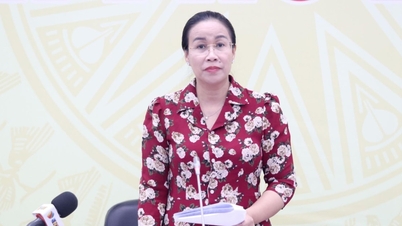
Associate Professor Dao Xuan Co, Director of Bach Mai Hospital, assessed that the situation in which nurse Ha saved the tourist's life demonstrates the effectiveness of pre-hospital emergency care. Going forward, the hospital will cooperate with other units to train customs officers, firefighters, students, etc., in pre-hospital emergency care, aiming for everyone to be able to handle emergency cases outside the hospital effectively.
"A patient who receives good first aid or emergency care before being transferred to a hospital may have their life saved, or give doctors a better chance of providing treatment," Mr. Co said.
When the emergency video was posted on social media, Ms. Ha hoped that through it, people would understand the importance of cardiopulmonary resuscitation (CPR) and pre-hospital emergency care.
"With proper training, anyone can perform chest compressions anywhere," she said.





























































![[Video] Sunset at Lap An Lagoon – Where the sun sets over the fishing nets](https://vphoto.vietnam.vn/thumb/1200x675/vietnam/resource/IMAGE/2026/05/31/1780192137701_beach-landscape-sea-water-nature-grass-745871-pxhere-com.jpeg)










































Comment (0)