

Construction of the Independence Palace began in early July 1962, after the old palace from the French colonial era was damaged. The palace was built according to the design of architect Ngo Viet Thu, the first Vietnamese person to win the Rome Prize.
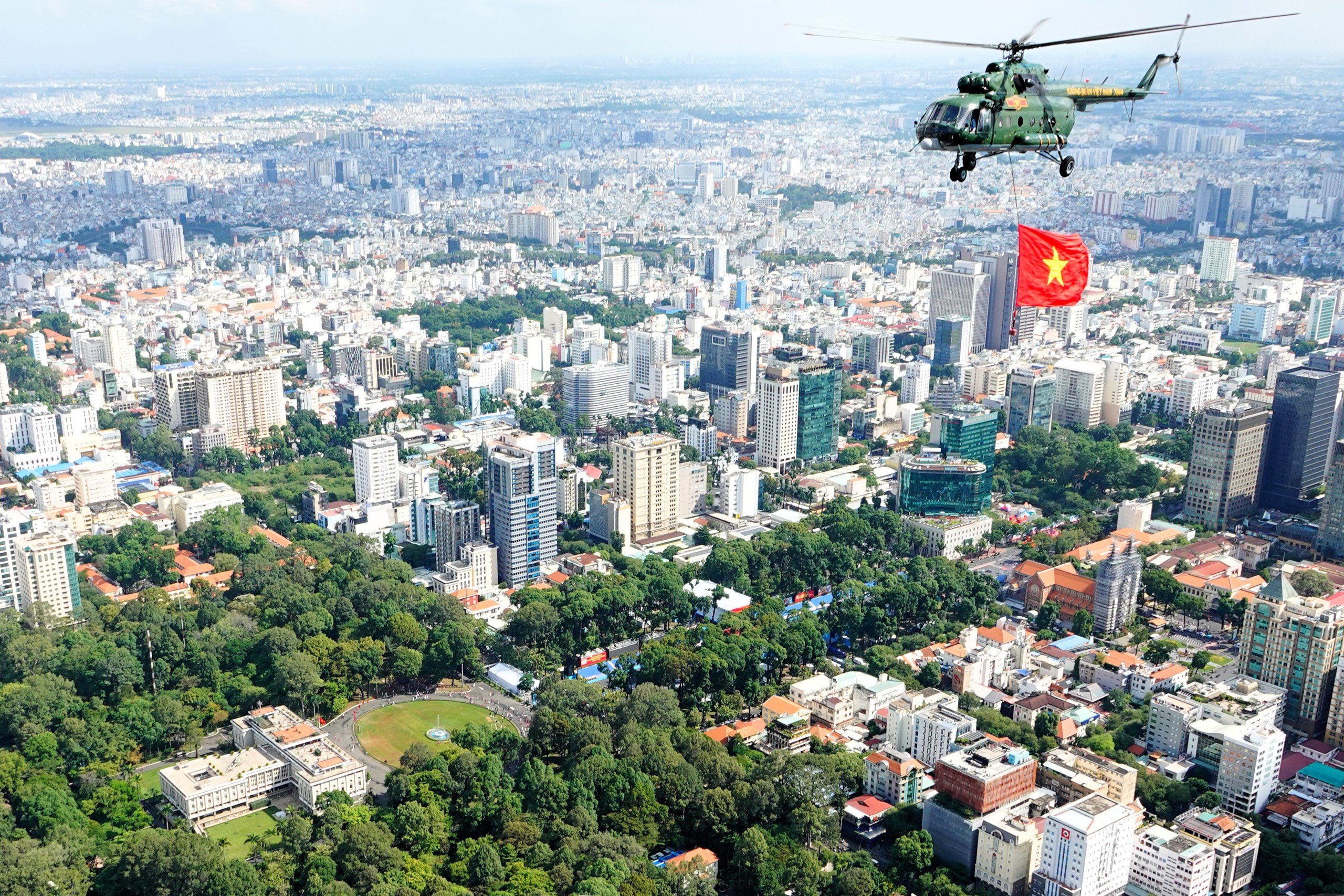
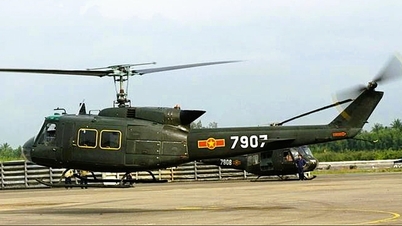
Military helicopters of the Air Defense - Air Force Command, flying the national flag, fly over the Independence Palace.
PHOTO: MAI THANH HAI
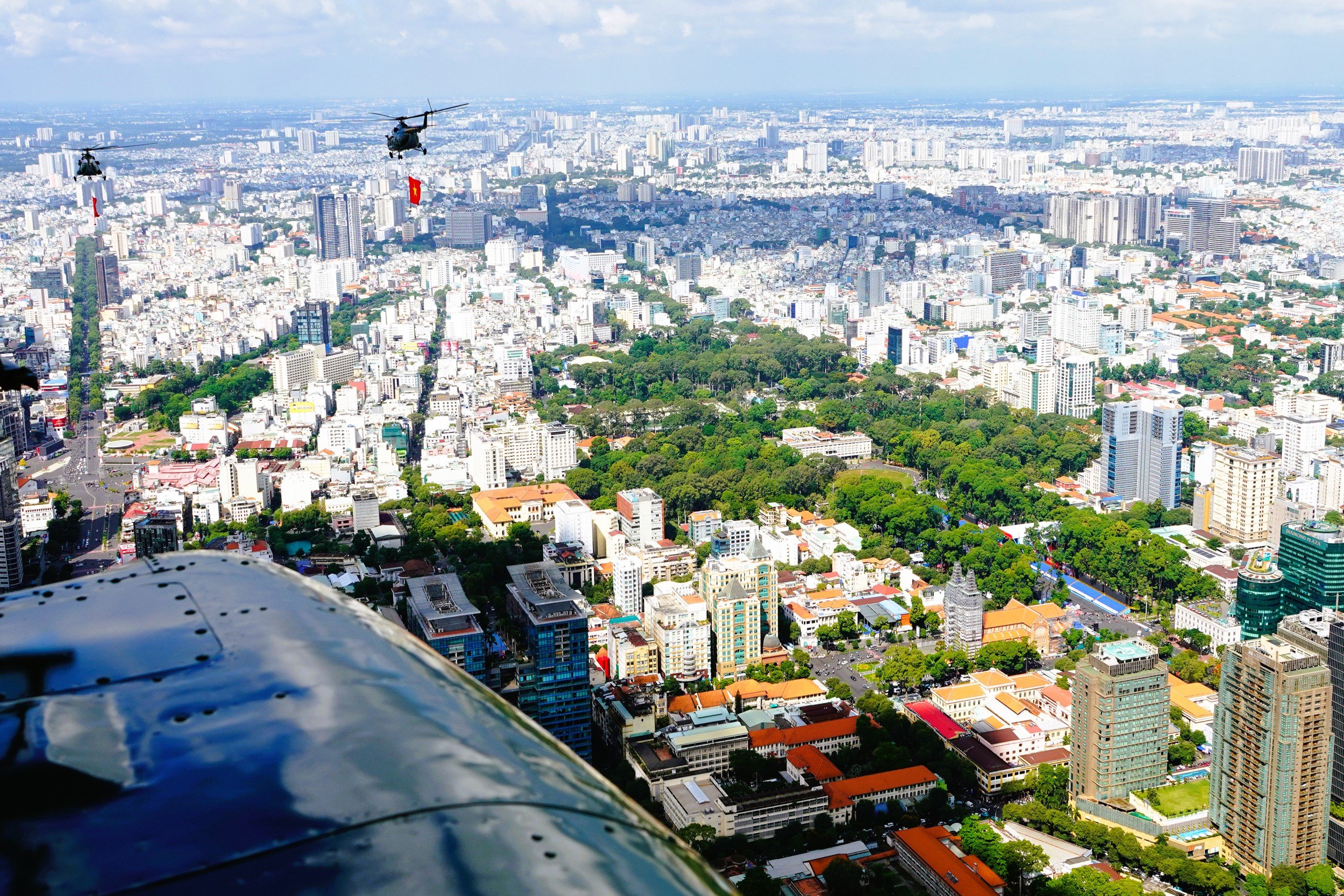
Independence Palace is notable for its green parks.
PHOTO: MAI THANH HAI
At noon on April 30, 1975, tank number 843 of the Vietnam People's Army, under the command of Lieutenant Bui Quang Than, rammed through the side gate of the Independence Palace; subsequently, tank number 390, commanded by Lieutenant Vu Dang Toan, rammed through the main gate and advanced straight into the palace.
At 11:30 a.m. that same day, Lieutenant Bui Quang Than hoisted the flag of the National Liberation Front of South Vietnam to the roof of the Independence Palace, signaling the day of complete victory.
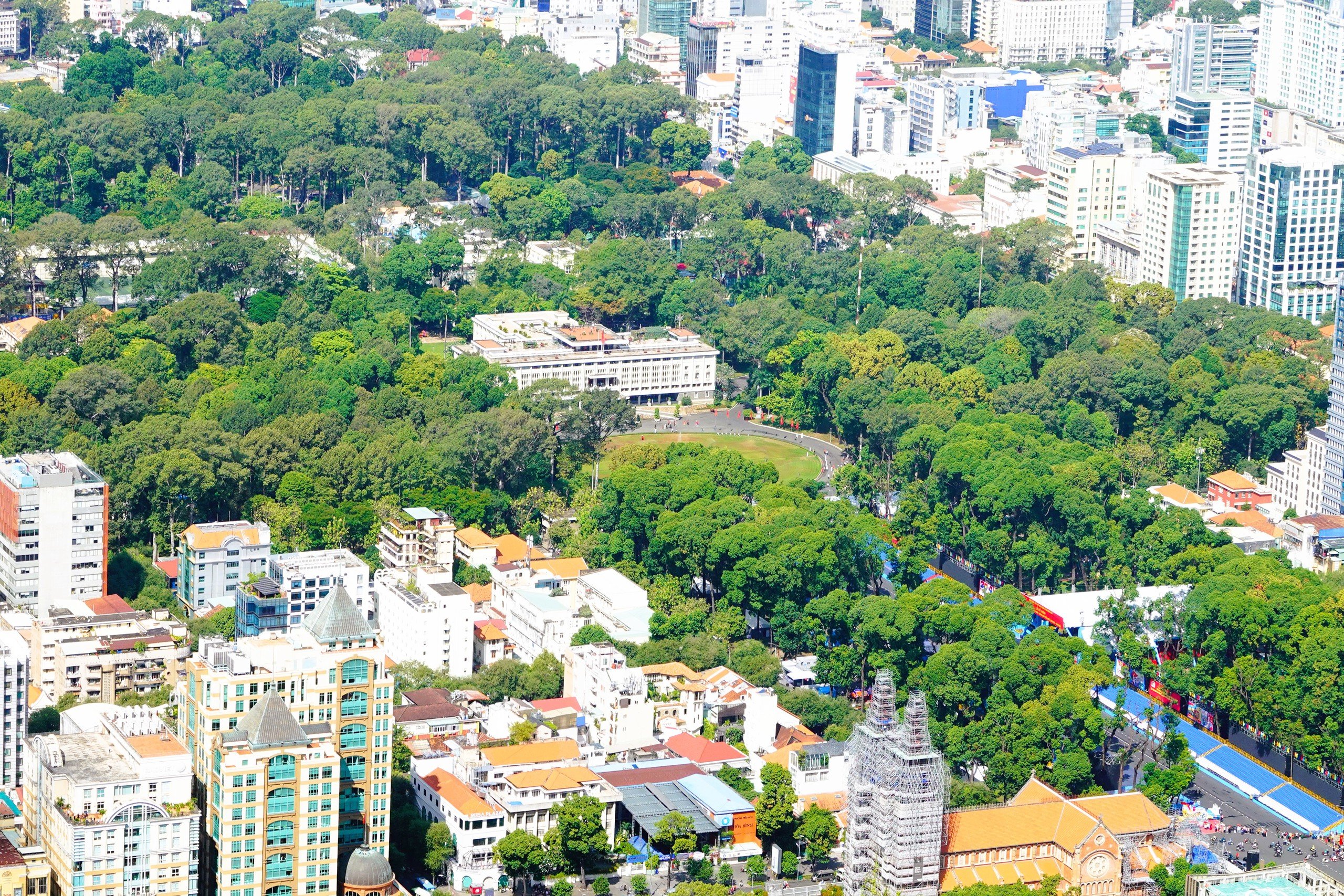
The grandstand for the 50th anniversary celebration of national reunification is located on Le Duan Street, in front of the Independence Palace.
PHOTO: MAI THANH HAI
Independence Palace is a famous historical and cultural site that attracts a large number of domestic and foreign tourists. The palace was recognized as a National Historical and Cultural Monument by Decision No. 77A/VHQD (June 25, 1976) of the Minister of Culture (now the Ministry of Culture, Sports and Tourism). The Government ranked Independence Palace as one of the first 10 special national monuments of Vietnam on August 12, 2009.
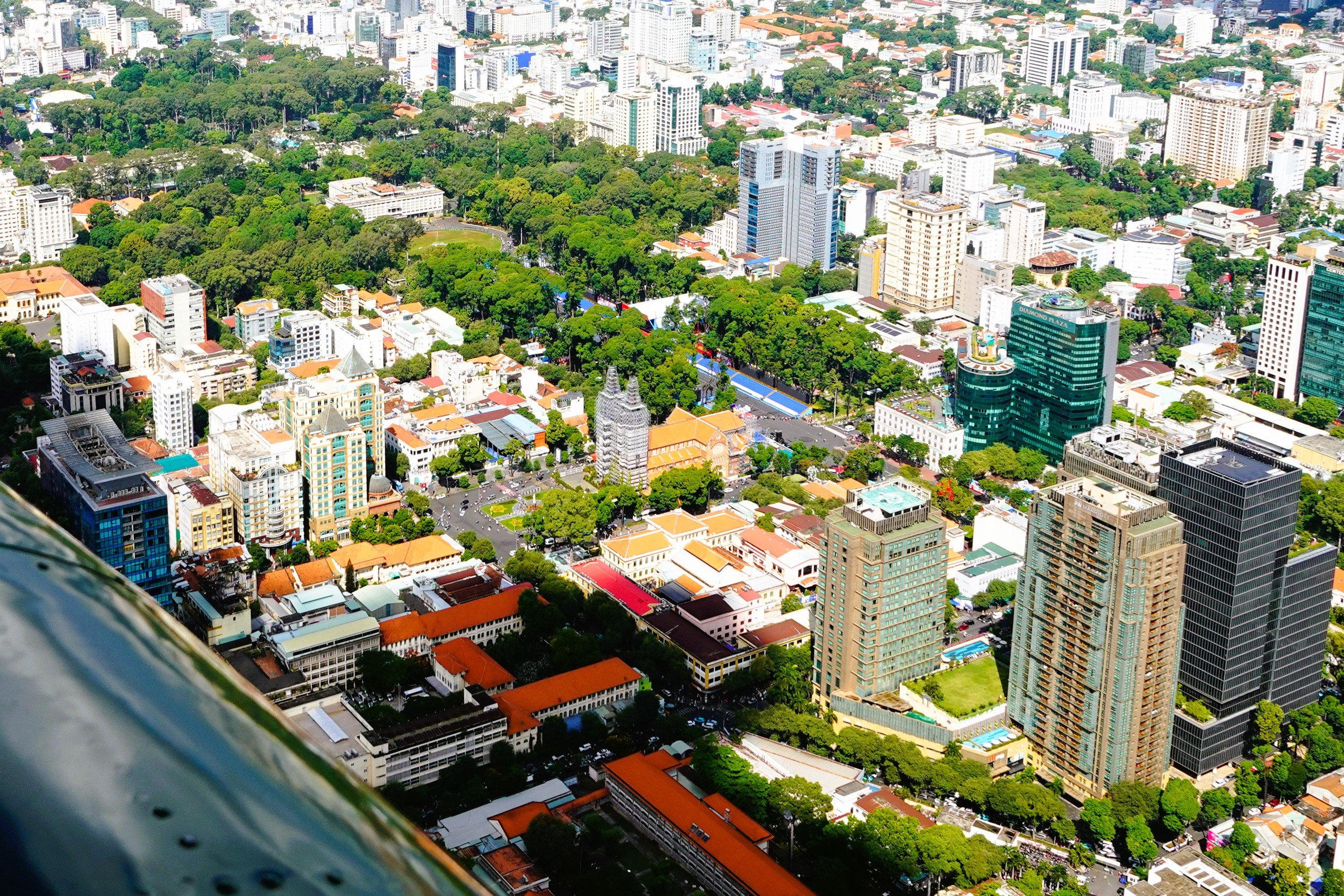
The large buildings in front of the Independence Palace area.
PHOTO: MAI THANH HAI
Beyond its historical significance, the Independence Palace also showcases typical Vietnamese architecture from the 1960s. Furthermore, the Independence Palace is often the venue for major events held in the city, including receptions for the Party and State in Ho Chi Minh City, as well as for the city government.
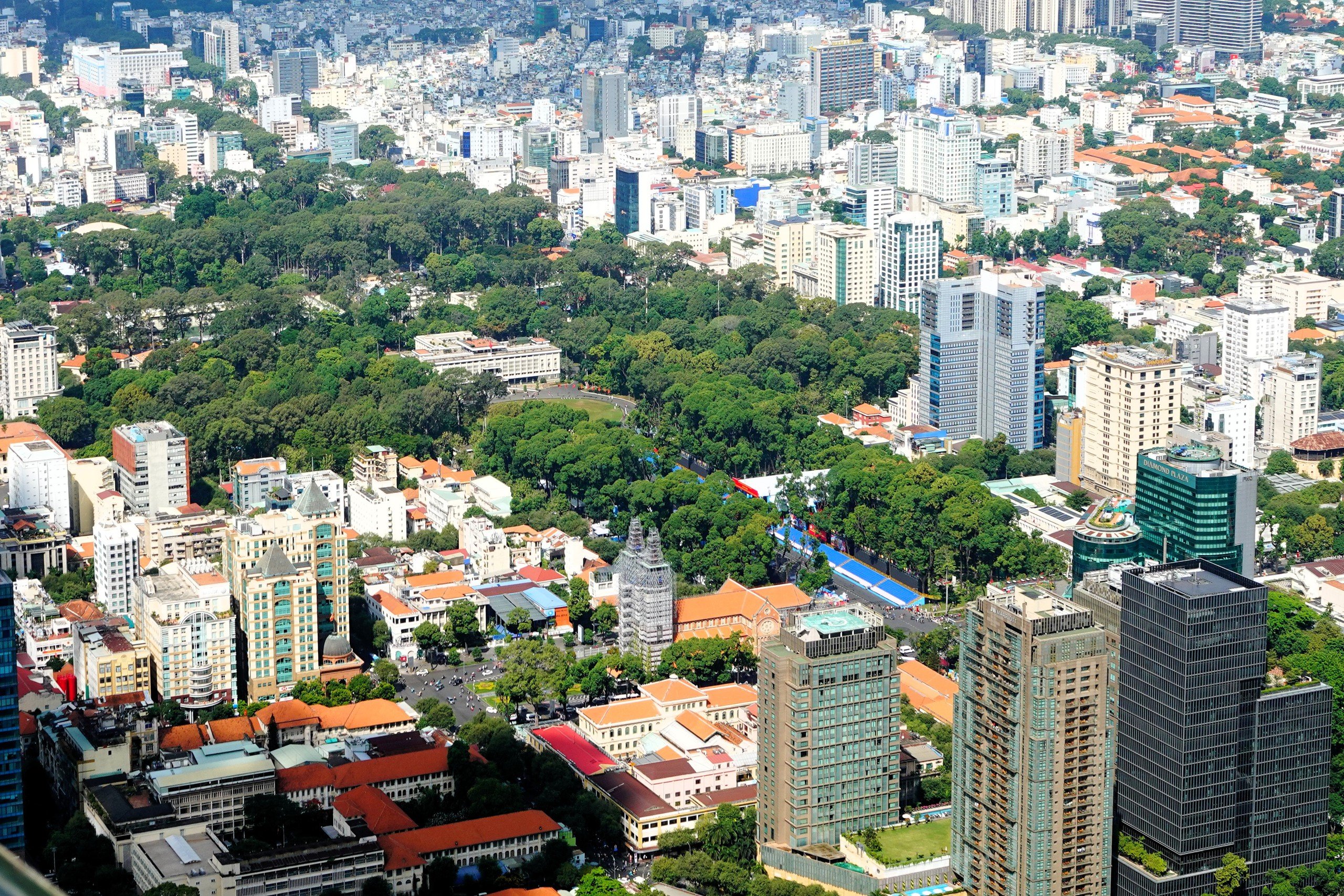
District 1, Ho Chi Minh City, is the center of the city, with the Independence Palace as its highlight.
PHOTO: MAI THANH HAI
The Independence Palace was designed and built by architect Ngo Viet Thu on an area of 4,500 m², with a usable area of 20,000 m², comprising 3 main floors, 2 mezzanines, a ground floor, 2 basements and a helipad on the rooftop.
The Independence Palace, standing 26 meters tall, is situated within a 12-hectare, tree-shaded compound. Outside the front and rear fences of the palace are two green parks.
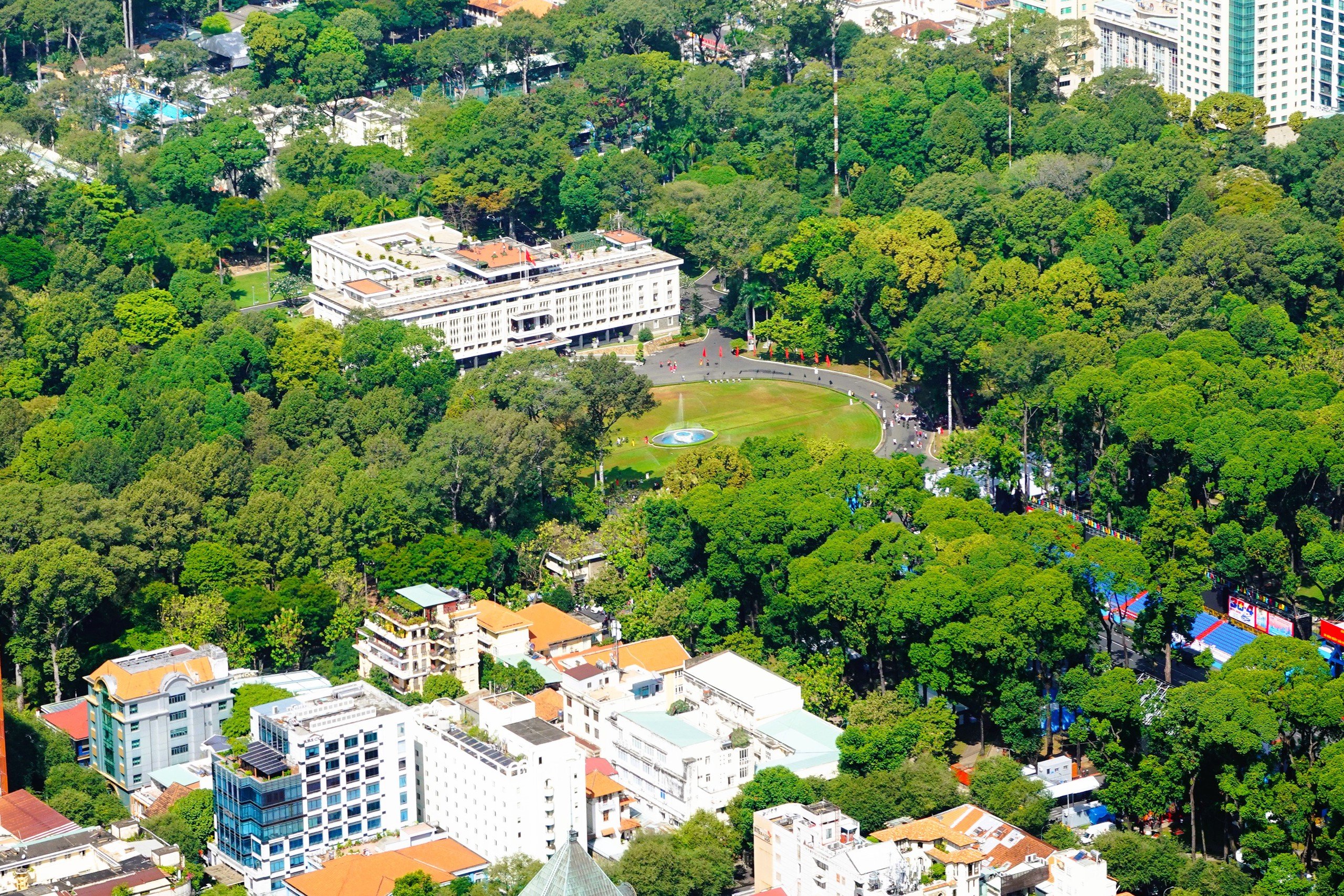
The front of the Independence Palace features a lawn and a fountain.
PHOTO: MAI THANH HAI
Reporters from Thanh Nien Newspaper captured some images of the Independence Palace, seen from a military helicopter:
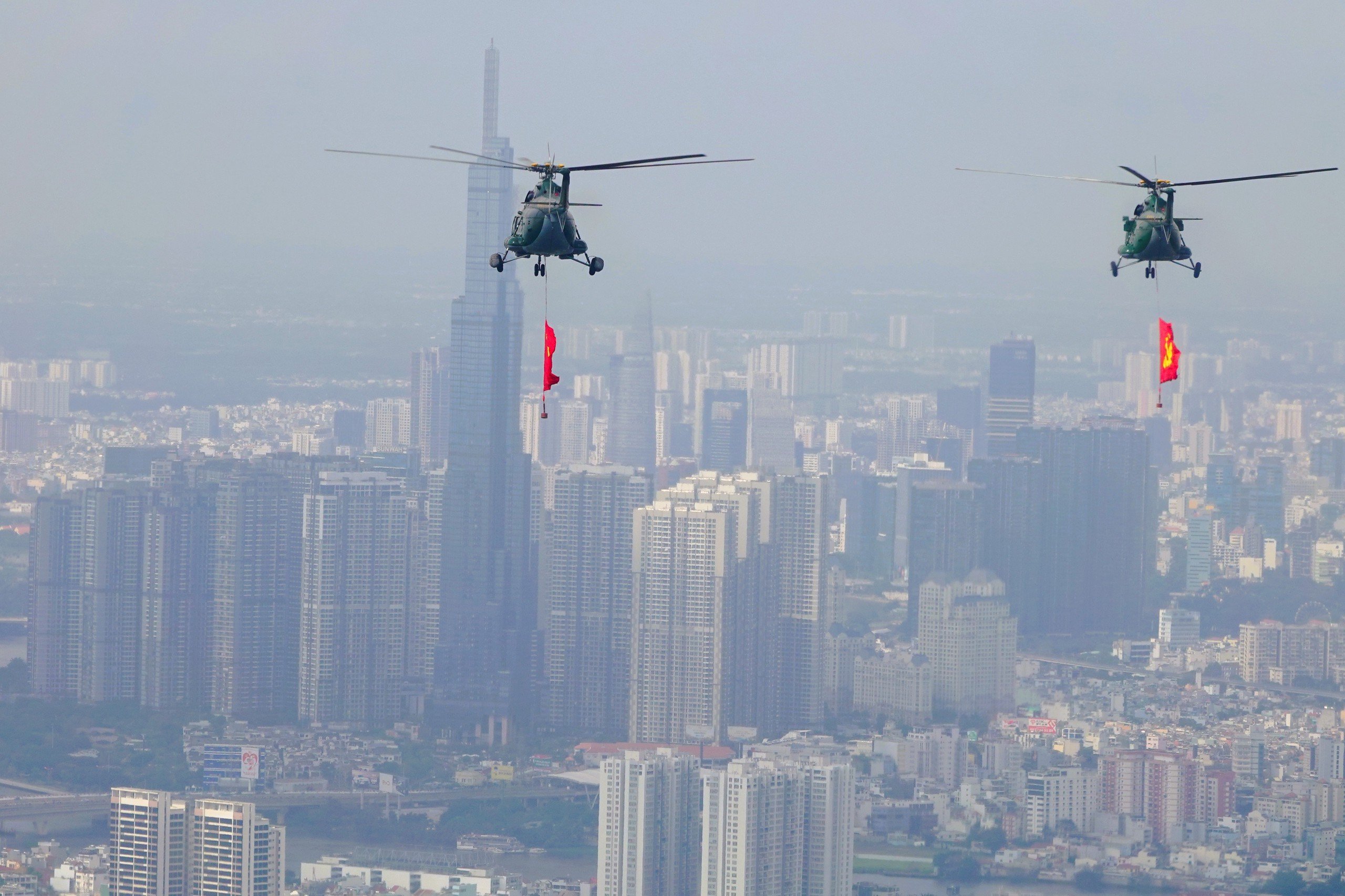
A squadron of helicopters advanced into the center of Ho Chi Minh City.
PHOTO: MAI THANH HAI
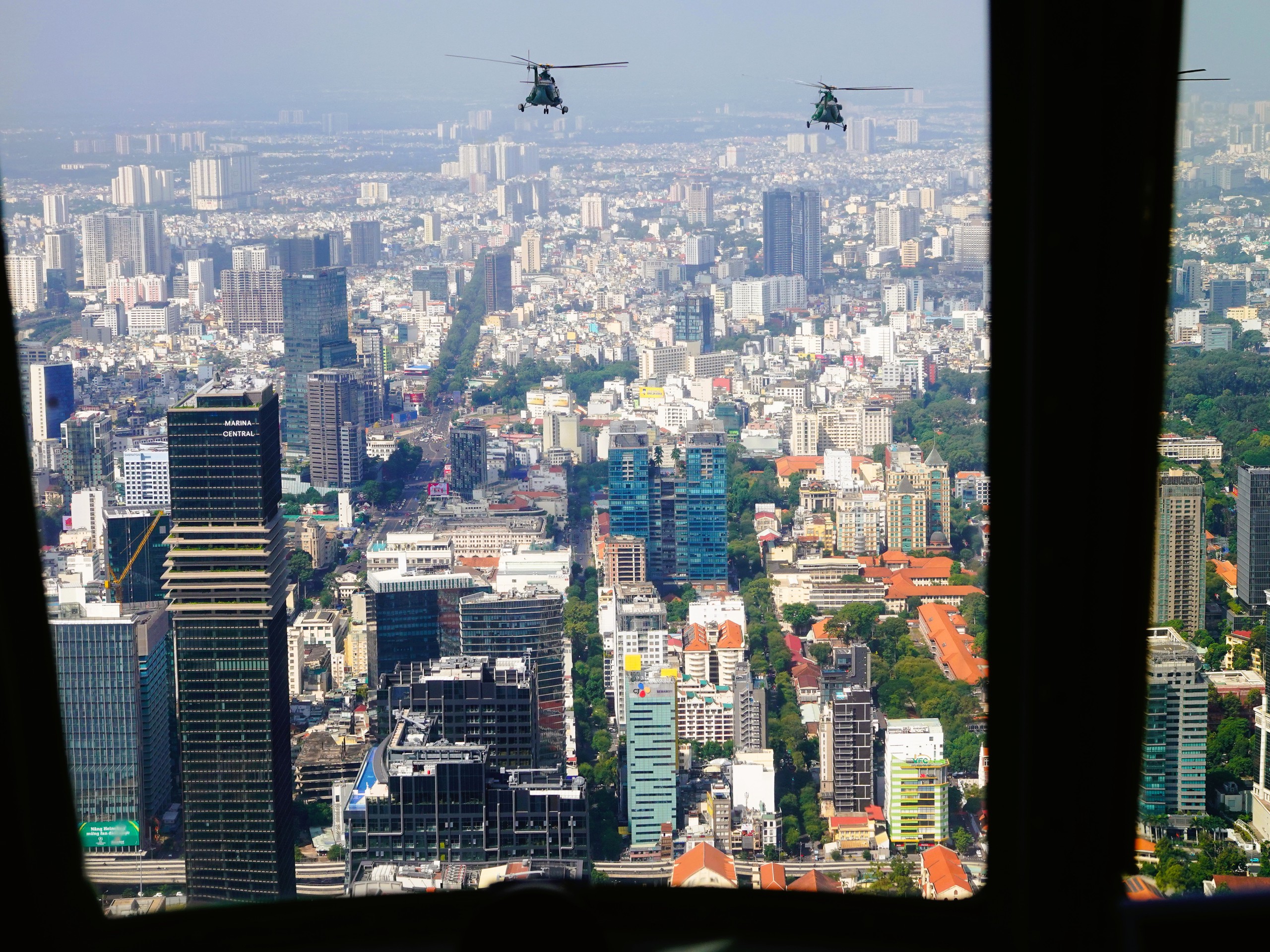
The Independence Palace is on the right, as seen from the cockpit of a military helicopter.
PHOTO: MAI THANH HAI
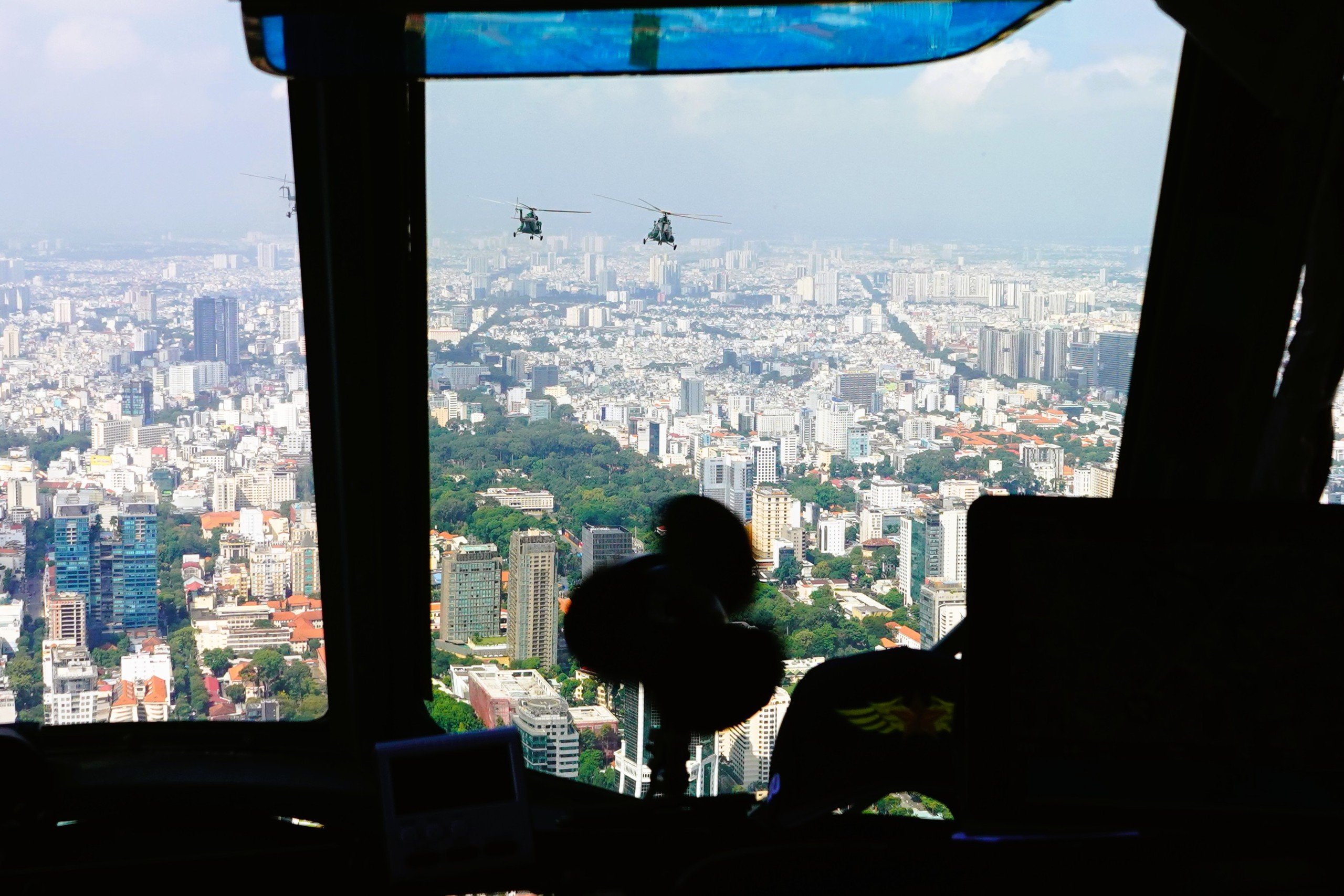
Military aircraft fly over Independence Palace.
PHOTO: MAI THANH HAI
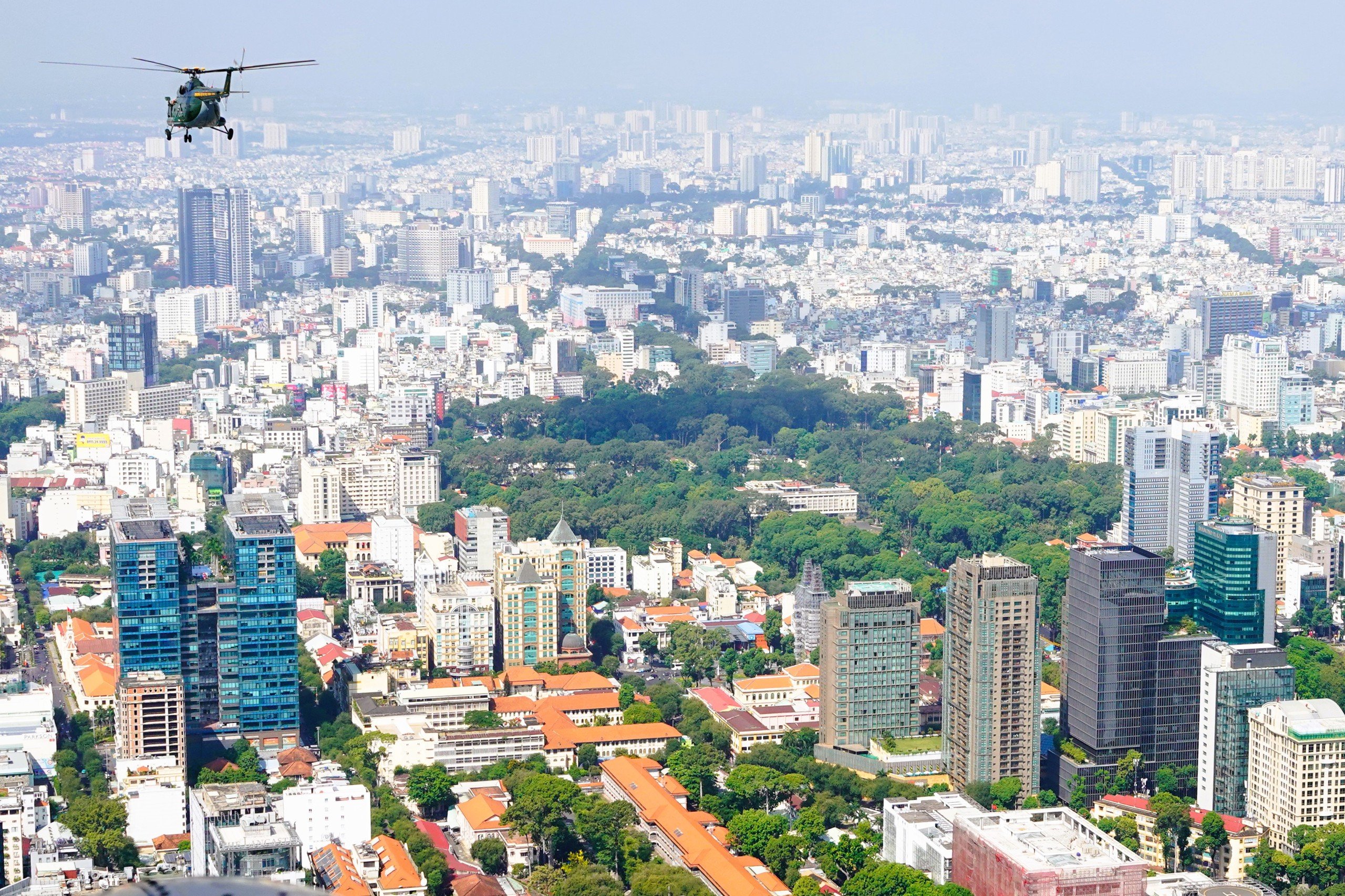
Independence Palace is situated amidst a lush green forest.
PHOTO: MAI THANH HAI
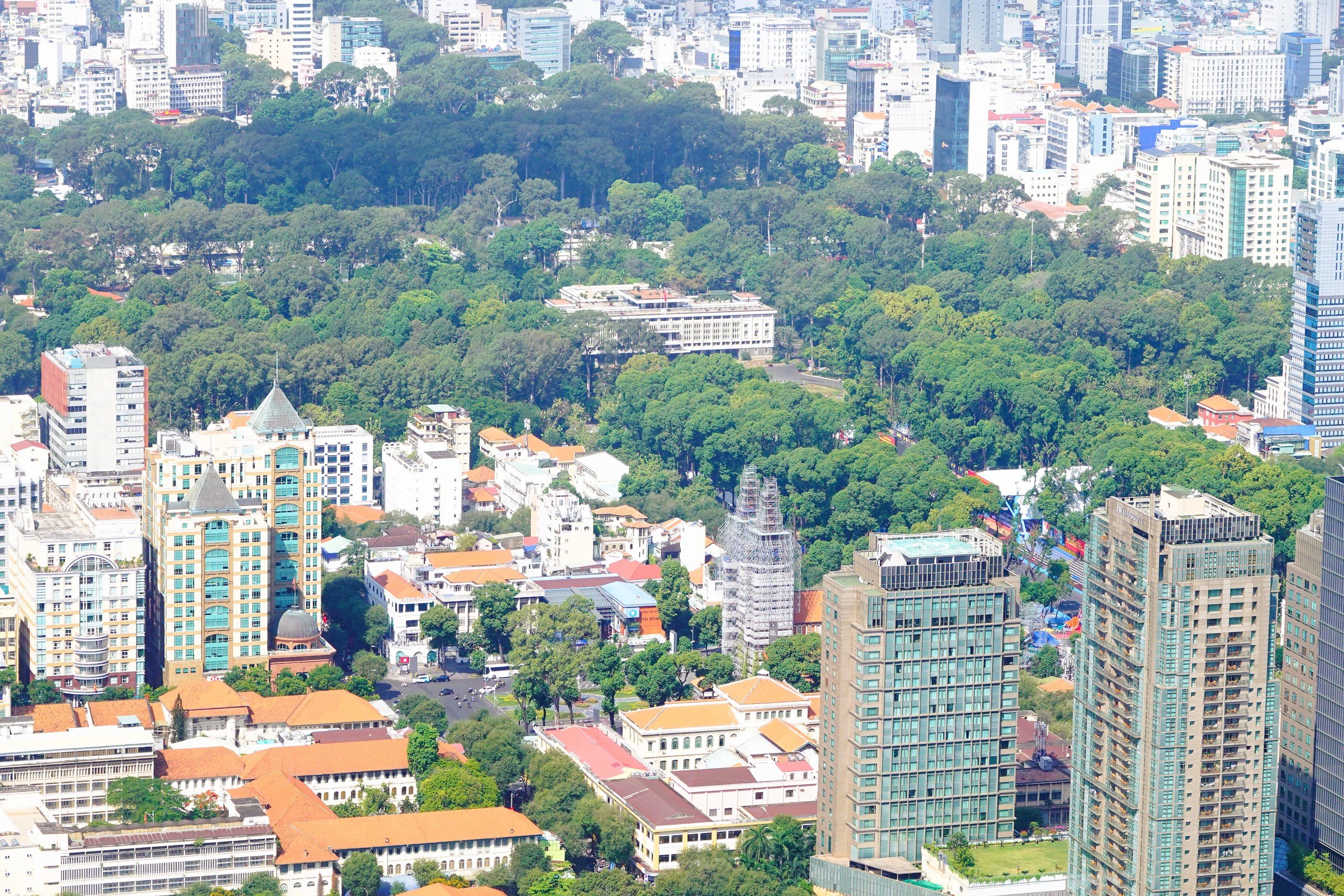
Tall buildings in front of the Independence Palace
PHOTO: MAI THANH HAI
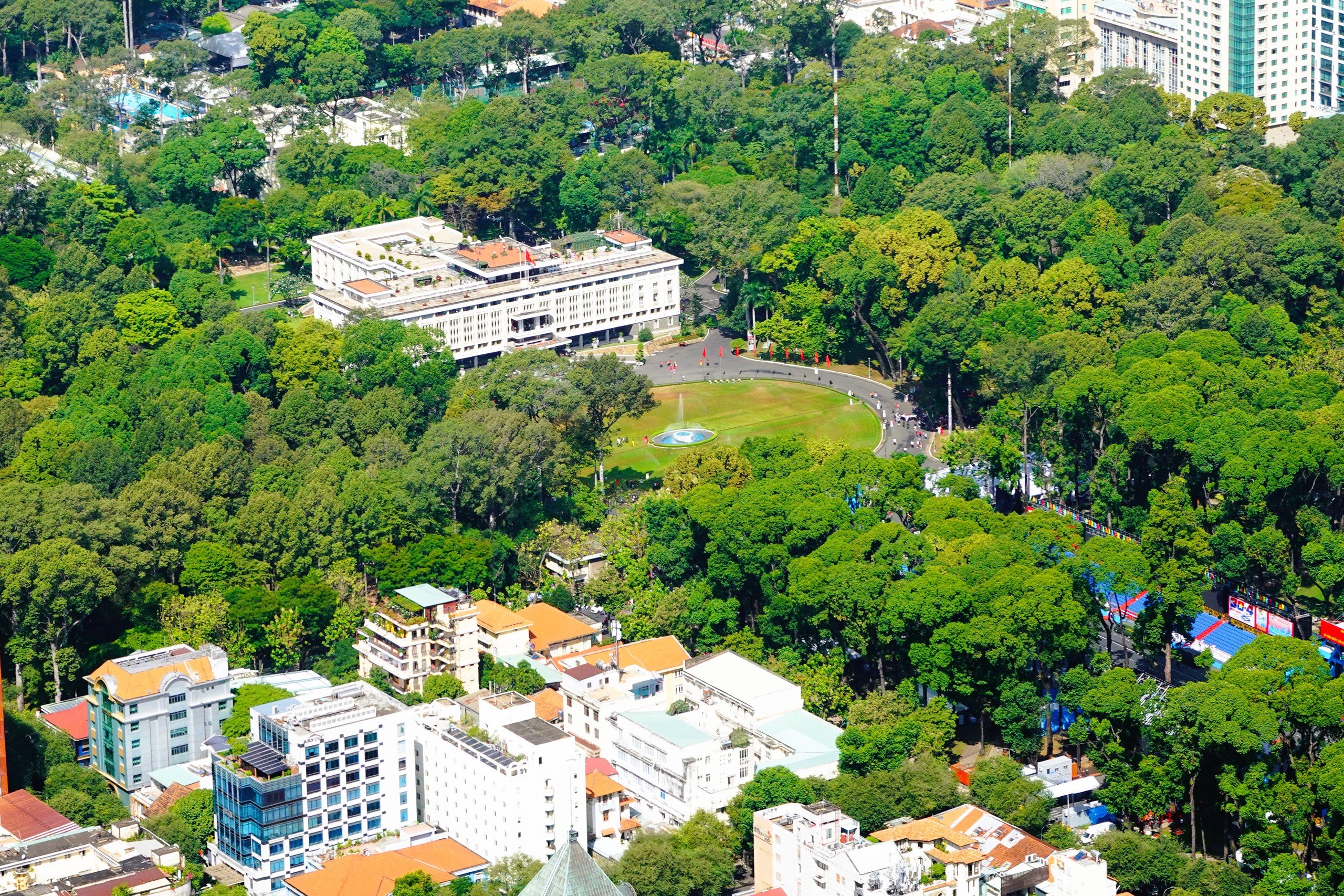
A close-up view of the front of the Independence Palace.
PHOTO: MAI THANH HAI
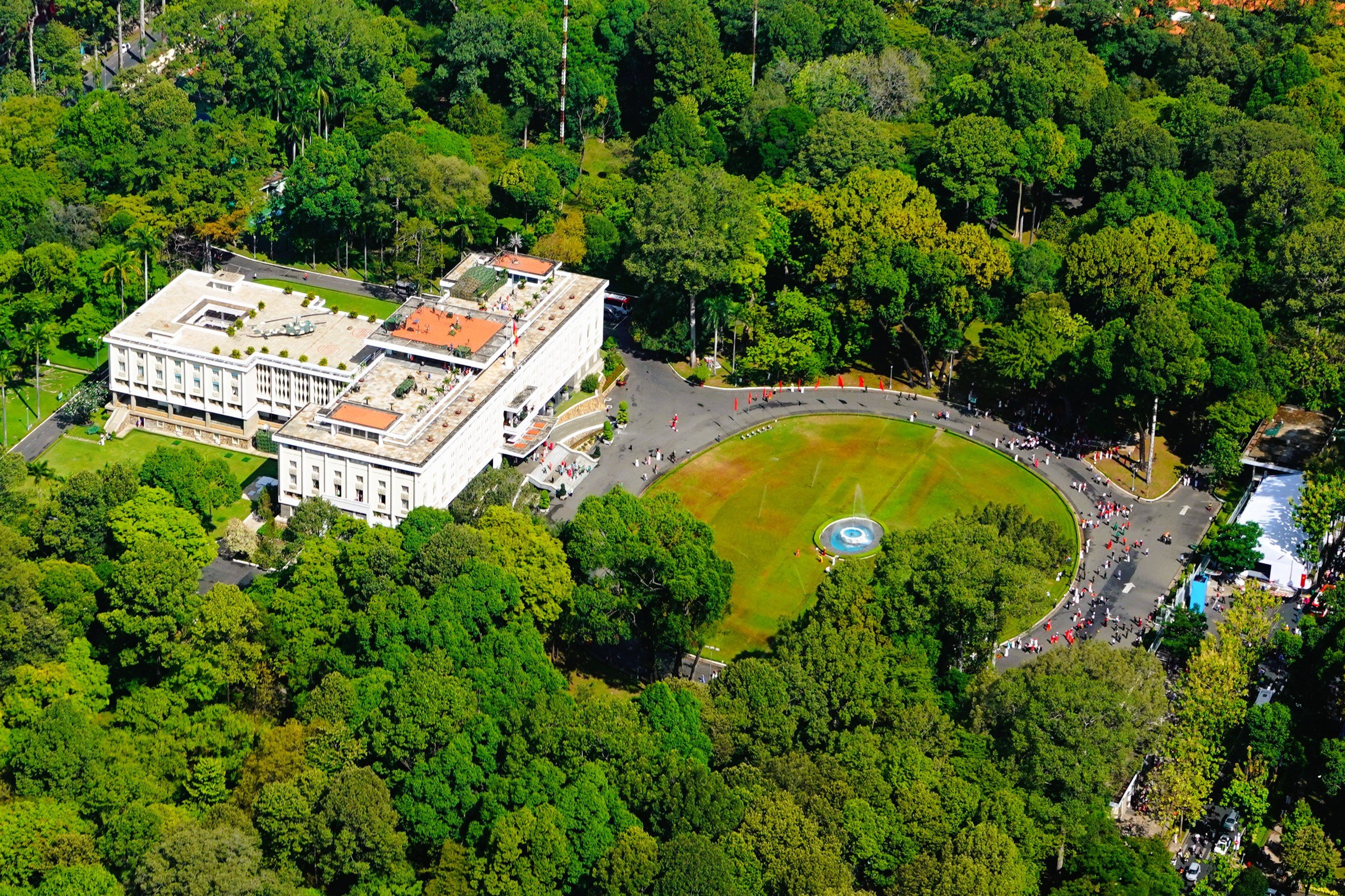
Many people visit the Independence Palace.
PHOTO: MAI THANH HAI
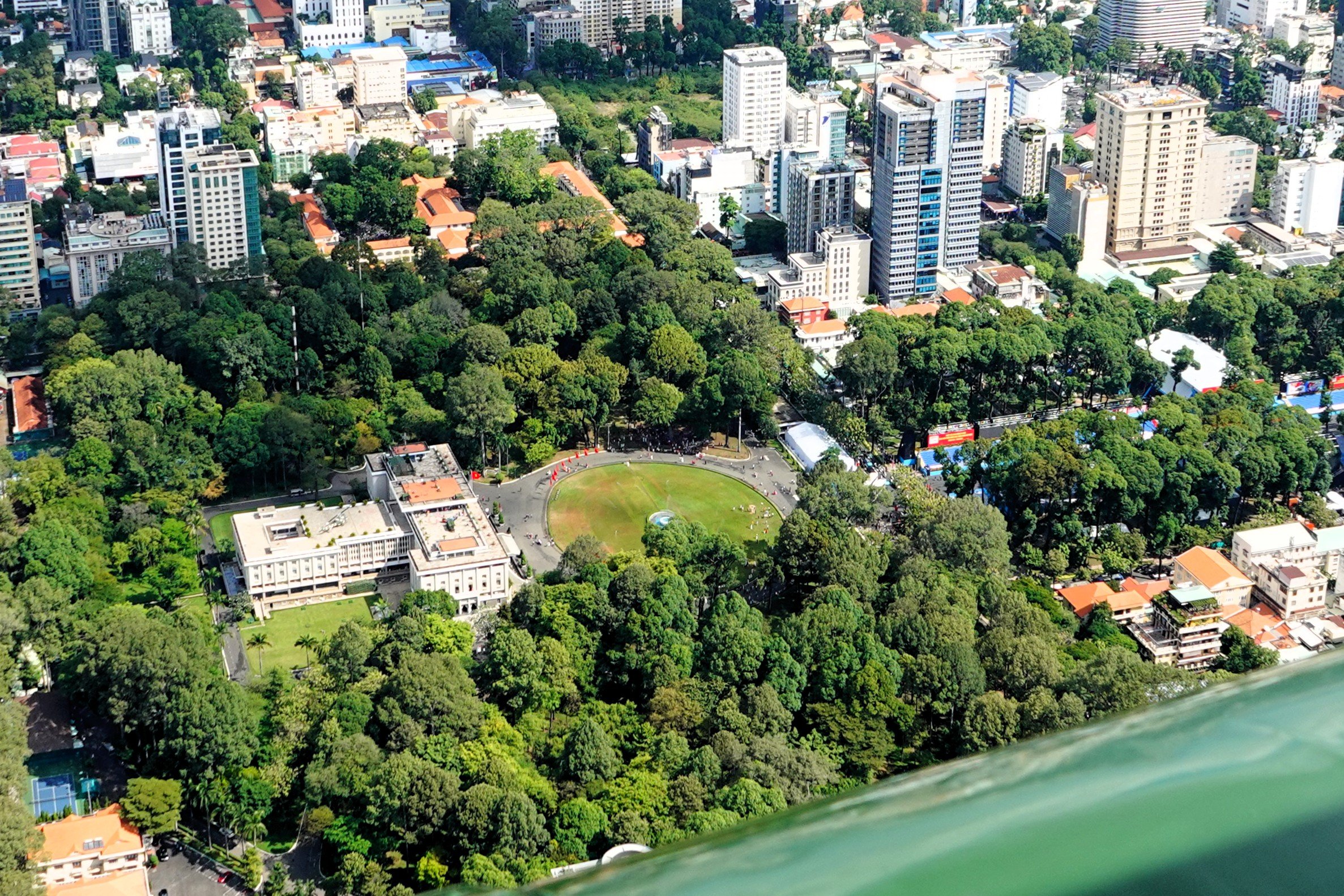
The trees surrounding the Independence Palace are mostly old trees.
PHOTO: MAI THANH HAI
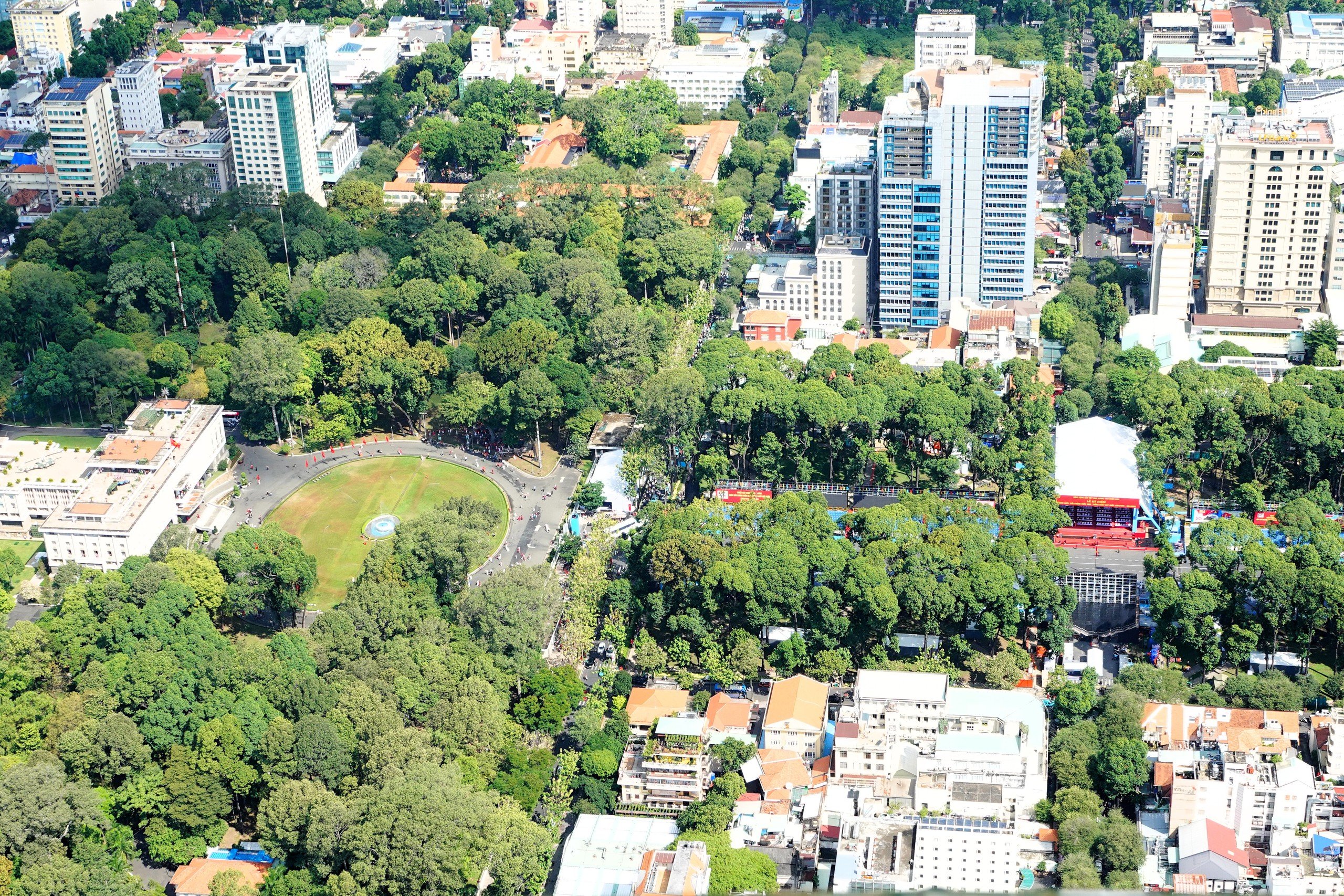
The main grandstand on Le Duan Street (in front of the Independence Palace) will be the venue for the 50th anniversary celebration of national reunification on the morning of April 30, 2025.
PHOTO: MAI THANH HAI
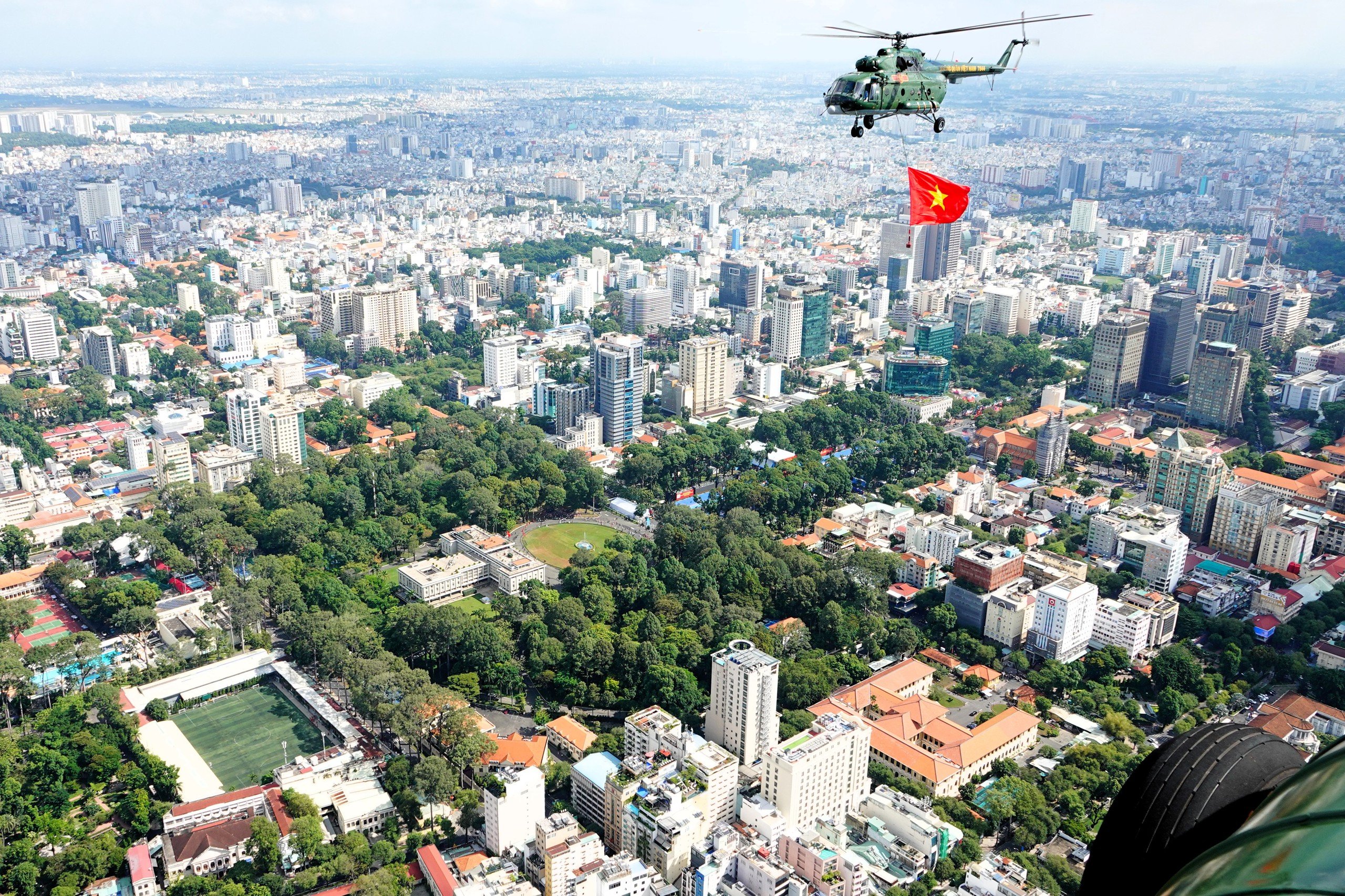
Military helicopters fly over the city.
PHOTO: MAI THANH HAI
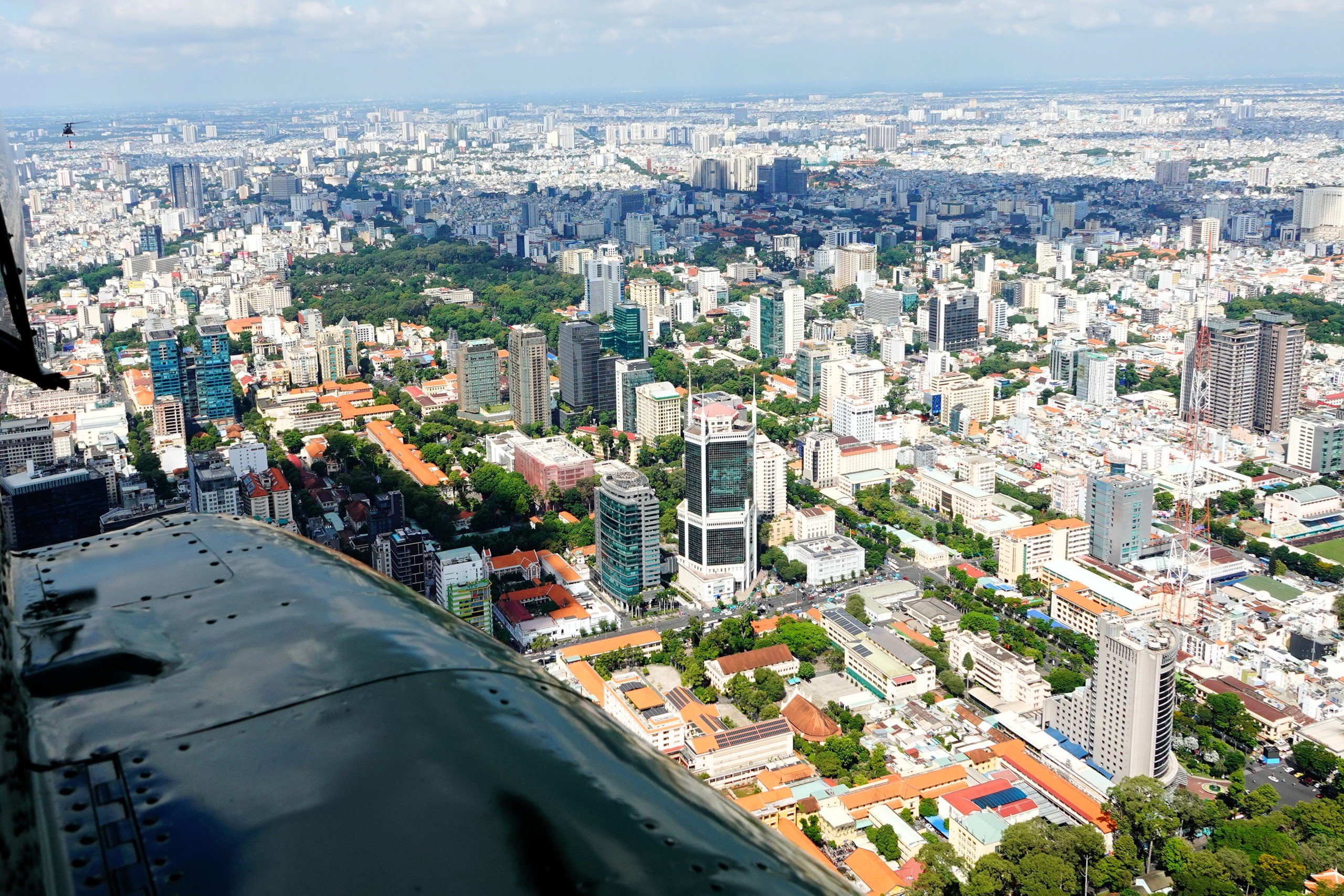
Ho Chi Minh City as seen from a military helicopter.
PHOTO: MAI THANH HAI
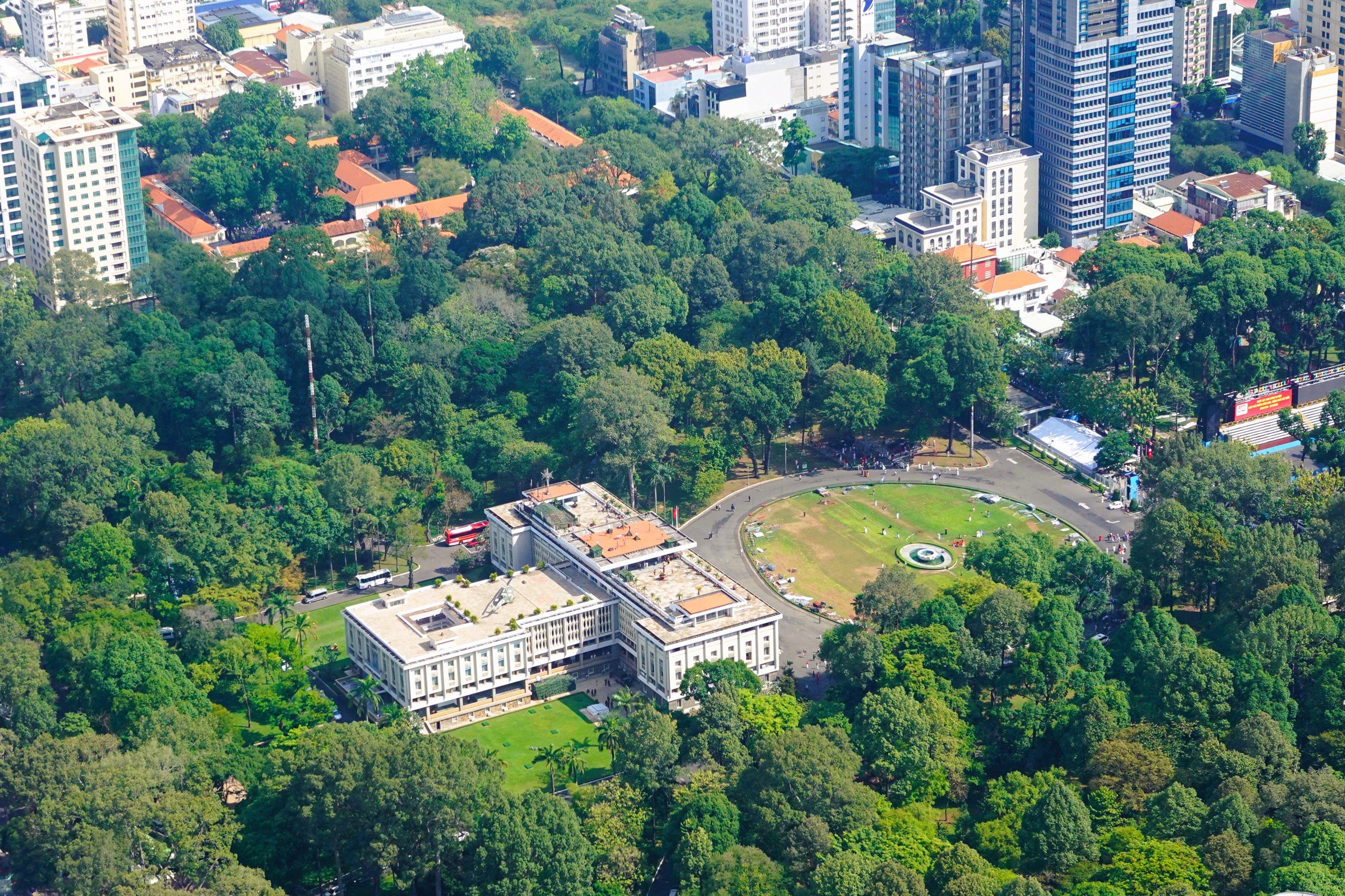
Independence Palace, photographed from an airplane.
PHOTO: MAI THANH HAI
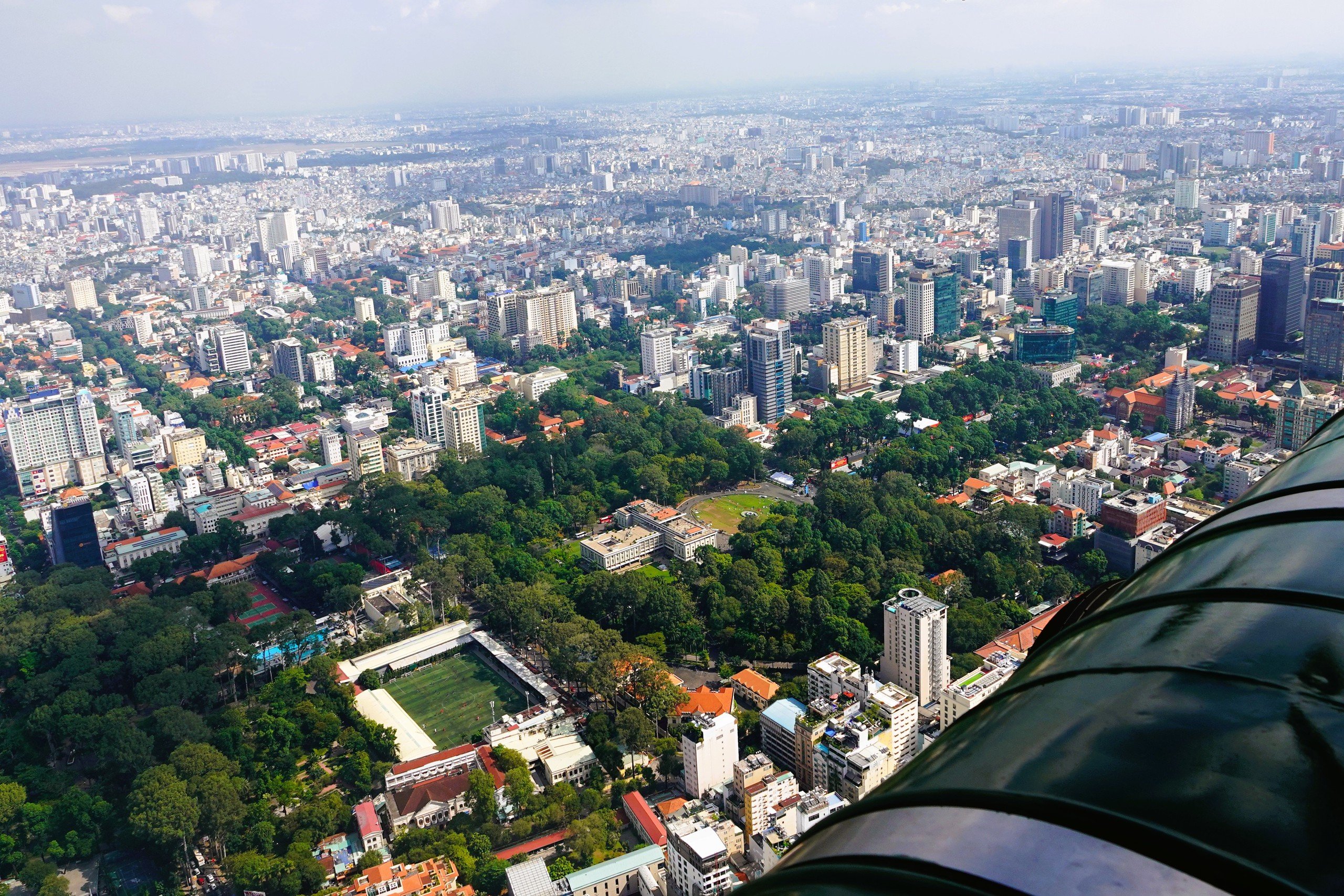
Panoramic view of Ho Chi Minh City from an airplane.
PHOTO: MAI THANH HAI
Source: https://thanhnien.vn/dinh-doc-lap-nhin-tu-truc-thang-quan-su-185250429123313394.htm



























































Comment (0)