

.jpg)
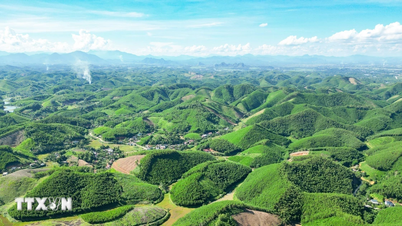
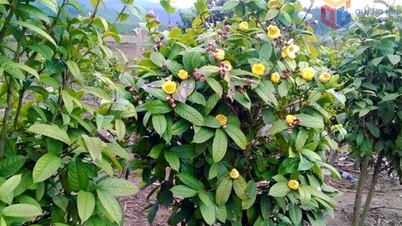
Many tea experts assert that tea plants have specific ecological requirements. The soil for tea cultivation must meet particular criteria regarding altitude, soil type, temperature, light, humidity, etc. This biochemical foundation determines the lifespan and quality of the tea plant. Tea – a symbol of Vietnam's unique culture – is the culmination of valuable knowledge and experience from labor and creativity: planting, caring for, processing, enjoying, and connecting the community.
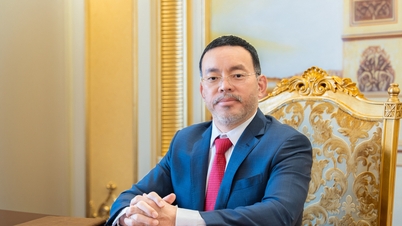
According to the Department of Industry and Trade, the province's processed tea export turnover is projected to reach US$14 million in 2025. Regarding this figure, Mr. Nguyen Manh Hung, Director of Tri Viet Tea Company (Ward 3, Bao Loc), shared: “For decades, the Vietnamese tea industry has primarily been driven by a production-oriented mindset: expanding tea cultivation areas to increase output and lower production costs. This approach has helped solve the immediate livelihood problems for many tea growers, processors, and traders, but it has also pushed the Vietnamese tea industry into a price-based competition, targeting low-end customers and making it vulnerable to major market fluctuations.”
In the current context, expanding tea cultivation is not feasible because urbanization requires a large amount of land for development. Furthermore, the economic value of tea is relatively low compared to other crops such as durian, macadamia, and coffee, so people are gradually shifting to crops with higher economic value.
According to data from the Lam Dong Department of Agriculture and Environment, there are currently about 9,411 hectares of land planted with tea, and this area is trending downwards. People have converted some old tea plantations to growing other crops such as coffee, durian, avocado, and passion fruit. “The Vietnamese tea industry needs to shift towards improving quality, increasing value, improving soil, structuring value chains, and managing value chains to adapt to the global competitive landscape,” Mr. Nguyen Manh Hung emphasized.
According to Mr. Nguyen Manh Hung, the Vietnamese tea industry should not compete in terms of production volume with tea-producing powerhouses. We should compete through differentiation – differentiation in land, differentiation in history, differentiation in tea culture, differentiation in tea knowledge and practices… “First, the State needs to clearly establish key tea-growing regions based on in-depth scientific research results, then build a dossier to identify each region, standardize the cultivation framework for each region, avoiding the approach of using ‘one variety – one cultivation process – for all regions’.”
The government should also have policies to support farmers in converting or restoring tea-growing areas that have exceeded their exploitation limits. As mentioned above, tea is a crop with specific ecological requirements. Tea-growing land needs strict nutrient management, in addition to good control of the land exploitation cycle based on biological thresholds,” Mr. Nguyen Manh Hung clarified.
In the context of global competition, the difference in tea quality is the measure of value. Therefore, tea producers require standardized technical skills through training to meet the job requirements in the value chain. In other words, tea producers must be professionally trained individuals – those who understand both the tea plant, the planting, care, and processing processes, and the dynamics of the market.
Properly positioning the value of tea within the global value chain will prevent situations where tea growers are disconnected from tea processors, tea processors are disconnected from the market, and tea traders lack long-term responsibility towards tea growers. Clearly defining roles, ensuring transparency of responsibilities, and sharing benefits fairly are key to the sustainable development of Vietnam's tea industry.
Source: https://baolamdong.vn/dinh-vi-lai-gia-tri-cua-tra-421485.html










































































Comment (0)