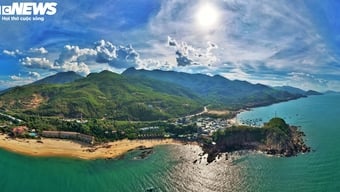
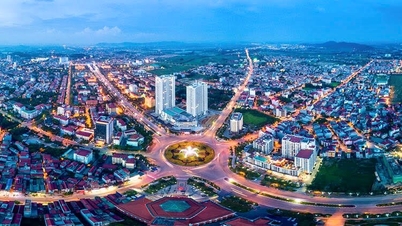
Along with promotional activities and cooperation with Korean partners, Do Son is striving to attract tourists from other markets to visit and relax in the area.
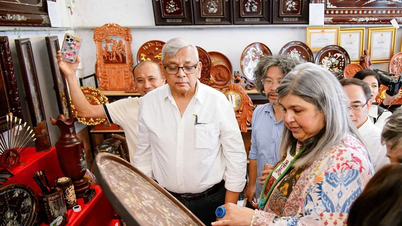
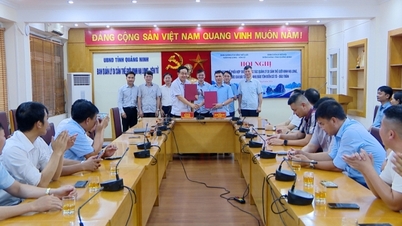
According to information from the People's Committee of Do Son Ward, the Korea Small and Medium Enterprises Association (KOSTA) comprises approximately 20,000 businesses. KOSTA began cooperating with Do Son in early 2026 and currently has a representative office in Do Son.
KOSTA's partnership not only helps elevate Do Son's position on the international tourism map but also opens up opportunities for cooperation in human resource training, tourism product development, and investment attraction.
According to Mr. Yuno, Head of the KOSTA Project in Do Son, this location has a very special appeal, both in terms of natural landscapes and rich cultural heritage. With its reputation and experience in the international tourism sector, KOSTA's businesses will become an important bridge to make Do Son an attractive destination for Korean and international tourists, contributing to the growth of tourism, services, and the local economy in the new phase.
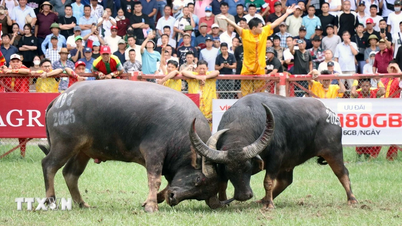
Along with the South Korean market, Do Son is renewing its products to welcome domestic and international tourists. Mr. Pham Hoang Tuan, Vice Chairman of the People's Committee of Do Son ward, said that along with resort tourism and rural tourism products, the traditional Do Son Buffalo Fighting Festival is a unique and distinctive tourism product.
Since its revival in 1990, the festival has continuously improved in terms of organization while preserving its traditional cultural values. This is what creates its unique appeal, giving international tourists the opportunity to learn about the unique folk culture of Vietnam.
Businesses have already proposed to the local authorities to bring thousands of international tourists to attend the traditional Do Son Buffalo Fighting Festival in 2026, as well as to visit and experience the local area.
Along with exploiting cultural and historical values, the infrastructure serving tourism development in Do Son has made strong breakthroughs in recent years, most notably the Dragon Hill International Tourist Area invested by Van Huong Investment and Tourism Joint Stock Company with a scale of over 480 hectares.
This is one of the largest land reclamation projects in Vietnam, comprehensively planned as a modern tourism, resort, entertainment, and coastal urban complex.
The project has created a diverse tourism ecosystem with the 27-hole international golf course Dragon Golf Links, the 5-star Dream Dragon Resort hotel, the artificial Dragon Beach, a water park, a light park, a convention center, and many large-scale entertainment areas.

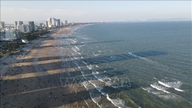
Modern infrastructure not only improves service quality but also creates favorable conditions for Do Son to strongly develop high-end resort tourism, MICE tourism, sports and entertainment year-round, targeting the segment of international tourists with high spending power.
Many new projects have been started and completed in the area, offering new experiences for tourists. The transportation system connecting Do Son with the center of Hai Phong, Cat Bi International Airport, expressways, and the tourism network of the Northern coastal region is becoming increasingly convenient. Modern infrastructure provides a crucial impetus for Do Son to transform from a traditional resort destination into a modern seaside tourism center.
"The convergence of unique natural resources and world-class tourism facilities is opening up opportunities for Do Son to become an attractive destination for international tourists in this new phase of development," Mr. Pham Hoang Tuan emphasized.
To transform Do Son into an international tourist destination, many experts believe the ward needs to leverage its geographical advantages, natural resources, and the unique development mechanisms of Hai Phong.
According to Dr. Duong Duc Hung, Director of the Institute of Applied Science and Development in Hai Phong, the locality needs to strongly develop the night-time economy, entertainment complexes, duty-free shopping centers, pedestrian streets, cultural festivals, and international events.
The focus is on perfecting the high-end tourism ecosystem at the Dragon Hill International Tourist Area, Hon Dau International Tourist Area, and the Vung Huong area, forming resort, entertainment, conference, and marine sports complexes that meet international standards.
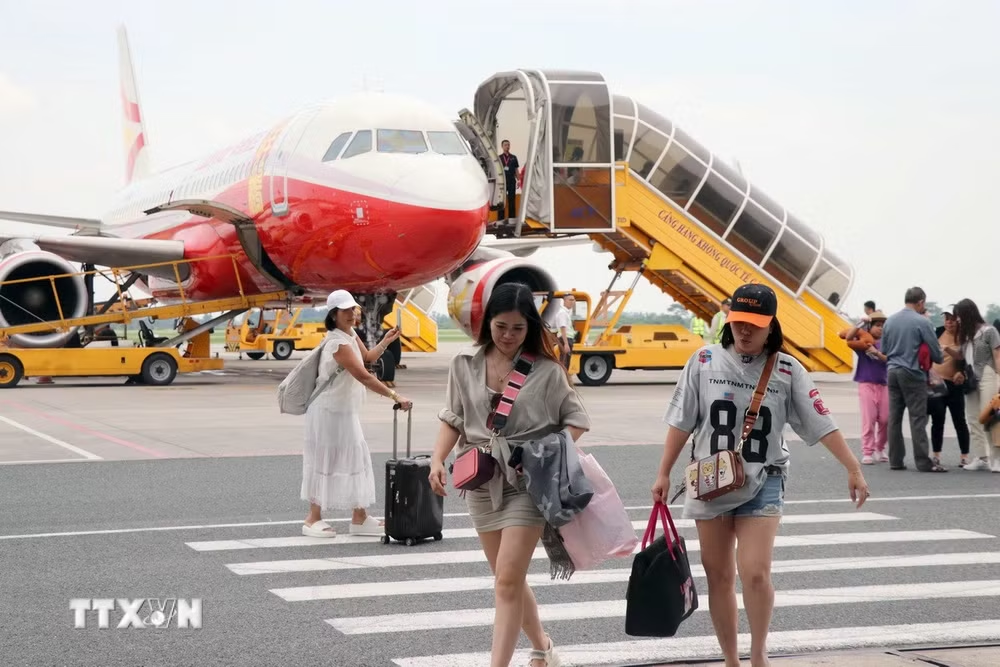
Do Son has a significant advantage: convenient connections to Cat Bi International Airport, the expressway system, international seaports, and the Hai Phong Free Trade Zone. This provides a foundation for expanding the international tourist market, especially from Northeast Asia.
Dr. Nguyen Anh Tuan, Director of the Institute of Tourism Economics, suggested that Do Son needs a strategy to position itself from a "beach resort" to a "four-season urban beach super-complex."
Do Son's positioning strategy needs to avoid two pitfalls. The first is positioning based on old memories. The image of "a beach near Hanoi," "a long-established resort," and "summer tourism" has historical value, but it is not competitive enough in the new era.



Do Son cannot enter a new era of development if it continues to be marketed only as a traditional beach. The second trap is positioning itself based on the scale of construction. Building on a large scale doesn't necessarily make it an icon; investing heavily doesn't guarantee a brand. Proper positioning must answer the question of what makes Do Son different on the map of Northern Vietnam's tourist destinations.
According to Dr. Nguyen Anh Tuan, the most suitable positioning for Do Son is a four-season urban-coastal mega-complex in the North, capable of integrating resorts, entertainment, shopping, events, and a modern seaside lifestyle on a large scale, thereby gradually forming an attractive destination that meets regional competitiveness standards, aiming for Asian recognition.
Source: https://www.vietnamplus.vn/do-son-lam-moi-cac-san-pham-du-lich-de-thu-hut-khach-quoc-te-post1120151.vnp
![[Image] Paris's oldest bridge goes viral after transforming into a giant cave.](https://vphoto.vietnam.vn/thumb/1200x675/vietnam/resource/IMAGE/2026/06/24/1782283441197_ndo_br_dsc05314-jpg.webp)



![[Photo] Prime Minister Le Minh Hung presides over the thematic session on promoting science and technology development and innovation.](https://vphoto.vietnam.vn/thumb/1200x675/vietnam/resource/IMAGE/2026/06/23/1782207872934_ndo_br_dsc-1724-jpg.webp)