


A city is only truly complete when the necessary living conditions are met - Illustration
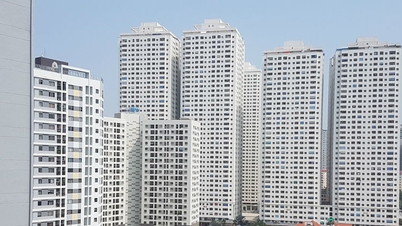
In many new urban areas, the apartment lights are on in the evening, but the pedestrian walkways remain unfinished. Children wander around the foot of the buildings because the parks haven't materialized yet. Adults accept taking longer detours each day because the connecting roads are still only on paper. Houses are occupied, payments made, but urban life remains in an "unfinished" state.
That state of affairs is becoming increasingly familiar. So familiar that many people consider it an inevitable part of development.
In popular belief, a city can be gradually perfected after the sales process is complete.
But as new projects continue to be launched, looking back at how urban promises have been and are being fulfilled is not just a story for those who have already bought homes, but a question of the development standards that society has tacitly accepted.
When deciding to buy an apartment, people aren't just buying the size or the price. What makes many families willing to invest a large portion of their savings is the prospect of a more fulfilling life: children have a place to play, the elderly have space to walk, transportation is convenient, and essential services are within easy reach.
These elements are often very prominent in advertisements, renderings, and project descriptions. But when it comes to real life, they are relegated to the "to be done later" category.
This has given rise to what could be called "empty promises": commitments regarding infrastructure and amenities are used to sell projects, but are not sufficiently binding in terms of timelines and accountability for their implementation.
When housing is handed over first, and living conditions are delayed, that disparity doesn't disappear. It's compensated for by the residents' patience, adaptation, and acceptance.
The problem, therefore, is not that the city is slow to complete, but that the promise has been made without sufficient discipline to ensure its completion on time. When commitments become something that can be extended indefinitely, the city begins to operate by tolerance, rather than by standards.
In the current institutional design, responsibilities are fairly well divided. Developers have reasons related to resources and timelines, the government has procedural and planning constraints, and the community is advised to "share the burden."
Each link in the chain has its own justification. But when those reasons are combined, the ones who bear the most direct consequences are still those who have paid in full for a life of promised fulfillment.
It's worth noting that these delays rarely cause immediate crises. They aren't noisy or disruptive. Instead, they create invisible social costs: prolonged travel times in makeshift traffic, pressure on infrastructure and nearby services, and small but recurring conflicts in community life. These costs aren't reflected in contracts, but they accumulate long enough to erode quality of life and market confidence.
The reality in many new urban areas shows that when core living conditions are not yet complete, residents are forced to adjust their expectations. They accept shortages, accept temporary solutions, accept waiting. This adjustment helps life continue, but at the same time gradually lowers the standards that society considers normal in urban development.
At a deeper level, this story isn't just about construction or real estate. It's about the order of responsibilities. When sales are prioritized and the completion of living conditions are pushed to the back, society inadvertently reverses the proper order of development: where human life should be the starting point, not the final destination.
This article is not aimed at any specific project. The issue lies at the institutional level, where delays have occurred so frequently that they have become commonplace.
Ultimately, the question remains not only for the market, but for the community as a whole: do we want to live in housing developments that have already sold out, or in cities that have fulfilled their promises?
A city is only truly complete when living conditions are met not through the patience of its residents, but through the discipline of commitments that have been made.
Source: https://tuoitre.vn/do-thi-ban-truoc-doi-song-den-sau-20260109110401458.htm
































































































Comment (0)