

A reporter from the Industry and Trade Newspaper had an interview with Ms. Tran Thi Thuong Huyen, Director of Bach Lien Joint Stock Company (VietMRO brand), about the role of MRO (maintenance, repair, and operation) in the industrial ecosystem, the development potential of domestic enterprises, and current policy issues.
With the industry accelerating, domestic MRO businesses are presented with great opportunities.
- Madam, how do you assess the development potential of the MRO sector in the context of Vietnam's rapidly growing industry?
Ms. Tran Thi Thuong Huyen: In the context of the continued expansion of supporting industries and manufacturing in Vietnam, the MRO sector is showing enormous growth potential. Currently, the domestic MRO market is still mainly dominated by foreign companies. These companies often partner with large manufacturing corporations, following their factories into Vietnam and providing relatively complete service systems.
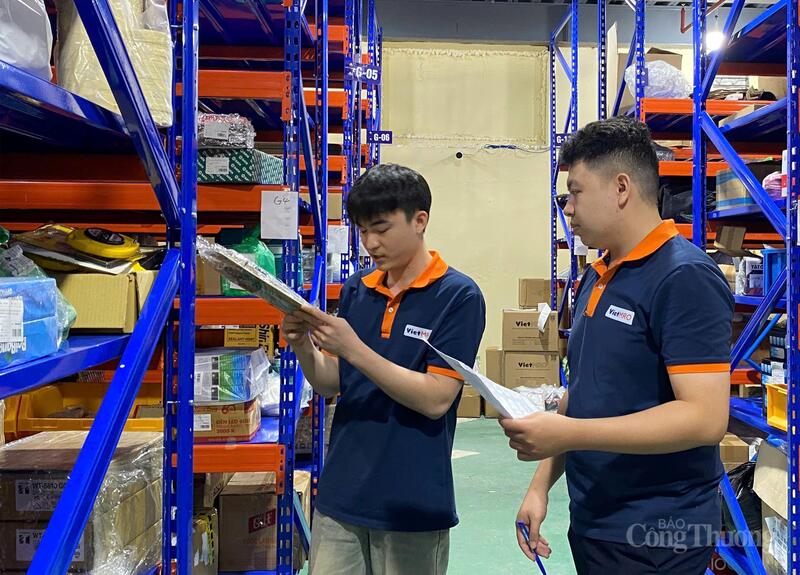
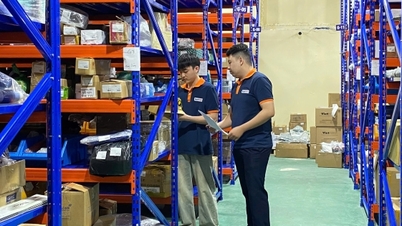
The MRO (Management, Recycle, and Recycle) sector is gradually asserting its strategic position in the industrial supply chain. Photo: NH
Meanwhile, the market share for domestic MRO businesses still has significant growth potential. The scale and growth rate of the MRO market are closely linked to the growth of the industrial sector. According to forecasts, in the next 10 years, the size of Vietnam's industrial sector could increase 3-4 times compared to the present. This is not only a positive sign for manufacturing, but also opens up great opportunities for supporting industries, including domestic MRO businesses, to gradually assert their role in the supply chain.
- One of the key aspects of MRO is advising on equivalent alternative solutions. Could you elaborate on this role?
Ms. Tran Thi Thuong Huyen: In essence, industrial activities need to clearly separate two components: production and services supporting production. However, in current policy-making practices, these two groups are often grouped together, while MRO enterprises belong to the industrial support services group, playing a direct support role for the operations of factories.
MRO services contribute to changing the traditional purchasing habits of many factories, which are heavily dependent on supplies from South Korea, Japan, or Europe. Through consulting and networking, MRO businesses can guide factories to use products that meet the standards of Vietnamese businesses, thereby promoting localization and reducing dependence on imports.
For example, when a factory needs to purchase tools for production, instead of rigidly specifying a foreign brand, an MRO (Mass Production, Recycling, and Operations) company can propose a list of equivalent products, introducing domestic suppliers that fully meet the technical, quality, and price requirements.
- How is this advisory role demonstrated in the actual implementation of the project, Madam?
Ms. Tran Thi Thuong Huyen: Right from the factory design and construction phase, investors often work with the initial consulting firm and provide a list of MRO solutions based on specific product codes and models, even models from Germany or other developed countries. At that point, the role of the supporting industrial service company is to analyze, compare, and propose suitable alternative solutions.
The core of MRO (Material Rescue Operations) is advising on equivalent alternative solutions. Upon receiving a request, the business will evaluate and propose products with equivalent quality and technical standards, but at a more reasonable cost, while still fully meeting operational requirements. The business is responsible for this advice from the outset. In cases where no suitable alternative can be found, we adhere to the client's original product list and do not interfere with the advice.
This approach can be likened to the healthcare field, where, if imported drugs from France or the US are unavailable, equivalent drugs from India or Vietnam can be used, provided they meet the same active ingredient, standards, and efficacy. MRO businesses act as evaluators, consultants, and guarantors of this equivalence.
MRO: The crucial missing piece in the industrial ecosystem.
- In your opinion, how should the role of MRO be viewed in the process of industrialization?
Ms. Tran Thi Thuong Huyen: In industrial operations, MRO, although seemingly small items within a factory, is very large in quantity and requires significant resources for procurement and management. In reality, in the purchasing process of manufacturing businesses, the purchase of components for products only accounts for about 20% of human resources, while MRO procurement can account for 70-80% due to its dispersed, diverse, and frequently occurring nature.
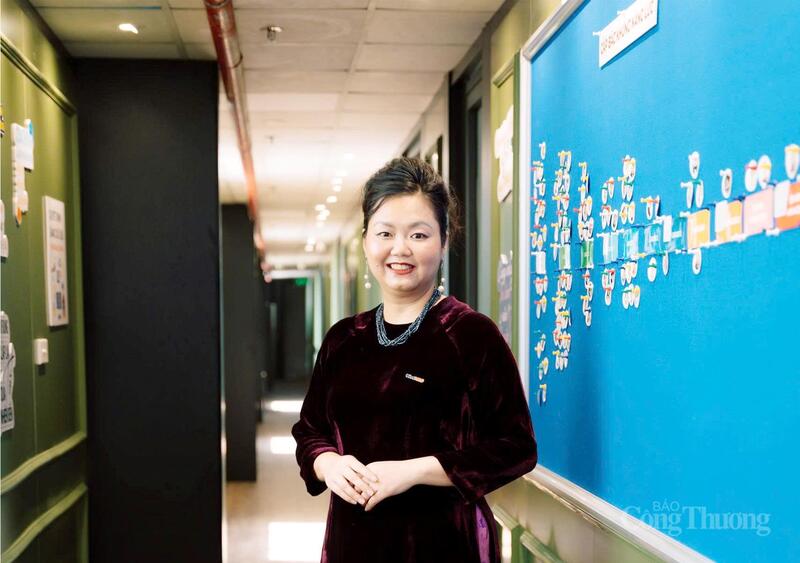
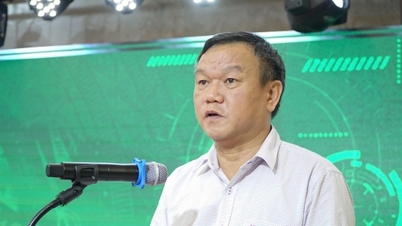
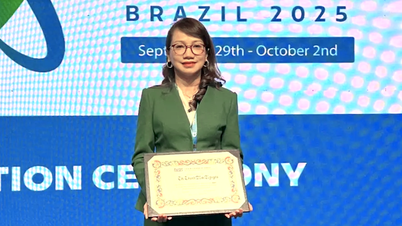
Ms. Tran Thi Thuong Huyen, Director of Bach Lien Joint Stock Company (VietMRO brand). Photo: NH
The reason is that MRO encompasses millions of product codes. On average, an MRO business worldwide manages between 2 and 5 million product codes, making management complex and requiring high levels of expertise, efficient operating systems, and close coordination among various departments.
Therefore, MRO plays a particularly important role in the industrial ecosystem. When MRO operations are well-organized, production is not interrupted, the supply chain runs smoothly, thereby improving the efficiency of the entire supply chain.
- Based on your practical experience, how do you view the shortcomings of current policies?
Ms. Tran Thi Thuong Huyen: Our company was established in 2006 and has been operating in the supporting industries sector for nearly 20 years. This stable development has helped us build a reputation and gain relatively easy access to capital. However, the biggest obstacle currently lies in the issue of land.
Due to its nature of not directly manufacturing but primarily providing consulting, ordering, connection, and MRO services, the business model is not suitable for land in industrial zones far from the city center. The actual need is for commercial and service land in the inner city for offices and headquarters, but access to this type of land remains very difficult.
Furthermore, within the current policy system, support mechanisms are primarily designed for businesses producing components and spare parts. Meanwhile, the role of supporting industrial service businesses, which act as intermediaries connecting, providing technical advice, and managing the supply chain, has not been clearly defined, leading to limited access to these policies.
- What are the company's expectations for the future, Madam?
Ms. Tran Thi Thuong Huyen: Based on our practical experience, we propose that there should be a separate policy for supporting industrial enterprises that do not directly manufacture but have a strong ripple effect on production activities. Through consulting and networking, MRO enterprises can support factories in using products that meet Vietnamese standards, replacing imported goods and increasing the localization rate.
Our central focus for 2026 is investing in human resources, a core factor determining our MRO service delivery capabilities. Alongside training and improving the quality of our personnel, we aim to expand our customer base. According to surveys, Vietnam currently has over 10,000 FDI factories, while we currently serve just over 200. This presents significant potential for domestic MRO businesses to continue developing as their capabilities and operational systems become increasingly sophisticated.
Thank you, ma'am!
Vietnam's industrial growth over the next decade is driving a significant demand for manufacturing support services, with MRO emerging as a fundamental link in the supply chain. Numerous studies indicate that scaling up production and accelerating the digitalization of equipment management will continue to fuel MRO market growth. Mobility Foresights forecasts that by 2031, the Vietnamese MRO market could reach nearly $92 billion, with a compound annual growth rate of approximately 6.6%.
Source: https://congthuong.vn/doanh-nghiep-mro-viet-tim-cua-hep-trong-chuoi-cung-ung-cong-nghiep-436013.html


![[Photo] Closing Ceremony of the 15th Conference of the Central Committee of the 13th Party Congress](/_next/image?url=https%3A%2F%2Fvphoto.vietnam.vn%2Fthumb%2F1200x675%2Fvietnam%2Fresource%2FIMAGE%2F2025%2F12%2F23%2F1766462841764_a1-bnd-3731-1647-jpg.webp&w=3840&q=75)







































































Comment (0)