

Entering the fourth quarter of 2024, business confidence, while strengthened, still needs further cultivation as old obstacles remain at the top of business concerns.
 |
A tough business quarter
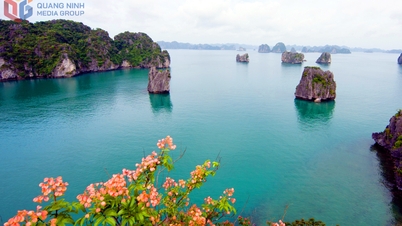
“The storm has passed, but the damage is immense. Thousands of billions of dong belonging to people and businesses have been swept away by the sea. We will have to find a way to rebuild, but the entire production chain has been disrupted,” said Ms. Nguyen Thi Hai Binh, CEO of STP Group ( Quang Ninh ), her voice somber as she shared about the stormy days of September.
Although most of STP's aquaculture cages were recovered after being swept away by the storm for three days thanks to a GPS system, tens of thousands of fish, oyster baskets, seaweed ropes, and the entire seaweed crop that had been cultivated for years were lost. STP's debts to the seaweed farmers in Van Don will have to be restructured…
"The biggest worry is the disruption to the market. Our buyers will look for new partners because we can't return to aquaculture right now," Ms. Binh said.
STP Group is one of many businesses that had a difficult third quarter. A survey by the General Statistics Office, published on October 6th, revealed a bleak picture for many businesses in localities affected by the storm.
The forecast for Q4/2024 is more positive than Q3/2024, with 82.6% of businesses assessing production and business activities as better or stable (42.2% better, 40.4% stable), and 17.4% assessing them as more difficult.
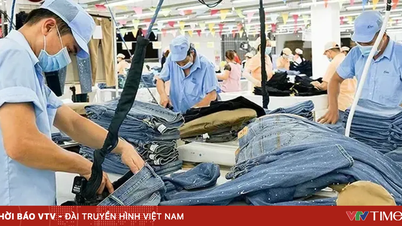
Not only businesses directly affected by the storms and floods feel this way, but businesses unaffected by the storms and floods are also complaining of difficulties. According to assessments from businesses in the processing and manufacturing industry, production and business activities in the third quarter were not as favorable as in the second quarter. The number of businesses performing better was 34.7% (lower than the 37.4% of the previous quarter). The number of businesses experiencing difficulties was also higher, with corresponding rates of 22.7% and 21%.
It is worth noting that domestic private businesses still face more difficulties than FDI and state-owned enterprises.
The list of difficulties... is still very old.
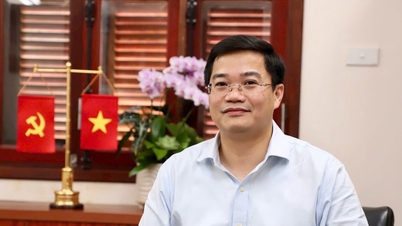
Ms. Pham Thi Ngoc Thuy, Director of the Office of the Private Economic Development Research Board (Board IV), continues to be concerned about the persistent difficulties faced by the business community, despite the strengthened business confidence.
"Recent meetings with 10 business associations further highlight this reality. In particular, the private sector seems to remain isolated amidst difficulties, as the issues they raised remain the same as in the previous survey," Ms. Thuy stated.
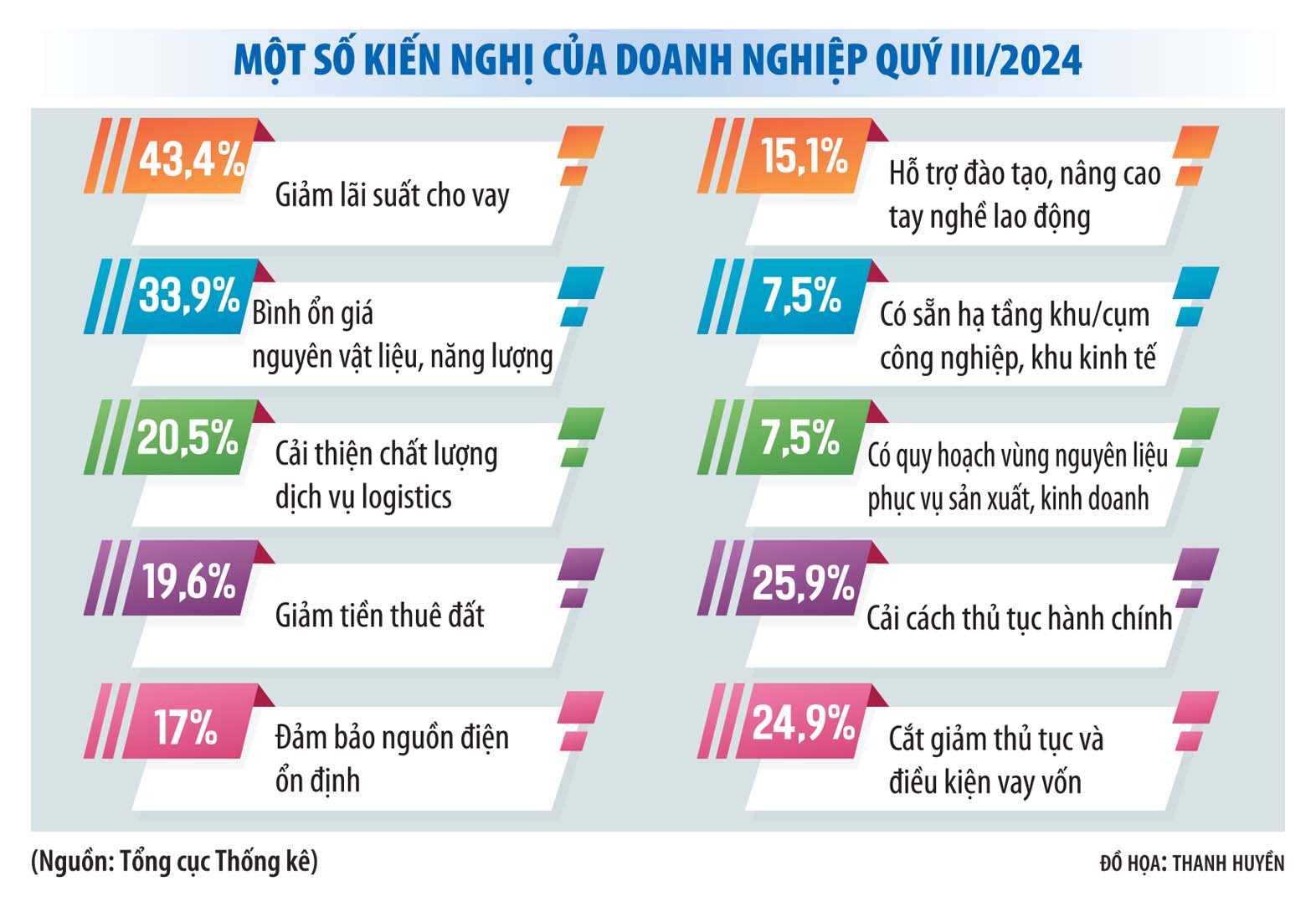
According to the survey by Committee IV, the top difficulty is the lack of orders, followed by the risk of criminalizing economic relations. Complex administrative procedures, difficulty in complying with regulations; difficulties with cash flow and market information continue to be challenges for businesses.
Similarly, a survey by the General Statistics Office shows that 53% of businesses reported difficulties due to low domestic market demand; 50.6% faced difficulties due to increasing competition from domestic goods; and 31.6% faced difficulties because demand for goods in international markets has not yet fully recovered.
Access to capital remains the biggest bottleneck for most businesses, among other input-related difficulties.
The survey by Committee IV also noted that concerns about the criminalization of economic transactions have emerged, becoming the second biggest difficulty among the top five challenges faced by businesses. In addition, Ms. Thuy stated that the nature of these difficulties has also changed compared to previous surveys conducted by Committee IV with businesses.
“The cash flow is also difficult, but at the end of last year it was hard to access money because there was no work, while this time there is work, there are projects, but they don't meet the loan conditions. Many businesses, due to difficulties, have outstanding debts, even with extensions or deferrals, but have been reclassified into a different debt category. Collateral is also difficult to obtain. Businesses are asking if there is a way for them to access capital more easily, like how some banks provide unsecured loans to businesses using MISA accounting software because it meets transparency requirements…”, Ms. Thuy shared information from a survey of nearly 900 businesses.
The desire to "get it done" and "get it done quickly".
In STP's comeback plan, which Ms. Hai Binh is grappling with, the questions of resources and time are not easy to answer.
“Local leaders are very concerned and have urged businesses to work with the people to find new projects. The locality will seek funding to support the people. But my question is, when can these projects be implemented if using only the budget? If the business alone is involved, it won't have enough resources because the investment will be very large,” Ms. Binh shared.
Currently, STP has proactively implemented a program to support interest-free deferred payments for fishermen to reinvest in HDPE fish cages.
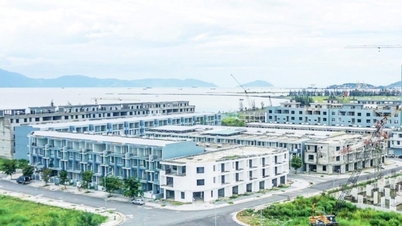
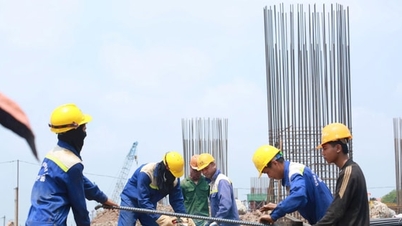
Concerns about the pace of construction are making the fourth quarter more uncertain for businesses following Typhoon Yagi. 45% of businesses are facing difficulties due to a lack of new construction contracts, 44.8% are struggling due to rising construction material prices, and 32% are facing difficulties due to unfavorable weather conditions for construction.
Among the proposed solutions, besides capital and construction materials, 38.8% of businesses requested transparency in bidding information; 32.8% requested further reduction of administrative procedures, creating conditions for businesses to shorten the processing time for administrative procedures; and 25.2% requested the handover of cleared land on schedule to ensure construction time according to the signed contract.
In particular, 25.1% of businesses suggested that there should be penalties for investors who are slow to settle outstanding construction debts, so that construction businesses can rotate capital for production and business activities.
"Businesses continue to feel insecure about the complex and difficult-to-comply business conditions, and there is a growing trend towards pre-approval rather than post-approval," Ms. Thuy further analyzed. Construction businesses, in particular, reported that for the past 10 years or so, procedures in this industry have been very difficult, with many sub-procedures and the need to obtain too many permits.
As a result, the decentralization and delegation of authority in handling administrative procedures remains largely superficial, and the process for implementing an investment project is excessively lengthy. Furthermore, the fear of making mistakes and taking responsibility makes it difficult to determine the completion time for many processes and procedures...
These shortcomings not only hinder businesses but also reduce investment opportunities and diminish the attractiveness of the investment environment in Vietnam.
"Currently, the number of businesses planning to expand due to positive forecasts for the macroeconomic situation next year has increased significantly compared to the previous survey. However, businesses also shared that they are very afraid of harassment, too many procedures, and too many business conditions," Ms. Thuy stated frankly.
Source: https://baodautu.vn/doanh-nghiep-tu-nhan-trong-nuoc-van-rat-kho-d226895.html









































![[Video] Sunset at Lap An Lagoon – Where the sun sets over the fishing nets](https://vphoto.vietnam.vn/thumb/1200x675/vietnam/resource/IMAGE/2026/05/31/1780192137701_beach-landscape-sea-water-nature-grass-745871-pxhere-com.jpeg)





























Comment (0)