



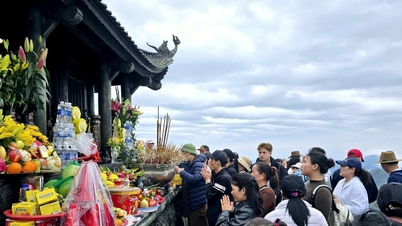
The Cung Temple historical and cultural site (Cam Tu commune).
Quy Tan village (formerly known as En village) is renowned for its lush, beautiful natural landscape, surrounded by mountains and hills such as Dong Sang mountain, Bum hill, Cao hill, and Vin hill. Furthermore, it boasts the sacred En village communal house, famous for the legend of two village guardian deities who contributed to the founding of the village. According to the elders, in ancient times, when this area was a wild, overgrown, rocky wasteland, Mr. Kinh and Mr. Vi diligently cleared the weeds and leveled the land to create fertile fields for rice and other crops. Later, they went to Muong Bi, Muong Vang ( Hoa Binh province ), Muong Du (Thach Thanh district), etc., to call upon people from the Bui, Nguyen, and Cao families to join them in establishing the village. Later, the powerful Nguyen Dinh family also came to settle here. From its earliest inhabitants, over the centuries, the village has grown into a bustling rural community. Not forgetting the contributions of the two pioneers who cleared the land and established the village, the villagers later revered Mr. Kính and Mr. Vì as their guardian deities, who are worshipped at the Én village temple. Originally, the Én village temple was built of thatch, bamboo, and leaves. About 100 years ago, the villagers contributed money to construct a more spacious and sturdy wooden temple.
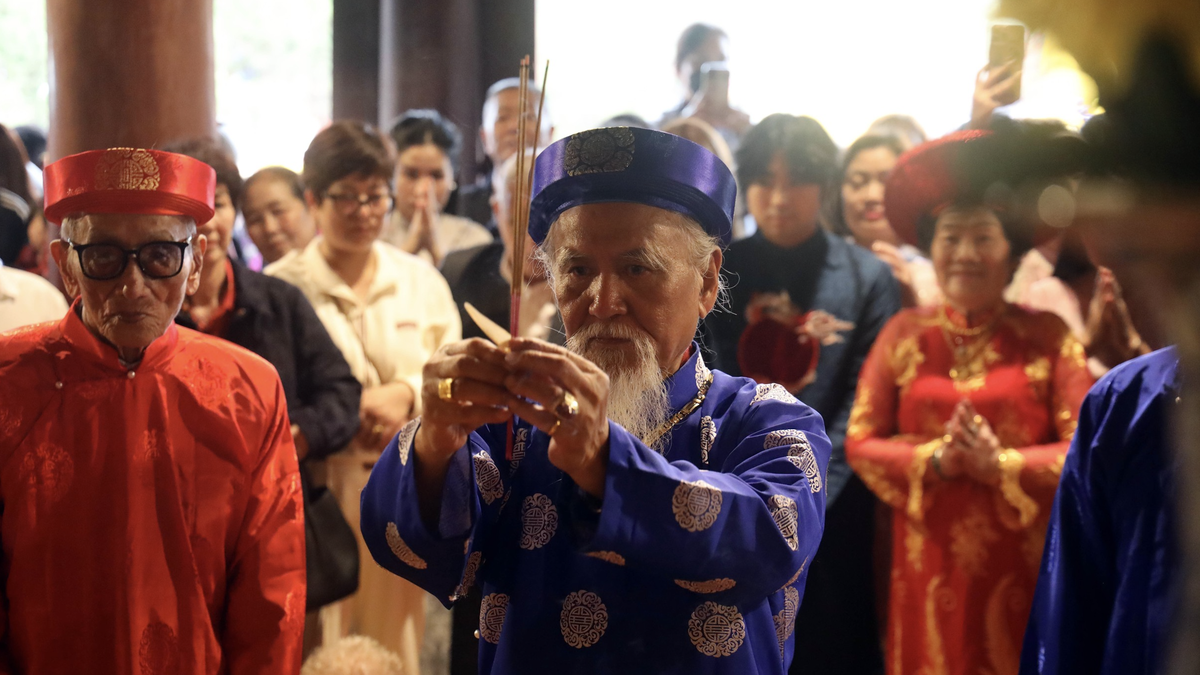
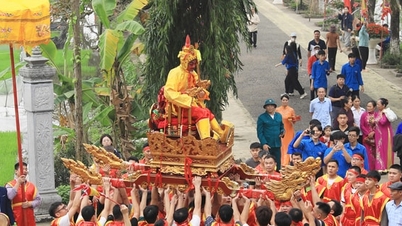
The Én village communal house is situated on high, spacious land, facing southeast, surrounded by villages and lush rice fields. The communal house has a "Nhất" (one) shaped structure with three bays, two wings, and four trusses, supported by a system of wooden columns. According to researchers, the decorative carvings at the Én village communal house reflect the architectural style of the Nguyen dynasty, imbued with folk elements and close to the lives of the people. Every year, on the 8th day of the first lunar month, the villagers gather at the communal house to hold the spring festival. This is both an occasion to commemorate the village's patron deity who founded the village and to pray for divine blessings for a prosperous life and bountiful harvest.
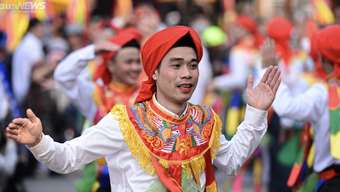
However, over time and due to historical changes, the Én village temple festival has faded away and is no longer held annually by the villagers. Therefore, recently, the Department of Culture, Sports and Tourism, in coordination with the People's Committee of Cẩm Tú commune, organized the restoration of the Én village temple festival based on the traditional festival of the past, with the aim of reviving awareness of preserving and promoting the cultural heritage left by our ancestors. At the same time, it aims to create a unique tourism product, contributing to the development of cultural and spiritual tourism in the commune.
Visiting the Cam Luong scenic area in Luong Ngoc village, we found a unique and fascinating cultural and ecological space. Here, we visited the temple of the Snake God (Dragon Temple), admired the sacred fish swimming in Ngoc stream, and explored the unique Cay Dang cave. We also heard the locals recount the legend of the Snake God – who protected the villagers. The story goes that long ago, there was an elderly couple who were childless. Every day, they went to their field next to the stream to cultivate crops and catch fish and snails for food. One day, while working, the wife found an egg. Curious, she put it back in the water. Surprisingly, after several attempts, the egg remained in the basket. She decided to take it home. The couple gave the egg to a hen to incubate. After some time, the egg hatched into a snake, terrifying the couple. The husband then took the snake to Ngoc stream to release it. But every morning, the husband would take the snake out to release it, and by evening it would return home. Having no other choice, the couple allowed the snake to live in their house. Gradually, the snake became familiar with the family. Since the snake came to live in the village, droughts have ceased, the villagers have enough water for farming, and the fields are fertile, leading to a more prosperous life for the people.
One night, a sudden storm raged with heavy rain, strong winds, and thunder. The next morning, the villagers found the dead snake washed ashore at the foot of Truong Sinh Mountain, by the Ngoc stream. The snake had died fighting a water monster to protect the villagers and had been bestowed the divine title of "Four-Realm Dragon King" by the gods. In gratitude, the villagers buried it and erected a temple in its honor. Since then, a school of fish has appeared in the Ngoc stream in front of the temple; the people call them "divine fish," and they swim in a line every day.
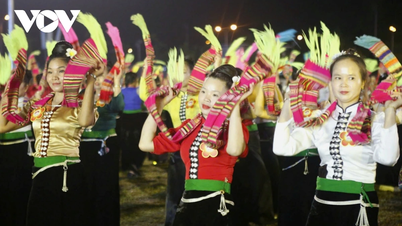
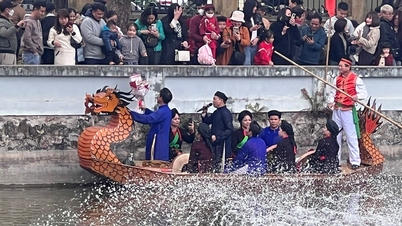
Every year on the 7th and 8th of January, the people of Luong Ngoc village gather to celebrate the Opening Ceremony of the Sacred Fish Stream Festival to report their achievements to the village's guardian deity for a year of hard work and production, and to pray for a prosperous and happy new year. The festival attracts a large number of locals and tourists, featuring many unique cultural and sporting activities that reflect the rich cultural identity of the Muong people.
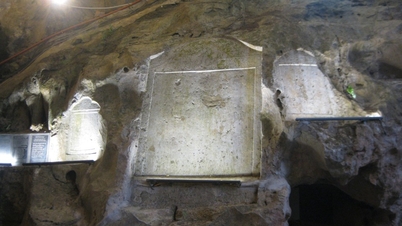
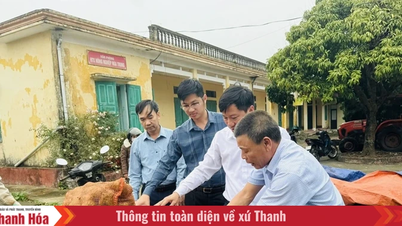
Cam Tu commune is a land rich in historical traditions with many historical and cultural relics such as communal houses, temples, shrines, and famous scenic spots like: the Mong Cave scenic site, the Vong Pagoda historical and cultural site and scenic spot, the Cung Temple... Each relic holds great historical significance, helping future generations understand a period of culture, beautiful traditions, and the wisdom of their ancestors, the formation and development of their homeland and country. This is also the potential and advantage for the locality to promote tourism development, especially spiritual tourism. Therefore, in recent times, Cam Tu commune has intensified propaganda and education to raise people's awareness about preserving and promoting the value of relics; paying attention to the restoration and renovation of relics; Coordinate with the management boards of historical sites to ensure security and order, maintain environmental hygiene, and promote a cultured lifestyle and civilized behavior in activities at these sites, especially during festivals, holidays, and other special occasions.
Text and photos: Nguyen Dat
Source: https://baothanhhoa.vn/doc-dao-cac-di-tich-o-cam-tu-274785.htm




























































Comment (0)