

Removing fishing nets is one of the traditional fishing methods, a distinctive cultural feature deeply rooted in the lives of the people living along the waterways of the Mekong Delta in general. In Dong Thap , many people still maintain this natural fishing method, both creating a livelihood and contributing to the conservation and regeneration of aquatic resources.
After about three months of piling brushwood along the canal leading to the So Ha River (bordering Prey Veng province, Cambodia), Mr. Cao Van Tam in Tan Hoa hamlet, Hong Ngu ward, hired more laborers to dismantle the brushwood and harvest fish and shrimp.
According to Mr. Tam, every year, after the floodwaters recede, his family begins piling up brushwood along the canal near their house to raise fish and shrimp. The first batch of brushwood removed after the flood season usually yields the highest output; each pile of brushwood can yield about 1 ton of fish and shrimp, bringing in an income of around 10 million VND.
Subsequent harvests throughout the year yielded less, but still helped the family improve their meals and earn extra income.
Having also been involved in the brush removal profession for many years, Mr. Nguyen Van Phong in Binh Chanh hamlet, Hong Ngu ward, currently owns more than 10 brush piles along the Binh Thanh canal. According to him, the effectiveness of the profession does not depend on luck but requires skill and expertise from the worker.
Understanding the tides and the habits of each fish species is crucial for choosing the right and most efficient harvesting time. Mr. Phong stated that more than 10 years ago, natural aquatic resources were abundant, with some piles of brushwood yielding 2-3 tons of various fish. However, in recent years, fish and shrimp production has decreased significantly.
According to long-time practitioners, removing brushwood is a traditional method of fishing that has been closely associated with the inhabitants of the Mekong Delta in general and Dong Thap province in particular.
A fish trap is made from dry branches, mainly bamboo, water tamarind, and some locally available trees, piled up in rivers, canals, and streams. Stakes are driven around the trap to prevent it from being washed away by the water, and also to provide shelter for fish and shrimp to live and thrive. Each trap typically has an area of 20-40 square meters.
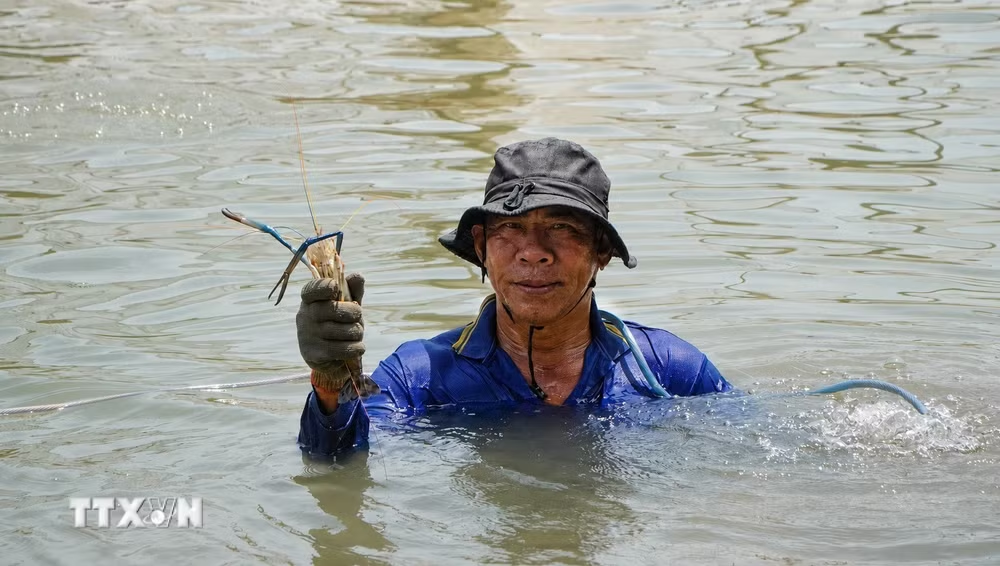
People often build brushwood in deep water, near river mouths or river junctions. After building the brushwood, they cultivate water hyacinth to create shade for aquatic life; they also add bait to attract fish and shrimp, such as roasted rice bran and commercial feed.
Each pile of brushwood is guarded to prevent illegal exploitation, especially fishing using electric shocks.
This is a safe "home" that attracts many fish species to live, breed, and grow. After 2-4 months, when the fish and shrimp have grown and gathered in large numbers, the locals then enclose the piles of brushwood with nets and dismantle them for harvesting. This method both creates a livelihood for the people and contributes to maintaining natural aquatic resources.
Removing the fish traps is usually done at low tide. This is when people can harvest many types of aquatic products such as freshwater prawns, catfish, snakehead fish, and many other freshwater fish species.
Because it requires a lot of manpower, each time the fishing traps are dismantled, relatives and neighbors usually participate in helping. Therefore, dismantling fishing traps is not only a method of fishing but also a long-standing community activity of the people living in the riverine areas of Dong Thap.
Having been involved in the work of building and dismantling brushwood piles for nearly 30 years, Mr. Nguyen Van Manh in Hong Ngu ward currently owns 7 brushwood piles and takes on brushwood dismantling jobs when he has time. According to Mr. Manh, this is a labor-intensive job, requiring participants to know how to swim and dive, and to have fishing skills.
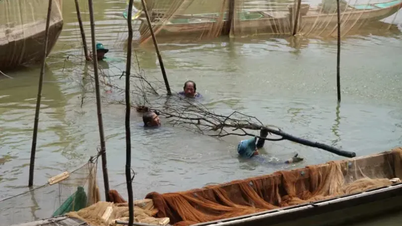
Whenever he gets a job clearing brushwood, he gathers his team members to work together. On average, clearing a pile of brushwood requires about 10 laborers and takes almost a full day's work, from 7 am to around 3 pm, with many steps such as wrapping nets around the pile, pulling the brushwood branches ashore, diving to catch fish and shrimp... Depending on the distance traveled and the amount of work, each laborer is paid between 300,000 and 500,000 VND per day.
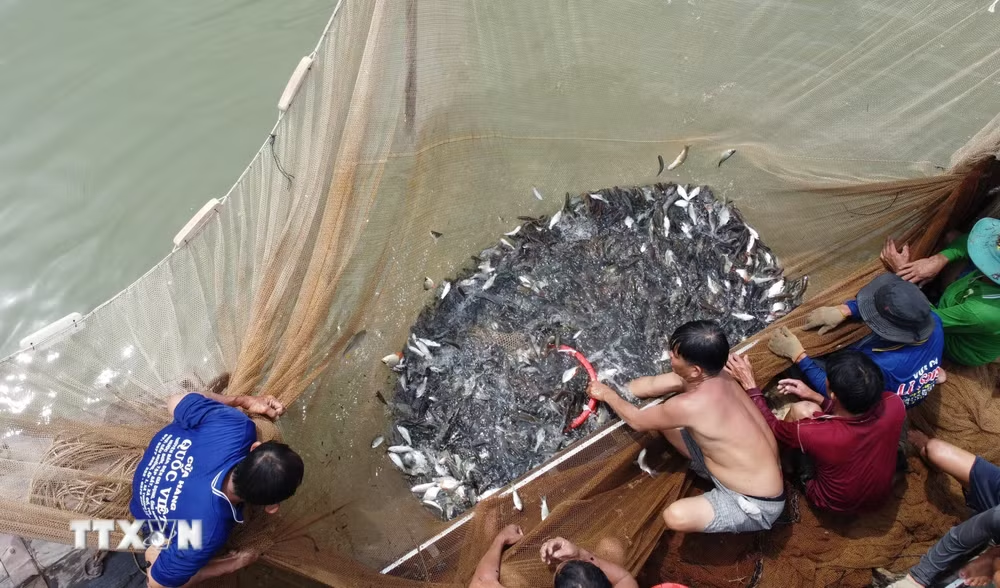
Besides providing a livelihood for the people, the practice of dismantling fishing traps is also considered a distinctive cultural feature of the riverine communities in Dong Thap province. Based on this value, several organizations have incorporated the experience of dismantling traps to catch fish into their community tourism products.
According to Mr. Le Phuoc Tanh, Chairman of Thuan Tan Association (Cao Lanh ward), due to its proximity to the Tien River and the abundance of shrimp and fish, local people pile up brushwood along the riverbank to create "homes" for fish and shrimp to shelter in, and then harvest them occasionally.
The association has collaborated with relevant units and owners of brushwood piles to develop a tourism model focused on dismantling brushwood piles to catch fish, which has initially been well-received by tourists.
The model has initially received attention from tourists, contributing to promoting the traditional culture of the riverine inhabitants to visitors from near and far, while also creating more jobs and increasing income for the people.
According to Dr. Vo Van Son, Senior Lecturer at the Faculty of Culture, Tourism and Social Work (Dong Thap University), from a cultural perspective, removing brushwood to catch fish is not simply a method of exploiting aquatic resources, but also a unique ecological cultural feature of the people of the Mekong Delta.
This activity reflects the process of human adaptation to the river environment, accumulating folk knowledge about water levels, the habits of fish species, and natural laws over many generations. Removing brushwood also has a very distinct communal aspect.
Each time the brushwood is removed, many people participate, sharing the joy and the fruits of their labor, thereby strengthening community bonds and preserving the unique cultural characteristics of the riverine inhabitants.
In the current context, the practice of dismantling fishing traps needs to be preserved as a folk cultural heritage associated with sustainable fisheries; at the same time, it can be developed into a unique experiential tourism product, contributing to promoting the culture and livelihoods of the Southern region.
Source: https://www.vietnamplus.vn/doc-dao-nghe-do-cha-thu-hoach-ca-tom-vung-song-nuoc-dong-thap-post1114406.vnp

![[Image] Shipbuilders exposed to steel and record-breaking heat.](https://vphoto.vietnam.vn/thumb/1200x675/vietnam/resource/IMAGE/2026/06/04/1780545781745_ndo_br_img-5402-4683-jpg.webp)

















































![[Video] Sunset at Lap An Lagoon – Where the sun sets over the fishing nets](https://vphoto.vietnam.vn/thumb/1200x675/vietnam/resource/IMAGE/2026/05/31/1780192137701_beach-landscape-sea-water-nature-grass-745871-pxhere-com.jpeg)

































Comment (0)