

Silence in the world
On Don Det Island on the Mekong River in Champasak, Laos, last summer, I noticed an Englishman. Everyone called him Sebastian.
His hair, uncut, uncombed, and unwashed for years, was always barefoot and shirtless. He would joyfully jump and hug his white compatriots who had just arrived on the island, helping them carry their backpacks and belongings. Sometimes, he would be seen sitting alone at the ferry dock, quietly watching the water flow by in the twilight.
Upon inquiry, I learned that the man had been on this island for several years, just like that. His mind was still normal, only he had no belongings, no possessions, and ate whatever people gave him. He never mentioned his family, and it seemed his family had "forgotten" about him. I wonder what has become of this man, named after a saint on that remote island, and whether he has returned to the civilized world ?
I often notice and greatly appreciate the "happy solitude" of tourists who visit my country. Cycling alone along deserted roads. Sitting quietly on mountaintops, streams, or beaches, with a book in hand. Drinking tea on mountaintops…
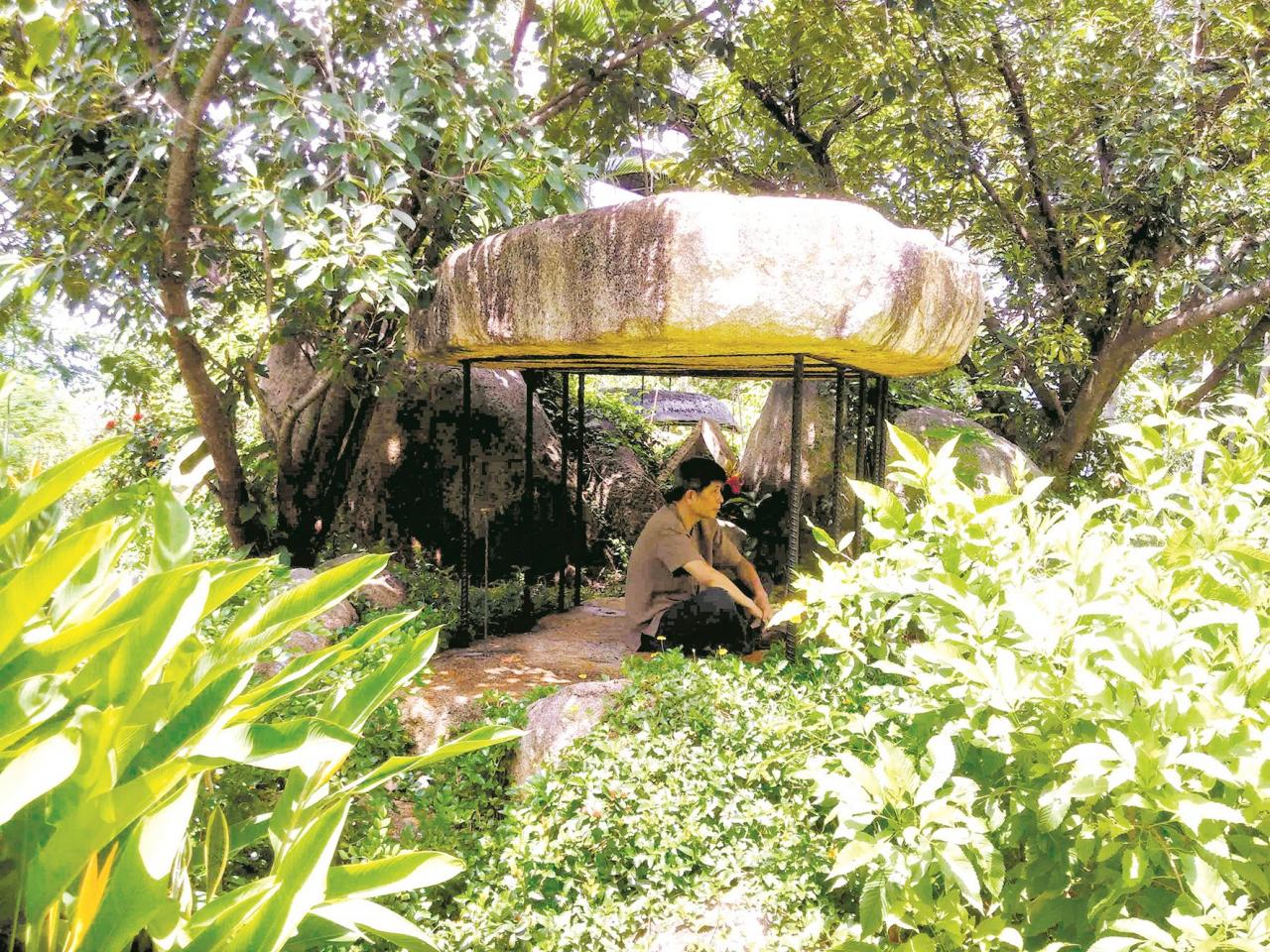
Of all my journeys, big and small, the happiest moment for me was probably sitting alone in silence beneath the Stone Pagoda on a deserted hill at the foot of Mount San (Nha Trang). It's called a "pagoda," but it's actually just a large slab of stone, about 6 square meters, suspended precariously among the trees and grass. To enter, you have to bend down.
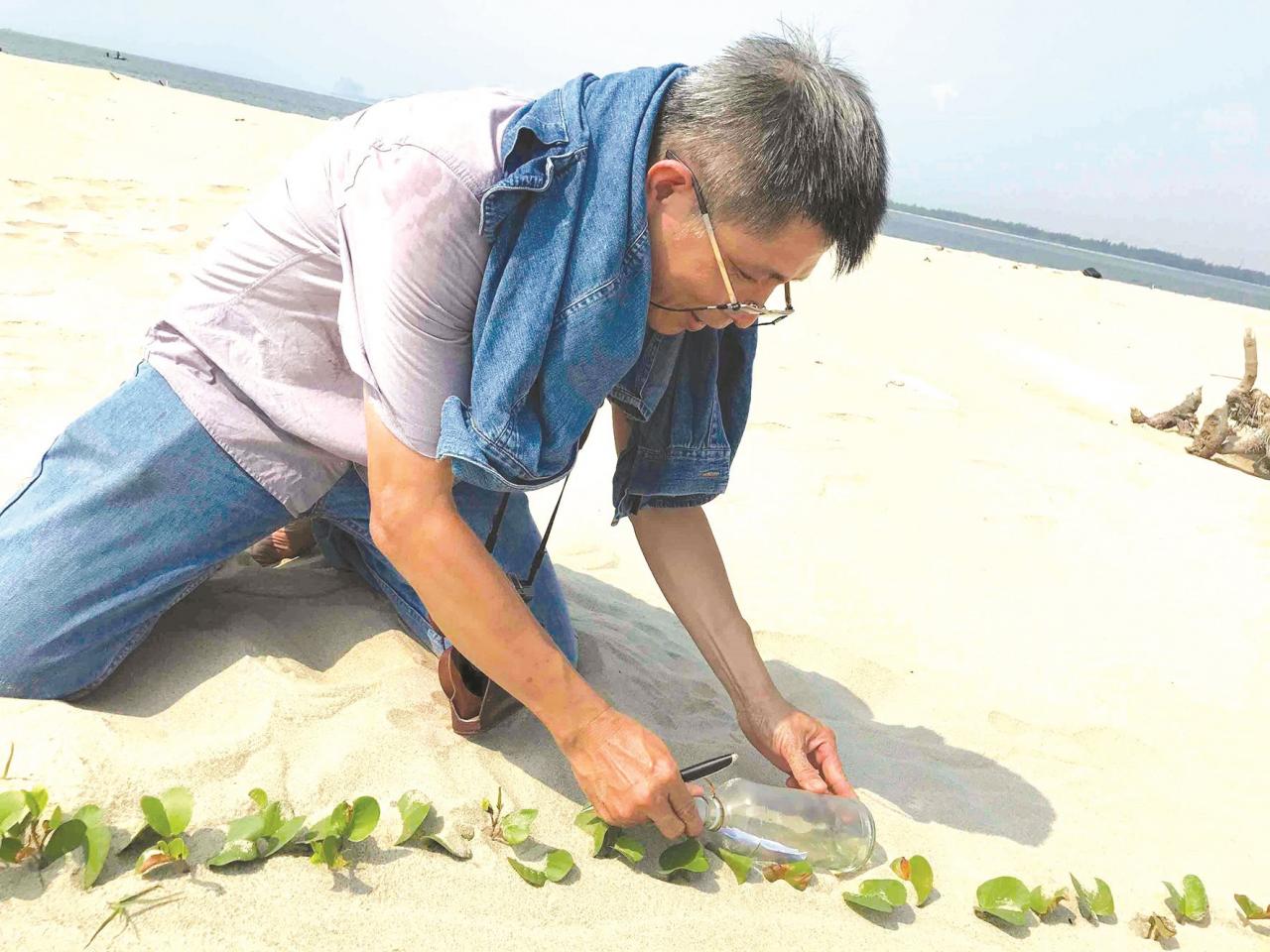
That's all there is to it, but the building was ranked as one of the 7 most beautiful religious designs at the 2015 World Architecture Festival. Despite its fame, the owner needs peace and quiet, so visitors are very limited.
Sitting beneath a vast, tranquil rock, like a symbol of "nothingness" above one's head, in a place of "self-enlightenment without a teacher," how could those grand temples and towering bells outside compare?
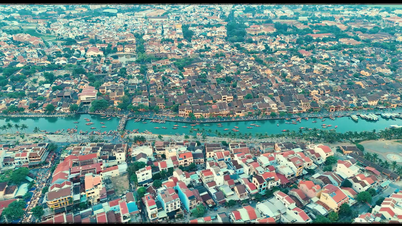
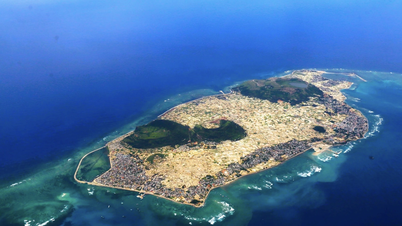
What could be more fascinating than walking barefoot on an island that has only just emerged from the sea… a few days ago? Perhaps even one that hasn't been named yet – like the sand island that suddenly appeared off Cua Dai, Hoi An.
Later, this place was called "Dinosaur Island," because from above it looked like a prehistoric dinosaur. The island was deserted, littered only with broken bottles, pieces of buoys, fishing nets, pottery shards, old shoes covered in barnacles, and driftwood. Then, in the midday sun, like Robinson Crusoe, I took out my pen and paper and painstakingly copied a poem, stuffed it into a bottle, and released it back into the sea. Where has that bottle drifted to now?
Someone said, "Happiness is the journey, not the destination." I think the same applies to travel . Travelers want to experience and find happiness throughout their journey, not just luxurious resorts, crowded entertainment venues, and bustling restaurants.
Adventure travel - conquering happiness
I remember the summer of over two decades ago (July 2001), sitting on the wooden boat named Hoi An Culture, I intently followed the solitary strokes of the Japanese male and female athletes Honbu and Masuda as they swam for over 20 kilometers from Cu Lao Cham Island to Cua Dai.
Both are volunteers from the Japan International Cooperation Agency (JICA) who train Vietnamese athletes in swimming.
Sitting in the boat, Masami Nakamura – a renowned expert in designing adventure tourism programs for JICA and the organizer of OPEN WATER 2001 – calmly acted as navigator and directed his students.
For the first time, someone had swum all the way from the island to the shore in one go, leaving everyone on our side astonished. But for the three Japanese men, the teacher and his two students, this leg of the swim was just "a piece of cake." They had previously competed in top-level competitions across the world's oceans.
Sadly, this amazing swimming event only took place once more with a few Vietnamese swimmers participating, and then stopped completely. If properly organized, Hoi An would surely have another world-class sports tourism product, where tourists can discover and challenge themselves.
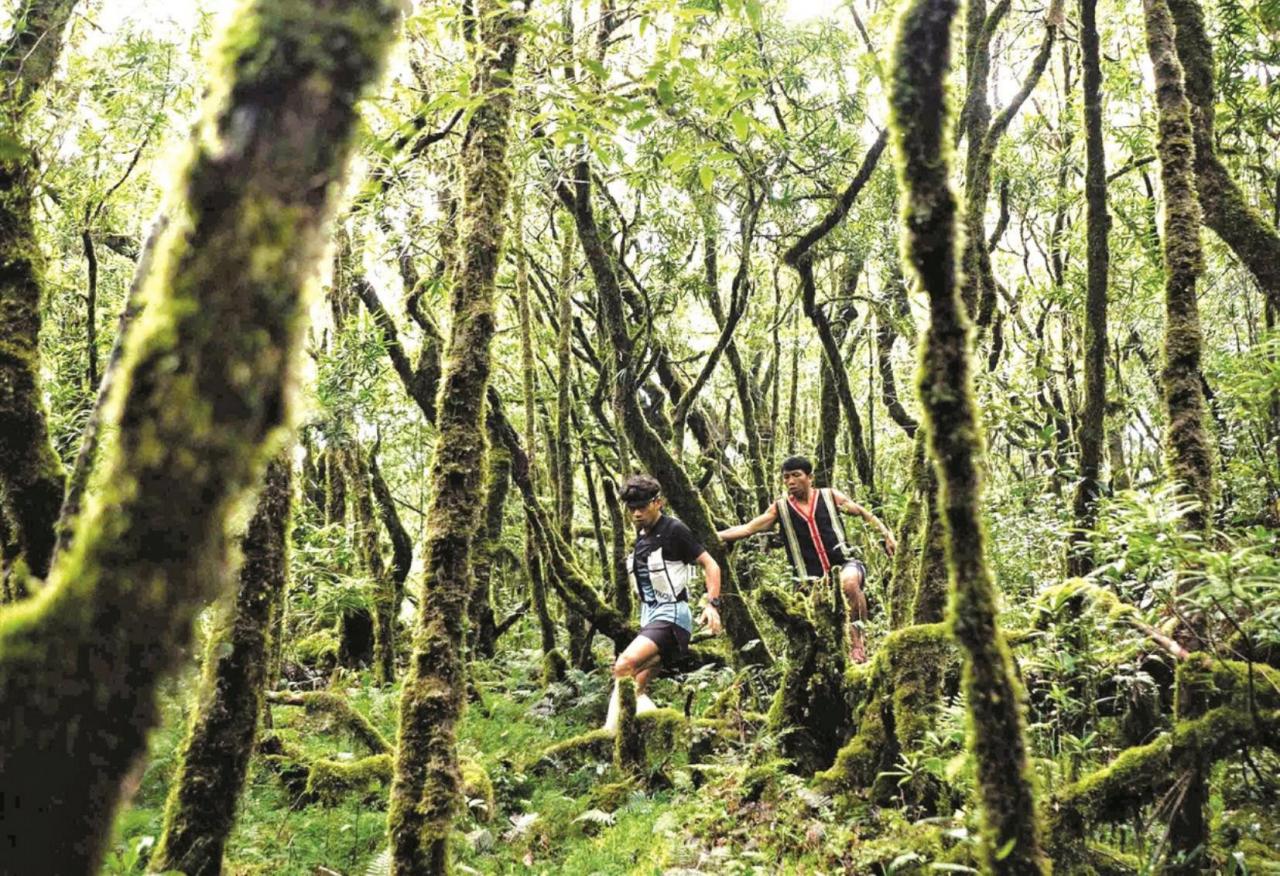
In the last two years, many runners have become aware of the Tay Giang (Quang Nam) primeval forest marathon. With a distance of 18km, hundreds of athletes from all over the country have the opportunity to run alongside Co Tu ethnic minority runners, experiencing a route through ancient rhododendron forests, climbing mountains and slopes, crossing streams, and passing through the pristine villages of the local people…
I remember back in 2009, a Hong Kong event organizing company collaborated with Vitours and the Departments of Culture, Sports and Tourism of Quang Nam and Da Nang to plan a 100km marathon through the mountains and forests of Tay Giang, to celebrate the launch of the direct Da Nang - Hong Kong flight.
The run lasted 3 days, with approximately 30km covered each day.
Running on the hillsides along the Vietnam-Laos border, having lunch on the run, and sleeping in tents at night. Interspersed with nights of campfires, dancing with gongs and drums by traditional Co Tu longhouses, and interacting with the kind-hearted people in the mountains…
But ultimately, that initiative to stimulate demand through adventure tourism didn't materialize, and has now been replaced by the Tay Giang Marathon, which has been held for the past two years.
Dreaming of... a pilgrimage
I often go up to the Trung Phuoc mountain area at the foot of Ca Tang mountain (Nong Son). Before the Phuong Ranh pass was built, everyone went through Le Pass, past the fields with the Tay Vien hot springs…
At one time, there was consideration of opening a route from Nong Son, crossing Mount Chua (also known as Hon Den), to My Son Sanctuary in Duy Xuyen, following the ancient path from west to east. How wonderful it would be if a special pilgrimage route could be opened now for those who prefer solitude and nostalgia.
Mentioning the land at the foot of Ca Tang mountain, one is always impressed by the annual forest opening ceremony in Khe Hop forest. The altar to the Forest God is a large stone slab beside a crystal-clear stream. After the ceremony, a feast is spread out on banana leaves on the ground, and everyone sits on their sandals. This special village feast takes place in the sacred forest.
Beside glasses of milky white rice wine, with its intoxicating aroma, how can visitors experience this atmosphere? How can they, here too, stroll through the place where the poet Bui Giang once herded goats? The villagers are ready to point you out, "This is Lu Hill, Bui Giang's old goat grazing ground. And over there is the Bui family's burial ground...", like a village legend passed down orally.
How can we, when stopping to offer incense at war memorials like Hoc Thuong, Trai Tiep, Khe Chin Khuc… relax in hammocks, and smoke a pipe of tobacco placed by the Hoang Cam stove…?
American billionaire Bill Gates and his girlfriend recently enjoyed tea on top of Ban Co Hill in Da Nang. Like many other famous billionaires and heads of state, this location has been a quiet and private destination for luxury tourism.
Hoi An is becoming increasingly crowded, which is both fun and worrying. Bearing the brand of a "Global Village," it may be global now, but will it still be the peaceful, quiet "village" it once was?
Source

![[Photo] Capturing the moment the tide recedes at Yen Binh Son rapids - a million-year-old scenic spot in Quang Ngai.](https://vphoto.vietnam.vn/thumb/1200x675/vietnam/resource/IMAGE/2026/05/19/1779175463885_yen9-1199-jpg.webp)
![[Photo] National Assembly Chairman Tran Thanh Man attends the groundbreaking ceremony for the National Highway 1A spatial axis project.](https://vphoto.vietnam.vn/thumb/1200x675/vietnam/resource/IMAGE/2026/05/19/1779161360398_ndo_br_bnd-1412-jpg.webp)











































![[Photo] General Secretary and President To Lam receives Indian Defense Minister Rajnath Singh](https://vphoto.vietnam.vn/thumb/402x226/vietnam/resource/IMAGE/2026/05/19/1779184046302_anh-man-hinh-2026-05-19-luc-16-46-58.png)

























Comment (0)