NDO - On the morning of October 2nd, at the Hoa Lac High-Tech Park, the National Innovation Center (NIC), in collaboration with the Vietnam Network for Innovation and Entrepreneurship in Universities and Colleges (VNEI), organized the workshop "Innovation and Entrepreneurship in Vietnamese Higher
Education : Dynamism and Cooperation". The workshop was part of a series of activities celebrating the 5th anniversary of NIC's establishment and the Vietnam Innovation Day 2024. In his opening remarks, Mr. Vu Quoc Huy, Director of NIC, reaffirmed the role and importance of innovation in the higher education system in particular and innovation in general in the journey towards achieving the goal of "building a strong and prosperous nation". He also expressed hope and confidence in the effective collaboration in training high-quality human resources between domestic and international universities and NIC.
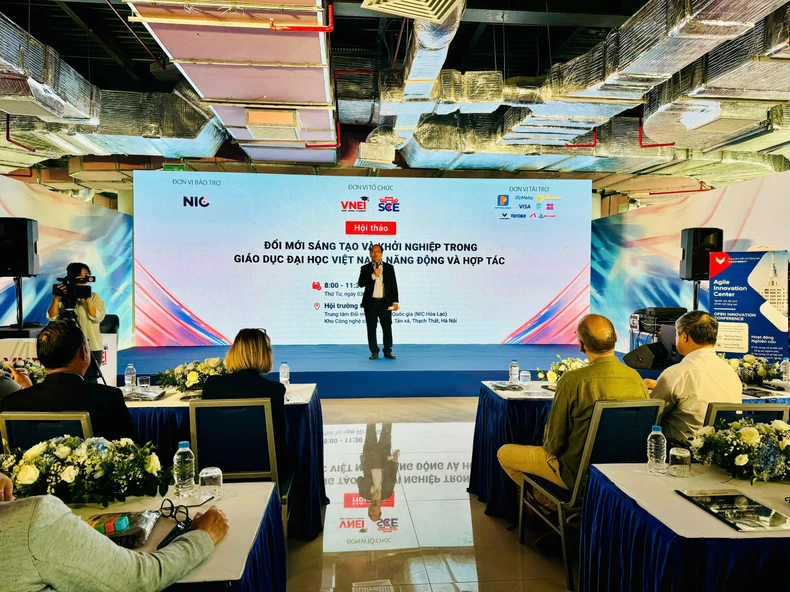 |
| Mr. Vu Quoc Huy, Director of the National Innovation Center (NIC), spoke at the workshop. |
Sharing some current innovation models from Switzerland at the workshop, Mr. Hub Langstaff, Director of the SwissEP Program in Vietnam, a Swiss support program for building
innovation and entrepreneurship ecosystems implemented in 7 developing countries including Vietnam, emphasized the enormous potential of innovation in Vietnam today. He also presented some recommendations for addressing shortcomings to ensure the innovation ecosystem truly thrives. Sharing this view, Dr. Sarah Mamiese, Director of AFD Campus, a French development agency, highly appreciated Vietnam's recent innovation activities, especially the formation and development of NICs as a symbol of successful innovation towards the future, along with Vietnam's enthusiastic and passionate spirit for innovation. In her presentation, Dr. Sarah also shared her insights on innovation and current models related to the innovation we are pursuing, emphasizing that innovation is a decisive factor in the context of the whole world seeking solutions for effective and sustainable development, economic development without increasing environmental impact. According to Dr. Sarah, current circular economy orientations can allow for the harmonization of economic development with environmental and human protection… therefore, conducting practical research using an innovation approach to find truly effective solutions, avoid innovation pitfalls, and master innovation for a better future is absolutely essential. Also at the conference, Dr. Nguyen Trung Dung, Chairman of VNEI, General Director of BK Holdings, Hanoi University of Science and Technology, proposed that leaders of Vietnamese universities could visit and survey innovative models of universities around the world to see the practicality and effectiveness of innovation in universities, closely linked to the goal of national socio-economic development. It can be seen that the presentations provided a comprehensive overview of innovation in the university sector as well as an international perspective on Vietnam and innovation in Vietnam today. Notably, in the open forum session, under the guidance of Mr. Pham Tuan Hiep, Director of BK Fund, BK Holdings, the six speakers included: Dr. Tran Nam Tu, Head of the Department of Science, Technology and Environment,
Ministry of Education and Training ; Assoc. Prof. Dr. Bui Quang Hung, Vice Director of the University of Economics Ho Chi Minh City; Assoc. Prof. Dr. Le Anh Phuong, Director of Hue University; Mr. Hoang Nam Tien, Vice President of FPT University; Assoc. Prof. Dr. Nguyen Phu Khanh, Vice Rector of Phenika University; and Assoc. Prof. Dr. Truong Ngoc Kiem, Director of the Center for Knowledge Transfer and Entrepreneurship Support, Vietnam National University, Hanoi, offered practical perspectives and assessments from diverse viewpoints related to innovation in general, including innovation in universities in particular. These perspectives included: a determination to change and create differentiation; a constructive mindset; enhancing students' innovative capacity; close engagement with the community; and a spirit of quickly embracing entrepreneurship, integrating entrepreneurship and innovation into independent subjects within training programs, and creating a workforce of innovative individuals from an educational environment that meets comprehensive requirements in terms of both knowledge and skills, especially innovation linked to creating value for society. In addition, there is the connection of incubation and support, with input and output in a chain to effectively practice, directly from schools to businesses, commercializing products right from the university with a network creating an innovation ecosystem closely linked with students, as shared by Mr. Hoang Nam Tien, Vice President of FPT University, "avoiding innovative ideas that remain just ideas, possessing 'artistic' value, only serving competitions; instead, innovation must bring value to life, create value for the community."
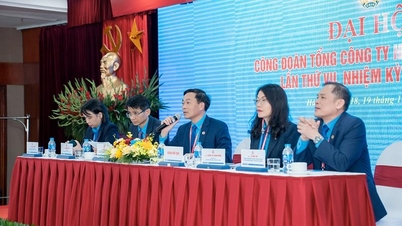
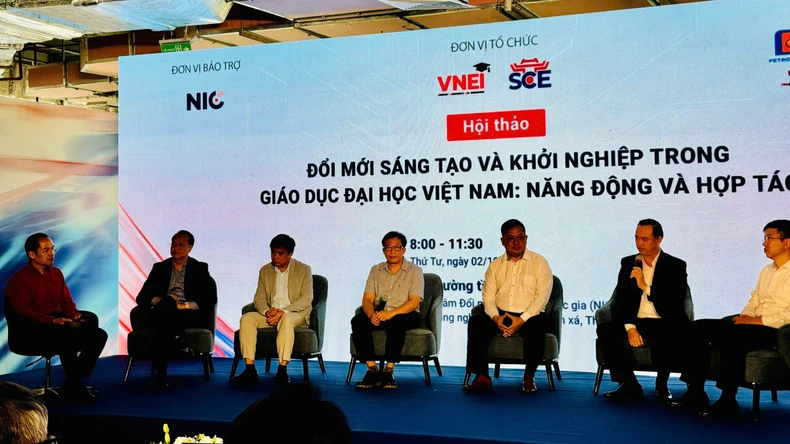 |
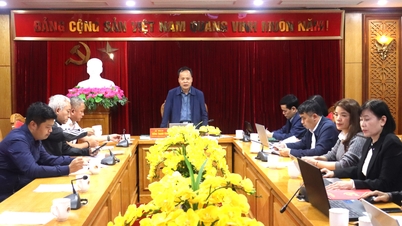
| A view of the panel discussion at the conference. |
From a policy management perspective, Dr. Tran Nam Tu, Head of the Department of Science, Technology and Environment, Ministry of Education and Training, agreed with the opinions exchanged and shared at the workshop. He also suggested that, in the current higher education system, it is necessary to conduct a statistical study to determine how many institutions have the conditions to implement innovation in education and which institutions have the conditions but do not implement innovation. In reality, innovation depends not only on individuals but also on the collective leadership and the overall system environment. From this, we will have a comprehensive and multi-dimensional view of innovation in universities today, contributing to the adjustment and supplementation of appropriate policies. “The Ministry of Education and Training will also issue two projects on “Training human resources to serve high-tech development in the period 2025-2035 and orientation to 2045” and “Developing high-quality human resources to meet the requirements of the 4.0 Industrial Revolution.” Both projects aim to prepare a plentiful supply of high-tech human resources, especially a large team of experts in artificial intelligence and semiconductor chips, to become a competitive advantage for Vietnam in attracting investment from major technology corporations worldwide, contributing to the restructuring of
the economy and sustainable development of the country based on science, technology and innovation, digital transformation and green transformation. The 4.0 Industrial Revolution will particularly change the labor structure and labor market. Automation systems will gradually replace manual labor throughout the economy, and the shift from human labor to machinery will increase the gap between workers and workers.” Profit on capital and profit on labor will impact the income of unskilled workers and increase unemployment. The increasing number of jobs requiring high-skilled labor is creating an increasingly fragmented job market: a high-skilled market and a low-skilled market. This leads to increased differentiation or the creation of entirely new job demands compared to the past. Therefore, proactive preparation in human resource training and vocational education is necessary to meet market needs. Human resource development policies must both expand the scale, diversify the types, and improve the quality of human resource training, while also creating favorable working conditions and environments to effectively utilize trained human resources. This ensures that those who have been trained maximize their potential and have opportunities for continuous learning and skill development. Accordingly, human resource training at universities needs to focus on redesigning training programs, innovating teaching methods, and Learning and enhancing soft skills for students; creating links between schools and businesses; improving the quality of technology incubators; innovating the state management mechanism for vocational training according to market needs and the specific requirements of employers… all aim to meet the requirements of deep and sustainable integration, highlighting Vietnam's innovation on the world map. Within the framework of the Conference, the Organizing Committee announced 15 new members of VNEI, bringing the total number of network members to 71 (previously, from 2023, VNEI only had 31 members).
Nhandan.vn
Source: https://nhandan.vn/doi-moi-sang-tao-and-khoi-nghiep-trong-giao-duc-dai-hoc-viet-nam-post834401.html













































































Comment (0)