Silkworms followed people as they settled new lands.
The first rains of the season poured down on the plateau, awakening everything, making the plants and trees flourish and grow as if by magic. Just yesterday, the mulberry hills were barren due to drought, but after only a few rains, they suddenly grew tall, sprouting large leaves the size of a hand, gleaming a vibrant green in the sunlight.
With nimble hands, Mrs. Lo Thi Thu, Head of Hamlet 3, Me Linh, Nam Ban Commune, Lam Ha District, said that the mulberry cultivation and silkworm farming profession has followed the people to this land for nearly half a century. Since then, despite the passage of time and market fluctuations, the silkworm farming profession has been preserved by the people here as a precious heritage of their ancestors.
 |
| Lush green strawberry gardens in Nam Ban commune, Lam Ha district. |
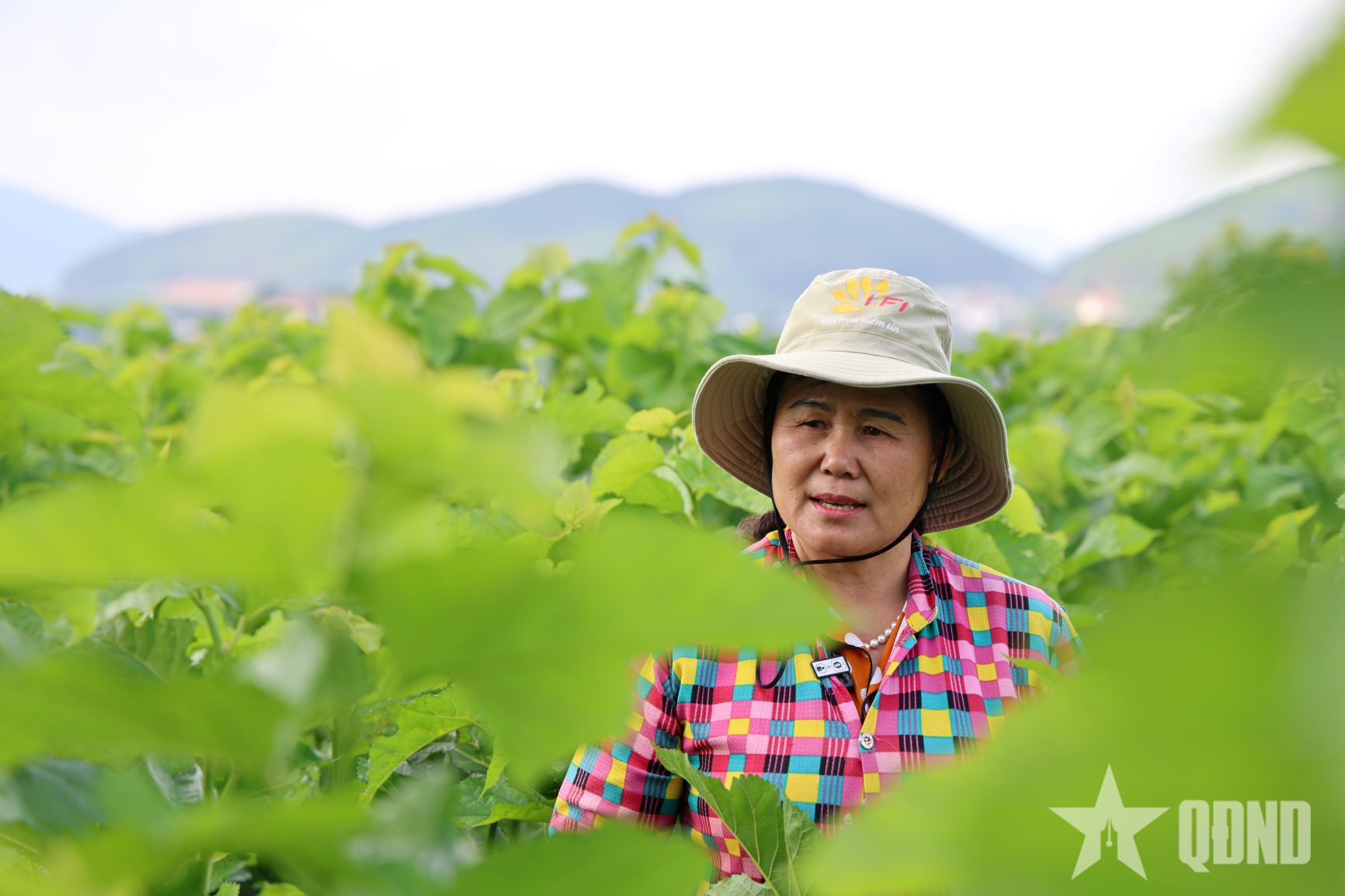 |
| Ms. Lỗ Thị Thư, Head of Hamlet 3, Mê Linh, Nam Ban Commune, Lâm Hà District, introduces the local mulberry cultivation and silkworm farming industry. |
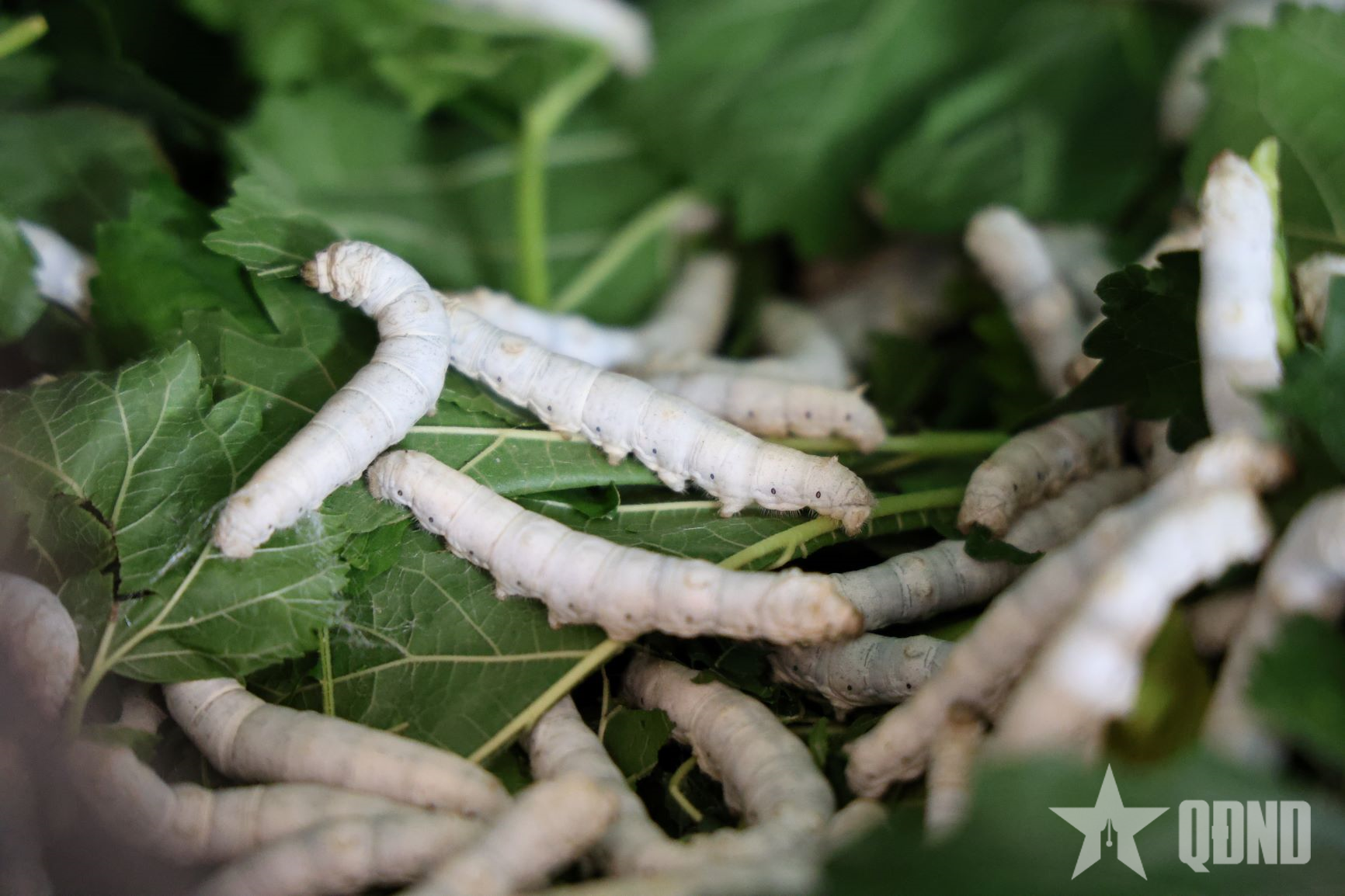 |
| Silkworms were brought to the Nam Ban Lam Ha area by Hanoi residents nearly half a century ago. |
Following the liberation of South Vietnam and the reunification of the country, in accordance with the Party's policy on redistributing the population and labor force across the country, on December 17, 1975, the Standing Committee of the Hanoi City Party Committee issued Notice No. 154-TB/ĐBHN regarding the decision to establish the Hanoi New Economic Zone in Lam Dong province.
On March 29, 1976, the Gia Lam Youth Vanguard Brigade, with 293 members, was the first unit to depart. This was followed by youth volunteer brigades from Tu Liem, Dong Anh, Thanh Tri districts and the neighborhoods of Ba Dinh, Dong Da, Hoan Kiem, and Hai Ba Trung, along with thousands of households from various districts and counties of Hanoi, who migrated to the Nam Ban area ( Lam Dong province ) for economic development, creating the "Hanoi New Economic Zone in Lam Dong" during the period 1976-1985. Over time, the barren land gradually transformed into a prosperous rural area. From a residential area with only a few dozen households, the "Hanoi New Economic Zone in Lam Dong" developed into Lam Ha district (Lam Dong province) during the period 1986-2024. From July 2025, a part of the old Lam Ha district separated to establish Nam Ban Lam Ha commune (Lam Dong province).
When leaving their hometowns for new lands, the people of Hanoi brought with them not only their traditional houses but also the essence of their crafts, including silkworm farming and weaving.
Ms. Lu Thi Thu recalled: “When we first arrived here, things were difficult and everyone tried many different jobs to make a living. Over time, we found that mulberry trees suited the soil and silkworms thrived in the climate. Coupled with the government's preferential policies and support, many families chose this profession. As time went on, mulberry trees and silkworms grew and spread.”
Livelihood from silkworm farming
For many households in the Nam Ban area today, mulberry cultivation and silkworm rearing are not only traditional occupations but also a stable source of income. Nguyen Thi Diem Quynh, 25 years old, from Hamlet 3, Me Linh, said her family currently has about 4 sao (approximately 0.4 hectares) of mulberry trees. Each batch consists of one box of silkworm eggs, yielding 65 to 70 kg of cocoons after about 15 days.
“Currently, the price of silkworm cocoons is 235,000 VND/kg. Each harvest brings in about 12 million VND, and after deducting the cost of the cocoons, there is about 10 million VND left. Raising silkworms is hard work, but the turnover time is fast, and there is a regular source of income,” Ms. Quynh shared.
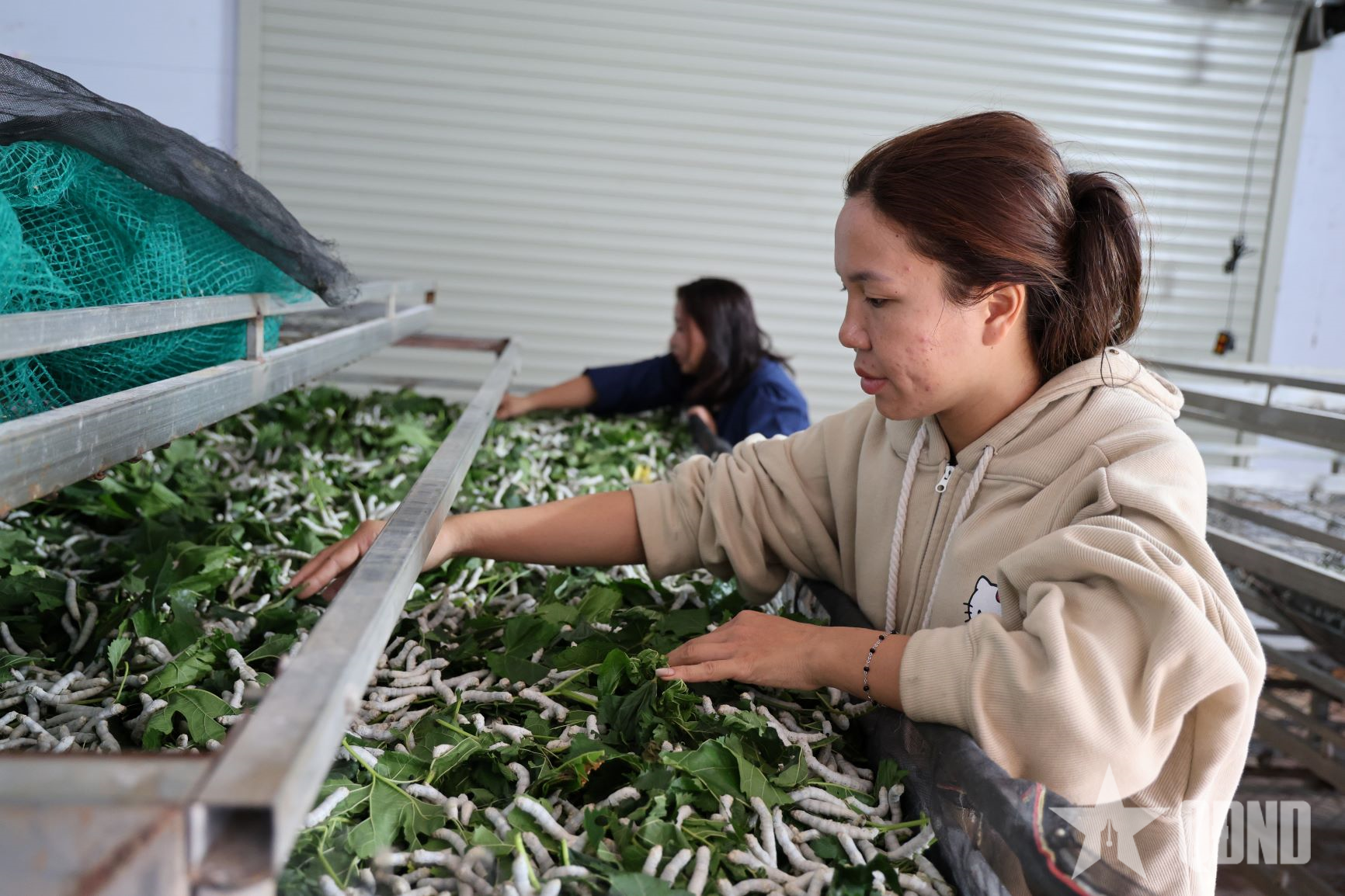 |
| Ms. Nguyen Thi Diem Quynh, residing in Hamlet 3, Me Linh, Nam Ban Commune, Lam Ha District, is caring for silkworms. |
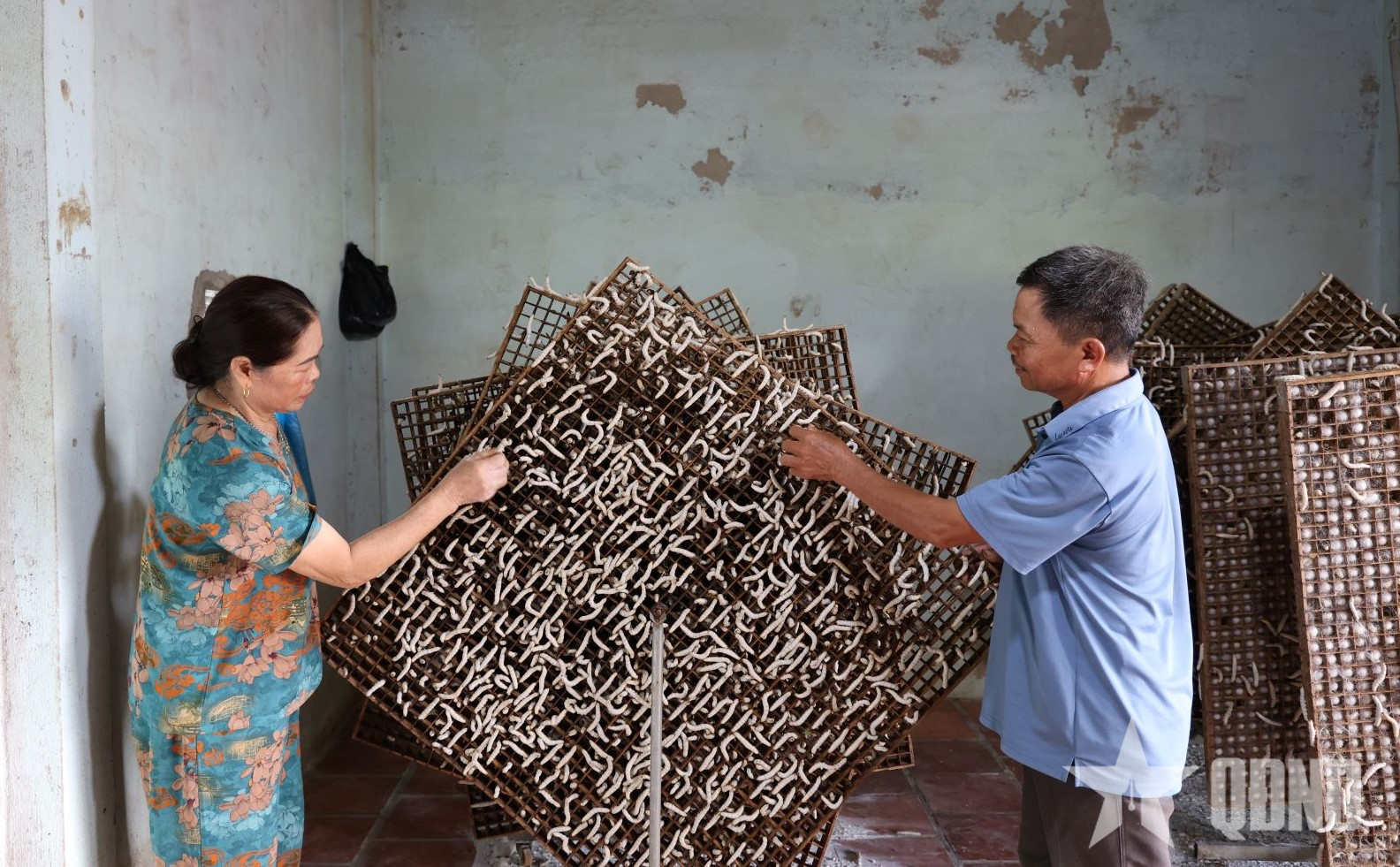 |
| Place the silkworms on the frame in preparation for spinning their cocoons. |



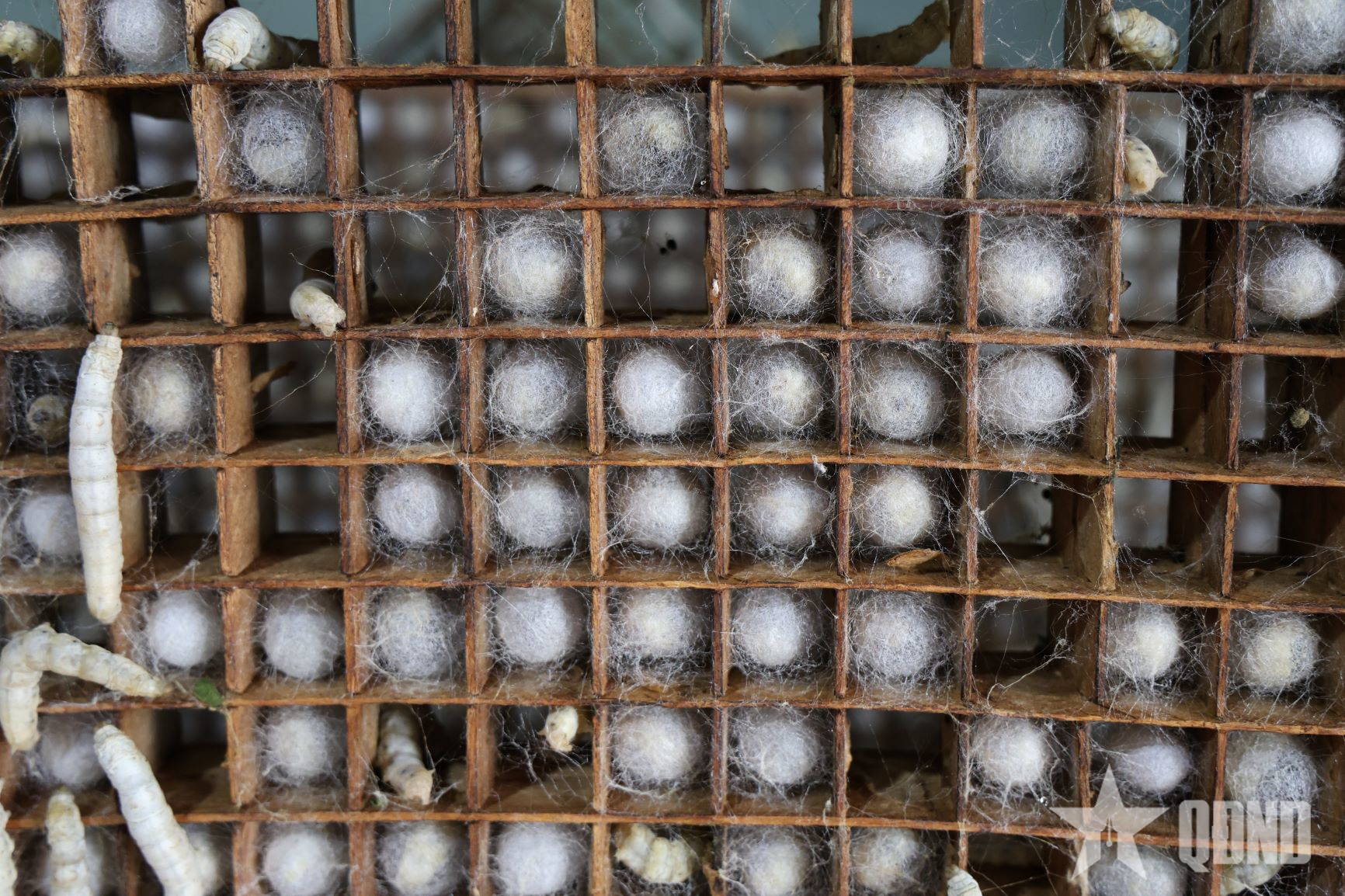 |
| Silkworms spin cocoons. |
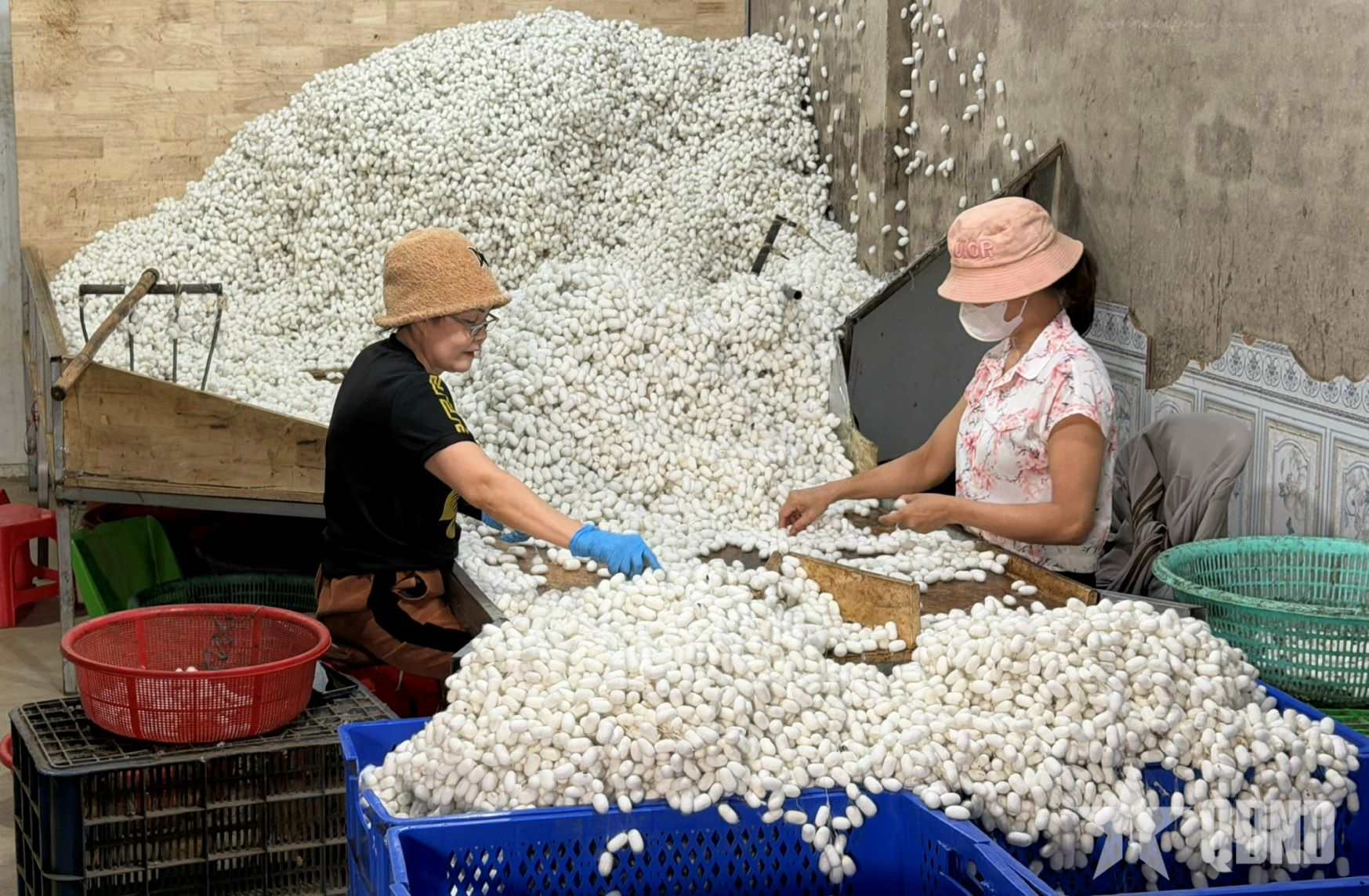 |
| Pre-processing and sorting silkworm cocoons. |
Not far away, Mr. Nguyen Van Suat, originally from Me Linh commune (Hanoi), who has been involved in mulberry cultivation and silkworm farming for over 25 years, said that his family grows coffee on a fairly large area, but the income from mulberry and silkworm farming plays a crucial role in their daily expenses.
"The money from selling silkworm cocoons helps cover expenses like groceries, weddings, and our children's education. After deducting all costs, the profit margin is about 70%, so people are still very attached to this profession," he said.
Forming a value chain
Beyond simply producing raw materials, the silk industry in Nam Ban, Lam Ha has gradually become more deeply involved in the industry's value chain. Hualong Lam Dong Silk Company Limited, located in Gia Lam Hamlet 4, Nam Ban Commune, Lam Ha District, is a large-scale silk reeling enterprise in the area. Mr. Tran Van Ba, 69 years old, the company's director, has dedicated almost his entire life to the mulberry and silk industry.
Born and raised in Hung Yen, Mr. Ba graduated from the University of Agriculture I (now the Vietnam Academy of Agriculture) with a major in silkworm farming. After graduation, he worked in many places before coming to Nam Ban in 1996 and deciding to settle down in this area.
 |
| The cocoons are fed into a machine system to extract the silk. |
 |
| Mr. Tran Van Ba, Director of Hualong Lam Dong Silk Company Limited, inspects the quality of silk at the factory. |
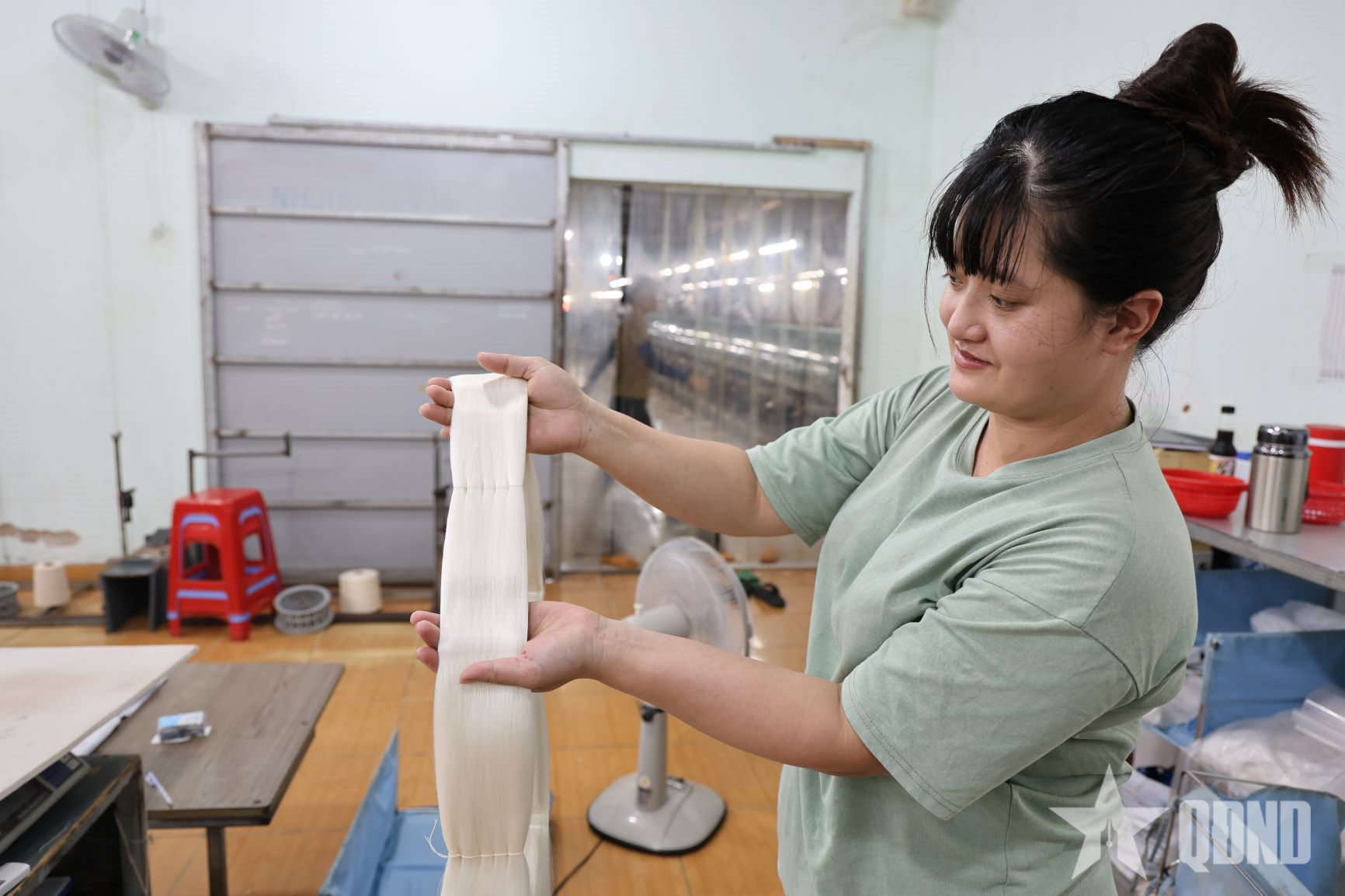 |
| Check the quality of the silk. |
Currently, the Hualong Lam Dong Silk Company Limited's factory produces approximately 10 tons of silk per month, using about 70 tons of raw cocoons and providing employment for over 120 workers. The silk products are mainly exported to the Indian market.
What makes Mr. Tran Van Ba most proud is that the quality of silkworm cocoons from the Nam Ban region is considered among the best in the country. “To have high-quality silk thread, you first need good cocoons. From the weight and size of the cocoon to the rate of raw material consumption, everything directly affects the quality of the silk product. As someone with many years of experience in the industry, currently consuming silkworm cocoons from many different localities, I can confidently say that silkworm cocoons from the Nam Ban area of Lam Ha are of the highest quality,” Mr. Tran Van Ba affirmed.
The presence of processing businesses such as Hualong Lam Dong Silk Company Limited has contributed to increasing the added value of the product, helping farmers feel secure in developing the raw material area and remaining committed to the craft. Besides export, Nam Ban silk is also used to weave many high-value silk products, becoming household and fashion items favored by both domestic and international markets.
Aspiration from golden threads
Comrade Nguyen Van Chau, Secretary of the Party Committee of Nam Ban Lam Ha commune, said that the entire commune has about 686 hectares of mulberry trees with more than 140 households participating in production and business related to this industry.
In particular, the locality has two silk weaving villages that have been recognized by the province since 2015: Hung Vuong - Dong Anh 3 village and Dong Anh 5 - Nam Ban village. These two villages currently employ over 400 workers, providing a stable income of approximately 7 million VND per person per month. These are not only production units but also repositories of the traditional techniques, experience, and culture of the community originally from Hanoi.



What is admirable is that despite going through many difficult periods due to market fluctuations, seed sources, diseases, etc., the mulberry growers and silkworm breeders here have not given up the silk farming profession. It is this perseverance that has helped the mulberry plantations continue to thrive on the plateau, enabling the silk farming industry to survive and develop to this day.
In its development plan, Nam Ban commune in Lam Ha district aims not only to expand raw material areas or improve the productivity of mulberry trees and silkworms, but also to develop experiential tourism associated with traditional crafts. This includes the idea of creating a silk culture space where tourists can visit the local silkworm farming, silk reeling, and silk weaving processes; learn about the history of mulberry cultivation and silkworm rearing; and purchase products made from local silk. "With its proximity to Da Lat city, Nam Ban commune in Lam Ha district has many opportunities to become an attractive destination on tourists' journeys to explore culture and agriculture," affirmed Comrade Nguyen Van Chau.
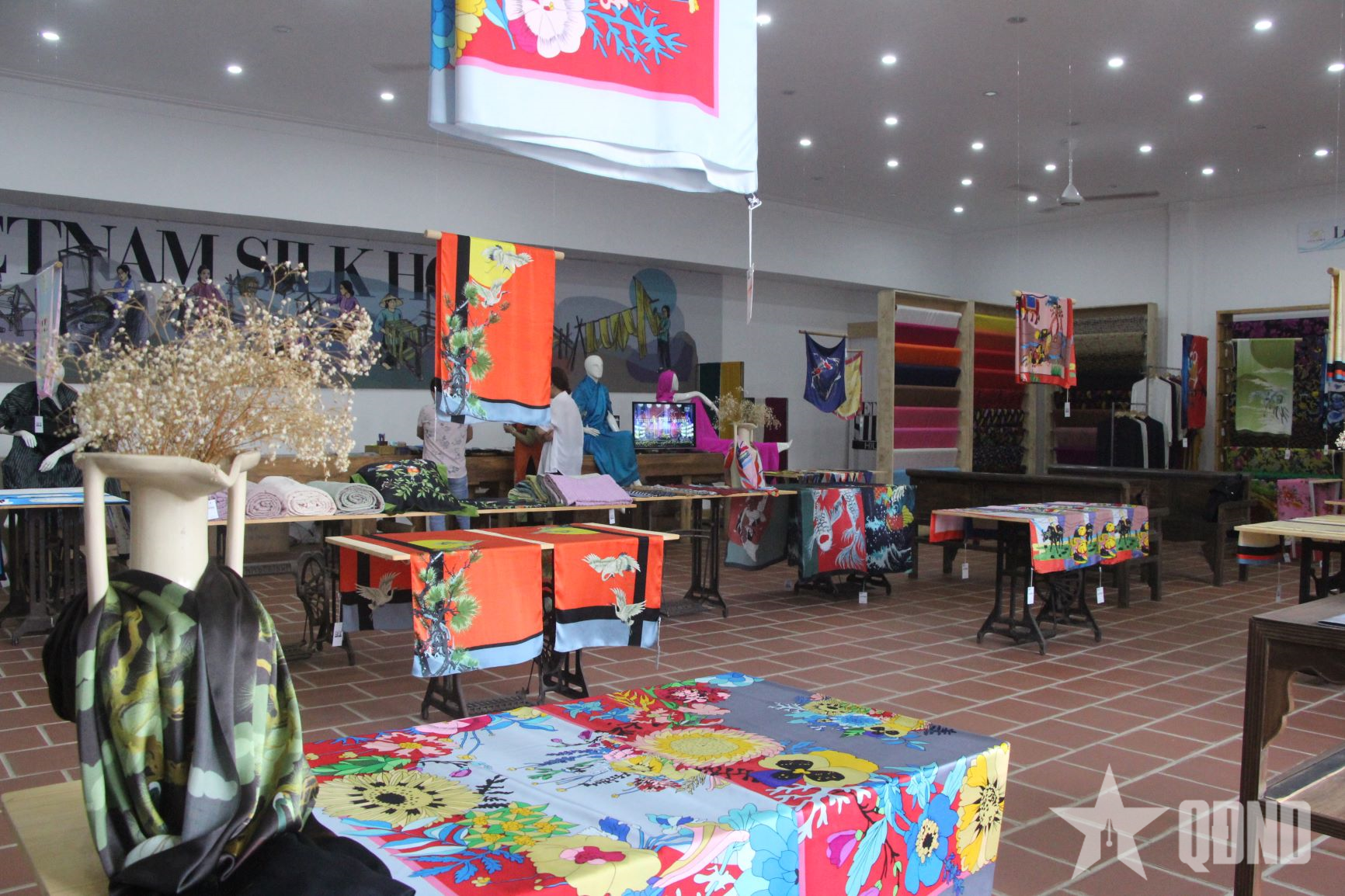 |
| Nam Ban Lam Ha silk is the raw material used to weave famous silk products. |
 |
| Silk woven from Nam Ban Lam Ha silkworms on the fashion runway. |
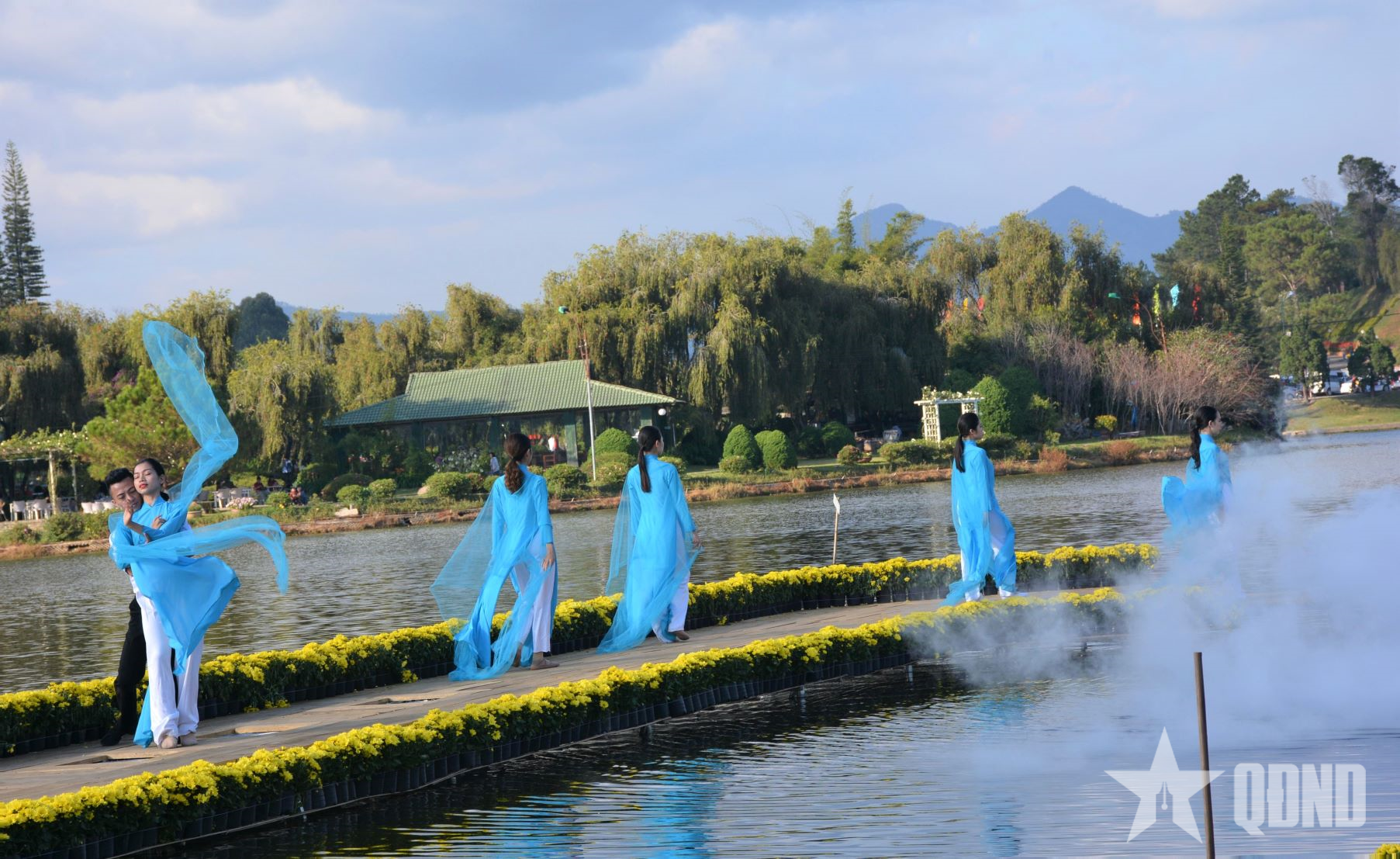 |
| Nam Ban Lam Ha silk possesses a romantic, flowing beauty and high practicality. |
In the late afternoon, golden sunlight bathed the lush green mulberry hills. Inside the houses, the rhythmic sound of silkworms eating leaves continued as it had for nearly half a century.
It is also the sound of memories, of perseverance and the aspiration to rise in a new land. In each shimmering thread pulled from the white cocoons, one can see the beautiful story of the people of Hanoi who went to open up new lands, bringing with them traditional crafts to build a prosperous countryside on the Lam Dong plateau.
Source: https://www.qdnd.vn/phong-su-dieu-tra/phong-su/doi-tam-tren-dat-nam-ban-lam-ha-1044660