

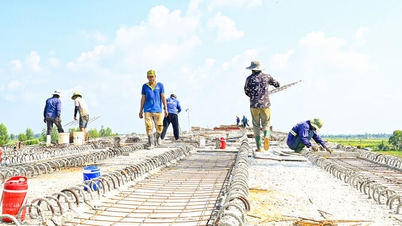
Visiting Giang Thanh border commune today, one can easily see the new face emerging in an area that was once a "low-lying" region in terms of infrastructure in the province. Straight, paved roads stretch along the coast, and the school system, health station, and central market have been invested in and built to a high standard. Irrigation works along the canals have been reinforced, ensuring water supply for agricultural production. The national power grid and clean water cover most hamlets and villages – something the people here could only dream of more than 15 years ago. Mr. Truong Van Bo, residing in Co Quen hamlet, recalls: “More than 15 years ago, the roads were all dirt roads, dusty in the sun and muddy in the rain. The main means of transportation were motorbikes, bicycles, or boats. During the rainy season, it took half a day to get to the commune center. Now, roads have been built to every hamlet and village, making travel and trade much more convenient.”
This transformation is the result of the decisive involvement of the local government along with investment resources from the national target program for socio -economic development in ethnic minority and mountainous areas. Giang Thanh commune has focused on effectively implementing and prioritizing the completion of essential infrastructure systems. To date, more than 17 rural transportation projects have been newly built and upgraded, with a total investment of over 20.9 billion VND. As a result, over 95% of the roads in the commune have been concreted, making travel and goods transportation more convenient, especially during the rainy season. The percentage of households using the national power grid and clean water has reached over 98%. Many Khmer households that previously lived in isolation now have access to healthcare and education services, and their living standards are gradually improving.
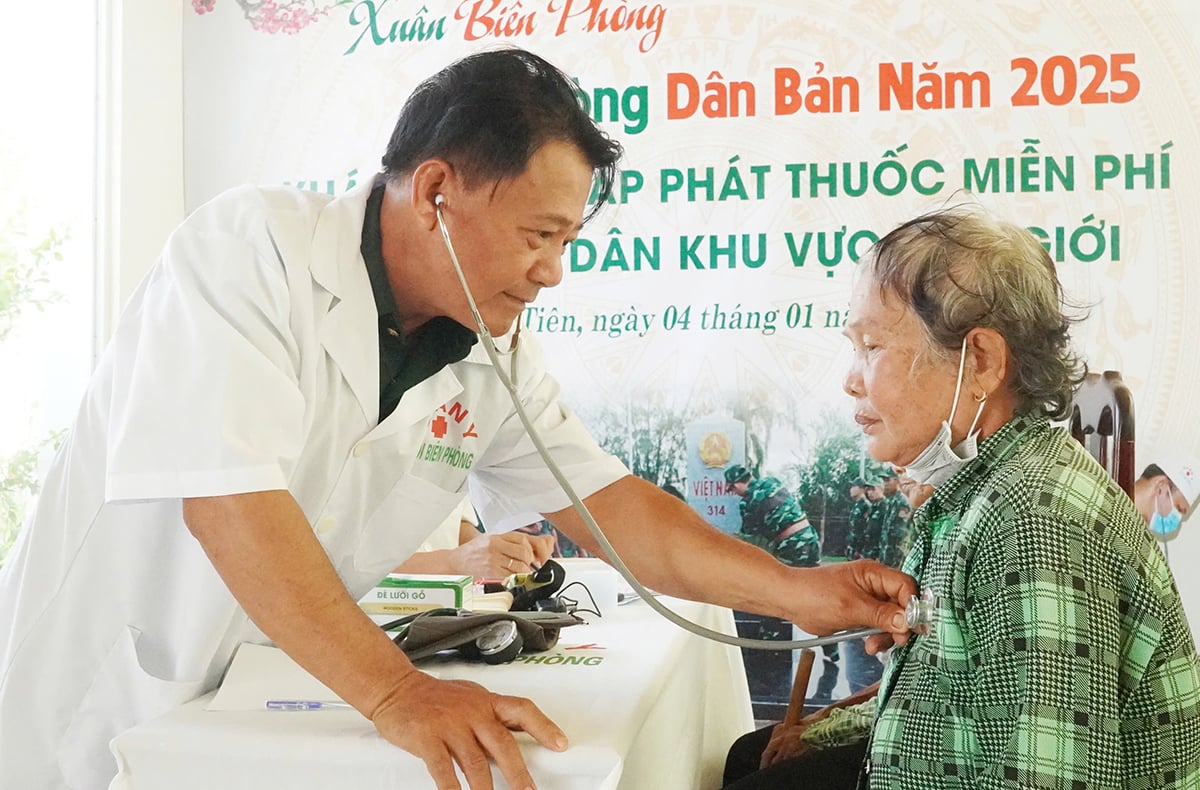
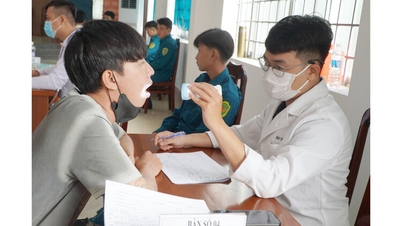
Ethnic minority people in Ha Tien ward received free medical examinations and medication.
According to Ta Hiep, Chairman of the People's Committee of Giang Thanh commune: "The biggest goal of the commune is to improve the quality of life for its people, especially ethnic minorities. Therefore, the commune has proactively reviewed and prioritized investment in essential projects that both serve the people's needs and create momentum for sustainable socio-economic development."
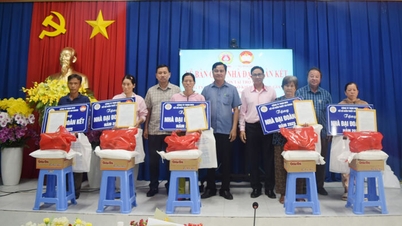
Leaving the Giang Thanh border area, we went to Can Vam hamlet, Vinh Hoa commune to visit the family of Mrs. Thi Hai (92 years old), one of the households that recently received housing support from the national target program for socio-economic development in ethnic minority and mountainous areas. Mrs. Hai welcomed us with a gentle smile and tears welling up in her eyes. For many years, she lived in a dilapidated thatched house, exposed to rain and wind, with her main income coming from her son's work as a laborer. Understanding Mrs. Hai's lonely and difficult circumstances, the Vinh Hoa Commune People's Committee allocated funds from the national target program to support the construction of a new house. The house, with an area of 36 square meters and a total construction cost of 75 million VND, is designed to be sturdy, safe, and suitable for the living conditions of an elderly person.
At the house handover ceremony for Mrs. Hai, the Department of Ethnic Minorities and Religions presented additional gifts including rice, essential goods, and household items, totaling over 3 million VND. Although the gifts were not large, they were enough to warm the heart of an elderly woman who had spent almost her entire life in hardship and struggle. Sitting in her new home, Mrs. Hai shared: “Now that I’m old, living in such a sturdy house makes me very happy. I thank the Party and the State for helping my long-held dream come true.”
According to Danh Phuc, Director of the Department of Ethnic Minorities and Religions, the province has been allocated a total of over 658 billion VND for the implementation of the national target program for socio-economic development in ethnic minority and mountainous areas from 2021 to 2025. This is a very important resource to promote development in areas with a large Khmer population. The program focuses on key areas such as: investing in the development of essential infrastructure, supporting production development, livelihood transformation, and creating sustainable livelihoods; supporting land, housing, and clean water; and improving the quality of education , training, and healthcare for the people.
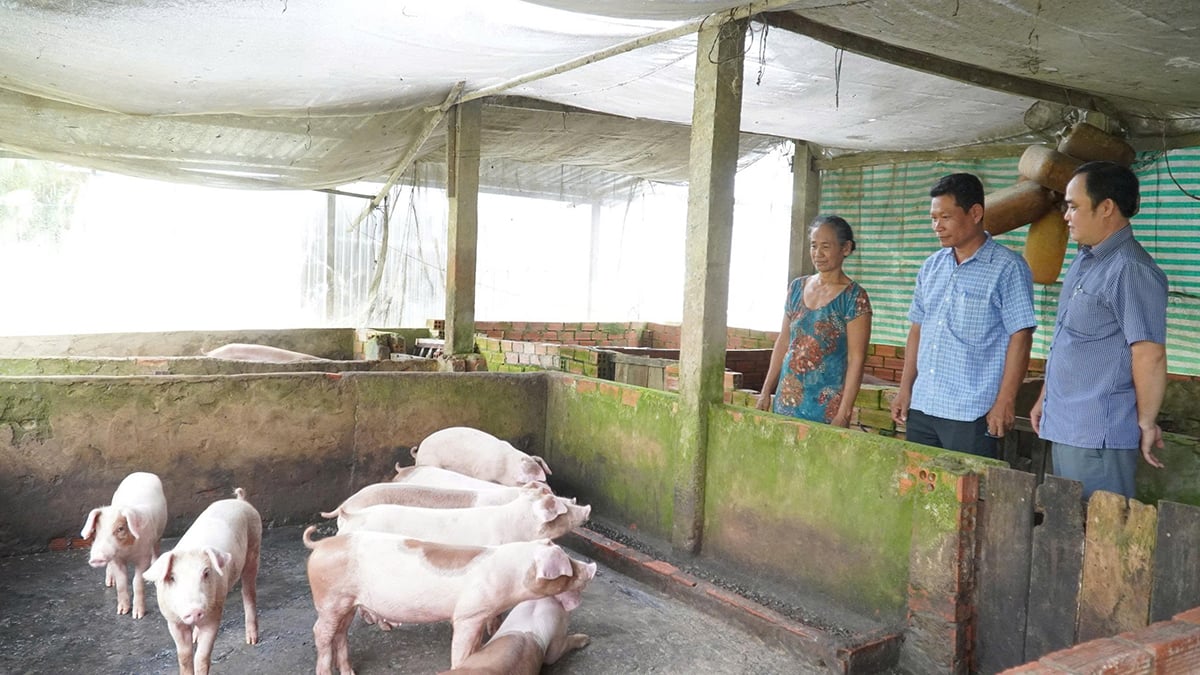
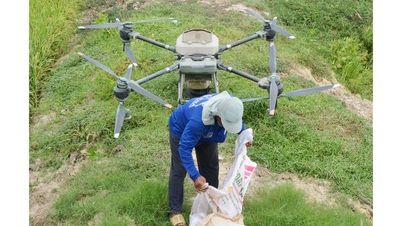
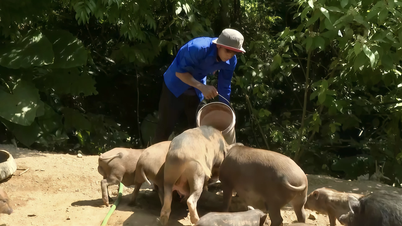
The family of Ms. Thi Son, residing in Giong Rieng commune, earns over 400 million VND per year from pig farming.
Thanks to investment and attention, infrastructure in ethnic minority areas throughout the province has seen many positive changes. Rural transportation systems have been significantly improved, and the national power grid covers all areas. Irrigation systems serving production and daily life are gradually being completed. “The program has contributed to changing the face of rural areas, improving the quality of life, and creating strong confidence among the Khmer people in the policies and guidelines of the Party and the State. This has strengthened national unity, maintained political stability, and ensured security and order in border and ethnic minority areas,” emphasized Danh Phuc, Director of the Department of Ethnic Minorities and Religion.
Source: https://baoangiang.com.vn/doi-thay-nho-chinh-sach-a423950.html




![[Image] Exploring tourist destinations in the Central Highlands](https://vphoto.vietnam.vn/thumb/402x226/vietnam/resource/IMAGE/2026/04/03/1775188646177_anh-kham-pha-diem-_4405_1775188602.jpeg)


































































Comment (0)